Friday, October 9, 2009

Friday Dance Party: Kudos for Kristin


I'm a big Kristin Chenoweth fan, though I know some people (you know who you are) are not. What the hell's wrong with you? More accurately, what the hell's wrong with her? Nothing, that I can see. Perhaps you think her tone is too perky, her voice is too high, her height is too short?

I've been reminded of Ms. Chenoweth's talent quite a few times in the past weeks, beginning with the Primetime Emmy Awards a short while ago. She was part of the ensemble of that kookie show Pushing Daisies, a program I really tried to love, but couldn't. I promise, I gave it more than one chance, but there is just only so much whimsy a guy can take. The show was the critics' darling, but was sabotaged by the writers' strike and by the network's foolish decision to refrain from broadcasting reruns. Instead, they "re-launched" the show a year later. Bad, bad mistake. Despite the presence of stage actor types like Swoozie Kurtz, Ellen Greene, and of course Chenoweth (plus the superbly talented Jim Dale narrating the thing), I just could not hook into the show. Nobody else could, either, and Pushing Daisies has been pushing up daisies for many months. So it was one of the few surprises of the recent Emmy Awards that our Kristin snagged the prize as Best Supporting Actress in a Comedy.

It's not her first major award. That would be the Tony, which she won for the Broadway retooling of You're A Good Man, Charlie Brown, in which she stopped the show as Sally Brown. She attracted a lot of attention for her work in what was, apparently, a mediocre production. She snagged several films and a short-lived TV series, the latter of which did not showcase her talents well. She now moves easily between the stage and screen and, more importantly, actually does so. Lots and lots of stage actors who become regulars in Hollywood claim their heart is still with the stage, but actually abandon the theatre. Not our Kristin. She returned to Broadway in a very big way, playing one of the witchy roommies in one of the biggest smashes of the past decade, Wicked. There are several bootleg videos out there, of Chenoweth singing her various songs from the show, and in all of them, she is clearly overplaying her charm factor. I bet she knew the same thing that all my friends who have seen the show recognized: the show is a technical behemoth, but is emotionally slender.

I mentioned there were several reasons Kristin has been on my radar lately. In addition to the Emmys, she guested on Glee last week, a performance which gave her the opportunity to show off her lower register, as she belted Cabaret's "Maybe This Time." She's popping up on my TV screen even more during the day; I've been revisiting The West Wing, which is being rerun on Bravo. I had forgotten that Kristin had a large recurring role in the show's final season, a performance which included no singing and no dancing (but it does have her requisite charm...I doubt she can give a performance without it. But why would we want her to?) The West Wing was not known for its sight gags, but they provided a doozy in an episode I watched this week. They placed Chenoweth in the same frame, side by side, with the show's star Alison Janney. Kristin is 4'11". Alison is 6'. Hilarity ensued.

I admire Kristin Chenoweth for a reason other than her talent. She is a woman of devout faith, and does not hide the fact. But unlike other mouthy Christians, she does not torture herself (or us) over Leviticus. She lives her life according to the WWJD belief system; she asks herself, "What Would Jesus Do?" The answer is always one of inclusion, and as a result, she is the only born again Christian I can think of who is also a gay favorite.

This week's Dance Party is a clip from Chenoweth's visit to the Boston Pops, videotaped for PBS. She is at her best with comic numbers like this one, from an old Jule Styne show called Two on the Aisle. If you love our Kristin, prepare to love her even more. If you dislike our Kristin, this may change your mind. Or you're just crazy. Watch the clip anyway, and enjoy the physical comedy of the unnamed actor playing the corpse. He should be a star, too:


Wednesday, October 7, 2009

Theatre Droppings: Stage Guild Does Its Bit

I was tickled pink (or some other, more Shavian colour) to attend the opening night of Strange Bedfellows, offered by the Washington Stage Guild at Catholic University, Saturday night. It was a welcome return to full production by the Guild, which has been on hiatus for the past two seasons; I'll get to that in a mo'. First, it's a pleasure to report that the double bill of one-acts by George Bernard Shaw is hilarious. Why wouldn't it be? Not only is the cast filled with my friends (well, perhaps one or two are mere acquaintances, but why quibble), they are all experts at translating Shaw's humor to the stage.

Director Bill Largess assembled an outstanding ensemble, filled exclusively with old hands who attended Catholic University back in the day, and who were all important contributors to the formation of the Stage Guild in 1986. I especially enjoyed seeing Alan Wade, who directed me in Of Mice and Men, play a couple of wildly different roles. Alan is a well-respected professor of theatre at George Washington University, and the academic gravitas which that position requires suits him well. So it was a double hoot to watch this genteel gent let loose onstage, first as a harried prime minister crawling under the furniture (in ladies' heels!), then as an hilariously drunken clerk. If he did not already have a very full career on campus, he would be a much more frequent player on local stages.

The rest of the cast are all folks I had the pleasure of working with in the Stage Guild's recent Staged Reading Series. I may be prejudiced toward this unique theatre company; regular readers of these pages already know that one of my favorite onstage experiences was provided by WSG, when I appeared in their production of Opus. That lovely show was, until last Saturday, their last fully produced production. The intervening two years have been more than difficult for the Guild.


I've learned a bit of the history of the group, from program notes and from chats with the current artistic director (the same Bill Largess mentioned above), and from the executive director, Ann Norton. This group of CU grads performed Shaw's Heartbreak House back in 1986, a production which encouraged them to form their own theatre company. From the start their focus has been on the plays themselves, which has yielded a high threshold of quality ("rare plays, well done!" is their motto), and anyone who has been in the DC theatrical community for a while knows and admires their ambitious work.

Over the years, while WSG concentrated on the work, other DC companies spent a lot of energy on institutional growth. Studio, Signature, and Woolly Mammoth, for example, expanded their boards and launched fundraising campaigns, ultimately resulting in those institutions landing in swanky permanent digs. But the Stage Guild took a different route, continuing to concentrate on, well, rare plays, well done.


They had what seemed a permanent space for a decade or so, at St. Patrick's Catholic Church, where the chief priest was a big supporter. Eventually, Rome became displeased with the idea of a secular theatre group performing on Catholic grounds, and threw them out. OK, I made that part up, just to add to the dramatic narrative. Carroll Hall, the performance space occupied by WSG, was slated for demolition. (But I think that was just an excuse; I know the real reason the Guild was evicted: the Pope was mad that WSG refused to do Nunsense). Anyway, the group moved on, performing at Source theatre for a handful of years, and in a small black box owned by Arena Stage for another five or so. It was in that latter space where Opus was performed, and was so successful that it was remounted several months later. The show was promoted as the final Stage Guild production before the company moved into its own, permanent theatre.

Yes, it seemed the muses really did like rare plays, well done, and WSG had been invited to become the arts component in a new office building going up in Penn Quarter (the developers received incentives from the city in exchange for allowing some sort of arts organization to occupy their new basement space). A Capital Campaign was launched, and I'm told a good bit of money was spent to design a theatre space which would afford the Stage Guild a unique home of their own. This was terrific news. The types of plays WSG produces really cry out for a bigger space (the farcical elements of their current show at Catholic, for example, would fit very nicely in a larger venue). The new theatre was to hold several hundred patrons, and was designed with all the bells and whistles necessary to produce high quality work.

Plans for this new space were well underway when I began to hang with the Guild gang. (This was back when I worked with many of them on a staged concert reading of 1776, about which I wrote a while ago.) If my memory serves, everyone was truly excited and optimistic about the future, with only one snag. Well, maybe two. The first: several millions of dollars were needed to turn the basement space of this new office building into a theatre. The second, and perhaps more alarming snag: there could be no kitchen. Herein lies a crucial difference between the Stage Guild and so many other companies; founders John MacDonald and Ann Norton lived and worked as family, and treated others the same. Dating back to the first years at the Catholic Church, when the group had the use of a large kitchen, rehearsals and performances were accompanied by generous "family time," usually taking place around a long table full of food. This was an important aspect of the Guild's production model; Ann used to joke to her actors, "You're not well-paid, but at least you're well fed." The prospect of shrinking full-course meals down to frozen food from a microwave was not a pleasant one for this crowd.

Still, the future seemed bright until, as Bill mentioned to the Washington Post last week, a "perfect storm" hit. The Capital Campaign hit bumps, then hills, then walls, and worst of all, John MacDonald suffered a fatal fall at his home. For a company which believed that an artist's work should be harmonious with an artist's life, this was a terrible blow. Then, the economy tanked, and hopes of achieving funding for the new theatre fell, as Bill put it, "out of reach."

For the last couple of years, the Washington Stage Guild has not had a full production, presenting their Staged Reading Series instead, and taking the time to reassess. And of course, to grieve for the loss of their founder. I know that process continues, even as WSG is now offering its first fully produced piece in such a long while. Strange Bedfellows consists of two very funny Shavian playlets, and will be a centerpiece of the International Shaw Conference, which is in town next week (the conference is in DC, at least partly, due to Washington Stage Guild's presence here).


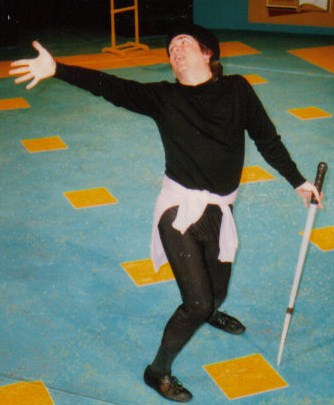
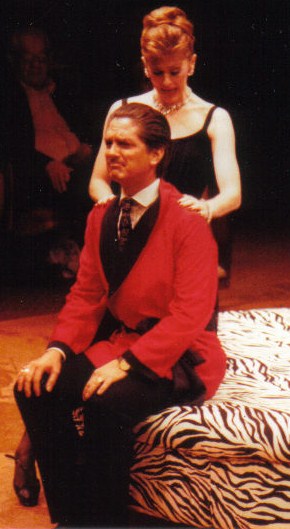
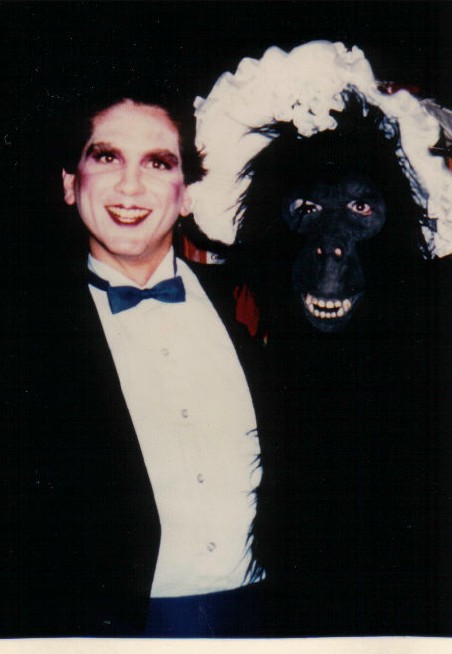
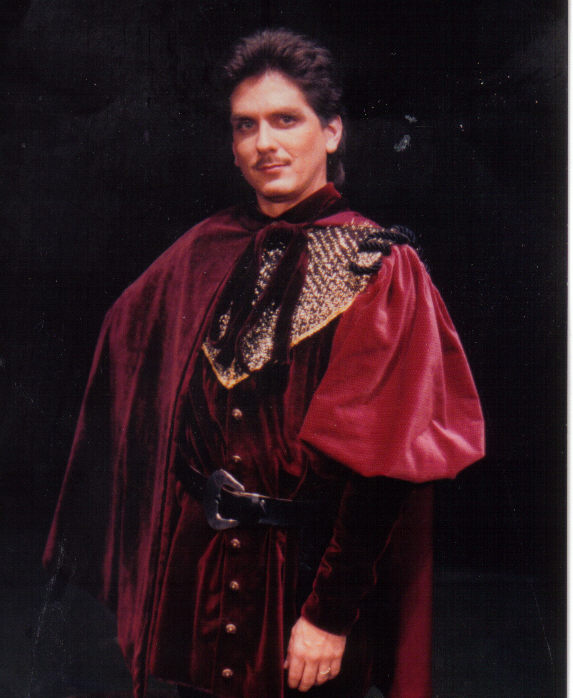
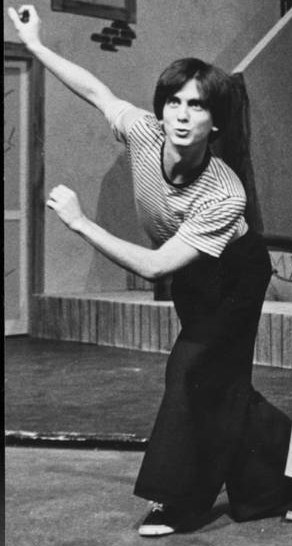
After thoroughly enjoying the show on Saturday, I started to think about this specific group of actors who has spent the last several weeks returning to the scene of their college crimes. It reminded me of a production of Bye Bye Birdie (below) produced waaaaaay back in the late 70s. I played the lead, and though the show was being produced by a church group, we performed in the theatre at JFK High School, on the very stage where I had spent my senior year of high school. Memories flooded back, and ghosts were hiding in every corner. The same thing must be happening to the cast of Strange Bedfellows.


The most powerful ghost they are encountering is probably John MacDonald, who was instrumental in the creation of the Washington Stage Guild, and who dreamed of a permanent space for his troupe. That goal remains in the long-term plans for the theatre company he created, but for now, it's one show at a time...

Friday, October 2, 2009

Friday Dance Party: Practically Perfect in Every Way


It's ridiculous but true: I used to dislike Julie Andrews. How could anybody? Well, I was young, and pompously believed that her work was all syrupy sweet. I made those judgements from her early film work; a more recent viewing of those family classics reveals much more depth to her performances than I recall.

It's hard to remember a time when Dame Julie was not part of our entertainment landscape. She played Poppins and von Trapp, Eliza and Guinevere, Darling Lili, Modern Millie, and Noel's Gertie . And of course, both Victor & Victoria. She served Hitchcock in Torn Curtain, played melodrama in Hawaii, and bared her boobies in SOB. She's had running roles in the Eloise series, the Princess Diaries series, and a couple of Shreks, too. And a lot of that was done after her voice was damaged by a botched vocal chord operation. What hasn't she done?


Her childhood was spent in British Music Hall, where she developed skills which would serve her when she headlined her own variety series decades later. She came to Broadway in The Boyfriend in the early 50s, and had already been picked to star in Rodgers and Hammerstein's Pipe Dream when composer Rodgers learned that she was also up for the lead in a competing show, My Fair Lady. He advised her to take the Lerner & Loewe show instead, feeling that, eventually, he would be writing something specifically for her extraordinary talents. He did just that, and provided Andrews the opportunity to become nationally known when she stepped into the spotlight on one single night, March 31, 1957. That was the one and only performance of Cinderella, starring Julie Andrews. The live telecast was viewed by 117 million people, which was, at the time, the largest audience for anything, in the entire history of the planet Earth.


Julie Andrews became a household name, but it wasn't enough to convince Warner Brothers that she could put butts into seats in movie houses, so when My Fair Lady was filmed, her role of Eliza Doolittle went to established star Audrey Hepburn. By then she had moved into her next Broadway triumph, Guinevere in Camelot, a performance which attracted Walt Disney's personal attention. She landed the title role of Mary Poppins and won the Oscar, the same year Hepburn failed to get even a nomination for My Fair Lady. (Gotta love that poetic justice.)


Andrews spent the rest of the 60s on the big screen and appearing in a series of well-regarded television specials. This week's Dance Party is from one of those specials, in which our Julie croons, floats, and hoofs with Gene Kelly. The clip is a good example of the style Andrews used in all her specials, and in her TV series in the early 70s: she believed true entertainment should emphasize the performer, rather than peripherals such as sets, costumes, and other pyrotechnics. Isn't it a lovely clip?


Dame Julie Andrews turned 74 yesterday.

Thursday, October 1, 2009

s'Newz

...an occasional series of stories which recently caught my eye...
This is the theatre story that just keeps on giving. For some reason, I have had a fascination with the ongoing, drawn-out Jeremy Piven On Broadway saga. I can't explain it, I don't even like the guy. Maybe that's why. Anyway, I reported a while ago that the matter was finally settled in arbitration: Piven did not break his contract with Broadway's Speed-the-Plow when he bolted the production claiming mercury poisoning. Once again, I spoke too soon. Some clever satirists pulled together an evening of comedy surrounding the events and called it The Piven Monologues (the title is a clever take-off on that other evening of speechifying, centering around a woman's...um...secret splendor). The show was authored, if that's the word, by a couple of participants of the Public Theatre's Emerging Writers Group, and is apparently a composite of some of the comments to Piven's actions which were published on the Internet:

“My understanding is that he is leaving show business to pursue a career as a thermometer.”-David Mamet, Variety, December 2008

“However, it is not known whether he is an oral or rectal one. I can guess. LOL.” “Larry”, January, 2009, random website, the Internet.

Here is the blurb explaining the show: "When Jeremy Piven made his abrupt exit from the Broadway production of Speed-the-Plow due to the alleged illness of mercury poisoning, Mr. Mamet may have been the first to comment – but he was by no means the last. In this new age of instant global communication, no matter how minor the story or how wacky the rumor, everyone gets to have their say. THE PIVEN MONOLOGUES presents a selection of the shitstorm in a very special staged reading."


The show ran one performance at Joe's Pub in Manhattan on September 14. Piven wasted no time; his lawyers sent a Cease and Desist order the next day, and issued this statement: “We didn’t say you cannot do the play, we said you can’t make defamatory statements about our client.” It looks like the producers feel confident that they can withstand further legal action, as the second performance of the piece is still on the Joe's Pub calendar, in the late-night slot on October 2.


Now that Piven has been shielded from any further legal action on the part of the producers he screwed, he ought to just shut up about the incident. Or better yet, he should get his ass to New York and sit in one of the front tables at Joe's, and laugh his head off at the show. Or even better, he should offer to actually appear in the thing; it would go a long way to rehabilitate his tattered reputation.
There are a couple of other stories to come out of New York lately which I find interesting. After a six year Broadway run, during which it won the Tony for Best Musical, Avenue Q has closed. But not for long. The show began its life Off-Broadway in 2003, and in what I think may be a one-of-a-kind move, it's returning to its roots. I have never seen the show; the national tour swept through DC a while ago, but I didn't get there. It's a story of urban living told with Henson-like puppets and Sesame Street-like tunes, but it's decidedly adult. Wicked, the show which Avenue Q beat on Tony night, continues to pack 'em in on Broadway and on tour, while the Q's Vegas production closed prematurely, and its national tour was a disappointment. It was struggling with small houses for many months before it closed on Broadway, but I have a hunch it will continue to draw crowds Off-Broadway for years to come. Other shows hope to make the leap onto Broadway; Avenue Q is making a bit of history by going in the opposite direction.


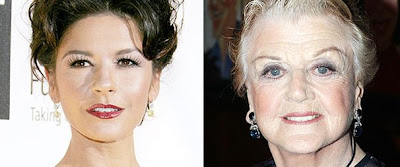
Did you hear that there will, finally, be a Broadway revival of A Little Night Music? I wrote a while ago how odd it was, that this Sondheim favorite has never had a new production. The late Natasha Richardson headlined a staged reading of the piece earlier this year, with her mother Vanessa Redgrave playing her mother in the show. Now, a new, full production has been announced with Catherine Zeta-Jones in the lead (she'll warble Sondheim's most famous tune, "Send in the Clowns") and Angela Lansbury will be swiping the show as her mother. Perpetual Anticipation pays off!
Here's another New York Show Biz story, this one from the world of the soaps. Actress Patricia Mauceri has been a supporting player on One Life to Live for over a decade, but when her character became part of a gay storyline (her son on the show came out), she balked. She approached the producers, telling them her character would never support a gay son; she was promptly replaced. She is now contemplating legal action. She has told Fox News (who else?) that she was fired for her own personal religious convictions, which consider homosexuality an abomination. Sorry lady, you were fired because you refused to speak the lines provided to you by the writers of the show. Your own personal homophobic bigotry had nothing to do with it.


This story is rather an old one, but I left it in my inbox because it made me so angry. You probably heard the story when it was breaking news weeks ago. Some old gent was shopping at Walmart in an Atlanta suburb when he became irritated with the constant crying of a two year old. He approached the mother and warned her to quiet the kid, or he would. The mother, with that typical attitude that so many mothers have these days (that she is entitled to break social conventions simply because she gave birth), ignored the warning (and also ignored the screaming baby). The guy, Roger Stephens, fulfilled his promise and slapped the child. He was arrested for felony cruelty to children.

This story drives me nuts. It is another illustration of the complete lack of consideration which parents routinely force upon the rest of the world. "Hey, I've got a stroller, so my needs, wants, and conveniences trump yours." This arrogant mother should have attempted to control her child and, failing that, should have taken the kid out of the building. I'm sure any suggestion of such a thing to her would have been met with incredulity. "I'm a mother! This is my child! You have to put up with whatever we do!" I don't think this poor old coot should have been arrested. I also don't think he should have hit the child. He should have slapped the mother instead.


I have to go back to Broadway for this last story, which is a new chapter in a story which seems to be getting worse. Hugh Jackman was in previews for his new show last week, a non-musical two-hander which costars Daniel Craig. Some jerk's cell phone went off during one of his dramatic speeches, and, as you can see from the clip below, he decided not to try to compete with the distraction:


As you saw, once Jackman brought attention to the interruption, the phone continued to ring. The owner was obviously too embarrassed to reach into her purse and hit the mute button, so instead she held the entire production hostage with her inconsiderate actions. (You may note that, though I never saw the perp, I am calling her a woman. I wonder how many times over the years I have witnessed a cellphone going off during a performance...I bet it's close to a hundred. And the offending cellphone always belongs to a woman. Always. ALWAYS.)


Anyway, The New York Times reports that Daniel Craig was interrupted by the exact same thing during a previous performance; like his costar Jackman, he halted the show until the ringing stopped.

Months ago, when Patti Lupone was getting such flack for stopping her show to harangue against someone taking pictures, she gave interviews saying that the number one problem in live theatres today was the intrusion of ill-mannered audience members with their cameras, cellphones, texting, and the like. This is not, of course, just a problem in New York, it happens in every theatre everywhere. My buddy and sometime boss Warner Crocker published a note on one of the websites to which he regularly contributes. He mentions Jackman's actions, and relates it to an incident at his own theatre, Wayside. I was in the audience at the performance Warner references; a cellphone went off, and instead of immediately silencing the thing, the owner (guess what? It was a woman) allowed it to continue to ring as she made her way up the aisle to the lobby. (This was a loud, intrusive ring-tone, so loud that I wondered if Robert E. Lee, a character in the play, was getting a phone call from the White House.) This woman then answered the phone, in full voice, and talked for a minute in the lobby, which is not soundproofed. We heard every word. A few moments later, the damn phone rang again; this cow had asked somebody to call her back, but instead of placing her phone on "vibrate," or, God forbid, stepping out onto the sidewalk, she answered the call and had a conversation in the lobby, with the whole audience listening in.


Really, people? Are you actually that important? That you must be available to answer your phone every minute of every day? Are you a heart surgeon, waiting for a donor for your transplant? Are you an expectant father, waiting for your wife's water to break? Are you an actor waiting to hear if you got the gig? If you do not fit into one of the above three categories, your cellphone should be OFF.


Amidst my anger over this kind of thing, I admit I got a giggle from Warner's post. Well, not the post, exactly, but the site onto which it was submitted. Warner contributes notes to a site called "GottaBeMobile.com." His vote against inconsiderate cellphone users appeared on a website which celebrates the fact that we all, everywhere, everyplace, are now accessible to everybody else, and ought to be! Warner's note has received a dozen or so comments, all supporting his views. But I wonder how many other readers of a site called GOTTA Be Mobile feel that irritating entitlement which goes something like, "I'm Mobile and Connected and Entitled to Prove It. And if the guy sitting next to me disagrees, screw him." I Gotta Be Mobile!


This final picture needs no explanation:


Wednesday, September 30, 2009

Is It Ok If I Call You Mine?


The current remake of Fame is clearly not aimed at people like me. The original 1980 film was, but more on that in a mo'. I succumbed to curiosity yesterday, and popped out to see this new version; I admit I did it no favors by watching the original on DVD before setting out. The two are not comparable, but as the current effort is being touted as a remake, well, it's hard not to compare the two. This Fame.2 is clean-cut and sanitized, with none of the grit of the original. These young folks are all perfectly formed and ready for their close-up. And dull as toast. Realistic conflicts are nowhere to be found here; the only drama results from mild parental disapproval or an occasional swindler swooping in on one of our kids. That latter plotline, involving the only interesting young actor in the piece, Paul Ioacono, does not compare with the corresponding sequence in the original, in which Irene Cara is duped into removing her blouse for a sleazy pedophile masquerading as a filmmaker (she dissolves into tears, but does not refuse, just in case this guy might be legit). See where this is going? Our New Fame is cleaned up, and aimed squarely at the High School Musical crowd, where the biggest problem is whether to be a highly successful pianist or a highly successful singer. And speaking of the music, well, I acknowledge I'm not a good judge of such things. But here I go anyway. I can report that there are several sequences in the remake which have clear antecedents in the original. That huge musical number in the lunchroom remains, though in the remake, the song has a hip-hop feel, while the original was rooted in disco. I don't know which song is better, but I do know that the new version feels very, very staged, as opposed to the original, which had a chaotic, improvisational, more organic feel. There isn't much dancing on cars here; the current cast of goodie goods would never dream of holding up Manhattan traffic like our original gang did. Instead, there is a Halloween sequence right out of Moulin Rouge. This new film is full of the visual, but the deeply emotional is hard to find. If you've gotten this far, you can tell that I have a fondness for the original Fame. The movie was released in 1980, and was only a moderate hit, though it spawned a TV series (which spawned its own spinoff), as well as a stage show and the current remake. While that first film was not considered a big hit, it had a large impact on any stage actor of my generation. Those students in the original were quirky oddballs, exactly the kind of kid who is attracted to the performing arts. And the tone of the movie was darker and grittier, which made it seem more realistic. The Manhattan of 1980 was pretty grimy, as opposed to the Disneyfied territory of the remake. We had the rich dancer who had an abortion in order to gain admittance to a professional corps de ballet, the fatherless Puerto Rican who so idolized Freddie Prinz that he followed his descent into drug use, and the mousy virgin who blossomed into a woman of power. And of course, there was Montgomery, the unusual-looking geek who outed himself as an acting exercise. That character, for some obvious reasons, resonated very strongly with me. Played by a young Paul McCrane, when he had hair, his loneliness was particularly painful for me to watch back then. Take a peek at this clip, which features McCrane singing a song he wrote himself; though never outwardly addressed, it's a love song to his best friend Ralph:
But actually, any young actor could find him (or her)self in the original Fame. I remember I first saw the film with a group of actors from my workshop; we drove into Hollywood to see the thing on the big screen at the Hollywood Cinerama Dome. We brought our acting coach and mentor, Bobbi Holtsman, with us. All the students ate the movie up; we were moved, inspired, energized, and tipsy with ambition. But Bobbi did not get it; I was tempted back then to believe Fame was just not an adult's movie. But I must now be around the age Bobbi was when she first saw it, and today's viewing of the DVD still provided a heady feeling of "I'm going to live forever." As I said, I did not follow the subsequent versions of Fame, losing interest in the series after a couple of episodes (it ran four or five years on NBC and in syndication). I never saw the second series, nor the stage show which made the regional rounds several years ago. A couple of the actors from the original made the transition to the series, but the two actors who went on to larger careers did not. Paul McCrane and Barry Miller have continued acting, most of the others haven't. I've found this fun clip, in which McCrane, Miller, and Maureen Teefy illustrate a little of what I've been rambling about. They have the unusual look of the teens who were always attracted to the arts, a little off-beat, a little misfit, a whole lot of insecurity. They look like us, back then. The remake's cast is full of picture-perfect model types whom you don't believe for a second live in the real world. The only actor who looked like that in the original was Boyd Gaines, who also appears in this clip. He has become a multiple Tony winner, but his character did not; this promising golden boy heads to Hollywood and ends up waiting tables, another realistic depiction of the actor's life: