Showing posts with label Hudson Warehouse. Show all posts

Sunday, November 12, 2017

Richard, Cubed

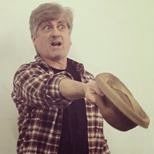
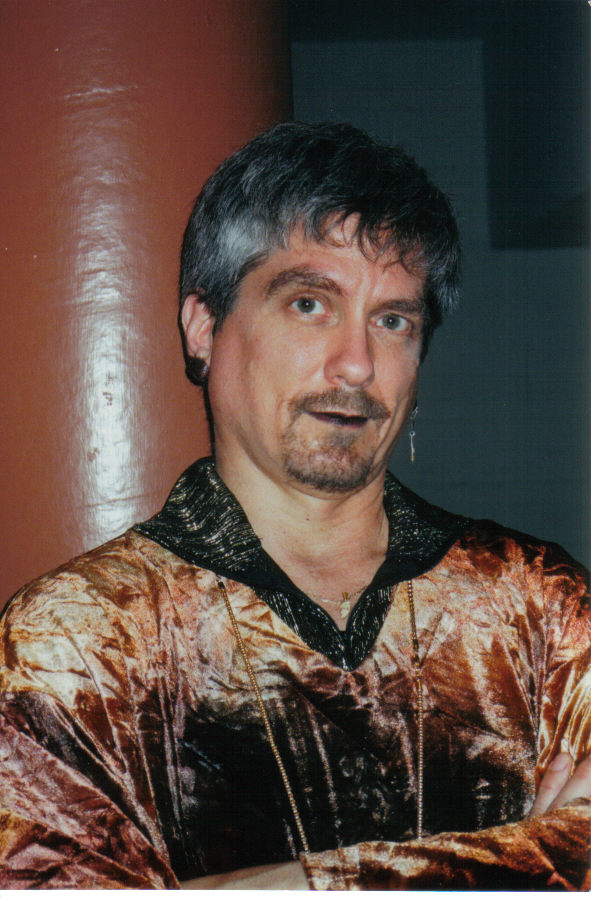
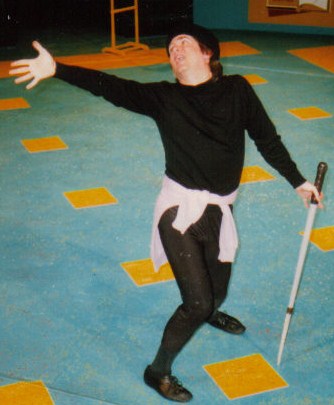
A typical rehearsal look.
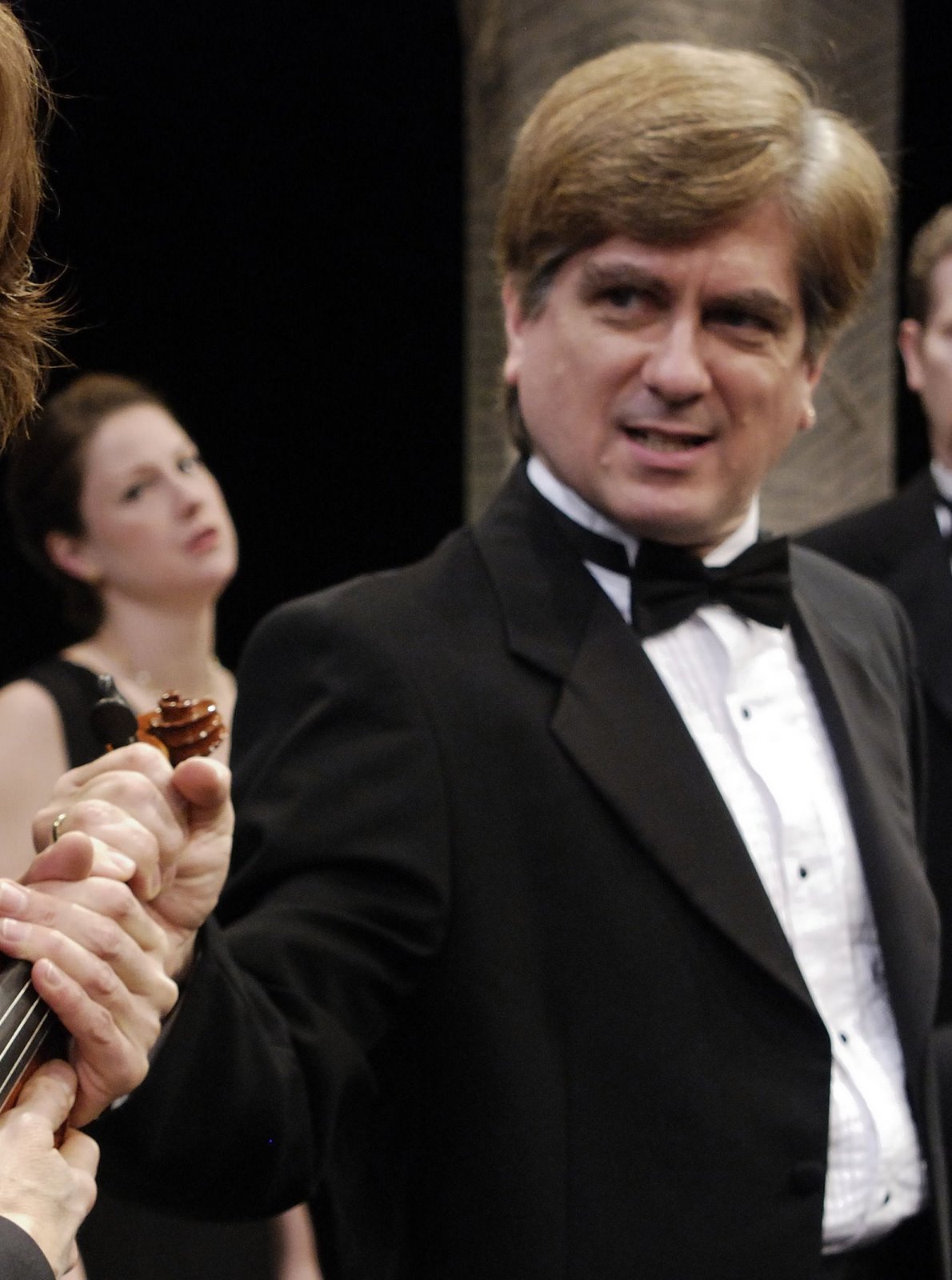
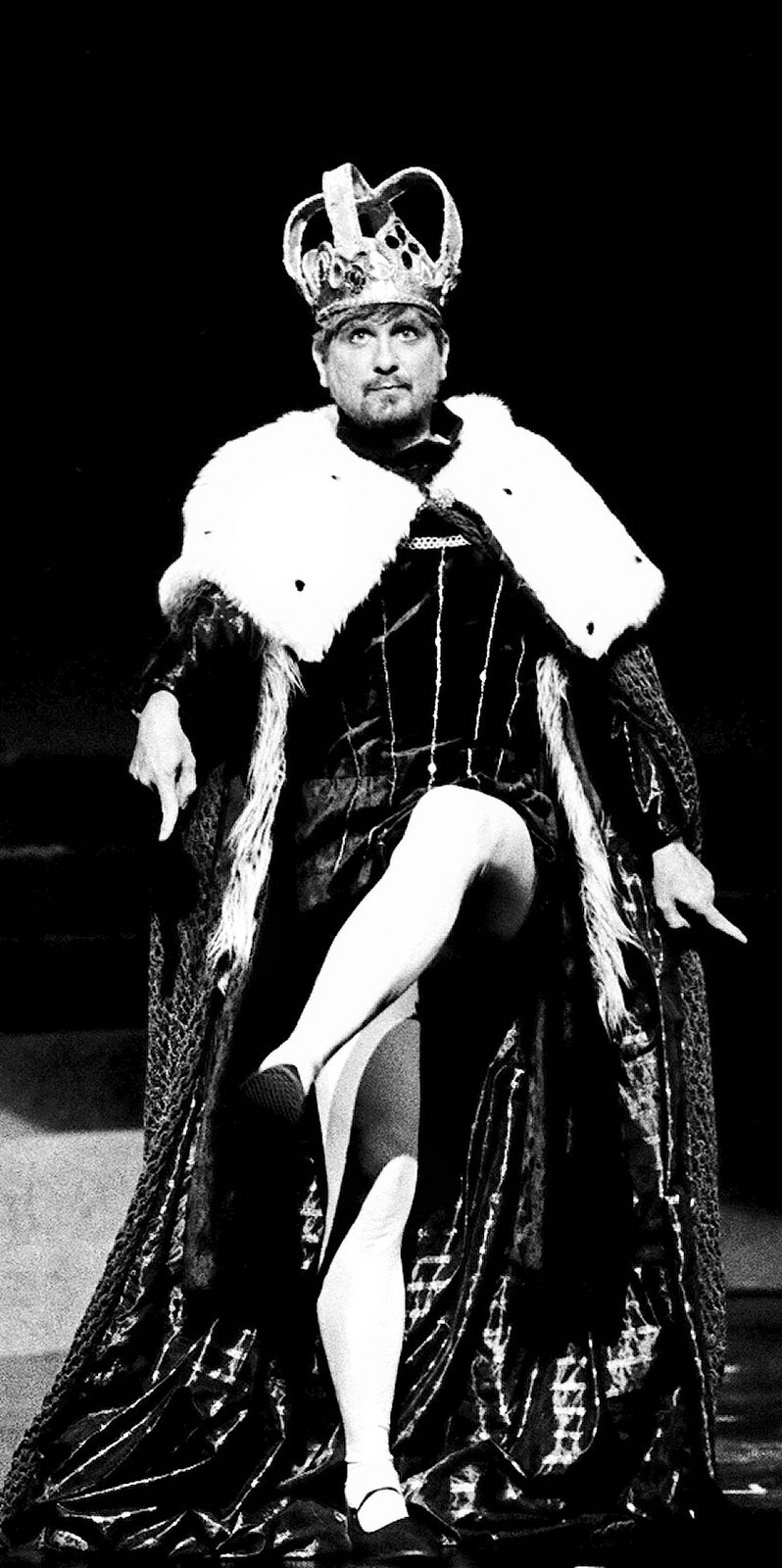
Actors who perform the classics are likely, if they've been around long enough, to appear more than once in certain plays.  Two weeks ago, I closed Richard III for the third time.  I was always a bridesmaid in these productions; I hoped to play Richard himself for years, but the chance never came.  Instead, I've had to be satisfied by playing various supporting characters in various productions. 
Jack played R3, from his own adaptation, and
directed the thing too. I was thrilled to be
invited to play his Buckingham.

My first encounter with the hunchback who had misplaced his horse was back in <gulp> 1999. My buddy Jack Young, at the time the artistic director of the Warehouse Theatre in Greenville, SC, invited me to join his production of the play, in which he was to both star and direct.  It was a herculean task, in my opinion, but if anyone could accomplish it, Jack was the man.
This tableau, or a similar one, opens just about every production of Richard III, though Shakespeare did not write it.  In his original, the play opens with Richard alone onstage, lamenting his fate and revealing his plans to the audience. Modern directors are convinced this is a weak beginning, and wastes a chance to illustrate the arrogant power of the Yorks who have, seemingly, won the Wars of the Roses. So every production of R3 you are likely to see will begin with this family's revels (or procession or coronation or whatnot), followed by Shakespeare's original opening.
  
Christina Keefe, a great friend from grad school
suggested I play Buckingham. She played mad
Queen Margaret, a brute of a role which is
sometimes cut from American productions, as
she serves no dramatic purpose and is confusing
to viewers unfamiliar with the dynastic
entanglements of the Wars of the Roses.

My grad school comrade Christina Keefe, Jack's wife and the leading lady of his theatre, had suggested he hire me for the show.  I was told that my name first came up to play the small comic role of the Mayor of London; Christina wondered why Jack would waste me on such a minor character, considering he would have to hire me as an out of town actor, and provide lodging and transportation for me as well.


This gal played the Mayor, a role I was later to play. Twice.
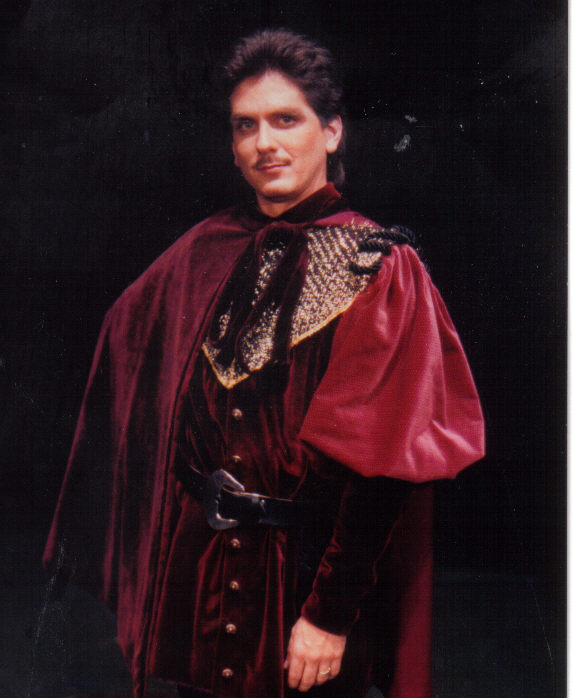
They agreed I should play the much larger role of the Duke of Buckingham, Richard's co-conspirator and later, betrayer. Depending on the adaptation, Buckingham usually turns out to be the show's second male lead.


Buckingham ends the play being led to
his execution. This photo was on my
 Christmas Card that year.

I have to admit that I don't have many specific memories of the experience at The Warehouse. I recall I spent a lot of time working the text; Buckingham was the largest Shakespearean role I had played to date.  He is definitely one of those roles which I would like to attempt again, now that I'm more <ahem> seasoned.  
Our star was not the only one with a hump.  Our stage had one too. We played in-the-round, with a misshaped hill in the center as the defining scenic element. 

Fourteen years later, Richard III reentered my life. 
After a prelude lifted from Henry VI, Part III (a prequel of sorts to Richard III), my second R3 began with a procession of the royal family down the stairs of the playing space, through the audience . I'm up top, in the beard and white tie.
Richard's opening "Winter of our discontent..." speech was
delivered, in part, through a bullhorn as a political stump
speech. In all the productions of R3 I've seen, I don't believe
I've ever seen one which begins as Shakespeare intended: a
solitary figure limps onto a bare stage, turns to the crowd and
tells them his plan. Too dull for modern audiences I suppose.
Even Olivier began his iconic film version with pageantry.
And McKellen's film begins with a tank breaking through
a wall; his opening speech doesn't show up until scene 4.
I had only been in my New York apartment a few months when I responded to a casting call for Hudson Warehouse, a company which produced classic (mostly Shakespeare) shows outside in Riverside Park.  


I never really adjusted to the weather issues, but I have
to admit, when the sun is setting on your face, it gives
the performance a glow which I've never felt from
artificial lighting.
It's probably lucky that I had not, at the time, experienced how hot New York summers got, especially if you're dressed in business suits spouting classical text, but I had never spent a summer in NY, so I assumed hey, if Joe Papp can attract all that A-List talent to do Shakespeare in the Park every year, the climate must be tolerable.


The playing space used by Hudson Warehouse is huge, well-suited for big Shakespearean epics (if not for acoustics, which are as you might imagine). I wrote about trying to meet the challenges of this space here and here.


As the clueless Mayor of London.
Just as so many years earlier, it was the role of the Mayor for which I was initially engaged at Hudson Warehouse. Shortly before rehearsal began, an additional role became available, that of Richard's brother, the Duke of Clarence.  It was possible to play both roles, and it was a terrific pairing.  


Clarence is led to the Tower by
Brakenbury, a minor character whom I
was to play in my next R3. The irony of
this shot only became apparent recently;
I conquered this scene when I was
playing Clarence for HW, but in the
smaller role of Brakenbury for Titan,
I repeatedly fell short.
Clarence has a strong dramatic presence in the early scenes of R3, including a speech about a dream, full of imagery and dramatical moments.  After this speech, Clarence is murdered, but not without a fight (and plenty of blood. Hudson Warehouse loves to work with blood). I loved the fact that, in our version, Clarence did not simply accept his fate, but instead fought back as best he could. His slaughter was inevitable, and very fun to play.
The murder of Clarence is written to be performed offstage, but Hudson Warehouse had other ideas. During rehearsal, we were wondering how to get my lifeless corpse off the stage when I joked that I could simply be tossed over the wall. Everyone looked at each other, and a dynamic fight sequence was born. This became my favorite moment in the play.
After this very bloody scene, I cleaned up myself as best as possible in order to return to the stage as the Mayor, perhaps the only specifically comic role in Richard III.  After getting a few laughs in a few scenes, I donned the bloody t-shirt in which Clarence had been murdered in order to reappear as his ghost, haunting his brother.  The juxtaposition of these two roles, one dramatic and one comic, was great fun to play, making this my favorite overall experience with any of my R3s.
There were no artificial lights used outside at Hudson Warehouse, merely a few streetlamps of questionable efficiency.  As the sun set, the play reached the sequence in which Richard is haunted by the ghosts of all whom he has murdered. I made my ghostly entrance by climbing the wall over which I had been tossed, reappearing with bloody shirt and a score to settle.
My third go-round with Richard III ended only a few weeks ago.  
Let's Partaay! Titan's production also opened with the royals celebrating their success, before brother Richard hobbles on to spoil everyone's fun.
I have worked repeatedly with Titan Theatre in Queens since arriving in NY six years ago (in fact, they afforded me my NYC debut, I wrote about that here), so when artistic director Lenny asked me to join his production of Richard III, I agreed.  
This was my only R3 which used actual kids to play the
young Princes in the Tower (you know, the ones who get
murdered). On the wall, you can see the major motif of
Titan's R3: each time somebody bites the dust, our "hero"
paints a line to keep score.

I was once again to play the Mayor; this time the role was doubled with that of Brakenbury, a minor official in the royal court whose primary duties seemed to be keeping the keys to the Tower.  
I mentioned on social media that Brakenbury is the guy who is always standing next to the person who's talking. I did a lot of "active listening" in the role. I also disappointed myself greatly. My lack of focus in this character led to several <ahem> senior moments, during which my mouth refused to do what my brain instructed, and the scene had to be rescued by other actors. I have never had such trouble onstage before, and I remain perplexed as to why my brain built a wall around this particular moment.  It was embarrassing the first time it happened; when it happened a second time, I had officially humiliated myself.
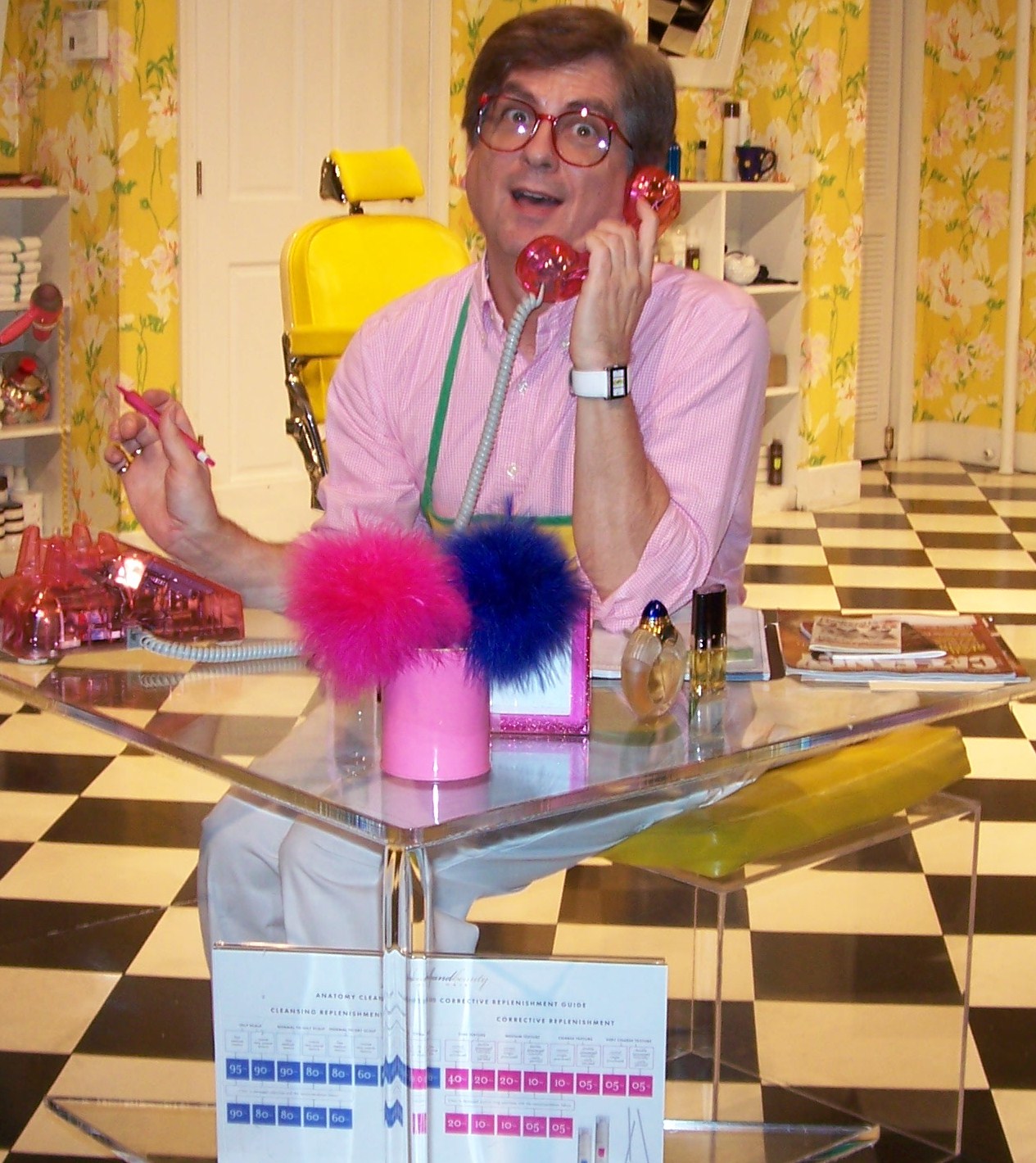
This is a selfie I took in the dressing room, of
the Mayor. I had to take a selfie because there
was scant photographic evidence I was in this
production. It became a running gag that I did
not appear in any rehearsal photos nor any
promotional materials nor any Instagram
entries. So if I wanted a picture of myself
as the Mayor, I had to take it myself.
I brought a few new touches to the role of the Mayor, but overall, my performance in Titan's Richard III was not one to celebrate.  It was the most limited amount of stage time I had experienced since playing a nameless fishseller in Volpone at the Shakespeare Theatre Company back in 1996.  I had to admit that I was working my way DOWN the ladder of importance, role-wise, in this play: from the costarring villain Buckingham in my first R3, to the satisfying supporting role of Clarence in my second R3, to the most recent endeavor playing that guy who is always hanging around on the sidelines.
The Duke of Clarence pleads innocence, in Hudson Warehouse's Richard III (my second). I would welcome the chance to play this guy again, as well as the Duke of Buckingham (from my first R3). I'm afraid I have no desire to revisit my third R3, in which I was a major disappointment to myself.
Another backstage selfie: Lord Brakenbury.
We were not a good match.
After our final performance, most of the cast remained behind to help with the show's strike, but I slipped out into the rain, to take the 15 minute walk from the theatre to the subway station.  As I trudged along, getting wetter and wetter ("My kingdom for an umbrella!"), I had to admit this was an ignominious but fitting end to a theatrical experience in which I had disappointed myself so thoroughly.  Not all artistic endeavors can be personal triumphs, but when it's a personal failure, the aftertaste is sour.  It will be a while before I attempt my fourth Richard III.


Wednesday, April 30, 2014

April's Fool

These pages have been dormant for many weeks, for a variety of reasons.  My life imploded a bit in recent months, and though I certainly could have made time to contribute to this site, I just was not inspired.  And who wants to read a blog which isn't inspired?
Here's the Fool's coxcomb.
And my apologies for being
absent for so long.

The biggest event in my recent life was surely my father's heart attack in January. 

Though he's well into his 80s, my dad has maintained perfect health throughout his life. 
Every doctor he's ever encountered has marveled that he will live beyond 100. He's never been overweight, and though he was a casual smoker in his young adulthood, he quit smoking over 50 years ago. His diet has been exemplary, especially since marrying my stepmother more than a decade ago, and his exercise routine includes cardio 5 times a week. He has aced every stress test ever given to him, and he hasn't had a drink in years.  In short, he was the last person ever thought to be at risk for a heart attack. So he had one.
It was a pretty major event, and Dad's overall good health helped him survive the damage to his heart.  By coincidence, I was scheduled to fly to North Carolina to visit him the day after his attack, so I was present for his hospital stay and his return home.  Even in those early days, his recovery seemed to pleasantly surprise his doctors (including the doc who missed Dad's clogged arteries all these years), and he is well on his way to recovery.  But this event severely rattled me and my family.  Having myself achieved half a century a while ago, I am now faced with the reality of Heart Disease in my Immediate Family.
Only a few weeks after my father's heart attack, my oldest and dearest friend Claudia lost her husband of 30 years.  I wrote about my Claud quite a while ago in these pages, and it was particularly frustrating for me to be a continent away while she went through this major trauma.
Not everything these past weeks has been traumatic.  I could claim that my own life has been filled with drama, but it's been the theatrical kind.  
Hudson Warehouse posters usually feature
the leading actors in evocative poses. My
little secret: I am determined to land on one
of their show posters in the future.

I spent most of February and March working on a production of Julius Caesar, produced by the group with which I have spent the past two summers, Hudson Warehouse.  After a decade working outside, this group snagged the opportunity to produce two shows indoors, and their first Shakespearean offering was that ode to the Ides of March.  I was very pleased to be offered the role of Casca, as the arc of the character was dramatic and satisfying.  The first time we see him, he displays a dry wit which sits well on me;  in his next scene, he is a bundle of nerves.  Hudson Warehouse has cast me very well in the past two seasons, for which I am grateful. 

Casca and Cassius face the elements.  For two summers,
the only complaint I had about working with Hudson Warehouse
was: the weather. Out in Riverside Park, we are at the mercy
of sudden rainstorms and blistering heat.
And I've been obnoxiously vocal about it all.
This year's indoor production included, you guessed it, a huge
rainstorm. Before my entrance, I sprayed water all over my hair,
face, and clothes, leaving me wetter than I had ever been in the
park.  I call this Payback Karma.
It was fun to watch Hudson Warehouse's team play around with lighting and sound effects, which are not possible when they work in Riverside Park.  I won't be working with HW this summer, as I attempt to get my personal finances in order, but I hope I'll be back with them again in the future.
Our Julius Caesar followed the historical account of his assassination, which reports that Casca delivered the first of 23 stab wounds. Our fight choreographer Jared Kirby (encouraged I think by our producer Susane Lee) gave the final stab to Casca as well.  And who was I to argue?
I had a week between closing Julius Caesar and the start of my next project, and I spent the time indulging in a couple of Broadway Shows.  I'll report on those separately in later pages.  On April Fool's Day, I began rehearsal for King Lear, in which I am, prophetically, playing the Fool.  I've worked with Titan Theatre Company before (in fact, they afforded me my NYC debut in Taming of the Shrew); this particular group of actors is an extremely strong one.  As I write this, we have opened the show to strong audiences and enthusiastic reaction.  Now that I'm back on The Blog, as it were, I hope to track our show's process in better detail.

Stay tuned for further reports, and welcome back!

Monday, July 29, 2013

Friday Dance Party: I'm Gonna Wash That Blood Right Outta My Hair

This week's Dance Party comes as my summer activities reach the two thirds point, and by activities, I mean the productions in Manhattan in which I am performing.  I am spending my summer acting up outside, in Riverside Park on the Upper West Side of Manhattan.  I worked with this scrappy little company, called Hudson Warehouse, last summer too, in a production of Richard III (I wrote about that experience here and here too).
The Hudson Warehouse loves blood, and even more, they love splattering it all over me.  In both Richard III (above) and in this year's King Lear, I had blood spouting out of various orifices.
This year, I agreed to perform in two of Hudson Warehouse's productions, back-to-back.  In one, The Three Musketeers, I will be playing a small, comic relief role, and we will open that swashbuckler Thursday. But up until yesterday, I have also been engulfed in the dark and hubristic world of King Lear. 
As King Lear's Earl of Gloucester, I had the privilege (if that's the word) of being on the receiving end of one of Shakespeare's most gruesome atrocities:  my eyes are gouged out.  Hudson Warehouse loves blood, and I was drenched in it every night, so much so that I had to dash home for a thorough shower to remove it from my hair and beard.  I think there's still some in my goatee.
King Lear was plagued with lousy weather (ironic, considering much of the play occurs during a storm).  During our final week of rehearsal, which included all our tech/dresses, we were continually aborted by rain.  I mean torrential downpours which kept the cast scurrying toward the nearest overhang, attempting to protect costumes from the gales of rain.
 
Our King Lear opened a month ago, on the opposite side of this
monument, against some substantial odds provided by Mother
Nature.  All rehearsals and performances happen in this
outside space.


Elegant 1980s clothes were not made to wash and wear.
Rainstorms plagued our rehearsal period.
The weather interfered so frequently that we added a rehearsal the afternoon of our preview performance, just so we could run through the full show once before audience members showed up.  And show up they did, with one of our biggest houses.  This preview was on the Fourth of July, and I wonder how many viewers actually meant to be there, and how many others had arrived early for the fireworks display which was to happen on the river once the sun went down.
This is the climactic showdown between my two sons, the legitimate Edgar who was tricked into being disowned, and the bastard Edmund who manipulated his father and brother.  This subplot concerning the Gloucester family runs parallel to the tale of Lear and his daughters.
We had plenty of fireworks on our own, mostly provided by our dynamic King Lear, David Brown.  David was fiery and robust in the role, and I loved playing our scenes "on the heath," when Lear has gone mad, and my character, Gloucester, has been brutally blinded and is wandering around trying to commit suicide.

Oh, but rain was not our only weather issue.  The New York area, as with most of the eastern seaboard, was hit with record breaking heat for days on end. 
With the heat index reaching triple digits, and humidity higher than the Empire State, we canceled two shows.  The Heat was the big news that week in New York City, and the Daily News picked up on our cancellation.  While we were all impressed that our King Lear received this publicity for NOT doing our show, I wondered aloud if we would ever get any press for actually DOING the show.  This comment was not met with much enthusiasm from the Hudson brass.
And in the end, Mother Nature had the last word.  We were to conclude our run yesterday, Sunday, but we were rained out.  Luckily, our Saturday night performance was one of our best, with a very full audience who were very appreciative.  Still, Closing Night Performances (like Opening Night ones) are special, and to be handed one retroactively made the experience feel a bit unfinished.

I did not feel a strong connection to my role of Gloucester when we started rehearsal, but I grew to love the scenes I shared with Jake Russo, above, who played my son Edgar.  I disown him; then, after my blinding, encounter him again as he is disguised as a bum.  The resulting scenes are among the most poignant in the Bard's canon, and I think we played them well.

What does any of this have to do with this week's Dance Party?  Our Friday night performance was also a good one, and it had an unexpected participant, at least for me. 
I've got something in my eye.

During the show, I made several loops around the monument to cross from stage right to stage left.  During one of those trips, I passed a charming family seated on the lawn, having a picnic.  The mother was hugely pregnant, and there was a husband and toddler there as well. Unfortunately, I had removed my contact lenses by then (I learned early on that I could not be wearing the lenses during my "blinding" scene, as copious amounts of blood squirted everywhere, and turned my contacts pink). 
I was pleased to work with Laura
Frye again; we appeared in Taming
of the Shrew a year ago. Go here for
that report.

So, everything was pretty much a blurr as I loped around the monument to make my final entrance.  I was wearing the sunglasses which my character wore after losing his eyes, and my shirt and face were covered in stage blood.


This spot below our playing space was a prime picnic spot.
On Friday, a Manhattan family spread out their blanket,
and listened to the performance of King Lear happening
on the cement stage above them.

I was set to ignore the family seated on the blanket enjoying the evening, but the mother piped up, "Hello, Gloucester!"  I was pretty impressed that she pegged my role from the blood and sunglasses, clearly she was up on her classical theatre.  I was to learn a moment later, from one of my castmates, that the woman on the blanket was Broadway headliner Kelli O'Hara.  In her honor, she stars in this week's Dance Party.
Kelli O'Hara has an exceptional ability to bring new life to older iconic roles.  The Pajama Game, Bells Are Ringing, Sunday in the Park with George, and of course South Pacific (above) have all been reinvigorated by her presence in their revivals. She can take an outrageously corny role such as Nellie Forbush and make you believe such a person actually exists.
Other than this momentary meeting in the park on Friday, I have never seen Kelli O'Hara live, but her performance in the hit revival of South Pacific has been preserved on DVD, which I own and enjoy. 
O'Hara has created her share of musical roles, notably in Light in the Piazza, for which she earned one of her four Tony nods.  Right before she recently withdrew from the theatrical scene to have her second child, she starred in the new musical adaptation of Far From Heaven (above).  She received glowing reviews during its Off-Broadway run;  if the show has a further life, she will surely be attached. 
Kelli was born and raised in Oklahoma (and trained by the same vocal coach who taught Kristin Chenoweth), which may give some clue as to how she can so thoroughly inhabit down-to-earth characters. 
Kelly O'Hara as the 50s suburban housewife
in Far From Heaven.

In this week's Dance Party, she attacks this well-known song so enthusiastically, you can't help but be won over.  If only I had been wearing my contacts last Friday night, I would surely have responded to her sweet greeting with an expression of my admiration of her work.  Perhaps this will do. 

Monday, December 31, 2012

2012: It's Not The Work. It's The Stairs.


I'm ending 2012 more upbeat than when I started.  Looking back, I've worked pretty hard this year.  Was anything gained?  Not sure. 
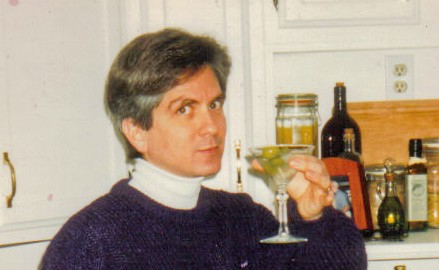
IIIIIIIIIIIIIIII'll drink to that.

But I am reminded of the old quip with which the great Elaine Stritch opened her one-woman show At Liberty.  "It's like the prostitute said," Stritch deadpanned in her signature rasp, "It's not the work.  It's the stairs."

It's the appropriate description of my life in 2012.
Both metaphorically and physically, I spent 2012 climbing stairs. This is a picture of the first of THREE flights of stairs which I climbed to do A Midsummer Night's Dream. The year proved to me that such climbing is necessary to progress artistically and professionally.
The year was defined by my learning to straddle life in two cities at once.  I have not perfected bi-urban living (a term I believe I coined, I hope it catches on), but I'm getting better at it.  The first months of the year, I was always eager to return to DC if I spent any more than a few days in NY. 
At least I never had to queue up outside, like these actors.  But
the AEA required EPA process, correctly nicknamed the Cattle
Call, is not for the feint of heart.

That feeling of unease in Manhattan was exacerbated by the fact that I spent the early months of 2012 attending Equity cattle calls, which always provide proof that my chosen career is not for sissies.  By my count, I attended more than 60 of these ego-busters in 2012.  No wonder I was usually glad to return to the security of the DC Branch.

As time went on, though, I became more comfortable in the Big Apple and by year's end, a curious change had occurred.  I now find that, if I spend more than four or five days in one city, I start to think about the other one.  I take this as a good sign.
I played Gremio in this production, which wins the award for the Largest Number of Different Rehearsal Spaces (six, by my count).  The final performance space was one of hundreds of Black Boxes in the city, with lousy/non-existent backstage area and primitive air conditioning.  The audience actually entered through the loading dock of this building, and as the location was in Queens, our audiences were not robust in numbers.  But I was treated very very well by Titan Theatre's brass, with whom I shared many mutual colleagues.  I will be working with them again, stay tuned.
Whether it's healthy or not, I almost always judge a year by the amount of work I achieved, and by that standard, I had a good first year in NY.  I snagged three very different Shakespearean productions, and while each had its stairs to climb, as it were, I came away from all three considering them successful, at least artistically. 
The "stairs" I had to climb with Richard III all had to do with our rehearsal process, which took place outside.  In July. I am never comfortable in extreme heat, so I never rehearsed without being wet and sticky.  But an interesting reversal happened once we opened.  Our evening performances in August were a joy to do, with audiences and actors alike sharing nature's elements.  R3 holds the distinction of being this year's show which I hated the most to rehearse, and the one which I loved the most to perform. 
The fact that I made no money from these three projects means that I must consider them only marginally successful, professionally. After all, this is my vocation, not my hobby.  But in each of the three projects, I climbed those metaphorical stairs and did the work.
A Midsummer Night's Dream ended my performance year.  I only wish I had felt better during its brief run.  I had a nasty cold and cough throughout our performances, which sapped a lot of the fun for me.  And the stairs here were not metaphorical, as the theatre, another Black Box with limited back stage, was a fourth-floor walk-up. 
The new year will begin in the plus column, as I will start a project tomorrow in DC which actually furnishes a little bit of money.  It will keep me in the DC Branch of my life, give or take a night or two here or there, until early March.  My current plan has me returning to NY in the spring, to play with some of my new NYC friends in another Shakespeare.  I'm betting that that show, and any others I snag in this new year, will require me to climb more stairs. 

I've never been involved in anything worthwhile which didn't require it. If you can coast through a project by staying on the ground floor, it's probably not worth the effort.   Gotta keep climbing those stairs.

Tuesday, September 4, 2012

Stratford Upon Hudson

All is calm on the south side of the monument.
But walk around the thing,
and you're in the middle of the Wars of the Roses.
We all consider Labor Day to signal the end of summer (except the meteorologists, who know otherwise), and by coincidence or divine providence, my final summer project also ended with Labor Day.
Our Richard III began with a scene which is not in the play. This moment from Henry VI, Part 3, was interpolated into our production of R3, to make it clear that the Yorkists achieved the English throne through bloody actions. David DeWitt delivered a majestic deathbed speech as the last Lancaster king. While this moment clarifies how Richard's family won the throne, it also robs the audience of any surprise regarding the character of Richard.  In the first 2 minutes of the play, we know he is a cold-blooded killer, so when he orders the murder of his own brother, and his own nephews, nobody's surprised.
Richard III, about which I wrote a few weeks ago, provided the bookend to my earlier summer gig, Taming of the Shrew, which opened on Memorial Day, usually considered the beginning of summer. 
The role of Lady Anne is sometimes thought
unplayable, as it contains one of the most
outrageous reversals in the canon.
Amanda Renee Baker made
me believe it.

Other than those two gigs, not much happened in between, but I'm not complaining.  It's been years since I did two shows in a single summer, my career does not run that way, and the symmetry of opening a show on summer's opening weekend, and closing one on summer's final weekend, is kind of fun.
Hastings, Buckingham, and Rivers. No, it's not a law firm, they are all victims of our anti-hero.
Since it's so freshly minted, it's only natural that R3 is uppermost in my thoughts at the moment. 
Our dressing room was also the audience's lobby. We
dropped trou as the audience exited.

We had terrific weather for our run, interrupted only twice by rain.  Most evenings were balmy with a nice breeze coming off the river, and I was very surprised that our audiences sat still for two hours, on the hard cement steps which served as our auditorium. 

Valerie O'Hara's Duchess of York recalled the Queen Mum,
and Bruce Barton's Archbishop wins for Best Voice in Show.


We played by natural light, and when we opened a month ago, Mother Nature proved a good designer and technician. 

I was not fond of the sun setting in my face, but can't deny
it looks swell.

In those first weeks, we had a warm sunset in our faces through much of the show, and as the sun finally disappeared and darkness set in, the ghosts of Richard's victims were just coming out to haunt.  Following that scene, the big battle took place, and the play was done.
Richard is haunted by the ghosts of his victims, in a scene which is enhanced by the natural dusk.
Nick DeVita's Catesby handled several of the props which
enhanced the show, including the one and only table.
"You can't go to war without a table," he quipped.

But it's late August, so the sun's habits were changing drastically, and the last week or so, darkness set in about half-way through our performance.  Lit only by three streetlamps (one of which turned itself on and off at irregular intervals), some scenes played better than others. 
The Royals bask in sunlight which is all-too-fleeting.

This is the first year Hudson Warehouse has performed this late in the season, and we were at the mercy of the significant change in the natural light which happens in late August.  Personally, I could tell a difference in the way the Mayor's scenes, which are comedic, were playing. 
The Mayor begs Richard to assume the throne.

When there was lots of light, there were lots of laughs;  when the light was dim, so was the laughter.  (This is not news to anybody: comic moments usually come off better in bright light.)

No matter the lighting, I had a fun time with the Mayor.  Initially, I was cast only in this small role, but less than a week before we began rehearsal, the gent scheduled to play the Duke of Clarence bowed out, and I jumped at the chance to play Richard's hapless brother. 
Clarence ascends to the Tower. He won't
emerge. But I'll get a new audition piece.

I was pleased that I could play this largely dramatic role, in addition to the comical Mayor;  it gave me much more to do, and provided a nice contrast.  And Clarence's famous "dream speech," which was truncated in our production but I hope still effective, is a great audition piece for me in the future.

Before Richard III, I had performed outside only once, in a production of Much Ado About Nothing in South Carolina, many years ago. 
Ryan Ervin's Brakenbury owned those steps.

That show was also performed in a space built for non-theatrical endeavors.  It became one of the charms of our R3 that our space was not secured from outside forces. 


This sight gag was enjoyed by the first row
or two. But Vince Phillip's
ferocious performance was enjoyed by all.

Early on, we had a drunken fool interrupt a scene, and later, when our houses were quite full, I occasionally collided with an audience member during my Big Death Scene.  (That sequence became my favorite moment in the show.)
The Money Shot. Clarence's death became my favorite moment in the show. There were more gruesome murders to come. "You can't do Richard III without blood," someone said, but you actually can.  In Shakespeare's original text, only one murder occurs onstage, that of Richard himself.  All other assassinations occur off stage. Nowadays, though, we won't accept such delicacy.  We want to see all the blood and guts, which caused laundry concerns, as all the men were in business suits. The solution was to have each victim abandon his jacket for his death scene, which caused our Buckingham, Timothy Reynolds, to advise, "Keep your coat on, and you'll be safe."
Throughout our run, I was pleasantly surprised that our audiences seemed to be following the story. 

Mad Margaret, Dowager Queen of England, is sometimes removed from the show completely, as she does not serve the foreword thrust of the action (the Duchess of York is also sometimes dumped). Margie Catov's curses on the Yorks, though fierce, could not keep Drew Rosene, at left, from dozing off. He would become the uncrowned Edward V, before falling victim to his Uncle Dickie.

Matt Ebling as the young Duke of York provided some comic relief.

Shakespeare's history plays are notoriously hard for American audiences to follow, we can't tell Henry VI from Henry VII, even if the Brits can.  And the original text is Shakespeare's second longest play (right behind Hamlet), so cutting this monster down to two hours was a feat. 


George Wells as Richmond, at left, remains on the outskirts of the play for two hours, then steps up to deliver a call-to-arms which rivals Henry V's. Once everybody's dead, he will ascend the throne as that first and most buff Tudor king, Henry VII.
 
Our director, at right, also adapted the script. And played
the part of Lord Hastings. And is the group's
Producing Artistic Director. And he bagged all the blood.

The man with the buzz saw was our director, Nicholas Martin-Smith, who mercilessly cut the text;  he didn't bother much with maintaining the poetry, his intention seemed to be to tell the story cleanly and efficiently.  So, lots of embroidery disappeared, but as it turns out, you CAN see the forest, if you cut down enough trees.
This is the last we see of Edward IV, whose death opens the floodgates.
 
Myles and Ian reminded me of Cruella DeVil's henchmen,
Horace and Jasper. They enjoyed killing me
 and everyone else.

Fall will soon be upon us, and with it, my next project, yet another Shakespearean effort, which begins rehearsal in late October.  Between now and then, I'll be spending more time in my DC branch, which I have ignored through most of this Shakespearean Summer. Hmm: "My Shakespearean Summer"- could be a chapter in my memoir. Stay tuned.
The final image of R3, as the carnage of the Wars of the Roses ends. There is something very right, when scenes which Shakespeare placed outside are actually performed outside.