Sunday, September 5, 2010

Friendly Fire


It's been an interesting week, as I fill time while I remain "between engagements, " a euphemism for Shit Outta Work. The new theatrical season in DC is just getting started, with many if not most of the area theatres opening shows this week or next. Everybody I know seems to be working on something exciting.

My lovely Washington Stage Guild is one of the few locals not opening a show soon; the first show of their season will appear in late October. The WSG held two days of union-mandated auditions this week, and I volunteered to help at the front desk. While other philanthropists volunteer to feed the homeless, I volunteer to usher actors in and out of the audition chamber. Maybe it helps actors get jobs. I'm that kind of guy.

The Stage Guilders were holding these auditions mostly to refresh their files, but my old friend Steve Carpenter, who will be directing half of the company's shows this year, was actively looking to cast two roles in the season opener, Darwin in Malibu. I bulldozed Steve into letting me read for one of the roles, though he freely admitted that he did not see me in the part. I greatly appreciate that kind of honesty from a director (even as I hate to hear it), as too many directors don't tell the truth to actors, fearing that they may hurt some feelings. And I went into the audition having known Steve for 17 years, so was pretty sure I would not be changing his mind.

This week's experience started me thinking about the weird relationship which actors often have with directors who are also their friends. That relationship can develop one of two ways. First, a director may hire an actor who is unknown to him, or is known to him only slightly. Sometimes, through the course of working together, that director and actor can become personal friends (that's happened to me many times). But when that director is again auditioning that friend, the parameters have already been set in place, so there isn't much awkwardness if the actor-friend is not hired by the director-friend. It's all part of the accepted structure of the relationship.

But here's a second scenario. Suppose the actor and director were initially peers. This is exactly what happened the very first time I auditioned for Steve. I had arrived at grad school in the fall of 1993, and Steve was in the MFA class ahead of me. We were a small crowd, and as usually happens with MFA actors, we all became very close very quickly. Though Steve was in the program as an actor, he was stretching his directorial muscles as well. After knowing him for several months as a colleague and friend, I auditioned for his production of Lee Blesssing's hostage drama, Two Rooms. Now that I think of it, I had already been appearing on stage for about 20 years, and in all that time, whenever I had auditioned for a director who was first a friend, I had been cast. Let's not delve too deeply into that; if my friend the director cast me because I was his friend, rather than for my ability, I don't think I want to know about it.

In this instance, with Steve's production of Two Rooms, I did not get the part. It was the first time I felt that palpable awkwardness from being rejected by someone I considered an equal.

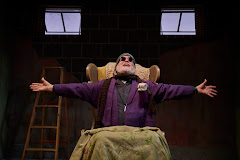
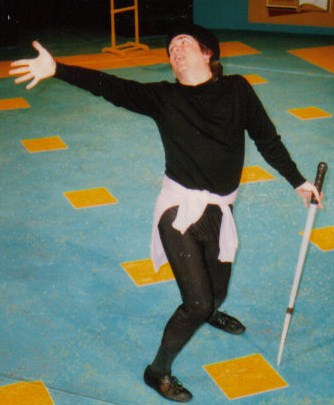
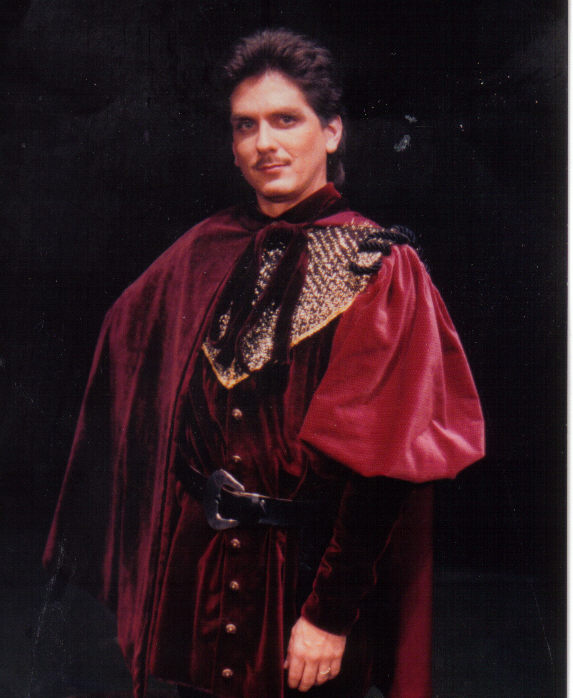
The feeling was yucky on both sides I'm sure. I have come to admire Steve's directorial work greatly, and he is responsible for placing me in two of my favorite projects in DC theaters. Back in '03, Steve cast me in Thief River, where I played two wildly different characters, including this dude (I really rocked that head scarf, didn't I?):

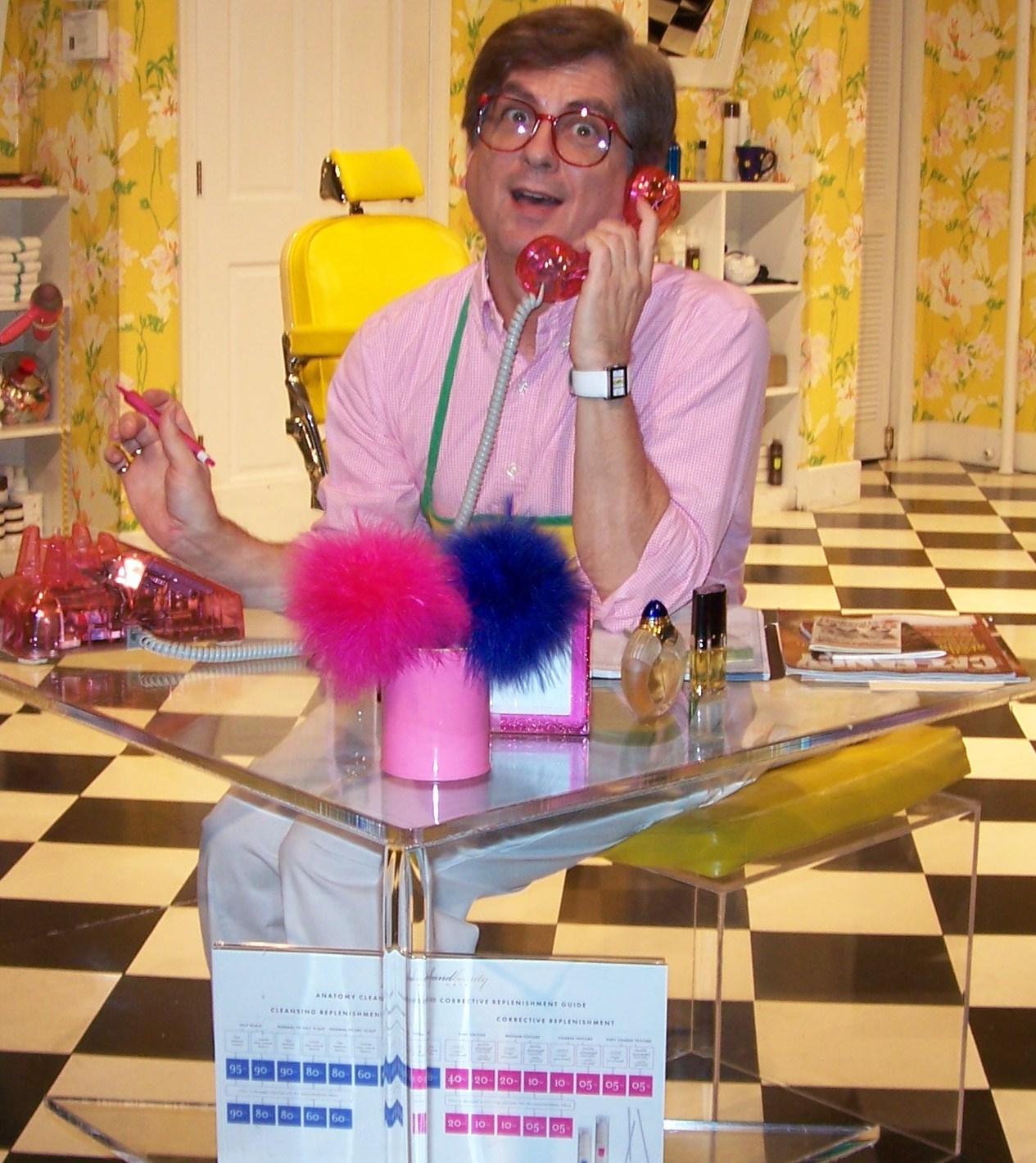
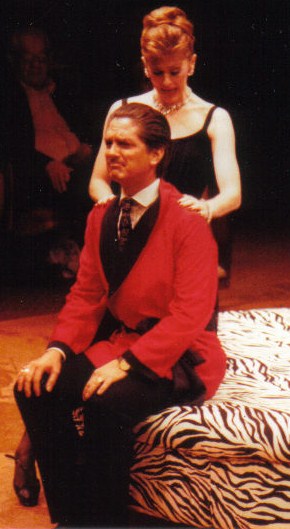
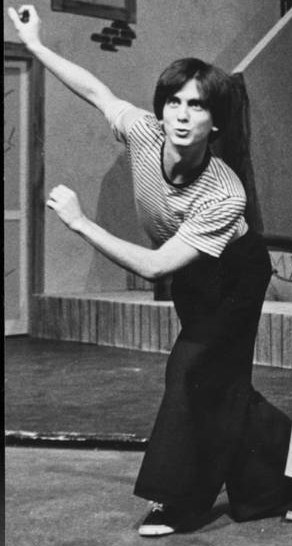
The second role Steve placed in my hands in Thief River was much more comfortable for me. And I got to sit on the floor:


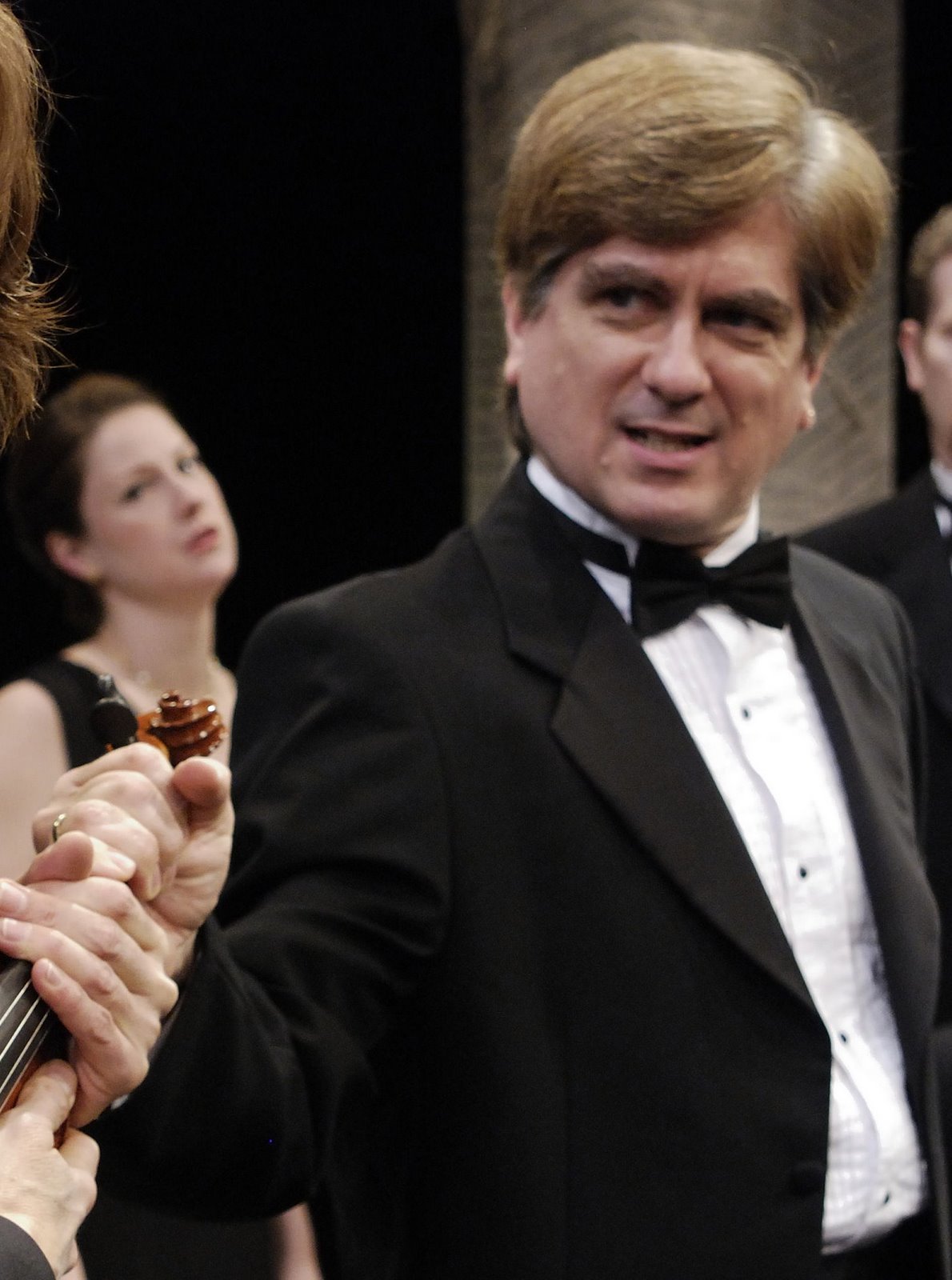
Three years ago, Steve invited me to participate in a Stage Guild production of Opus, playing the slightly off-balanced viola player dismissed from a famous string quartet. During the casting process, I felt the role Steve asked me to play was not as good a fit for me as the uptight, priggish violinist. Steve respected my opinion enough to consider my suggestion that I play the other part, but he returned to tell me that whenever he heard Dorian (the violist) speak, it was in my voice. That is just about the most complimentary thing any director has ever said to me, and Steve was very smart to say it. I stopped lobbying for the other role, and ended up having a great success playing the guy Steve wanted me to play all along.


Which brings me back to this week's audition for Darwin in Malibu. Because Steve respects me as an actor and as a friend, he was not going to say no when I demanded an audition, for a role he could not see me in. The reading itself went swell, just as I wanted, and Steve was gracious enough to thank me for my efforts. The role for which I read is written in my cadence and rhythm, so I may have come upon some nice material to use for audition purposes in the future, though for now, my audition did not lead to an offer of employment.

I don't believe Steve makes many mistakes regarding the casting of his shows, and I have none of the awkward feelings this time that I had 17 years ago at the University of South Carolina. Steve's production of Darwin in Malibu will be terrific, I have no doubt. I actually mean that, even as I would be a fool to say otherwise, since he occasionally reads these pages. He and I will work together again one day, I'm certain.

But I have to confess this. Just for a very quick moment this week, that old awkwardness resurfaced. After my reading went exceedingly well and I performed exactly as I had hoped, there was a nano-second of that old feeling I had first experienced 17 years ago in South Carolina. No one was to blame, and it was only a glancing blow, but just for a moment, I felt myself nicked by friendly fire.

Friday, September 3, 2010

Friday Dance Party: Emmy Loser


Last week's Emmy Awards only brought a few surprises, and the star of this week's Dance Party wasn't one of them. Everybody predicted he'd lose, and he did. Deservedly so, but more on that in a mo'. I suppose the biggest shocker was Edie Falco's win as Best Actress in a Comedy, even she herself called it "ridiculous." I've never seen her show, but it is apparently darker than the far side of the moon, so perhaps calling it a comedy in the first place is a misnomer. With her win for Nurse Jackie, she becomes the only actress to have won Emmys for leading roles in both Drama and Comedy categories.


I was glad to see Mad Men continue its reign as Best Drama, as I believe it is. Their cast, though, has a heck of a time at the Emmys. I really thought John Hamm should have picked up the trophy this year, as his character's veneer was finally shattered in the episode he submitted, in which his wife discovered his true past (January Jones did great work in that episode as well, but I don't expect her ever to win; the performance is just too icy and unlikeable). I have thought for years that the Supporting Awards should go to John Slattery and Christina Hendricks for their work on Mad Men, but they were shut out again (if you are interested, read my love letter to Mad Men, written after its first season). I hear Bryan Batt is back for this season's finale, and that's terrific news.


I was pleased as punch that Jim Parsons finally won for his hilarious work on The Big Bang Theory, though the others on the show are always overlooked, as is the show itself. Seems the academy now considers the 3-camera sitcom, shot in front of an audience, to be old-fashioned. Desi Arnaz, who helped invent the formula (and in doing so, helped invent the rerun) must be spinning in his bongos. Still, I have no problem with Modern Family winning, a show I came to late, but of which now I can't get enough. One of their actors, Eric Stonestreet, won the Supporting Actor Emmy, beating most of his castmates, including the gent I wished had won, Ty Burrell. His performance as the clueless father is priceless.


As for the Emmy broadcast itself, well, everybody seems to think Jimmy Fallon hit a home run, so I won't disagree. He has a disarming charm, right on the edge of nerdy but never really crossing over, and is fun to watch. I have to say, I was not a fan of the running gag with the guitar, which I hear is also a set piece on his late night show. Frankly, I prefer my Neil Patrick Harris as host; he has a smoother delivery and is a better showman. Perhaps it's apples and oranges.

As I mentioned, no one was really surprised that Matthew Morrison did not take home the prize as Best Actor in a Comedy. His show, Glee, is the breakout hit of the season, but try as I might (and I have tried on numerous occasions), I just cannot become a Gleek. The show is wildly uneven, and a wonderful moment is likely to be followed by another of maddening dreck. I am glad Jane Lynch won, which was totally expected and deserved (Lynch appears in her own Dance Party here. She does not get the chance to dance much on Glee, which is just as well, since she has two left feet. But this clip illustrates the fun she is having on the show, and I promise, it is NOT the clip of her impersonation of Madonna in "Vogue." That was just unnerving.)

I doubt Morrison is complaining much about going home a loser, as he's having a banner year. After years of stage work, in the chorus and then leading man types, he has hit it huge with Glee. He is such a magnet that he was invited to perform at last June's Tony Awards, though he hadn't gone near a stage all year. This week's Dance Party is that performance; the guy certainly is game, but so many months on a TV set left him a bit out of shape: you can hear him panting during some of the more athletic moments. Yep, he used to be an actor who could dance and sing with such energy 8 shows a week, but perhaps no more. Regardless, it's an enjoyable clip (and when it's time for the money note, Matt totally rips into it). So, here is one of this week's Emmy losers:


Friday, August 27, 2010

Friday Dance Party: Invitation to the Dance


This week's Dance Party stars Gene Kelly, who had a birthday this week, or would have, had he not been dead. Everybody knows Kelly was one of the biggest musical stars of the 40s and 50s. His masculine athleticism set him apart from the other dancing superstar of the era, Fred Astaire. While Fred's work was sophisticated, elegant, and a bit ethereal, Gene's was aggressive, powerful, and more sensual. I doubt the two were ever up for the same part, though Kelly was supposed to play opposite Judy Garland in Easter Parade before he broke his ankle and was replaced by Astaire. How different that film would have been with Gene in the lead!

Astaire had the slender, willowy frame of the aesthete, while Kelly was muscular and earthy. Gene learned early in his career that his physique was his fortune, and he was usually dancing in form-fitting costumes which accentuated the use of his body as a tool (Fred, on the other hand, always seemed to leave his gangly body behind when he danced).


Just take a look at the costume Kelly wore in a fantasy sequence in The Pirate. I bet that closet queen Vincent Minnelli had a hand in putting Gene in hotpants and a muscle shirt; this guy would have been at home dancing on a box at a disco in West Hollywood:


There are dozens and dozens of clips out there, of Gene Kelly and his work. He danced with all the big stars of the day (go here to see a very sweet clip with Julie Andrews in a previous Dance Party), but I find it fascinating that his creativity was not limited to human dance partners. When left to his own devices, Gene came up with some of the most unusual dance routines in film history. He danced on skates, and with a mop, a garbage can lid, a goat, and his own reflection (and of course, in one little-known clip, he does some hoofing in a rainstorm).


He danced with the cartoon mouse Jerry, as well as a host of other hand-drawn partners, in his dialogue-free masterpiece, Invitation To The Dance, released in 1956. That film flopped but is now considered an innovative gem; it provided Walt Disney with the inspiration for Mary Poppins.

This week's Dance Party comes from 1950's Summer Stock. In it, Gene Kelly uses a creaky floorboard and a ripped newspaper as both percussion and dance partner. Happy birthday, Gene!

Sunday, August 22, 2010

Twinsies For Keepsies

The Creative Arts Emmy Awards were held last night, a week before the higher-profile Primetime Emmys. Kathy Griffin calls these awards the Shmemmys, and she's allowed to, having won two. She lost her award last night to something called Jamie Oliver's Food Revolution. Isn't that the show when the Brit goes to the fattest town in America (you mean there's only one?) and gets them all to lose weight?

Jane Lynch, currently red hot for her role on Glee (and star of the Dance Party here), was nominated for a guest shot on Two and a Half Men, a performance which lasted about two and a half minutes. She lost her award to Betty White. Betty's hosting turn on Saturday Night Live gave her a seventh Emmy, which still does not give her the record (Cloris Leachman still holds the record for performers, at nine). Did you know White won the very first Emmy Award for Best Actress in a Comedy Series (Life With Elizabeth, in 1952)? She is also the only woman to win an Emmy as Best Game Show Host (in 1983, for something called Just Men! Does anybody remember that one?). Everybody knows White is on a surging winning streak lately, but she was derailed a bit last night. Yes, she won for SNL, but her commercial for Snickers lost the Emmy to the Old Spice guy on the horse. Yes, even commercials win Emmys.


John Lithgow, one of my favorite actors who always gives a reliable performance, picked up another award (he used to win big time for 3rd Rock From the Sun) for a guest arc on Dexter, a show I have never seen. It's on Showtime, which I don't get, and apparently, neither does Lithgow. He pulled a Denzel during his acceptance speech and thanked HBO, who has nothing to do with his program. At this year's Tony Awards, Denzel Washington won for Fences, and could not come up with the name of the organization who was giving him the prize.


And speaking of the Tonys, my protege Neil Patrick Harris was probably the big winner last night. He's been nominated for Emmys numerous times for his role on How I Met Your Mother, but he's never won. This year, in addition to being nominated again for that performance, he also got a nod (and last night, won) for his guest appearance on Glee. But here's the kicker. A while back I lamented that Neil was not able to be recognized for his superior hosting skills on the Tony and Emmy Awards shows of 2009. The TV academy eliminated the category which comprises those kinds of performances. Instead, they clump the host of such shows with the producers, so when, say, the Oscar broadcast wins an Emmy, the host(s) pick up a trophy, too. So, the host is inexorably linked to the show; if the host's performance is better than the broadcast in which it appears (as often happens), he's shit outta luck. This is the only instance in which this happens at the Emmys: hosts of game shows, talk shows, and reality shows are all judged independantly from the programs in which they appear. Jeff Probst wins the Emmy in his category repeatedly, though the show he hosts, Survivor, never does.

The 2009 Tony Awards broadcast was indeed nominated this year, for Best Special Class Program, but the nominators goofed and left Harris off the paperwork. If the error had not been spotted by an eagle eye at the LA Times, our Neil would never have known that he should have won his second Emmy last night, as in fact, the Tony Awards won that category. The error was corrected a couple of weeks ago, so NPH (as he's affectionately known around here) picked up a twin trophy. Just in time to decorate his new nursery, as he and his partner are having twins, by surrogate, due in the fall.


That's two wins out of three nominations in a single year, we'll find out next week if he wins his third Emmy. That will be doubtful, as his category includes the little gay boy from Glee (whose episode is double the length of everyone else's, and includes some dramatical moments) and all those terrific actors from Modern Family.


But I'll bet NPH is pretty satisfied with his twin Emmys won last night, further proof that an openly gay star can continue a career after revealing his sexual orientation.

Friday, August 20, 2010

Friday Dance Party: Miles From Her Own Little Corner

This week's Dance Party celebrates one of the very few successful movie musicals of the 1980s. Victor/Victoria was the brainchild of Blake Edwards, who was shopping around for a musical to showcase his wife at the time, Julie Andrews. Edwards was shrewd to take a lesson from Bob Fosse's landmark film of Cabaret: modern audiences are far more likely to accept singing actors if those actors are onstage at the time. Fosse famously jettisoned about half the original Cabaret's score, all "book" numbers, and showcased the songs performed onstage (and added a few new ones). I'm sure Cabaret will show up on the Dance Party eventually, since it is one of my favorite pieces of theatre or film. But back to Blake Edwards. He adapted a German film from 1933, Viktor und Viktoria, enlisted Henry Mancini and Leslie Bricusse to write a brand new score, and surrounded his wife/star with a couple of top-notch supporting players. Broadway veteran Robert Preston had a ball playing the gay best friend, and James Garner was a believable hoot as the manly gangster who can't quite understand why he is falling for a man who dresses in women's clothes. Victor/Victoria is a fun treatise on sexual identity, and is definitely worth a look if you have never seen it. There is also a DVD of the stage adaptation out there, filmed before a live audience when Andrews played the role on Broadway in 1995, but that video reflects a bloated stage show which did not adapt all that well to the stage. Stick to the film version. When you see it, you will be duly impressed with an over-the-top, hilarious performance by the star of this week's Dance Party, Lesley Ann Warren. Victor/Victoria put Warren back on the map, so to speak, as she had been floundering for several years, attempting to outgrow her sugary ingenue identity formed in the 1960s. She got her start on Broadway, appearing in 110 in the Shade, and she received nice notices for her performance in the notorious flop, Drat! The Cat! She tested for the role of Liesl when The Sound of Music was being filmed, a role she obviously lost. But in 1965, she became perennially attached to the Rogers and Hammerstein oeuvre when she appeared in the first television remake of their Cinderella. The original Cinderella, as everybody knows or ought to, was Julie Andrews, who performed the role once, in 1957, on live television. The show was preserved on lousy kinescope, so was unseen by the public for close to 50 years; it has since been cleaned up a bit and released on DVD. A clip from that production appears on this Dance Party. But when my generation thinks of Cinderella, we think of Lesley Ann Warren. Her version was preserved on videotape and rerun many times, in addition to eventually being released on VHS and DVD. That 1965 performance informed Warren's career for many years. Soon after, Walt Disney paired her with John Davidson in several musical films, one of which graced the Dance Party a while ago. Go here for that swell dance number pitting Lesley Ann against Goldie Hawn, of all people. Warren had a difficult time outgrowing the double-whammy of Cinderella and Disney, and as she matured, she had trouble graduating to more mature roles. She played Scarlett in a disastrous attempt to musicalize Gone With the Wind, and she spent one season on Mission: Impossible, during the period when she was billing herself as simply Lesley Warren. I guess she hoped that it was the "Ann" which was holding her back. She has long since regained her three names, and is now a respected character actress, with many recurring roles on many TV series to her credit. But it was this performance in Victor/Victoria which finally proved she had outgrown Disney and R&H. The character is a loud, screechy mobster moll, with that New Yoik accent we always expect. I may be able to pinpoint the exact moment in this film when Cinderella was finally put to rest: "Keeeeeng!" Warren's Norma Cassidy whines through a closed door,"I'm hoyneeeeeeee!" Bet Uncle Walt rolled over on that one, but the Academy did not; Warren was nominated for the Best Supporting Actress Oscar for her performance. As you enjoy Leslie Ann Warren's big number from Victor/Victoria, it's fun to note that this sophisticated film, full of naughty double entendres and adult innuendos, stars the two actresses who each created an enduring, almost iconic, performance as the wholesome Cinderella . 
Lesley Ann Warren turned 64 this week.