Don't recognize this guy's name? I didn't, but I recognize his most famous work. Barnes had a dual career; not only was he an artist, he was also (are you ready?) a professional football player. He went to college to study art, and ended up playing ball for the Denver Broncos among other pro teams. He used to sketch the defensive lineman who would be opposing him each week. His most famous work was featured in the credits of the 70s sitcom Good Times; it also appeared on an album by Marvin Gaye. Farewell to the artist of The Sugar Shack.
I drove back down to North Carolina this week, in time for a mini-family reunion and to catch a couple of swells before their shows closed. But before leaving DC, I popped over to see Studio Theatre's latest Stoppard rant, Rock 'n' Roll. They did a bang-up Invention of Love a long while back, and since then, have become one of the leading interpreters of Stoppard's plays in the area. I was interested to see my young SSMT cohort (that's Shenandoah Summer Music Theatre, a stock company where I work on occasion) Atom Pribila, who snagged a role in the show, and has been imported from New York by Studio. The show is presented in the round. Atom makes a big splash in the first moments of the play, leaping onto a wall and blowing a pipe in a drug-induced vision of one of the major characters. Wouldn't you know, I happened to be sitting in the one section of the theatre to which Atom's back was turned, so I did not get a good look at his brief performance. (Our section DID get a good look at his bum, though; during his crouching on the wall, his pants slipped below the equator. So we got our own treat.)
Otherwise, I had no trouble at all with the circular staging, which brought the story right into our laps. Ted van Griethuysen, playing a die-hard Communist professor, has never made a wrong move in any piece in which I have seen him, and here, he makes every explosive argument logical and clear. Lisa Harrow, whom I just saw emote the pants off Ion's mother at The Shakespeare Theatre, delivers a, pardon the pun, harrowing portrayal of dying wife Eleanor. This performance was so intricately nuanced that I could hardly stand it, having had some personal experience with breast cancer death. Her very specific, unforgettable portrayal of Eleanor gave me trouble in Rock 'n' Roll's second act, in which the actress plays her own daughter as an adult. The problem here was mine, not the actress's; Harrow's scenes with Ted, as husband and wife, were so painfully effective that I had real trouble in Act II, in which the same actors played father and daughter. I'm a bit embarrassed that such a cosmetic aspect of a production would throw me, but it did. Stafford Clark-Price, who is new to me, was quite wonderful in the central role of Jan (he's been getting a bit of flack elsewhere for delivering a non-specific performance, but I had no such trouble.)
Back in Asheville, I caught NC Stage's closing performance of ANumber, a densely constructed one-act by Caryl Churchill. This two-hander starred Charlie Flynn-McIver, whom I had previously admired in Stones in His Pockets, and a gent named Graham Smith, who is new to me. Both actors were terrific, as was the production as a whole, all about the possible repercussions of human cloning. The company's playing area was converted so the show could be performed in the round, an unusual configuration for NC Stage, but I thought very effective. This tightly acted piece benefited from being placed so close to the audience. Coincidentally, the onlookers included a handful of folks from my recent experience with Rosencrantz andGuildenstern Are Dead, so I had some fun catching up on everybody's news. That's really the reason we go to the theatre, isn't it? To catch up on everybody's news?
Even more coincidentally, I sat next to an actor I saw just the day before in Art: Scott Treadway, one of the honchos at Flat Rock Playhouse. (Scott was also in that Stones in HisPockets I mentioned earlier; the theatrical community in this area is very close-knit.) I was glad to get the opportunity to let Scott know how hilarious his production of Art had been. I've seen the show more than a few times over the years, as it's frequently produced on regional stages; in fact, I saw the original Broadway production about two years into its run. By then, the headliners were Alan Alda and George Wendt, but Billy Munoz and Damian Duke Domingue, who played the same roles at Flat Rock, were much more entertaining. This was the funniest production of the play I have seen, and also the most clear. The repartee among the guys morphed from discussions about art to the more substantial topics of the meaning, the necessity, and the boundaries of friendship. I understand the three actors, who all work at Flat Rock Playhouse in various other capacities, are great friends, and it showed.
Working with your friends...that's why we do it, isn't it?
...an occasional series of stories which recently caught my eye...
You can find someone doing something stupid anywhere, anytime, but this is one of the best in recent memory. I'm sure everybody recalls this idiotic woman, who cheerfully climbed into the bear pit at the Berlin zoo to play with the fully grown polar bears during feeding time. She was astonished, I suppose, when her projected playmate, Knut, mauled her. Was this woman drunk? Intellectually impaired? Just looking for attention? The only real problem I have with this story was its conclusion; zoo caretakers hauled the stupid cow out of the pit and saved her life.
I'm with the bear on this one.
Here's another, sadder story which causes the head to itch. Last week, George Zinkhan, a mild-mannered professor of Business and Marketing at the University of Georgia, drove his two children, aged 8 and 10, to a party being attended by his wife. He left the kids in the car while he opened fire on his spouse, killing her and two others, before returning to the car and driving off with his kids. He went to a neighbor's house and asked if the children could be left there for a while, then disappeared. He's still at large, though his jeep was found in a ditch. This kind of violence is nothing new these days, but what caught my eye was this: the party was being given by the volunteers of the local community theatre, where the wife was the president and leading actress. (The other two fatalities were the guys who handled most of the tech for the group.) As I've written previously, I spent a good bit of time working in community theatre in Los Angeles, and without a doubt, I can imagine someone wanting to kill the president of that group, but I still feel for this troop. How are these poor schnooks at the Town and Gown Players in Athens, GA, going to put on their plays without tech?
The Washington Post yesterday mentioned a sign of the current times. At a State Department reception Thursday night, before Hillary Clinton began shaking hands along the receiving line, everyone present was offered hand sanitizer.
Finally, it looks like the infamous Glory Days may be getting some respect. I wrote about the show during its premiere at Signature Theatre a year ago, where it was successful enough for some foolish producers to transfer the piece, with no retooling, to Broadway. It played 17 preview performances to lackluster houses, then closed after its Opening Night, an extremely rare occurrence for a musical these days. It was ruled ineligible for Tony Award consideration due to its short life. But a year later, the show is being resurrected in Tokyo, and will star Japanese recording group Attack All Around. Though this production will be in Japanese, it could jumpstart interest in the show here. Though I disliked it (or rather, didn't quite get it), it has a few pluses. The show requires only four teen-age actors, one set, and a small rock band. I can see it having an afterlife in high schools and college drama programs. The only problem here: the show's cast consists of four BOYS; everybody knows drama departments in schools are overrun with teen aged GIRLS.
One of the pioneers of the Lindy Hop in the 1930s and '40s, Frankie "Musclehead" Manning was a featured dancer at Harlem's Savoy Ballroom when he invented his signature "airstep move," in which his partner was tossed into the air, landing on the beat. It was the first step in the evolution of the Lindy Hop, an exhilarating, acrobatic swing dance which became the rage in pre-World War II dance clubs. Many of the moves are preserved in this week's Dance Party, from 1941's Hellzapoppin'.
As be-bop jazz, and later rock-and-roll, became popular, Manning left the business and worked 30 years as a clerk at the Post Office. His dance career revived in the 80s, and in 1989, he won the Tony for his choreography of Black andBlue. He taught Denzel Washington the Lindy Hop for Malcolm X (the dance takes its name from a dancer's exclamation, "We Flyin' like Lindy!", a reference to aviator Charles Lindbergh), and he choreographed for Alvin Ailey and other dance ensembles. This clip is a terrific example of the exuberance which accompanies the dance, as the couples propel each other into the air, over the back, through the legs, and into any other available space between partners. Manning is the dancer in overalls who gets kicked in the butt by his partner:
Frankie "Musclehead" Manning died this week at age 94.
The last day or so, I've been thinking about a coincidence. The same weekend during which I was invited to perform one of the most famous sidekick roles in American Musical Theatre, Beatrice Arthur died. As I previously wrote, before Arthur was a TV star, she originated memorable roles in two iconic musicals, Fiddler on the Roof and Mame. In the latter, she won the Tony Award, and created what may be the finest sidekick ever to show up on Broadway.
The sidekick has a glorious history in the American Musical Theatre, and I've been lucky enough to play a couple. At Shenandoah Summer Music Theatre, for example, I played sidekick "Jeff" to leading man "Tommy" in Brigadoon, one of the chestnuts of the canon. (In those older shows, the leading man rarely had any laughs, so the sidekick got them.) I have a deep respect for the sidekick, and Bea Arthur's performance as Vera Charles in Mame was one of the true greats.
I think the mark of a great sidekick role comes during the moments when both the leading player and the best friend (the sidekick seems always to be a BFF) are onstage and interacting together. The clip below proves the point. During one of the Tony Award shows which Angela Lansbury hosted, she reunited with Bea Arthur to recreate their showstopping duet from Mame.
Tonight, in fact just a few moments ago, the lights of Broadway's marquees were dimmed for a minute, to commemorate Beatrice Arthur. That honor is reserved for those who have made a distinct, lasting contribution to the American Theatre. In Arthur's case, that contribution included the creation of one of the most memorable sidekicks ever:
I admit to being sidelined a bit by the death of Beatrice Arthur, about which I previously rambled. It made the past weekend a sorrowful one, but I also received a call which cheered me up considerably. Warner Crocker, artistic director of Wayside Theatre in Virginia (and author of a blog which mixes the theatrical with the technical, as Warner is both a stage director and a techno-geek), surprised the heck out of me by calling me regarding his upcoming musical.
I worked out at Wayside several years ago, playing a dullard in the Agatha Christie whodunit, Black Coffee. I don't have a high opinion of my work on that production, about which I have already written. But for now, who cares? I'm thrilled to have been asked back to Wayside, a regional theatre inhabited by folks who really, honestly care about the theatre. Like pretty much all the regionals in the country, they have been blindsided by the economic downturn, but they soldier on, continuing to create theatre against great odds.
I'll be writing much more about Wayside in the coming months. In mid-May, I'll journey out to Middletown, VA, to dream an impossible dream. I'll be playing Don Quixote's sidekick Sancho Panza in Wayside's production of Man of La Mancha.
Arthur spent thirty years on stage before achieving unlikely television stardom at age 50. She had been glimpsed, and remembered onstage by All in the Family creator Norman Lear, who created a guest starring role with her in mind. Edith had a cold (or broke her foot, or something, who remembers?) and her cousin Maude moved in to run the Bunker household for a week. The episode pitted the left-wing feminist Maude against the right-wing bigot Archie, and magic was made. After the episode aired, the honchos at CBS suggested that this highly skilled, but highly unknown (at least in Hollywood) actress be given her own show, and Maude was born. A pilot episode was written and shot as an episode of All in the Family, in which the Bunkers travel to upscale Westchester County, New York, to attend the wedding of Cousin Maude's daughter. Jean Stapleton and Carroll O'Connor appeared in only a couple of scenes in the episode, which took place primarily in the home of limousine liberal Maude Findlay. She was acerbic, caustic, sarcastic, and hilarious (this episode introduced Maude's catchphrase, "God'll get you for that"). Her household included her fourth husband Walter, her divorced daughter Carol, and her often absent grandson Phillip.
A few adjustments were made when the show went to series, the biggest of which was the replacement of actress Marcia Rodd, who played Carol in the pilot, with younger, less caustic Adrienne Barbeau. In its early episodes, the show added stage actress Esther Rolle to the cast to play the maid Florida. Maude was an immediate hit, and its first season set the stage for the controversial subject matter which would become its legacy. The script for the two-part abortion story was read into the congressional record, even as the nation was deeply divided on the issue (Roe vs. Wade was decided a year after Maude's abortion episode aired). While the show tackled social issues such as alcoholism, racism, menopause and the like, it provided a showcase for Arthur's dynamic comic timing. After repeated nominations, she won her first Emmy for the show in 1977; that year's season included an unusual episode in which Arthur was the only performer to appear (we witnessed Maude's session with a psychiatrist, who remained off-camera and mute for the full half-hour). It was the sitcom version of a One Man Show; Arthur herself called it a "tour de force." The series suffered diminished ratings in its later years, and Arthur herself decided the show should not continue beyond its 77-78 season.
I was in the audience during a taping of Maude once, and was impressed that the ensemble treated the show as a theatrical production, running the entire episode without stops or retakes. The stage chops of Arthur and her costars were on clear display.
After Maude, Arthur briefly returned to Broadway in the Woody Allen flop, The FloatingLightbulb; the experience did not diminish her love of performing onstage. In her early years, she had been a regular presence on New York stages, and made a splash in the 1954 off-Broadway production of Threepenny Opera starring German star Lotte Lenya, a production which boasted a cast which would soon achieve major recognition: Charlotte Rae, Jo Sullivan (Mrs. Frank Loesser), John Astin, and Paul Dooley.
In the early 60s, Arthur created the role of Yente the Matchmaker in the long running smash Fiddler on the Roof. By then she had married and divorced her first husband, and married director Gene Saks, a union which would last 28 years (I wrote about Saks and his career when he died). The 1966 production of Mame was directed by Saks, who was in the unenviable position of telling his wife that she did not get the leading role in his play. She did, however, snag the supporting role of drunken stage actress Vera Charles, which provided Arthur with a Tony Award. Arthur recreated the role in the disastrous film version starring Lucille Ball in 1974 (I wrote about that trainwreck here).
After her major success with Maude in the 1970s, Arthur returned to series television briefly in 1983, headlining the sitcom Amanda's, the adaptation of the British series Fawlty Towers. What worked for John Clease did not for Bea Arthur, and the show lasted only 13 weeks. Two years later, she debuted in her second hit series, The Golden Girls. Though the role of Dorothy was written specifically for Arthur, she was reluctant to commit to another series. Her friend and Maude cohort Rue McClanahan, who was to costar in the new series, was enlisted to convince Arthur that the show had something new to say about middle-aged women (Go here for my appreciation of McClanahan, which I wrote when she died). The pilot episode (which included a gay houseboy who did not return when the show went to series) provided plenty of evidence that the four feisty actresses could form a dynamic ensemble.
Arthur won her second Emmy Award for The Golden Girls (she garnered additional nominations in 1978, for a guest appearance on Laugh-In, and in 2000, for a guest shot on Malcolm in theMiddle). She has continued to maintain a presence on television, appearing as Larry David's mother on Curb Your Enthusiasm, as well as providing a notorious (but riotous) performance in 2005, on a Comedy Central roast of Pamela Anderson (in her trademark deadpan, she read from Anderson's autobiography). She created and toured a one-woman retrospective of her career, which reached Broadway in 2002 and garnered a Tony nomination (she lost the award to Elaine Stritch's one-woman show, which may have been payback for this fun story: while Arthur was always the first choice to play Dorothy on TheGolden Girls, she hesitated long enough that auditions were held to cast the role elsewhere. Stritch was called in, and, by her own account, blew the audition by adding some foul-mouthed ad-libs. Can you imagine Elaine Stritch as Dorothy Zbornak? I think I can).
Bea Arthur can be credited for creating four, count 'em FOUR iconic roles: Dorothy Zbornak, Maude Findlay, Vera Charles, and Yente the Matchmaker. Her comic timing was impeccable; I'm sure the phone book would be a scream if she read it aloud. That timing is apparent in the clip below, as is her ability to bring life to an old standard. There is also a nice bit of acting going on here. Bea Arthur once told an interviewer of the three influences in her work: "Sid Caesar taught me the outrageous; Lee Strasberg taught me what I call reality; and Lotte Lenya taught me economy."
All three influences are apparent in this Golden Girls clip, which takes place in a bar to which Dorothy has been dragged against her will:
Beatrice Arthur died yesterday after a long battle with cancer. She was 86.
 1938-2009


 previously admired


 written previously




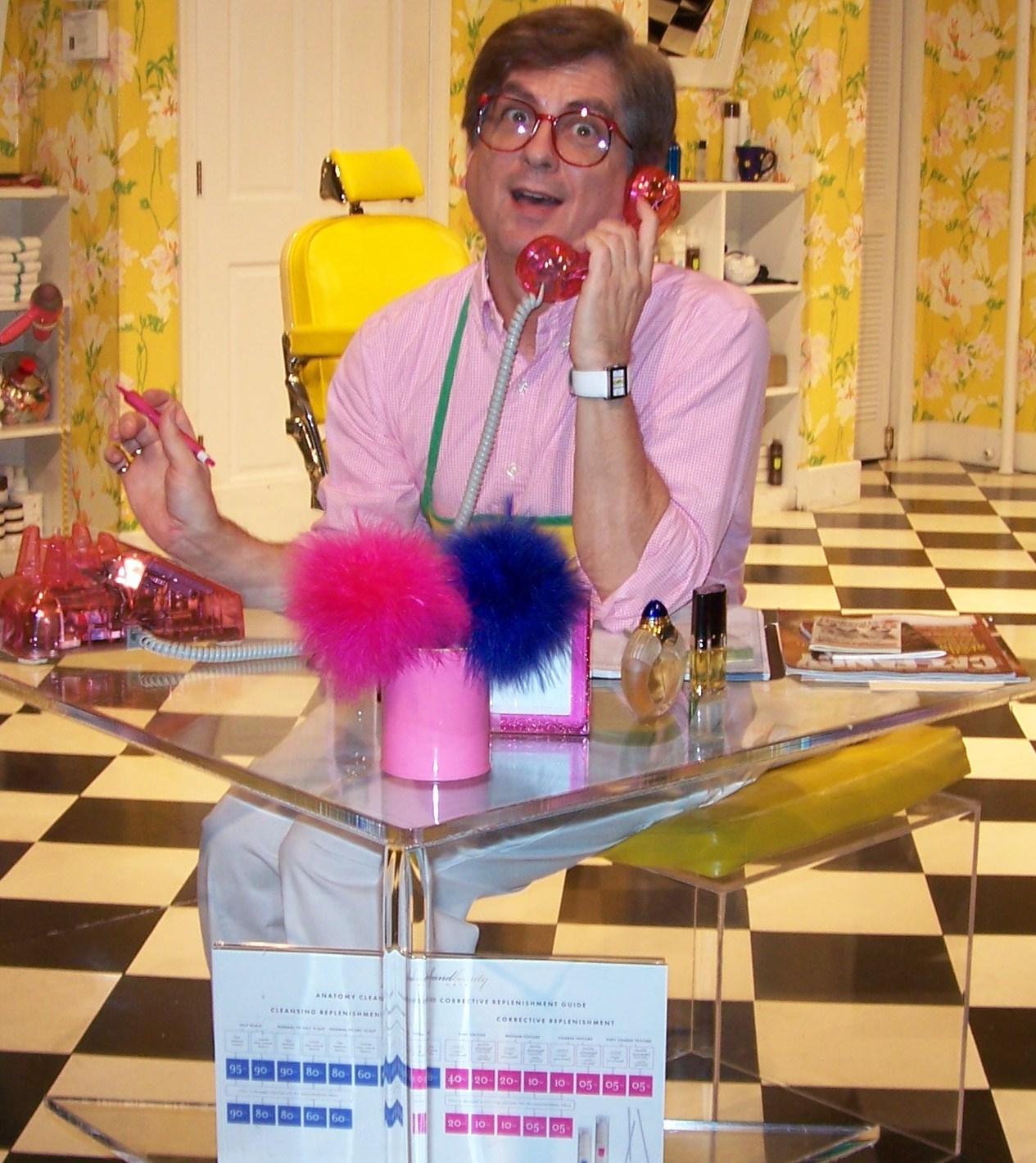
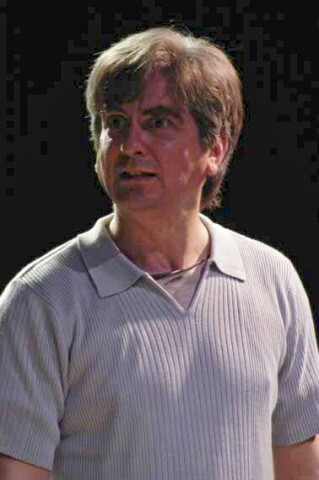
,+Olney+Theatre+Center,+2004.jpg)


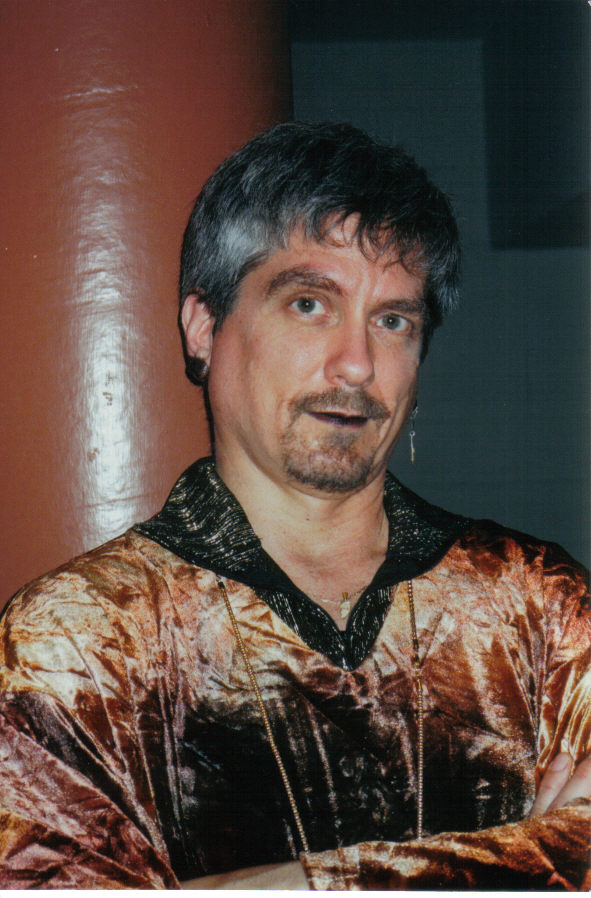
,+Shakespeare+Theatre+Company,.jpg)
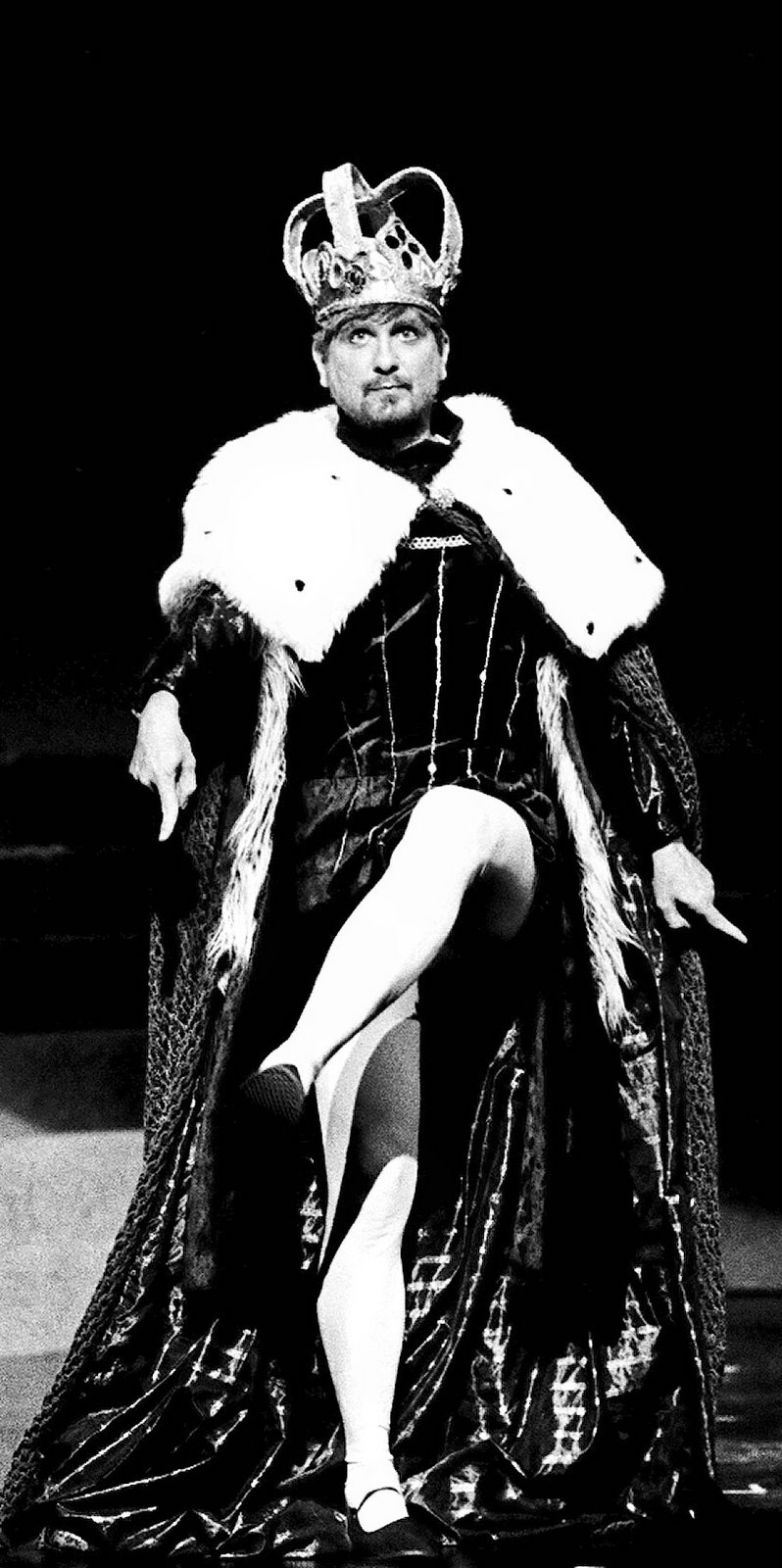

,+Warehouse+Theatre,+1999.jpg)
,+Are.jpg)
,+Everyman+Theatre,2002.jpg)
,+First+Nationa.jpg)
,+Shakespeare+Theatre+Company,.jpg)


,+Granada+Th.jpg)
,+Globe+Playhouse,.jpg)
,+Valley+College,+1975.BMP)
,+CSUN,+1976.jpg)