Friday, November 13, 2015

Friday Dance Party: Seven Year Itch

Just as I attempt to reactivate the Dance Party (only last week, as a matter of fact), I turn the page of my planner (yes, I still use a planner. It's 22 years old and I'll never give it up) and find that this weekend marks the 7th Anniversary of the weekly Dance Party on this site. Yikes.

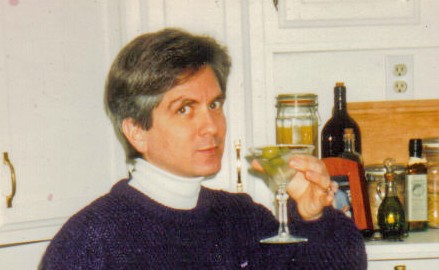
I used to give an annual shout out to this
guy. Larry Dalke invented the Dance Party
and promptly gave up on it.
He probably saw the monster it would
become in these pages.
In its early years, in fact up until about 2 years ago, I was very conscientious about creating an entry every week. At each year's anniversary, I would congratulate myself by writing a little rundown of all the clips presented that year. Once I fell out of the habit of the weekly entry, the annual review also disappeared.  I hope to continue the Party on a weekly basis, since I actually enjoy the research and the compiling of the entries, I just got lazy.  Allow me to review the relatively few Dance Parties which have appeared in these pages the last few years.

I used to celebrate various holidays with DP clips, but I'm surprise to see that, looking over the past two years, I did that only four times. 
Rita Moreno's turn as a waitress in the musical Working
reminded me of the many Thanksgivings I worked as a waiter. Confession: I actually considered using her song as an audition piece.
For Christmas, I talked about my favorite Christmas carol ("Little Drummer Boy") which The West Wing used to great effect here. 
Independence Day was celebrated with a very revolutionary
outfit, courtesy of Christine Ebersole.
As almost always happens, New Years rolled around a week later, so I wrote about the great Frank Loesser song which he meant to be sung in springtime, but which has now become a New Years Eve perennial.  And the 4th of July last year gave me the chance to showcase one of the great Broadway stars of our generation, Christine Ebersole.

Speaking of Broadway, the Tony Awards inspired two entries a year ago.
Tony winning Jessie Mueller as
Carole King.
Carole King, who was not nominated for anything, came up a winner anyway when her portrayer, my favorite Jessie Mueller, snagged the Best Actress prize.  Sadly, another of my favorites, Tyne Daly, was a big ol' loser that year, so I compensated her with her own entry.

Terrence McNally wrote a play specifically for Tyne Daly, Mothers and Sons, for which they each received a Tony nomination. They both lost, and the show closed a week later. The least I could do was give them a Dance Party.
Speaking of the Tonys, did The Sound of Music win any awards way back when? I'm too lazy to look it up, but I do know that the Live presentation on NBC last year, starring a reality TV star turned C/W singer, won derision from critics but ratings so stellar that it triggered a mini-trend. 
Is there anything more frightening than a nun with a guitar? The masses didn't care, as the ratings went through the roof for The Sound of Music Live!. Go here for my report, which included my wish for a future live presentation (complete with Perfect Casting Suggestions)
NBC followed up their Sound of Music Live with a truly
dreadful Peter Pan, starring a somnambulent Christopher
Walken but co-starring current Broadway Stud Christian
Borle, who appeared in last week's Dance Party.
Birthdays and Deathdays have always played a big part in inspiring Dance Parties, and the past 2 years were no exception. When Sondheim (he doesn't need a first name in these pages) turned 85 the same week his hit film Into the Woods was released on DVD, we had to hear from Meryl Streep.  When Jerry Herman hit 83, we enjoyed the danciest party in recent years, imported from Britain.  When Charles Kimbrough turned 78, we got two little clips, a live action song and a cartoon ditty. Neither of them came from his biggest success, Murphy Brown.
Karen Morrow is one of my very favorite belters, so when she
had a birthday, we had to take note.

As I mentioned, Deathdays also inspire entries.  Being dead does not disqualify anyone from the Dance Party. 
Sammy Davis, Jr., as Mr. Bojangles
The anniversary of the death of Sammy Davis, Jr reminded me of his fondness for a particular song about a particular hoofer, which he performed on Flip Wilson's ultra-groovy TV series.  
Moms Mabley provided the most unlikely Dance Party of the past two years, on the 50th anniversary of the assassination of John F. Kennedy.
When director Gene Saks went to his maker, I
enjoyed reviewing his illustrious career, but
could no resist capping it with his most
notorious bomb: Lucy as Mame.
Elaine Stritch's death did not come as a surprise, as she had retired due to ill health and advancing age less than a year earlier, but it was a sad event nonetheless. Instead of presenting one of her signature tunes ("I'm Still Here, Broadway Baby, Why Do The Wrong People Travel", etc), I was pleased to showcase her very dry humor with this clip from a Rodgers and Hart classic.

"You can't have New York City without Queens," some wag once said, and it's equally true that you can't have the Dance Party without them either. 
Manilow's gay marriage was met
with shrugs. Show biz types rarely
get much press for coming out
these days.
Two gents got their own entries when they stepped out of the closet. I was pleased to report that both revelations induced more shrugs than shrieks;  show biz personalities revealing their homosexuality isn't newsworthy anymore, all those histrionics are now saved for the instances when sports figures come out. But still, when Barry Manilow married his longtime business manager, he got a cartoon DP, and when octogenarian Joel Grey revealed his sexuality, I discussed how we are practically twins.


There were a handful of Dance Parties which were inspired by nothing much. Angela Lansbury has made frequent appearances here over the years, so when she was Damed by the Queen, we took a peek at one of her very early film musicals. When I saw a local production of The Threepenny Opera, Pearl Bailey and Dinah Shore dropped by for a duet. 
Jane Lynch channeled Madonna when I
wrote a bit about Glee's finale.
Though I'm not a huge fan of Rodgers and Hammerstein, I had to admit that their Stepsisters' Lament is a real hoot, and always has been: two versions, starring three of my favorite character actresses, proved the point.


When the Dance Party first appeared in these pages, it was envisioned as a way to enjoy pure dance. That concept fell by the wayside pretty quickly, and the majority of entries over the years (a whopping 276 of them!) have featured musical performances which did not necessarily feature dance. But in keeping with tradition, the Annual Review Dance Party presents a clip starring amateur youngsters displaying enthusiastic talent. Here are a couple of teens who love to boogie.

Friday, November 6, 2015

Friday Dance Party: Mad About The Borle


As this site lurches uncertainly back to life, we pay tribute to my favorite Broadway Go-To Guy. He first attracted national attention more than a decade ago, in this fun commercial below.  Who IS this guy??

 I confess I don't remember ever seeing this commercial, but it is fondly remembered by most fans of Christian Borle (and I am one of those).

Broadway musicals do not usually appeal
to the MTV audience, even one based on a
tweenie movie, so the network's broadcast
of Legally Blonde still confuses me.
The first time I ever saw Borle's work was probably in the stage version of Legally Blonde, though I didn't know it at the time. In 2007, MTV made the unusual decision to air the original Broadway production in its entirety. I did my best with it, but could not get through the thing, mostly due to the unending commercial breaks inserted. So I know I saw Borle, who played love interest Emmett (and who earned a Tony nomination for his work), but frankly, I don't remember him.
As Bert in Mary Poppins
Borle held his own among comic
experts Hank Azaria, Tim Curry,
and David Hyde Pierce in Spamalot.
Legally Blonde was Borle's first Tony nod, but not his first Broadway appearance. He had replaced actors in Thoroughly Modern Millie and Mary Poppins, and originated several roles in Spamalot (including everyone's favorite Not Dead Fred). I had heard Christian Borle's name tossed around theatrical circles for quite a while before I actually saw the guy, and it wasn't onstage at all. 
On stage he's often flamboyantly
theatrical, but in Smash, Borle gave
a nuanced and unassuming
performance.
He gained national attention with his leading role in Smash, NBC's noble attempt to musicalize episodic television. The show ran two seasons, and Borle's character was a major presence throughout. (Smash had its own Dance Party a while back, go here.)

Christian's costar in the current Something Rotten!, Heidi Blickenstaff, hosted a video blog for a while, an entertaining look at the backstage shenanigans. Borle was regularly seen sitting in his dressing room clutching a book (he spends more time offstage than just about anyone else in his cast). "Book Nook" became appointment viewing among us Borlites.
During this period, Borle was also heavily involved in Peter and the Starcatcher, an unusual little play-with-music which was an impressive Off-Broadway hit.  
The show transferred uptown and Borle went with it, opening the Broadway production during his hiatus from Smash. He won the Tony for his efforts, an award I can attest he deserved, as I saw his energetic performance.
As Black Stache in Peter and the Starcatcher. The show isn't exactly a prequel, but is rather an imagining of how the Peter Pan myth may have begun. Finding Neverland, a giant show currently on Broadway, is also Pan-adjacent, though it covers the supposed inspiration for the writing of the original story. What the hell is it about Peter Pan that attracts people, over and over again?
Smash did not survive its second season, but that did not stop our hero, who has maintained a television presence in recurring roles on The Good Wife and Masters of Sex.
I'm a big fan of The Good Wife, so I'm delighted when Christian shows up to play one of Alicia's many nemeses.
Impressively, Borle has given satisfying performances in both of the live productions of Broadway musicals with which NBC has had such ratings success during the past two holiday seasons. His stage cred came in handy as Max in The Sound of Music, opposite stage vet Laura Benanti (I wrote about that production here). He was happily back when NBC's Peter Pan took flight (or rather, floundered), playing Mr. Darling and Smee.
Arms and the Man. Borle began working out during his Smash days, when bedroom scenes revealed a slender physique. Boy has that changed. His appearance as a pirate in Peter Pan Live ignited major interest in his huge arms. Some viewers suspected they were faked for the show, but no, it's really him. These days, Christian's biceps even have their own twitter account (which our hero claims he does not run).
Though neither of these live shows received much critical praise, they were ratings winners, and one would think Christian might be a good luck charm worth keeping (as far as I can tell, he is the only performer to appear in both The Sound of Music and Peter Pan live productions).
Before the big Borle Bicep Bulge, our hero starred
in a prestigious revival of Angels in America,
opposite Zachary Quinto. This guy does not need
song and dance to excel.
It was announced a while back that this year's event would be The Music Man, which is a show I dislike but one which might have given Borle the MUCH deserved leading role he has earned. I'd love to see how he handled conman Harold Hill. Soon after that announcement was made, it was rescinded. Instead, The Wiz will be easing on down the road, live, this Christmas. If the producers really want to insure ratings success, they should consider putting Borle in blackface to play one of Dorothy's cohorts. EVERYBODY would watch THAT, if only to complain about racism in Hollywood!


I have a hunch Borle is a bit of a hound
around the ladies, but why not? He was
married to his college sweetheart until
their individual careers really took off.
Yes, that's Sutton Foster, the former
Mrs. Borle. He's been linked to others
of his costars as well; who could resist
that wide, toothy grin?
Well, we finally come to our Dance Party, which features Christian singing one of his songs from his current hit, Something Rotten! (Look for my thoughts on seeing this show soon, as I attempt to get back in the habit of updating these pages. I saw the show months ago, early in its preview period.) 
The principal cast of Something Rotten!
This show is populated with many of Broadway's current creme, but when the show opened last spring, Borle was the face most recognizable to a network audience (due to his Smashing appearances), so there are several clips out there of Christian performing on the various morning/talk shows.
Instead, please enjoy this little video which the Broadway.com team produced themselves, to showcase the show's only Tony winner (did I mention Borle won his second Tony with this performance as Shakespeare?). It's a fun little number capitalizing on Christian Borle's comic timing. And of course, his arms.

As I watched this music video below, it occurred to me: isn't there a Popeye musical out there, just waiting to be put on the stage? Arms And The Man, indeed.


Friday, April 17, 2015

Friday Dance Party: Barry, Oh Marry!

He got married a year ago, but the news just trickled out last week.  And like other recent, shrug-inducing announcements, the revelation that 70s superstar Barry Manilow married his longtime male manager isn't cause for much excitement.

Though he married a woman, briefly, about a hundred years ago, Manilow successfully ducked questions about his sexuality for most of his career.  He seemed like the kind of guy who would always be single.
This was the only Manilow album I ever
owned. He proved himself a lively showman
and his concerts were lavish events.
Except that Manilow really was a huge star of the 70s who built his music career on scores of weepy ballads of love and yearning. He was the most unlikely of sex symbols, with a tall gangly frame and, let's face it, a real Jimmy Durante shnozz. But something about his music, and his public persona, struck hard.  I was not a big fan, but you really couldn't get those earwick ballads out of your head.
Barry had the occasional uptempo hit, like the disco-tinged "Copacabana," but primarily, he was known for sappy ballads with refrains that churned around in your head long after the song was over.
He's hardly recognizable here. He
spent some time in TV production
before his career as a jingle writer
took off.

Funny thing about those love ballads.  For the most part, the lyrics were not gender specific.  Did anyone notice this back then?
Our hero hit #1 for the first time
since "Mandy" with this song.
"I write the songs that make the
whole world sing," except he
didn't write it. Nobody cared.

Many, many songs were actually direct address, with the song aimed directly at the subject, rather than a tale of woe about the time "she" left me.  Was this a subtle way for Manilow to duck questions regarding his own romantic life?  Whatever it was, it allowed gay men to appropriate those songs without the hassle of changing pronouns.

Ah, who cares at this point. I find that I am more interested in the on-again, off-again relationship Barry had with another music superstar, Bette Midler. 
These two met back in the 70s, when Manilow was hired to accompany "the talent" who entertained at Manhattan's Continental Baths on Saturday nights. I guess back then, gay bath houses offered entertainment to the deviants wandering around the club in towels. Bette Midler made her first big splash performing there, with Barry at the piano. This club provided the inspiration for Terrence McNally's 1975 play The Ritz.  Rita Moreno won a Tony playing a role loosely based on Midler. 
Barry and Bette hit it off (not surprisingly, as The Divine Miss M has always been Best Friend to the Gays), and their professional lives were intertwined for about 3 years.  Manilow produced her first two albums in the early 70s, just as his own career as a solo artist was unexpectedly taking off as well. 
Gotta love those 70s fashions.

Somewhere in there, the Great Feud began, which was to keep the two apart for several decades, as they each rose to fame.  As much as I love Miss Midler, from what I've read, the fault was mostly hers:  she had trouble accepting the fact that her records sold "only" 30 million copies, while Barry's topped 80 million. 
By 2003, two older and wiser heads prevailed, and the Bette/Barry team was back in business.  Manilow produced Midler's well-received tribute albums to Rosemary Clooney and Peggy Lee, and the two even recorded a few songs together.
Tensions linger, apparently.  In 2013, Barry and Bette were both, coincidentally, on Broadway. A concert evening called Manilow on Broadway was selling out, while Midler's one-woman play I'll Eat You Last was packing them in as well.
There was talk of Midler and Manilow opening the Tony Awards with a duet, since they were both on Broadway at the time.  When it didn't happen, folks were sure the feud was still smoldering, but in reality, I think Bette was pissed she did not receive a Tony nomination for her work playing Sue Mengers.  Her show was a smash and did not need the publicity of a Tony appearance, so she skipped it.
There are a couple of clips out there, of the two superstars together, but for this week's Dance Party, here's another, more unlikely, collaboration.  In 1988, Disney released an animated musical adaptation of Oliver Twist, rewritten as a story about dogs. The score for Oliver and Company was written by a bunch of people, and included one song written by Barry Manilow.  The tune was given to the character of Georgette, a spoiled showdog, which, by coincidence or not, was being voiced by Bette Midler.  So, inadvertently, Barry and Bette were collaborating again, though in different rooms, and at different times.
Oliver and Company predated the great animation renaissance which Disney was to enjoy a bit later, but the film was a modest success.
I've never seen this film, but it's kind of a fun song.  So, in the spirit of congratulations to Barry and his hubby, enjoy Bette Midler belting a Barry Manilow song.

Friday, April 3, 2015

Friday Dance Party: The Simonizer

Broadway lights were dimmed this week in honor of one of the most successful stage directors of his generation. At the height of his career, he was responsible for bringing smash after smash to the stage, though in a curious twist, one of his greatest musical stage hits became one of the biggest musical film flops, both under his hand.


Gene Saks
1921-2015
In A Thousand Clowns, Saks played neurotic kids'
show star Chuckles the Chipmonk, a role he
repeated for the film starring Jason Robards.
He started and ended his career as an actor, but is far better known for his directorial knack with what someone called "Theatre of Repartee."  His friends reported that, though he himself was not particularly funny, his expertise with finding The Funny in a script, and bringing it out, was unparalleled.  
Saks's first film as director was
Simon's Barefoot in the Park, which
brought attention to Robert Redford
and Jane Fonda.

It was no surprise, then, that he became known as a premiere interpreter of the work of Neil Simon.  He directed eight of Doc's plays on Broadway, and translated three more to film.
Neil Simon's plays translate to film with varying degrees of success, but no one complains about The Odd Couple, in which Saks directed Lemmon and Matthau to greatness.


Saks brought Neil Simon's mid-career, autobiographical works to Broadway, including the so-called "B&B" plays. Brighton Beach Memoirs, Biloxi Blues, and Broadway Bound were successive hits for Simon, and all concerned his adolescence and young adulthood. Matthew Broderick became famous for his leading portrayals in the first two of these pieces.
Neil Simon won the Tony,
and the Pulitzer, for
Lost In Yonkers, in which Saks
directed unknowns Kevin
Spacey and Mercedes Ruehl.
Gene had other substantial hits.  He directed the slight 2-hander by Bernard Slade, Same Time Next Year, to a three-year run, and his guidance of the film version of Cactus Flower earned Goldie Hawn the Oscar. 
When I saw I Love My Wife, Lenny Baker, above,
had already won the Tony for his performance, but I
was bowled over by the unknown playing his best
friend's wife. It was Joanna Gleason
in her Broadway debut.

He won the first of his three Tony Awards for his direction of I Love My Wife, a musical concerning the wife-swapping phenomenon of the early 1970s. No wonder the show is rather obscure today. I wrote about seeing the show here, and one of the comic numbers of the piece showed up here a while ago on the Dance Party, in a duet between Bea Arthur and Rock Hudson.

Saks won his other two Tonys for Simon plays, though he was nominated several more times. 
Saks was sacked on the road with this
musical, and replaced by Michael
Kidd. The show became a major flop
and ended the Saks/Simon partnership.

His final show on Broadway, Barrymore, earned star Frank Langella the Tony in 1997.  By then he had fallen out with Neil Simon, after he had been fired from the musical version of The Goodbye Girl. Perhaps they should have listened to Gene, as his success rate with stage musicals was impressive.  He not only won the Tony for I Love My Wife, but years earlier, his direction guided one of the most enduring hits of the 1960s and beyond, Mame.

There are a few grainy clips of Angela Lansbury as Mame out there, but a while ago, Lansbury appeared in this Dance Party, in which she displayed all the characteristics of her signature role.  
Angela Lansbury was already an established star when
Saks placed her in the role of Mame, but the marriage
of character and star was so spectacular that she rose to
the top of Broadway stardom, where she has remained
to this day.
Angela won the Tony, as did her costar, who was Gene Saks wife at the time.  The story goes that Bea Arthur lobbied hard to play Mame, but her husband wisely gave her the drunken sidekick Vera Charles.  
Imagine going home to your wife, Bea Arthur, and
telling her you decided she will NOT be playing the
leading role in the play you are directing. "God'll Get
You For That, Gene". In fact, He kinda did, with this
week's Dance Party.
Imagine that conversation at home? I suppose Bea forgave her husband, since she won her Tony playing Vera Charles, and even repeated the role in the miserable film version, also directed by Saks. (I wrote my own appreciation of Bea Arthur when she died, you can read it here.)
What were they thinking as they turned Jerry Herman musicals into movies? The casting corps had a great sense of talent but a lousy sense of timing. Barbra Streisand was a great choice to play Dolly Levi, in about 25 years.  Conversely, Lucille Ball would have made a great Mame Dennis, about 25 years earlier.
You may think this week's Dance Party is
torture, but at least I didn't present a
number from this TV movie, also helmed
by Gene Saks.
Gene was not originally slated to direct the movie Mame, but there was a year-long delay in filming as they waited for Lucille Ball to recover from a broken leg.  Original director George Cukor took that opportunity to bale, and Saks was signed to replace him.  I wrote about the disastrous result when Lucy and Bea Arthur appeared in this Dance Party, feel free to read all about it.  But we can't let the late Gene Saks get away from us without one more dig at his lousy movie.  
Here's Angela Lansbury in the opening number of Mame, "It's Today." This number is this week's Dance Party, starring Lucille Ball; I'm afraid it should have been renamed "It's Too Late."
After a brief song which acts as a prelude to the action, Mame opens with a bang.  Here is the film version; in lieu of actual choreography, Lucy gamely allows herself to be grabbed, shoved, and tossed around by the chorus. At her age (62), and recovering from a broken leg, she does her best.