Friday, November 6, 2015

Friday Dance Party: Mad About The Borle


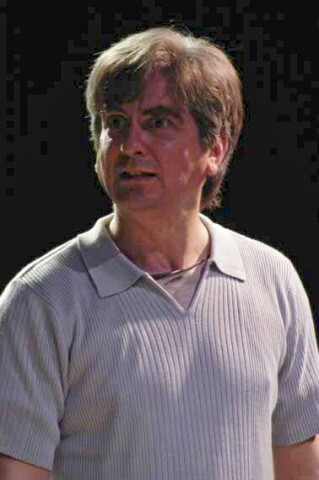
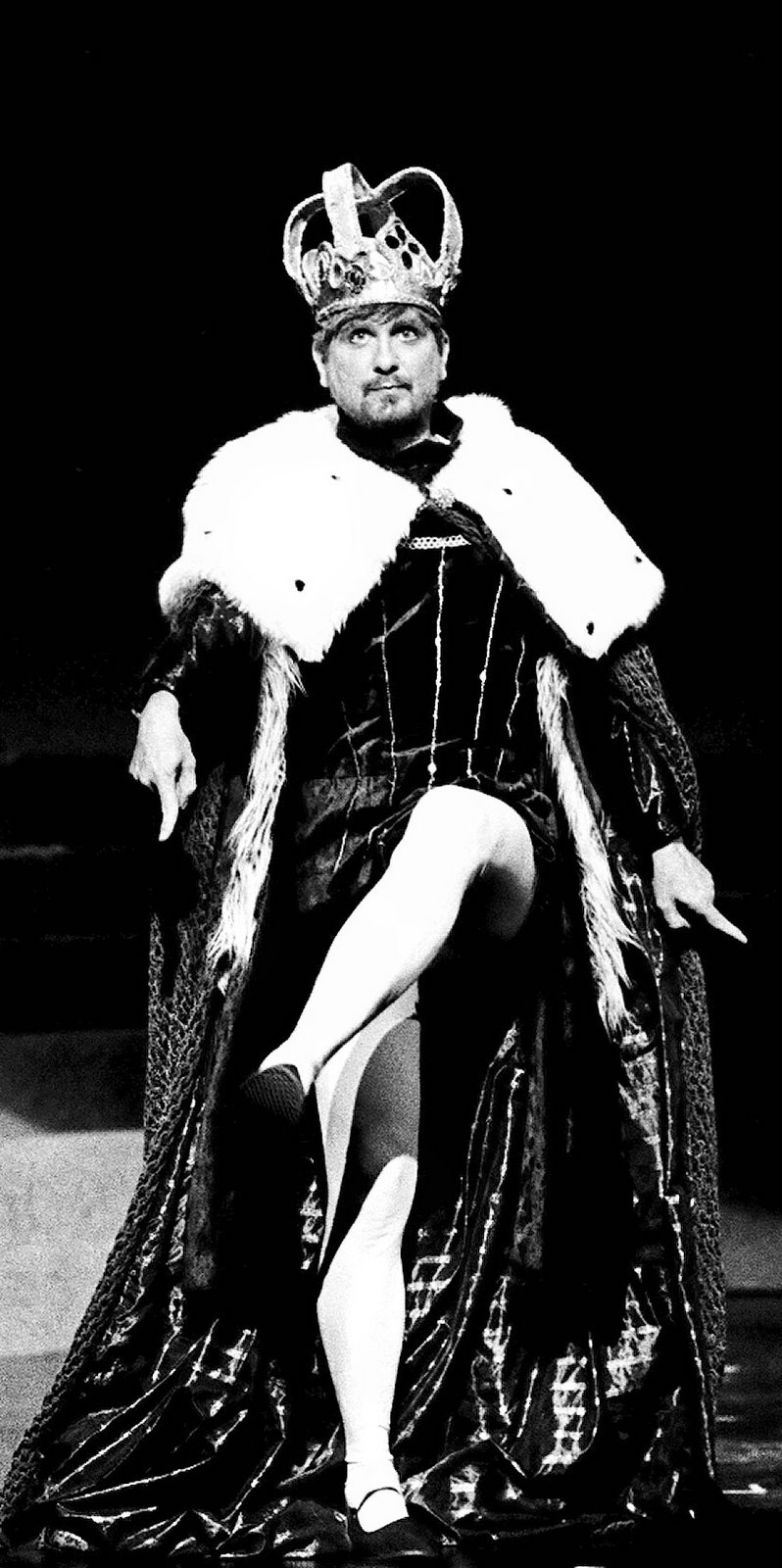
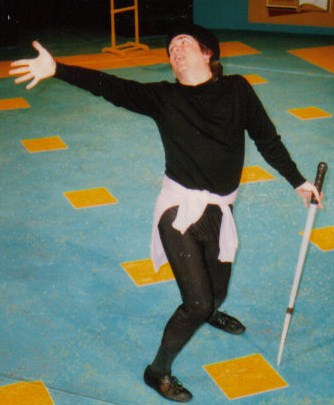
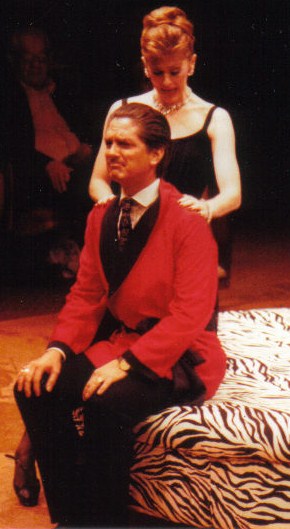
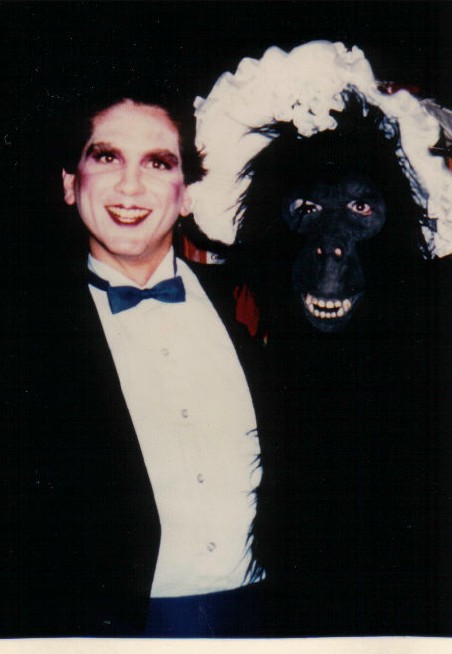
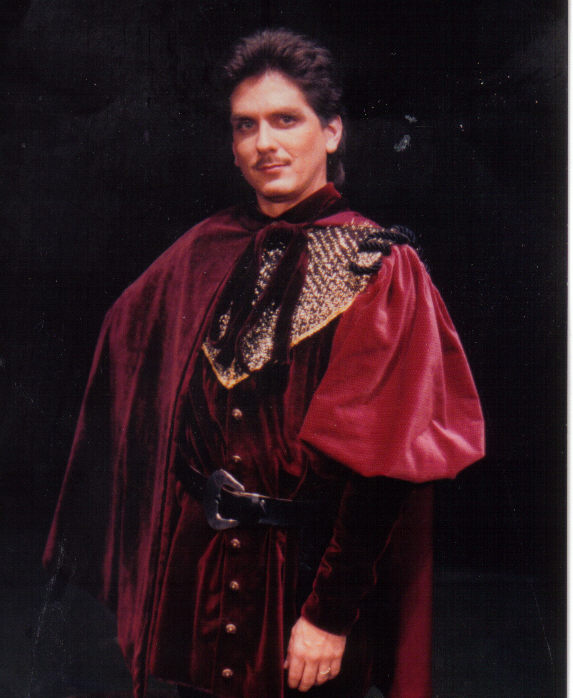
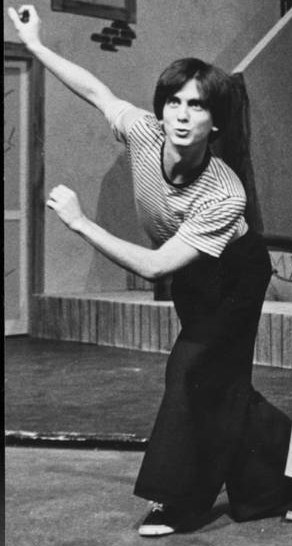
As this site lurches uncertainly back to life, we pay tribute to my favorite Broadway Go-To Guy. He first attracted national attention more than a decade ago, in this fun commercial below.  Who IS this guy??

 I confess I don't remember ever seeing this commercial, but it is fondly remembered by most fans of Christian Borle (and I am one of those).

Broadway musicals do not usually appeal
to the MTV audience, even one based on a
tweenie movie, so the network's broadcast
of Legally Blonde still confuses me.
The first time I ever saw Borle's work was probably in the stage version of Legally Blonde, though I didn't know it at the time. In 2007, MTV made the unusual decision to air the original Broadway production in its entirety. I did my best with it, but could not get through the thing, mostly due to the unending commercial breaks inserted. So I know I saw Borle, who played love interest Emmett (and who earned a Tony nomination for his work), but frankly, I don't remember him.
As Bert in Mary Poppins
Borle held his own among comic
experts Hank Azaria, Tim Curry,
and David Hyde Pierce in Spamalot.
Legally Blonde was Borle's first Tony nod, but not his first Broadway appearance. He had replaced actors in Thoroughly Modern Millie and Mary Poppins, and originated several roles in Spamalot (including everyone's favorite Not Dead Fred). I had heard Christian Borle's name tossed around theatrical circles for quite a while before I actually saw the guy, and it wasn't onstage at all. 
On stage he's often flamboyantly
theatrical, but in Smash, Borle gave
a nuanced and unassuming
performance.
He gained national attention with his leading role in Smash, NBC's noble attempt to musicalize episodic television. The show ran two seasons, and Borle's character was a major presence throughout. (Smash had its own Dance Party a while back, go here.)

Christian's costar in the current Something Rotten!, Heidi Blickenstaff, hosted a video blog for a while, an entertaining look at the backstage shenanigans. Borle was regularly seen sitting in his dressing room clutching a book (he spends more time offstage than just about anyone else in his cast). "Book Nook" became appointment viewing among us Borlites.
During this period, Borle was also heavily involved in Peter and the Starcatcher, an unusual little play-with-music which was an impressive Off-Broadway hit.  
The show transferred uptown and Borle went with it, opening the Broadway production during his hiatus from Smash. He won the Tony for his efforts, an award I can attest he deserved, as I saw his energetic performance.
As Black Stache in Peter and the Starcatcher. The show isn't exactly a prequel, but is rather an imagining of how the Peter Pan myth may have begun. Finding Neverland, a giant show currently on Broadway, is also Pan-adjacent, though it covers the supposed inspiration for the writing of the original story. What the hell is it about Peter Pan that attracts people, over and over again?
Smash did not survive its second season, but that did not stop our hero, who has maintained a television presence in recurring roles on The Good Wife and Masters of Sex.
I'm a big fan of The Good Wife, so I'm delighted when Christian shows up to play one of Alicia's many nemeses.
Impressively, Borle has given satisfying performances in both of the live productions of Broadway musicals with which NBC has had such ratings success during the past two holiday seasons. His stage cred came in handy as Max in The Sound of Music, opposite stage vet Laura Benanti (I wrote about that production here). He was happily back when NBC's Peter Pan took flight (or rather, floundered), playing Mr. Darling and Smee.
Arms and the Man. Borle began working out during his Smash days, when bedroom scenes revealed a slender physique. Boy has that changed. His appearance as a pirate in Peter Pan Live ignited major interest in his huge arms. Some viewers suspected they were faked for the show, but no, it's really him. These days, Christian's biceps even have their own twitter account (which our hero claims he does not run).
Though neither of these live shows received much critical praise, they were ratings winners, and one would think Christian might be a good luck charm worth keeping (as far as I can tell, he is the only performer to appear in both The Sound of Music and Peter Pan live productions).
Before the big Borle Bicep Bulge, our hero starred
in a prestigious revival of Angels in America,
opposite Zachary Quinto. This guy does not need
song and dance to excel.
It was announced a while back that this year's event would be The Music Man, which is a show I dislike but one which might have given Borle the MUCH deserved leading role he has earned. I'd love to see how he handled conman Harold Hill. Soon after that announcement was made, it was rescinded. Instead, The Wiz will be easing on down the road, live, this Christmas. If the producers really want to insure ratings success, they should consider putting Borle in blackface to play one of Dorothy's cohorts. EVERYBODY would watch THAT, if only to complain about racism in Hollywood!


I have a hunch Borle is a bit of a hound
around the ladies, but why not? He was
married to his college sweetheart until
their individual careers really took off.
Yes, that's Sutton Foster, the former
Mrs. Borle. He's been linked to others
of his costars as well; who could resist
that wide, toothy grin?
Well, we finally come to our Dance Party, which features Christian singing one of his songs from his current hit, Something Rotten! (Look for my thoughts on seeing this show soon, as I attempt to get back in the habit of updating these pages. I saw the show months ago, early in its preview period.) 
The principal cast of Something Rotten!
This show is populated with many of Broadway's current creme, but when the show opened last spring, Borle was the face most recognizable to a network audience (due to his Smashing appearances), so there are several clips out there of Christian performing on the various morning/talk shows.
Instead, please enjoy this little video which the Broadway.com team produced themselves, to showcase the show's only Tony winner (did I mention Borle won his second Tony with this performance as Shakespeare?). It's a fun little number capitalizing on Christian Borle's comic timing. And of course, his arms.

As I watched this music video below, it occurred to me: isn't there a Popeye musical out there, just waiting to be put on the stage? Arms And The Man, indeed.


Friday, April 17, 2015

Friday Dance Party: Barry, Oh Marry!

He got married a year ago, but the news just trickled out last week.  And like other recent, shrug-inducing announcements, the revelation that 70s superstar Barry Manilow married his longtime male manager isn't cause for much excitement.

Though he married a woman, briefly, about a hundred years ago, Manilow successfully ducked questions about his sexuality for most of his career.  He seemed like the kind of guy who would always be single.
This was the only Manilow album I ever
owned. He proved himself a lively showman
and his concerts were lavish events.
Except that Manilow really was a huge star of the 70s who built his music career on scores of weepy ballads of love and yearning. He was the most unlikely of sex symbols, with a tall gangly frame and, let's face it, a real Jimmy Durante shnozz. But something about his music, and his public persona, struck hard.  I was not a big fan, but you really couldn't get those earwick ballads out of your head.
Barry had the occasional uptempo hit, like the disco-tinged "Copacabana," but primarily, he was known for sappy ballads with refrains that churned around in your head long after the song was over.
He's hardly recognizable here. He
spent some time in TV production
before his career as a jingle writer
took off.

Funny thing about those love ballads.  For the most part, the lyrics were not gender specific.  Did anyone notice this back then?
Our hero hit #1 for the first time
since "Mandy" with this song.
"I write the songs that make the
whole world sing," except he
didn't write it. Nobody cared.

Many, many songs were actually direct address, with the song aimed directly at the subject, rather than a tale of woe about the time "she" left me.  Was this a subtle way for Manilow to duck questions regarding his own romantic life?  Whatever it was, it allowed gay men to appropriate those songs without the hassle of changing pronouns.

Ah, who cares at this point. I find that I am more interested in the on-again, off-again relationship Barry had with another music superstar, Bette Midler. 
These two met back in the 70s, when Manilow was hired to accompany "the talent" who entertained at Manhattan's Continental Baths on Saturday nights. I guess back then, gay bath houses offered entertainment to the deviants wandering around the club in towels. Bette Midler made her first big splash performing there, with Barry at the piano. This club provided the inspiration for Terrence McNally's 1975 play The Ritz.  Rita Moreno won a Tony playing a role loosely based on Midler. 
Barry and Bette hit it off (not surprisingly, as The Divine Miss M has always been Best Friend to the Gays), and their professional lives were intertwined for about 3 years.  Manilow produced her first two albums in the early 70s, just as his own career as a solo artist was unexpectedly taking off as well. 
Gotta love those 70s fashions.

Somewhere in there, the Great Feud began, which was to keep the two apart for several decades, as they each rose to fame.  As much as I love Miss Midler, from what I've read, the fault was mostly hers:  she had trouble accepting the fact that her records sold "only" 30 million copies, while Barry's topped 80 million. 
By 2003, two older and wiser heads prevailed, and the Bette/Barry team was back in business.  Manilow produced Midler's well-received tribute albums to Rosemary Clooney and Peggy Lee, and the two even recorded a few songs together.
Tensions linger, apparently.  In 2013, Barry and Bette were both, coincidentally, on Broadway. A concert evening called Manilow on Broadway was selling out, while Midler's one-woman play I'll Eat You Last was packing them in as well.
There was talk of Midler and Manilow opening the Tony Awards with a duet, since they were both on Broadway at the time.  When it didn't happen, folks were sure the feud was still smoldering, but in reality, I think Bette was pissed she did not receive a Tony nomination for her work playing Sue Mengers.  Her show was a smash and did not need the publicity of a Tony appearance, so she skipped it.
There are a couple of clips out there, of the two superstars together, but for this week's Dance Party, here's another, more unlikely, collaboration.  In 1988, Disney released an animated musical adaptation of Oliver Twist, rewritten as a story about dogs. The score for Oliver and Company was written by a bunch of people, and included one song written by Barry Manilow.  The tune was given to the character of Georgette, a spoiled showdog, which, by coincidence or not, was being voiced by Bette Midler.  So, inadvertently, Barry and Bette were collaborating again, though in different rooms, and at different times.
Oliver and Company predated the great animation renaissance which Disney was to enjoy a bit later, but the film was a modest success.
I've never seen this film, but it's kind of a fun song.  So, in the spirit of congratulations to Barry and his hubby, enjoy Bette Midler belting a Barry Manilow song.

Friday, April 3, 2015

Friday Dance Party: The Simonizer

Broadway lights were dimmed this week in honor of one of the most successful stage directors of his generation. At the height of his career, he was responsible for bringing smash after smash to the stage, though in a curious twist, one of his greatest musical stage hits became one of the biggest musical film flops, both under his hand.


Gene Saks
1921-2015
In A Thousand Clowns, Saks played neurotic kids'
show star Chuckles the Chipmonk, a role he
repeated for the film starring Jason Robards.
He started and ended his career as an actor, but is far better known for his directorial knack with what someone called "Theatre of Repartee."  His friends reported that, though he himself was not particularly funny, his expertise with finding The Funny in a script, and bringing it out, was unparalleled.  
Saks's first film as director was
Simon's Barefoot in the Park, which
brought attention to Robert Redford
and Jane Fonda.

It was no surprise, then, that he became known as a premiere interpreter of the work of Neil Simon.  He directed eight of Doc's plays on Broadway, and translated three more to film.
Neil Simon's plays translate to film with varying degrees of success, but no one complains about The Odd Couple, in which Saks directed Lemmon and Matthau to greatness.


Saks brought Neil Simon's mid-career, autobiographical works to Broadway, including the so-called "B&B" plays. Brighton Beach Memoirs, Biloxi Blues, and Broadway Bound were successive hits for Simon, and all concerned his adolescence and young adulthood. Matthew Broderick became famous for his leading portrayals in the first two of these pieces.
Neil Simon won the Tony,
and the Pulitzer, for
Lost In Yonkers, in which Saks
directed unknowns Kevin
Spacey and Mercedes Ruehl.
Gene had other substantial hits.  He directed the slight 2-hander by Bernard Slade, Same Time Next Year, to a three-year run, and his guidance of the film version of Cactus Flower earned Goldie Hawn the Oscar. 
When I saw I Love My Wife, Lenny Baker, above,
had already won the Tony for his performance, but I
was bowled over by the unknown playing his best
friend's wife. It was Joanna Gleason
in her Broadway debut.

He won the first of his three Tony Awards for his direction of I Love My Wife, a musical concerning the wife-swapping phenomenon of the early 1970s. No wonder the show is rather obscure today. I wrote about seeing the show here, and one of the comic numbers of the piece showed up here a while ago on the Dance Party, in a duet between Bea Arthur and Rock Hudson.

Saks won his other two Tonys for Simon plays, though he was nominated several more times. 
Saks was sacked on the road with this
musical, and replaced by Michael
Kidd. The show became a major flop
and ended the Saks/Simon partnership.

His final show on Broadway, Barrymore, earned star Frank Langella the Tony in 1997.  By then he had fallen out with Neil Simon, after he had been fired from the musical version of The Goodbye Girl. Perhaps they should have listened to Gene, as his success rate with stage musicals was impressive.  He not only won the Tony for I Love My Wife, but years earlier, his direction guided one of the most enduring hits of the 1960s and beyond, Mame.

There are a few grainy clips of Angela Lansbury as Mame out there, but a while ago, Lansbury appeared in this Dance Party, in which she displayed all the characteristics of her signature role.  
Angela Lansbury was already an established star when
Saks placed her in the role of Mame, but the marriage
of character and star was so spectacular that she rose to
the top of Broadway stardom, where she has remained
to this day.
Angela won the Tony, as did her costar, who was Gene Saks wife at the time.  The story goes that Bea Arthur lobbied hard to play Mame, but her husband wisely gave her the drunken sidekick Vera Charles.  
Imagine going home to your wife, Bea Arthur, and
telling her you decided she will NOT be playing the
leading role in the play you are directing. "God'll Get
You For That, Gene". In fact, He kinda did, with this
week's Dance Party.
Imagine that conversation at home? I suppose Bea forgave her husband, since she won her Tony playing Vera Charles, and even repeated the role in the miserable film version, also directed by Saks. (I wrote my own appreciation of Bea Arthur when she died, you can read it here.)
What were they thinking as they turned Jerry Herman musicals into movies? The casting corps had a great sense of talent but a lousy sense of timing. Barbra Streisand was a great choice to play Dolly Levi, in about 25 years.  Conversely, Lucille Ball would have made a great Mame Dennis, about 25 years earlier.
You may think this week's Dance Party is
torture, but at least I didn't present a
number from this TV movie, also helmed
by Gene Saks.
Gene was not originally slated to direct the movie Mame, but there was a year-long delay in filming as they waited for Lucille Ball to recover from a broken leg.  Original director George Cukor took that opportunity to bale, and Saks was signed to replace him.  I wrote about the disastrous result when Lucy and Bea Arthur appeared in this Dance Party, feel free to read all about it.  But we can't let the late Gene Saks get away from us without one more dig at his lousy movie.  
Here's Angela Lansbury in the opening number of Mame, "It's Today." This number is this week's Dance Party, starring Lucille Ball; I'm afraid it should have been renamed "It's Too Late."
After a brief song which acts as a prelude to the action, Mame opens with a bang.  Here is the film version; in lieu of actual choreography, Lucy gamely allows herself to be grabbed, shoved, and tossed around by the chorus. At her age (62), and recovering from a broken leg, she does her best.

Friday, March 27, 2015

Friday Dance Party: The Or Means More Than It Did Before

Stephen Sondheim turned 85 this week, coinciding with the DVD release of Into The Woods, which is the most successful of his stage-to-screen musicals. Naturally, a Dance Party is in order!
I didn't have a single problem with this cast, all of whom did their own singing, and quite creditably too.
Sweeney Todd made money and
raised eyebrows: could Sondheim
musicals become hit films?
When the Sweeney Todd film was released several years ago, I lamented the fate of Sondheim fans (or"Sondheimites," pardon the double entendre) who are always disappointed in our hero's screen adaptations.  Go here for that report. But Sweeney ended up making money, earning legitimate critical raves to boot, and Into The Woods has done even better.  The release has grossed just shy of $200 million, worldwide, and the video release will surely increase that number exponentially.  Sondheim can celebrate his 85th birthday with a legitimate film hit.
This week's Dance Party showcases the work of Meryl Streep, who previously appeared on the Dance Party in one of the more bizarre entries in the series, go here for that oddity. Her portrayal of The Witch earned another Oscar nod. Cynics were all over that, but one need only see her scenes with her adopted daughter to admit that she was doing award-worthy work. This was not Margaret Hamilton's witch.
The Into the Woods adaptation is an excellent one, and only Sondheim Poops complained.  By necessity, certain aspects of the original had to be "adjusted" (read CUT), but even purists had to have been pleased.  The songs excised were, with a few exceptions, reprises (though Sondheim reprises are never mere rehashes of previous songs, they stand alone).  Most of the missing music served to update the theatre audience on the passage of time and the progress of the characters's various journeys.  They were not necessary in the film.  
I wish the reprise of "Agony" might have been filmed for a DVD extra, as the original was one of the highlights of the film. No one knew Chris Pine could sing, but the bigger surprise was Billy Magnussen, a surfer dude turned soap star (he spent several years on As The World Turns) whose previous claim to fame was stripping to his skivvies as boytoy Spike in Broadway's Vanya & Sonia & Masha & Spike.  He won a Tony nomination for his work in his underwear, and has a major film career brewing.  
Tom Aldredge played the Baker's Father in the original. I
wrote a bit about him when he died. The theme of absent
parents was much stronger in the stage play than the film, a
theme which always resonates with me. But it had to go.

I felt the loss of the ballad "No More" most heavily, but have to admit that, here again, it simply was not needed. It's a raw and wonderful duet between the Baker and the father who deserted him as a child, and is probably my favorite song in the show.  But the Baker's Father was a minor character in the film, and the exclusion of his subplot was probably a wise, if painful, decision.
I suppose there are always complaints to be heard, in this case, regarding both Johnny Depp and Lilla Crawford. Depp received the usual snark regarding his eccentric choices; I rather enjoyed his portrayal of the Wolf.  Unbelievably, there were those who actually complained that the two younger roles, Jack and Little Red, were being played by children. Are they kidding? On stage, we might suspend our disbelief and allow 20-somethings to portray pre-teens, but on film, that would be ridiculous.  Crawford in particular handled the intricacies of her role quite well.  She has substantial stage cred, having played Annie in the most recent Broadway revival.
The success of Into the Woods, following that of Sweeney Todd several years ago, has awakened interest in translating Sondheim to film.  Our birthday boy has revealed that someone who shall remain nameless is tackling his Pulitzer prize winner Sunday in the Park with George for film. Considering it took decades to get Into the Woods into the theaters, no need to hold our breaths. 
"The Send In The Clowns Musical"
was the only way they could think
to promote this disastrous Sondheim
film adaptation. It was more than 30
years before anyone tried another.

I myself wish Steve's most cinematic work, Follies, would make its way to the big screen;  it really belongs there.  And boy I wish one of those TV networks planning live presentations of Broadway musicals would take a long look at A Funny Thing Happened on the Way to the Forum;  before Robin Williams died, I wrote a piece about how suitable the show would be for such a treatment, and I even cast the thing with TV-friendly stars.
Zero Mostel. Phil Silvers.
Jack Gilford. Buster Keaton.
What could go wrong?

Ah well, maybe one day. For now, enjoy this week's Dance Party, in which Streep has been betrayed by her daughter, who must now pay the price.  Happy Birthday, Steve, and congratulations.

Saturday, March 21, 2015

Friday Dance Party: Strike A (Final) Pose

Two pop culture phenoms intersected this week to inspire this week's Dance Party.
Nobody in their right mind would suggest these two women resemble each other.  Except those dreamers over at Glee.
Well, okay, here is one instance when Madonna
does resemble Lynch. She recently took a topple
during a live performance in Britain; Lynch is a
bit of a klutz herself.
Madonna's "Vogue" turned 25 years old on Friday, the same day Glee ended its 6 season run. I must first point out that I am not, nor ever have been, a slavish devotee to Madonna, though I have admired her work ethic, and her business sense, over the years.  For decades she's been known as the woman who can, quite cagily, reinvent herself with new images.  That rare ability has kept her on the A list of recording celebrities while other performers' careers wane and fizzle.
It was during Madonna's fling with Warren Beatty that she appeared in his film Dick Tracy and began her Marilyn Monroe period. While portraying mob moll Breathless Mahoney, she was prompted by Beatty to examine her character's inner thoughts/desires.  A list of celebrities was already percolating in her mind when Madonna became aware of the newest dance craze in hip gay nightclubs.  She married the two concepts, and "Vogue" was born.  It hit #1 around the world.
Glee was unable to repeatedly reinvent itself like Madonna, so after an opening season which dominated pop culture for a time, the show slid into irrelevance pretty quickly. 
I claim to have ignored Glee since its first season, but the
Dance Party in these pages begs to differ: the show has
provided 3 previous entrees.  When juvenile male lead Corey
Monteith OD'd, I wrote a little obit here.

I watched the show during that first season, but must confess that I abandoned it thereafter;  I was too frustrated by the wildly fluctuating quality of the show, where one episode would be clever and heartbending and true, and the next would sink like a boot in quicksand.  But there were enough "Gleeks" out there to sustain a run of 6 seasons.
After its first season, Lea Michele and Matthew Morrison were invited back to their Broadway roots to perform at the Tony Awards.  Michele was an alum of Spring Awakening, and Morrison had a slew of White Way Credits.  I included his Tony performance here.
Glee had its share of compelling characters, most of them teenagers who were treated as outcasts by  their peers, but the single Emmy winner among the regular cast was Jane Lynch. 
Turns out Jane Lynch CAN sing, and
CAN resemble Madonna. After this
breakout episode, Jane sang quite a
few times on Glee. She also headlined
the Annie revival on Broadway, and now
that the show is done, she is constructing
a cabaret act. I toasted Lynch on her
birthday a while back, here.
As she was playing the in-house antagonist, it seemed inappropriate that her character break into song, so for the majority of the first season, Jane's Coach Sylvester remained musically mute.  Then an episode came around which featured the music of Madonna, and Glee took a chance that Jane Lynch could carry a tune.
Glee's finale spent a lot of time in Flashback Mode, but as far as I could tell, all the material was new except for this poignant moment. They included the first, and best, sequence which defined the show. In this pivotal scene from the pilot, the original Glee club perform "Don't Stop Believin' " in an empty theatre;  it is the first time we see these kids triumph.  The recording of this song became a substantial hit during season one, and it has special significance as it showcases the late Corey Monteith.
As I mentioned, the series finale of Glee was broadcast on Friday;  I succumbed to the temptation to tune in.  I was lost only a bit of the time, as the creators wisely chose to focus the finale on the original members of the glee club, those same characters which had drawn the audience to the show in the first place. They shamelessly pulled at the heartstrings, showing us "before and after" portraits of these folks;  it was a fitting end to the series.
I suspect that most of Glee's large cast will sink into obscurity soon enough, but a few of them are already making waves on their own. Lea Michele is rumored to be returning to the stage in the first major revival of Funny Girl, and Amber Riley is touring with Beyoncé (just as her character announced in the "flash forward" segment of the finale). Chris Colfer has already written and produced a well-received indie film, and Matthew Morrison is in previews on Broadway playing J.M.Barry in the musical version of Finding Neverland.  And Jane Lynch is hitting the road with her new cabaret act.
But back to this week's Dance Party, which features Jane Lynch performing the Madonna smash "Vogue."  I do not know if this is a true, frame-by-frame recreation of Madonna's video, but who cares?  It's great fun.  Like Rita Hayworth, she gives good face.