Thursday, May 15, 2014

Choking The Fool

The reviews were stellar, with all of them saying
how lucky Queens was, to have Titan Theatre in
their midst. I was lucky, too, to have been a part
of this remarkable production.
The gent who afforded me my New York City debut, in Taming of the Shrew, spoke to me over a year ago about working with his company on their planned production of King Lear.  He wanted me to play the Fool, and from that moment a year ago, I worried about attempting this role.  The Fool, you see, is one of those ambiguous parts in Shakespeare which is completely open to interpretation... as opposed to, say, Malvolio in Twelfth Night (which is on my bucket list, just putting it out there...);  if the actor playing Malvolio just recites the words correctly, half his work is done.  But Lear's Fool is not so obvious.  I did a bit of research on the history of the character (not too much, I didn't want to spook myself), and it's been played in wildly different ways. 
Lear's Fool is wide open to the actor's interpretation, making it both exciting and worrisome to rehearse. Even women have played it. This picture is from the production by the Renaissance Shakespeare Company ("the OTHER RSC"), with Kenneth Branagh as Edgar. I saw this production, and wept when the Fool died.  The role was played by Emma Thompson, here seen in androgynous whiteface.  Scholars have surmised for years that the fact that the Fool and Lear's youngest daughter Cordelia never appear onstage together must mean that they were originally played by the same actor. Other research reflects that the role of the Fool was written for, and first played by, Robert Armin, who replaced Will Kempe as the resident comic actor in Shakespeare's company.  By the time King Lear premiered, Armin was 37, entirely too old to play Cordelia.
I found at least two modern productions in which the Fool was a British Music Hall performer, to which the Fool's various songs lend themselves.  In more than one production, the Fool is ultimately murdered by Lear himself, in a fit of madness.  I'm not sure how the text supports that, but it's happened. 
Lloyd Mulvey, as Oswald, was responsible for my death.
Lloyd is also the resident photographer for Titan, and
most of the shots on this page are his. But we have no
pix of the strangling of the Fool, since Lloyd did it. Not
really the time for a selfie. The violence surrounding my
death was rehearsed at our daily fight call, of course,
where it was called Choking The Fool.
The double entendre is evident.

What has concerned directors of Lear over the years is the Fool's sudden disappearance, without explanation, in the middle of the play.  In his final speech, Lear himself clears up the mystery by explaining his fool has been hanged, but there is no mention of exactly how or why the hanging might have taken place, or by whom.  There is no other mention of his disappearance.  It was decided in our production that I would be strangled and dragged offstage.

Tristan Colton swiped all the reviews as the
sociopathic Edmund. His famous speech
("Thou, Nature, art my goddess...") has been
butchered by every young classical actor.
Lenny moved it to the top of the show, giving
it even more importance. Tristan knocked it
all the way to Mets Stadium.

But I was never really concerned with how the Fool's life ended, I was more worried about giving life to the guy in the first place.  For a full year, each and every time I mentioned to somebody, ANYbody, that I was to play the Fool in King Lear, that person's face lit up.  "A great role!" or "Perfect for you!" or the like.  Nice, right?  The expectations of the Fool were very high, and even after a year of thought, I didn't know what the hell I was going to do with this part.
Michael Selkirk as the blinded Gloucester, being led, unknowingly, by his son Edgar. I spent some time onstage with Brendan Marshall-Rashid as he played that convincing beggar, Poor Tom; his was an extremely physical and satisfying portrayal. And I say that even when he had his clothes ON. I played Gloucester a year ago for Hudson Warehouse (go here for that report), but this is the remarkable thing about Shakespeare: never once did I think of how I played the role, I was so engulfed in creating my own character of the Fool. And Michael's performance as Gloucester was deservedly congratulated.
Director extraordinaire Lenny Banovez assembled a truly remarkable ensemble to play this Shakespearean classic.  He began, of course, with Lear himself. The role is one of those which is so substantial, and so iconic, and so very important to the success of the individual production, that the part is always cast first, and in advance. 
Kevin Beebee, on the left, has used his business
skills to help Titan grow fast and well.

You really cannot go into pre-production hoping to find your King Lear at an audition (Hamlet is another of those roles; because the entire play really revolves around these characters, it is impossible to build an ensemble to effectively tell the story without first knowing who will be at the center of it all.  This doesn't seem to be true with all Shakespeares. I think you can pre-plan Romeo and Juliet without knowing exactly who will be playing those title characters).
The relationship between Lear and his Fool is an important one, and through our rehearsal period, I think Terry and I developed a strong working bond. Here we are in rehearsal, with Brad Makarowski as Kent and Brendan Marshall-Rashid as Edgar.
I did not personally know our Lear, Terry Layman, before we began, but I had seen his work as Friar Laurence in Titan's production of Romeo and Juliet. (We almost worked together in that production, but that's another story altogether.) 

Lear surrounded by his daughters, played by Laura Frye,
Susan Maris, and Leah Gabriel. Fine actresses all, and they
actually looked like a family!
I was to learn, very quickly, in rehearsal that Terry was to be an outstanding Lear, and it was a privilege to stand next to him as he charted Lear's descent into madness. Lenny surrounded Terry with an exceptional ensemble. As Kent, the moral center of the play, Lenny cast Brad Makarowski, a talented and annoyingly tall actor with whom I shared several scenes. 
With Brad as the disguised Kent. Some of my favorite
moments were in this scene, in which Kent is in the stocks,
and the Fool advises him, through speech and song, that only
a knave would desert the king.


My first scene in King Lear opened with a speech to Kent, admonishing him that, if he insisted on following King Lear, he was himself a fool. The Fool's coxcomb, or hat, would traditionally have included bells, bright colors, or other signifiers of the Jester. Our version, with present day dress, could not include such a thing, so my coxcomb was just my hat. Unfortunately, the entire speech consisted of the Fool insisting that Kent take his coxcomb, or Fool's Hat, since he is becoming a fool himself. I tried to make this clear in the speech, but without the visual of a jester's hat, I'm afraid the audience did not follow.  Even successful performances have a failure or two, and this was one of mine.
Lenny did a fabulous job editing this monster of a script, which in its full form runs 4 hours or so.  Our cut ran only 2, yet told the full story with depth and nuance.  And it's a good thing the edit was so drastic, as we had only three or so weeks to rehearse the show.  We began, as so often happens, with the table reading on the first night.

Actors call this The First Day of School: the Table Read, or First Read Through. For me, it was the first time I met most of the cast; it is always an exciting rehearsal. This picture reminds me, though, of a pet peeve of mine regarding such rehearsals.  It has nothing to do with King Lear, particularly, but since this is my blog, I get to vent, right? You'll get a better view of my peeve in the picture below:
The Table Read, the first time the cast reads the script outloud. I can't count how many of these I have attended. The company sits around a table, at places assigned by either the director or the stage manager. From our assigned seats, we try to make preliminary connections with our fellow actors through the text. Without fail, actors who have significant interaction with other actors are placed next to each other, as above, with Lear and his three daughters. At this rehearsal, you will always find the Macbeths sitting next to each other, and Romeo and Juliet as well. The theory is that the actor can more easily make a connection to the actor sitting next to him. This is a false theory, at least at this early, script-reading stage. The actors who have the most important text together should be sitting ACROSS the table from each other, rather than side-by-side. Then, it's possible to glance quickly from the script to the actor and back again, with merely a flick of the eye.  But when actors are seated next to each other, it's necessary to twist the body 90 degrees to the side in order to look at each other, making it very difficult to glance up from the script to try to initiate a personal connection. I am apparently the only person in all of show business to take note of this constant failure of the First Read's seating chart.
Titan's King Lear was the troupe's inaugural production at their new home, the Queens Theatre, located in Corona Park, very near the stadium where the Mets play.  The park is a lovely one, and it's peppered with huge structures which are both attractive and desolate. 
These structures were constructed in 1964 to symbolize a modern future. Perhaps, then, it's fitting that Titan Theatre has moved into the neighborhood, as Titan appears to have a glowing future at the Queens Theatre.


Corona Park was the home of the 1964 New York World's Fair, and the structures which survive from that event have largely been abandoned.  Plans are afoot for a major rejuvenation of these artifacts, but for now, they remain both intriguing and a bit creepy.
This is my favorite picture on this page. The giant globe was constructed for the World's Fair and remains its most constant reminder. And there's our director Lenny Banovez, and his skateboard. I wish I had a picture of his skanky shoes, which I wore in the show.

Our theatre is nestled in the midst of the aging
monuments, above.

Our show was produced in the Studio Theatre of the building which houses a larger main stage.  It is a true Black Box, built as such, and it was a delight and a relief to be performing there.  This King Lear was my seventh production in the two years I have had a New York Branch, and the only one to be performed in a space originally designed to be a theatre. 
The intimacy of the Studio Theatre allowed
the audience to watch Lear's madness take
hold, up close and personal. When he drew
his last breath, holding his dead daughter,
there were tears. There were tears
backstage too, as we said goodbye to this
experience. We all knew how special it was.

It was very nice to have actual dressing rooms, an actual Green Room, and the like, but really, if a show is good, it doesn't much matter where it is performed.  And Titan's King Lear was very, very good, featuring a central performance which was majestic, funny, and ultimately heartbreaking. I was proud to be a part of it all.

Friday, May 9, 2014

Friday Dance Party: A Girl Who's Merely She

Stepsisters, 1965: Prunella and Esmerelda
It's time to reignite the Dance Party!  And what better way than to make a bit of history while honoring three of my favorite character actresses?  This week's entry is a Double Header, that is, two clips for the price of one. 

Stepsisters, 1957:
Joy and Portia

We've had a few Double Headers in the past history of the Dance Party, but never one like this.  Both clips feature the same song, sung by different performers.  Not to worry, they both time out at less than a minute and a half, so no need to arrange a babysitter.

Our song comes from the Rodgers and Hammerstein catalogue, and features some wonderful character stars.  First up, the only one of these terrific ladies with whom I have actually worked.
Pat Carroll (and me), backstage at Volpone.
Pat has had a very long and varied career, and by the time I met her, I had been an admirer of her work for decades. 
Barbara Ruick played opposite Pat as
the other of Cinderella's stepsisters. She
had a previous relationship with R&H,
having played Carrie in their film of
Carousel. All I remember of her performance
in Cinderella is her blinking. She is not one of
my favorites.

Though I have since seen much of her previous work, I believe I first became aware of this hilarious dame in the very clip below.  Along with Barbara Ruick, Pat delivered one of the few Rodgers and Hammerstein songs which is flagrantly comedic.  These two ladies were not the first to sing this song, but they are the ones I most closely associate with it. 
Most of my castmates in Volpone recognized Pat from this
vocal performance, but I considered her the definitive
Stepsister. I think of Pat every year on my birthday,
and here's why.

The 1965 version of Cinderella, starring Lesley Ann Warren, is the one my generation remembers most fondly, as it ran on TV annually for a full decade. It was almost 40 years later that I worked with Pat, and by then, she had won acclaim playing Mother Courage, Falstaff, and Gertrude Stein, as well as appearing on plentiful game shows, feature films, and the first season of The Mary Tyler Moore Show.  But sometimes the first memory is the strongest, and my first recollection of Pat Carroll was here:

You can see what's coming, can't you?  This 1965 TV production of Cinderella was a remake.  The original piece was broadcast live in 1957, and I wrote about that historical broadcast here.  The Stepsisters' Lament was handled on that date by two up-and-coming Broadway stars who would maintain careers for decades to come.  And both of them were favorites of mine.
Though never really absent, Alice Ghostley enjoyed a resurgence in her career as a recurring character on Designing Women.  I wrote about her when she died, go here for that obit.
Alice Ghostley's quirky delivery always cracked me up, and I was thankful to be exposed to it throughout the 60s and 70s in all the sitcoms of the day.  When Tom Bosley died, I wrote a bit about his episode of Get Smart, costarring our gal Ghostley, go here for those insights, and a quickie clip.
Alice was often compared to Paul Lynde, as they
had similar delivery and facial expression. They
both launched their careers on Broadway in New
Faces of 1954, but no, they were not related.
I love this serendipity. This screen grab is from the party scene in 1967's surprise hit, The Graduate.  We see Alice Ghostley as a party guest, as well as revered character actress Marion Lorne, who won the Emmy as Aunt Clara on TV's Bewitched during its early days. As Bewitched wound down, long after Lorne died, Ghostley joined the cast of that same show, as the maid Esmeralda.
But way back in 1957, Ghostley was chosen to create one of the original Ugly Stepsisters in Cinderella, along with another of my favorite gals:

Kaye Ballard first came to my attention when she costarred with Eve Arden in the 1967 TV sitcom The Mothers-In-LawI wrote about this series a while ago, when the cast showed up on the Dance Party.  When her sitcom hit the air, I had no idea Ballard was an established Broadway star, and of course had no idea that she, along with Alice Ghostley, were the first to introduce the Step-Sisters' Lament. 
Ballard hit the cover of Life in the early 50s,
while enjoying a burgeoning Broadway career
which included Carnival, costarring Jerry Orbach.
And a puppet.

Here is that very first public performance of the song, sung live to many millions back in 1957.  As you watch this version, take note that the later 1965 version has been expanded a bit, with another verse for Pat Carroll's character.  Cinderella is now on Broadway, for the first time if you can believe it, in a drastically rewritten version.  The Lament now being sung 8 times a week is delivered by only one of the step-sisters (and the ensemble chorus), in a dramatic departure from the originals. I haven't seen it, I doubt I will. Two versions of this lament are enough for me.

Wednesday, April 30, 2014

April's Fool

These pages have been dormant for many weeks, for a variety of reasons.  My life imploded a bit in recent months, and though I certainly could have made time to contribute to this site, I just was not inspired.  And who wants to read a blog which isn't inspired?
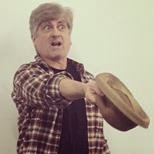
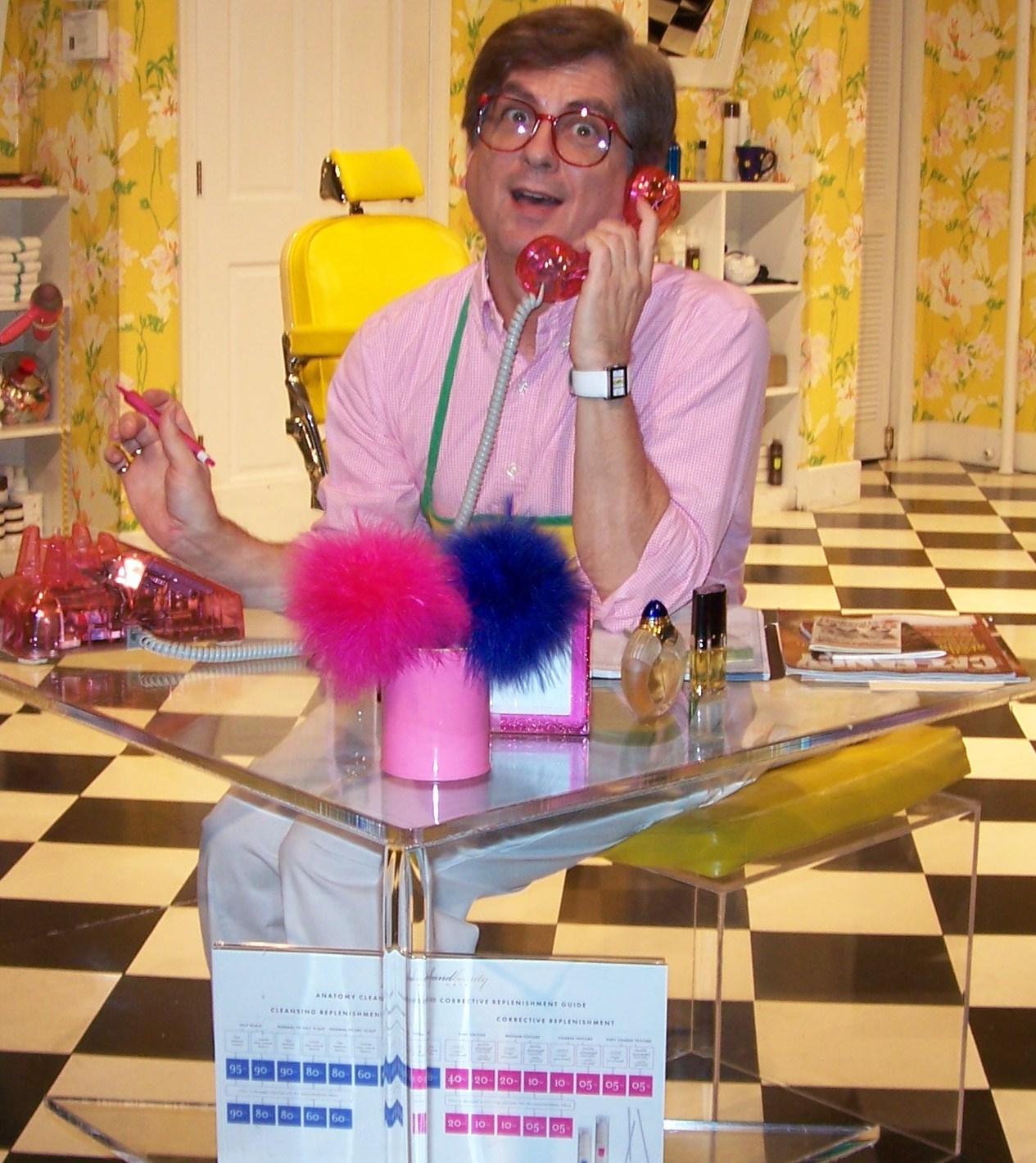
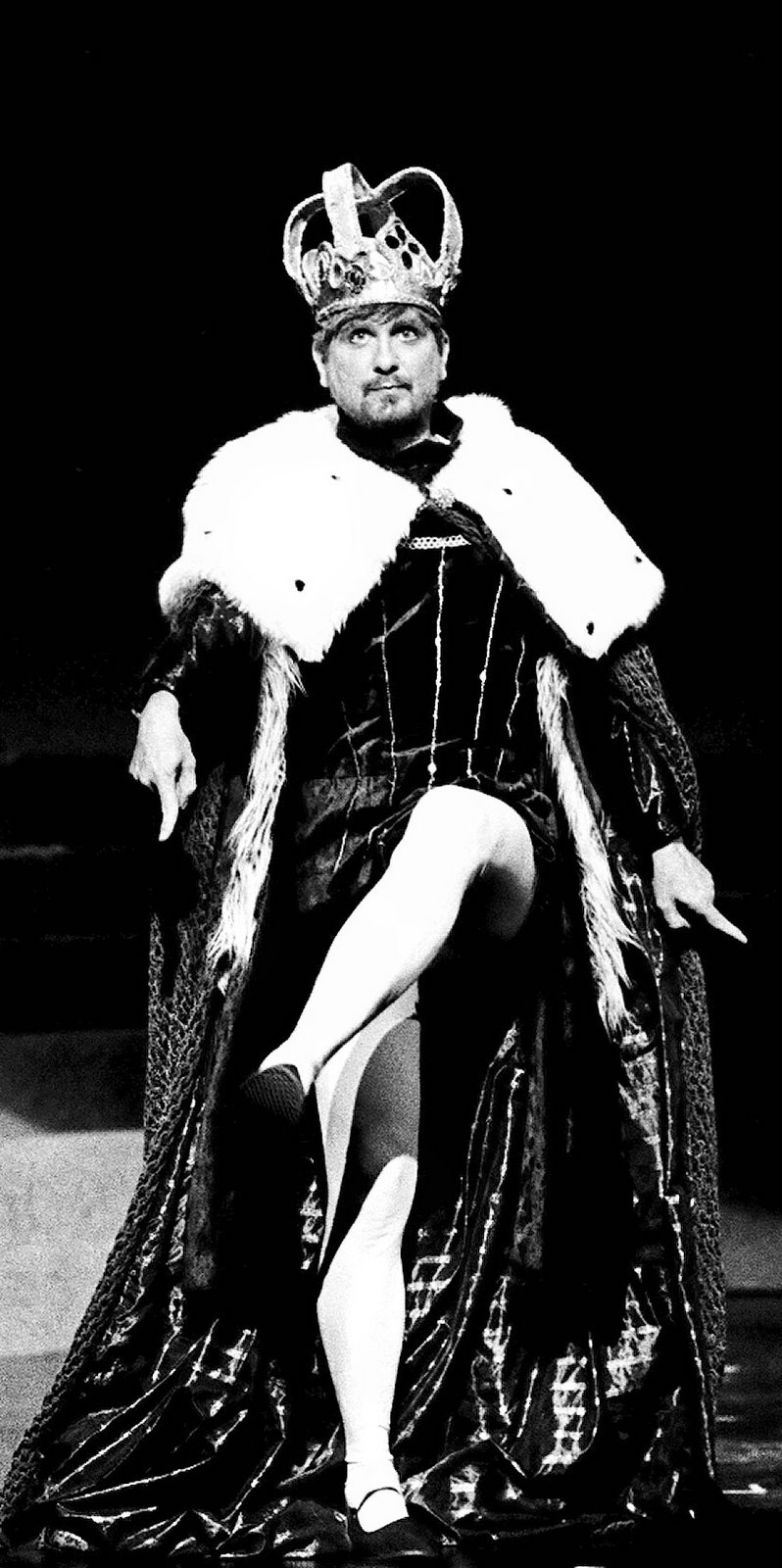
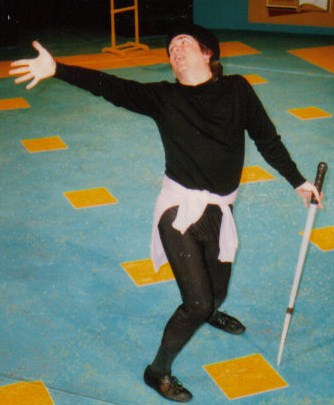
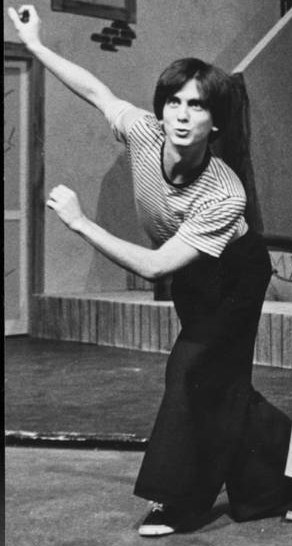
Here's the Fool's coxcomb.
And my apologies for being
absent for so long.

The biggest event in my recent life was surely my father's heart attack in January. 

Though he's well into his 80s, my dad has maintained perfect health throughout his life. 
Every doctor he's ever encountered has marveled that he will live beyond 100. He's never been overweight, and though he was a casual smoker in his young adulthood, he quit smoking over 50 years ago. His diet has been exemplary, especially since marrying my stepmother more than a decade ago, and his exercise routine includes cardio 5 times a week. He has aced every stress test ever given to him, and he hasn't had a drink in years.  In short, he was the last person ever thought to be at risk for a heart attack. So he had one.
It was a pretty major event, and Dad's overall good health helped him survive the damage to his heart.  By coincidence, I was scheduled to fly to North Carolina to visit him the day after his attack, so I was present for his hospital stay and his return home.  Even in those early days, his recovery seemed to pleasantly surprise his doctors (including the doc who missed Dad's clogged arteries all these years), and he is well on his way to recovery.  But this event severely rattled me and my family.  Having myself achieved half a century a while ago, I am now faced with the reality of Heart Disease in my Immediate Family.
Only a few weeks after my father's heart attack, my oldest and dearest friend Claudia lost her husband of 30 years.  I wrote about my Claud quite a while ago in these pages, and it was particularly frustrating for me to be a continent away while she went through this major trauma.
Not everything these past weeks has been traumatic.  I could claim that my own life has been filled with drama, but it's been the theatrical kind.  
Hudson Warehouse posters usually feature
the leading actors in evocative poses. My
little secret: I am determined to land on one
of their show posters in the future.

I spent most of February and March working on a production of Julius Caesar, produced by the group with which I have spent the past two summers, Hudson Warehouse.  After a decade working outside, this group snagged the opportunity to produce two shows indoors, and their first Shakespearean offering was that ode to the Ides of March.  I was very pleased to be offered the role of Casca, as the arc of the character was dramatic and satisfying.  The first time we see him, he displays a dry wit which sits well on me;  in his next scene, he is a bundle of nerves.  Hudson Warehouse has cast me very well in the past two seasons, for which I am grateful. 

Casca and Cassius face the elements.  For two summers,
the only complaint I had about working with Hudson Warehouse
was: the weather. Out in Riverside Park, we are at the mercy
of sudden rainstorms and blistering heat.
And I've been obnoxiously vocal about it all.
This year's indoor production included, you guessed it, a huge
rainstorm. Before my entrance, I sprayed water all over my hair,
face, and clothes, leaving me wetter than I had ever been in the
park.  I call this Payback Karma.
It was fun to watch Hudson Warehouse's team play around with lighting and sound effects, which are not possible when they work in Riverside Park.  I won't be working with HW this summer, as I attempt to get my personal finances in order, but I hope I'll be back with them again in the future.
Our Julius Caesar followed the historical account of his assassination, which reports that Casca delivered the first of 23 stab wounds. Our fight choreographer Jared Kirby (encouraged I think by our producer Susane Lee) gave the final stab to Casca as well.  And who was I to argue?
I had a week between closing Julius Caesar and the start of my next project, and I spent the time indulging in a couple of Broadway Shows.  I'll report on those separately in later pages.  On April Fool's Day, I began rehearsal for King Lear, in which I am, prophetically, playing the Fool.  I've worked with Titan Theatre Company before (in fact, they afforded me my NYC debut in Taming of the Shrew); this particular group of actors is an extremely strong one.  As I write this, we have opened the show to strong audiences and enthusiastic reaction.  Now that I'm back on The Blog, as it were, I hope to track our show's process in better detail.

Stay tuned for further reports, and welcome back!

Sunday, January 12, 2014

Friday Dance Party: There Is Nothing Like A Dame, She Wrote

This week's star appeared a long while ago in these pages, singing with her bosom buddy Bea Arthur.  Here's a peek at an earlier musical appearance.
All hail Angela Lansbury!  She's certainly considered a national treasure, so much so that it was a bit of a surprise when it was announced that she was to receive the DBE in the new year.  As a Commander of the British Empire, she can now be addressed as Dame;  because of her 7 or so decades of work in the United States, some of her fans forgot she was a Brit.
This is not Angela Lansbury, nor is she Lansbury's most famous character, Jessica Fletcher, but she might have been.  Once she completed her years with All In The Family, television producers were anxious to get beloved Jean Stapleton back on the tube.  She was offered Murder, She Wrote, and turned it down, thinking it was dreck.
Our newest Dame had some early success in Hollywood, snagging juicy roles in two MGM films back to back.  Both Gaslight and The Picture of Dorian Gray are better known today than when they were first released back in the early 40s, but Angela earned Oscar nominations for both pictures. 
This is not Angela Lansbury, but she deserves a mention.
She is Penelope Keith, who has maintained a substantial
career in Britain, and is known in the US as the star of
several Britcoms presented on PBS.  She is a particular
favorite of mine, and she was Damed along with Angela.

The majority of her film career, at the time, though, was comprised of small supporting roles which annoyed the heck out of our gal.  The Three Musketeers and National Velvet are among her films of the period, but the rest of her performances during the 40s were in movies we don't remember today.  Though throughout her career she made a relative buttload of theatrical films, we remember only a handful, including another Oscar nominated turn as the politically manipulative Mother From Hell in The Manchurian Candidate.
The Manchurian Candidate was a political thriller with psychological overtones set in the paranoid period of the Cold War.  Lansbury's rigid poise lent her an air of maturity which allowed her to convincingly play Lawrence Harvey's mother, though she was only 3 years older.  The film's star was Frank Sinatra, who did not want Angela in the part.  He lobbied heavily for the role to go to (are you ready?) Lucille Ball.  Director John Frankenheimer shot down that idea, but 12 years later, the tables turned, and our dame lost her most loved role, Mame Dennis, to Lucy.  It was not a fair trade.
Bedknobs and Broomsticks earned the
Oscar for Special Effects, but did not
measure up to Mary Poppins.
There is a generation of kids who first came across Angela Lansbury in the Disney film Bedknobs and Broomsticks, a 1971 musical which is often unfavorably compared to Mary Poppins. There was a mix of animation and live action, and the score was once again provided by the Sherman Brothers. 

Forget Disney, my favorite Angie film is the barely remembered
Peter Sellers item, The World of Henry Orient, in which he
played a philandering concert pianist stalked by two teenaged
girls.  Lansbury played the mother of one of the girls. Rent it if
you can: Paula Prentiss is a scream.
Mame, Mrs. Lovett, Jessica
Fletcher, and a teapot. She's a
Dame with Range.

Disney and Lansbury had much, much better luck together with Beauty and the Beast, the animated blockbuster which became the first cartoon to be nominated for the Best Picture Academy Award.  Our gal introduced the title song, which won the Oscar and became an international bestseller.
Murder, She Wrote turned our dame into an international celebrity.  It was a family-friendly whodunit and a mainstay on the powerful CBS Sunday night lineup.  Lansbury was nominated for the Emmy all 12 years of the show's run, and lost every year (she is in the record books for this stat).
This week's Dance Party comes from one of those forgettable films of Angela's early career, and though she is singing and dancing in this one, her musical talents had been forgotten by the early 60s. 
Stephen Sondheim's most prestigious
failure remains 1964's Anyone Can Whistle,
in which Angie played a corrupt mayor.

It was a surprise to everybody that she could handle the leading role in a Broadway musical;  unfortunately, her first foray into theatrical musical comedy was in the notorious flop Anyone Can Whistle
Angela was a smash as Mame; sadly, only grainy
clips of her performance remain. But on her 84th
birthday, she appeared in this Dance Party,
filmed while she was packing houses on Bway;
it gives a good indication of what her
Mame must have been like.

Lansbury emerged from that debacle unscathed;  when she turned in a stellar performance in Mame, she cemented her reputation as a musical star.  Back to back Tonys, for Mame and Dear World, followed.  She was to win two more Tonys for musical roles, and I was privileged to see her in both.

When I was 17, a group from my high school in Atlanta spent three weeks touring Europe, devoting the first full week to seeing London's sights. 
Other than Roz Russell in the film, this
was the first time I ever saw Mama
Rose.

That included a trip to Stratford to see some Shakespeare.  We saw As You Like It, set in a forest made of chiffon, and Timon of Athens, set among a motorcycle gang.  Things were a little more palatable in the West End, where we caught Angela Lansbury taking Rose's Turn in Gypsy.  Our dame had to be persuaded to take on that iconic part, which was still regarded as the exclusive property of Ethel Merman.  Producers attempted to present the show in London for almost 15 years before Lansbury took the role. And re-energized it. 
My high school trip to Europe was not
strictly a Theatre Jaunt, though we saw
Shakespeare at Stratford and Gypsy in
London. After the Follies Bergere in
Paris, we hit Athens and Rome. This
is me.  At the Acropolis.

I remember her performance vividly, and after seeing it, could not imagine that battle ax Merman in the part.  After an American tour, Angela took the production to Broadway and won her third Tony.

I was also privileged to see the performance which many believe to be Lansbury's finest stage work, as that villainous Kewpie doll who baked people into pies, Mrs. Lovett, in Sondheim's masterpiece, Sweeney Todd
Lansbury was the undisputed comic relief in the gruesome
grand guignol tale of Sweeney Todd. Who knew "popping
pussies into pies" could be so funny?

After playing the show in New York for a while, Angela left the production in the hands of Dorothy Loudon, and opened a touring production in Los Angeles.  It was there that the show was videotaped, over a period of three days.  I was present in the audience one of those days, and was again bowled over by our dame's work.
Flanked by Charles Durning and Michael Jeter, Angela was pegged to play Mrs. Santa Claus in Jerry Herman's attempt to create a Christmas perennial cash cow.  Our dame had won two Tonys singing Herman's songs, so in 1996, he wrote this TV movie for her, in hopes that it would be run every year.  Nobody's seen it since.
Lansbury has continued her stage work as she has aged.  She was well-received in a recent revival of A Little Night Music, playing a role created decades earlier by Hermione Gingold, and a year later, she spent some time in a starry revival of Gore Vidal's The Best Man.
Lansbury won her only non-musical Tony for this performance as the psychic Madam Arcati in Coward's Blithe Spirit.  The award ties her with Julie Harris as Broadway's top Tony winning actress (Audra McDonald has since joined that group as well).  Angela is scheduled to reprise this performance in London this year;  it will be her first stage performance in London since I saw her there in Gypsy 40 years ago.
In the past year, Lansbury has toured Australia in Driving Miss Daisy, opposite James Earl Jones.  The old gal certainly isn't slowing down.

This week's clip is from Till Clouds Roll By, a fictionalized biography of Jerome Kern.  The film includes several big production numbers by stars in cameo, including Lansbury;  this number comprises her entire performance in the movie.  But it does include some dancing, a rarity on the Dance Party these days.  Let's go spooning with Dame Angela Lansbury.


Monday, December 30, 2013

New Year's Dance Party: The Jackpot Question In Advance

This week's Dance Party brought back lots of memories of this show, in which I appeared shortly before leaving Los Angeles for good.  Perfectly Frank was a musical revue of the work of Frank Loesser;  our company sang "What Are You Doing New Year's Eve?" as the centerpiece of the act one finale.
As the holiday season concludes, it's fitting that this week's Dance Party feature a song associated with New Year's Eve. 
Frank Loesser wrote Guys and Dolls, How To Succeed..., The Most Happy Fella, and Where's Charley?, as well as a slew of songs for movies and as stand-alone tunes.  He wrote two songs which have become inexorably linked to the holidays, though he meant neither one of them to become holiday warhorses.  "Baby, It's Cold Outside" and "What Are You Doing New Year's Eve?" are now holiday standards.  It particularly galled Frank that the latter was sung at Christmastime, as he wrote it to be sung in the spring.  Note the opening line, "Maybe it's much too early in the game."  These days, that lyric is presumed to mean that it's too early in the relationship to be making plans for New Year's Eve, but no, Loesser meant it literally to mean too early in the year.
Frank Loesser wrote this tune back in 1947 and, much to his chagrin, it immediately became a holiday standard.  Everybody and his brother has recorded this song. 
When Barbra Streisand recorded a Christmas album way
back in 1967, the thing went quintuple-platinum.
Everybody forgot she was a Jewish girl from Brooklyn
and she was crowned the Queen of Christmas Music.
Her second holiday album, above, features this week's
tune.

Old timers such as Margeret Whiting and Dick Haymes brought the song to the public in the late 40s, but it may have been Nancy Wilson's version, released in the mid-60s, which put the tune in the standard holiday repertoire. 
Rod Stewart not only co-opted the song, he snatched
Ella Fitzgerald's performance of it, and with tech
slight-of-hand, recorded a duet with the long dead diva.

Johnny Mathis, Barry Manilow, The Carpenters, Donny Osmond, Bette Midler, Harry Connick, Patti LaBelle, even Chicago all took their turn. 

Our Dance Party clip is responsible for bringing new attention to the song.  A few years ago,Zooey Deschanel teamed up with her friend Joseph Gordon-Levitt to publish a sweet little rendition on YouTube. 
Nobody cares who this guy is, but the fact that he is
holding a ukulele can be blamed on this week's Dance
Party clip.

The popularity of the clip soared, with over 13 million views, and now, the Internet is thoroughly cluttered with all manner of amateurs accompanying themselves on the ukulele.  I wonder what Frank Loesser would think about that?  But why worry about such things, let's just wish everyone a Happy New Year, and hope everyone has a special somebody to kiss at midnight on New Year's Eve.