Friday, March 22, 2013

Friday Dance Party: The Culture Of Rape

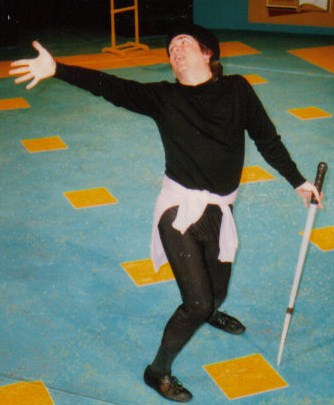
I wish I had a clip of the production of Man of La Mancha in which I appeared.  Nancy O'Bryan as Aldonza broke your heart.
Not a very nice phrase, is it, "the culture of rape"?  The term has been tossed around a lot recently, most notably this week, as the notorious Steubenville case concluded.  Those animals were lucky to be tried in juvenile court, and deserve to be labeled sex offenders for the rest of their lives, because that is what they are.
The little hamlet where these punks perpetrated their crimes has been called a real Football Town, where the high school players are treated as kings and they are protected from the consequences of their actions.  When the verdict was announced this week, one of them broke down into tears and moaned to his lawyer, "now no one will want me."  Was he worried that no woman would ever wish to spend her life with a sex offender?  No, he was worried that no FOOTBALL TEAM would want him.
Not a very pleasant subject for the Dance Party, is it?  I've been wondering this week how often violence against women has been featured as entertainment, and how rarely there are meaningful consequences for the perpetrators. 
The Rodgers and Hammerstein chestnut Carousel has an abusive relationship at its center.  Billy Bigelow had a nasty habit of slapping around his gal, and even physically threatened his own daughter from the afterlife.
I seem to remember the film The Color Purple had a very violent streak, so I assume the musical version does, too.  Violence against women has always been dramatically titillating, I suppose, and the culture in which it seems acceptable has been around for a long, long, time.
Even if you've never watched a daytime soap in your life, you've heard of Luke and Laura.  This romantic duo from General Hospital are still on the show's canvas more than 30 years later.  Their wedding remains the highest rated episode in the history of daytime drama.  They landed on the covers of People and Newsweek and inspired the term "supercouple."  Know how their romance began?  He dragged her onto the floor of a disco and raped her.  But the chemistry between the actors was so strong, Luke was transformed into an offbeat hero.  Unbelievably, this is not the only instance in soap history when a rapist became so popular that he was reinvented as a leading man. General Hospital has TWO such anti-heroes.
That most famous of chamber musicals, The Fantasticks, features a "Rape Ballet," a comic sequence in which a kidnapping of the ingenue is staged.  Preceding that insensitively named segment, the score features a song which, for decades, was commonly called "the Rape Song." 

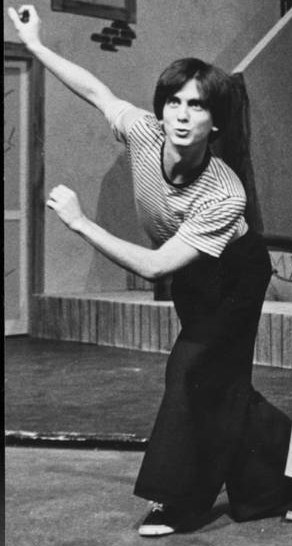
As Mortimer in The Fantasticks, I participated in the comically rendered "Rape Ballet." Even as a teenager in the 70s, I was uneasy with the way the writers bandied around that word. Didn't "rape" always mean sexual violence? Apparently the writers did not think so.
The lyrics repeated "rape" over and over, comedically, as a conman convinces the ingenue's father that the "rape" (his word) of his daughter will be a good thing.  "Rape is the proper term," El Gallo assured the dad.  "It's short and businesslike."

Or at least it was.  The creators of The Fantasticks, many many years too late, were convinced to change their offensive language;  all mention of rape has now been removed from the classic show.
In The Fantasticks, Schmidt and Jones did not intend a sexual meaning when they composed their Rape Ballet.  The fact that the sequence remained in the show, under that name, for decades, speaks volumes. (I wrote about The Fantasticks a while back and mentioned this issue.)
This week's Dance Party features a searing number from an old warhorse, Man of La Mancha.  This musical from the mid-60s did not shy away from violence;  this song is sung by the leading lady, a prostitute, immediately after she has been gang raped (mercifully, offstage). 
The classic Forsyte Saga had the unhappy marriage of Soames and Irene at its center. In an early catalytic episode
of the 1967  miniseries, Soames "asserted his marital rights," and raped his wife. By the end of the 26 hour series,
he had been transformed into a charming curmudgeon.
 
The Scarlett/Rhett relationship in Gone With the Wind is
more than tempestuous: it's violent. Here Rhett subdues his
wife and carries her upstairs against her will. But the next
scene alleviates the viewers' fears: Scarlett is humming in bed
while she enjoys the sunshine and breakfast on a tray. What
was the message being sent to women here? And to MEN?

There are many renditions of Aldonza available in video clips, it appears to be very attractive to female singers who really want to show some grit.  This clip comes from the disappointing film version of the show (when Peter O'Toole retired last year, another clip from the movie received the Dance Party treatment). 
I appeared in Man of La Mancha at Wayside Theatre several years ago.  Our Aldonza delivered an earthy performance; I wrote about it here. Her rendition of Aldonza was far superior to Sophia Loren's overplayed version below.
As far as I can tell, Sophia Loren was singing for herself (O'Toole was dubbed in his big numbers), as she fumbles several of the notes of this song.  I've got some problems with her overall performance anyway, but for this week, when violence against women is in the national consciousness, Aldonza is an appropriately timely clip.

Tuesday, March 12, 2013

Atmospheric Artistry

A few weeks ago, I did something I swore never to do again.  I've made that promise to myself before, but every few years, I renege on it.  I spent two very long days displaying my atmospheric artistry. 
This Ricky Gervais series was an absolute scream, but did not really address the abject boredom which accompanies the life of an extra.  Who could be bored with Ricky Gervais in the room?
I worked as an extra.  We don't really call it that anymore, it is commonly known these days as "background work,"  though filmmakers sometimes simply call it "atmosphere." 
My first extras gig was as "deep background"
on this flick. I turned down an audition in
order to do it, a mistake I would never repeat.

In the old days, extras were considered the lowest rung on the ladder of show business talent.  It may still be considered that way in Los Angeles.  Certainly when I lived in L.A., no self-respecting actor would ever work as an extra;  it was commonly believed that those who had been extras would never be considered for speaking roles. 
I love this story about Hollywood extras.  In 1974's The Towering Inferno, dozens of party-goers are trapped on a top floor of a skyscraper on fire.  There was to be weeks and weeks of work for these background players.  In the early days of shooting, the director needed a handful of extras to walk into the elevator.  Hoping for some dynamic close-ups, several amateurs volunteered.  Yes, they were shot going into the elevator, after which the shaft exploded and they were burned beyond recognition.  The less-eager but smarter background actors who had held back remained on the set for the duration of the shoot, and probably bought boats with their overtime.
Back then, extras even had their own union.  Eventually, the Screen Extras Guild (SEG) was absorbed by the Screen Actors Guild (SAG), and much later, they were joined by the American Federation of Television and Radio Artists (AFTRA), becoming the messy monolith to which union film actors now belong.  But I digress.
Contact, starring Jodie Foster and directed by Robert Zemeckis, spent many weeks in DC in 1996.  Big budget movies love to film in front of the national monuments of the capital.  The biggest background shoot I have ever worked was on this picture, which took place on a wintry day, outside.  Literally hundreds of extras shivered all day in sub-freezing temps while Jodie and Matt McConaughey walked up and down the steps of the Capitol building.  Once again, I swore never to work background again.
When I landed in DC, I discovered that there was no stigma attached to working "background."  Many professional actors did it to help augment the income.  I did my fair share of it (I wrote all about my film career, such as it was at the time, here), and hated every minute of it. 
Wayne Knight, so effective in Seinfeld and 3rd Rock From the Sun, disappointed me greatly when I worked background on For Richer or Poorer.  I sat in the climactic courtroom as he was dragged in to wrap up the plot.  The monologue he was supposed to deliver was clearly hilarious, but he had not learned it.  Take after take, he continued to cut the text until only a few lines remained.  It was my first indication that the screenplay of a film is nothing like the script of a play;  the dialogue in a screenplay is treated as merely a suggestion.
Waiting around wears me out more than doing anything active, and background actors do a hell of a lot of waiting around.  In recent years, every single time I work background, I swear I'll never do it again.

Two weeks ago, I received an offer for two days' work on the HBO sitcom Veep.
I have not seen this HBO series, but was impressed with the recurring cast, most of whom were on set during the two day shoot.  Julia Louis-Dreyfus and her costars were encouraged to improvise around the scripted dialogue, and they were all pretty good at it. Louis-Dreyfus won the Emmy as Best Comedy Actress for Veep's first season.
The show films in Baltimore and the surrounding area, and the casting director, though local, has a national reputation and has won several Emmy awards for her work. 
Tony Hale plays the VP's assistant, and provided much of the
physical comedy on set. He is an alum of another respected
cult favorite, Arrested Development.

I do not get called by Pat very often, so I do not like to refuse her.  I was assured that the shoot would be a small one, including less than 10 or so extras.  The smaller the number of extras, you see, the less likely it is that you will be treated like cattle.

I need the money, and I need Pat to be pleased with me, so I agreed to the gig.  The shoot was scheduled on a Monday and Tuesday, which fit into my performance schedule of Barefoot in the Park, so I really had no reason to refuse. (You didn't know I was doing Barefoot in the Park?  Where have you been?? Go here for that report.) I dutifully set my alarm for 5 friggin' o'clock in the morning, and left the house at 6 AM for the one hour drive to the location.  Much of Veep is shot on a sound stage in Columbia, MD, but these two days were to be shot on location in a mansion on the wrong side of Baltimore.

I arrived at Base Camp, the area where all the wardrobe trailers, and those with the actors' dressing rooms, were set up. 
The West Wing visited DC several times a year,
including this famous 2-parter which traced Bartlett's
relationship with Mrs Landingham. I was in the
background during the Young Jeb flashbacks.

Often, as in this case, Base Camp is several miles away from the actual shooting location.  There was much consternation in the wardrobe trailer about my clothes, which were not found acceptable.  Background actors, you see, are almost always asked to supply their own wardrobe, and I had done my best to dress as the character I was to portray, a hair/makeup person.  I was stripped of my own clothes, and given others which were so similar to the ones I had brought that it was comical.  Oh, well.

Vans transported the 10 or so of us to the set at around 8 AM.  Background actors are the cheapest of a film's labor force, so they are always the first required on the set, and the last to be released. 
I played a lab tech in Michelle Forbes's morgue on
Homicide. She struggled with the word
"toxicology."  She insisted it was "taxicology."
When proved wrong, she demanded to know what
"taxicology" was. I piped up "it's the study of cabs."
I was not hired again on Homicide.

It makes for a very long day, but a profitable one.  The initial 8 hours of an extra's workday is dirt cheap, even for union actors, hovering around $125 total.  But once overtime kicks in (which it usually does), the money starts to ka-ching

There were two of us slated to play "hair/makeup" artisans for these two days.  It turned out that this entire episode of  Veep was to take place in the supposed home/office of the Vice President, and would concern an important press interview (thus the need for "hair/makeup" people).  Other extras were to portray cameramen, sound guys, grips, and others who perform tasks during TV interviews.  Gotta love our profession, which requires that actors portray professionals who are already in the room.  Actual cameramen were shooting fake cameramen who were shooting the interview;  actual hair and makeup people were touching up fake hair and makeup people who were touching up other actors.
As the lights and such were being set, my co-star, Allison Janney, fiddled with index cards which contained her lines.  She would use them as props in the scene as well.  While we waited for things to get going, a crusty old grip approached her.  "We worked together before!" he announced.  "I worked on Chicago Hope!"  Allison dryly replied, "That was Christine Lahti."
I admit to having some fun with the scene in which I adjusted Allison Janney's hair.  She was playing the high-powered journalist conducting the interview, and our big scene included her producer;  the scene revealed all the sneaky questions they were going to spring on our heroine, the veep. 
Janney's background is the stage; she
did her best to keep up with the improvisational
aspect of Veep.  She spent years reciting text
written by Aaron Sorkin, whose dialogue did
NOT need improvised improvement.

I was quickly briefed, by REAL hair and makeup, how to futz around with Allison's hair without really messing it up, which must be avoided at all costs.  The sequence went well, I think, but who am I to judge, I'm not even sure I was in the camera shot.  But the director, a short Brit with a lively sense of humor, encouraged Janney and the actor playing her producer to stray from the script if they liked.

This was to be the most fun, and the most engaged, I was to be for two days.  I appeared in one or two more background shots, but spent most of Monday in the holding cell, which really felt like one, as I was trapped with the other extras.  Though there were only 10 of us, I was to discover that most of them were righteous bores.

I've had some lousy background experiences, but this one was the worst.  The film was Species 2, and I was booked for two days.  The above scene was shot the first day; we spent many hours in this banquet hall. You'll never find me in this shot, but I am there.  This scene remains in my memory solely because the guy at the podium, giving a lengthy speech, is James Cromwell.  He delivered this monologue, letter perfect, over and over again.  His stage credentials were showing.  The date was July 2, my birthday.  We were called back the next night for an outdoor scene.  In July.  In DC.  In tuxedos.  Hour after hour we stood in the summer air, with temps in the 80s and humidity at 90%.  I've never been that wet except on purpose.  The film employed dozens of non-union extras, and had advertised for them.  So we had many civilians who thought being in a movie would be fun, but who got very bored and unruly after a few hours.  Our overtime extended into the 4th of July holiday, so the paycheck was substantial.  I needed it to be.  During the shoot, my backpack was stolen.  Wallet, phone, eye glasses, radio, keys, all gone.  Yet again, I swore never to work background.
We wrapped the first day of Veep at 9:30 PM, having been on the clock since 7 AM.  Ka-ching.  I dashed home to hit the hay for the next long day.  I was to learn that Veep usually budgets 5-6 days to shoot a complete episode, but in this case, the entire episode was being shot on these two days.  Janney had to return to LA Wednesday for another gig.  So, concerns about overtime were non-existent;  they were determined to get the job done, no matter how long it took.  Tuesday was more torturous for me than Monday.  We arrived at 9 AM, and I took my seat on the hard, straight-backed chair in the holding area, and waited.  I was not called to the set until 11 PM.  You read that right:  I sat, unused, for 14 hours.  We were not released from the set until 1 AM.
I actually had a very small recurring role (2 episodes is enough to "recur," right?) on The Wire, so I never worked background on it, though it spent 5 or so years filming in Baltimore.  Homicide was also filmed in Baltimore; they both employed a dozen or so background actors as regulars in the squad room.  See all those people in the background?  They worked several days a week all through production.  They are probably the only SAG actors in the DC area to earn enough to qualify for union health care.
I was exhausted and frustrated and determined (yet again) NEVER to work background again.  My only consolation was the knowledge that severe overtime and other penalties would result in a substantial paycheck for my two days' work.  I did indeed receive nice paychecks in the mail the following week.  I also received greetings from both the Maryland and District of Columbia Departments of Transportation.  As I was heading out to the gig on Tuesday morning, a traffic camera snapped a lovely picture of my car going over the speed limit. 
 

About 16 hours later, as I returned south from Baltimore to DC at 1:30 in the morning, another camera snapped my car again.  In addition to some nice overtime payments for doing Veep, I was awarded $140 worth of speeding tickets.

I swear I'm never working background again.

Saturday, March 9, 2013

The Birdman of 48th Street

It's been an active week for me, with a round trip to New York, an ineffective audition, and a staged reading of one of the oldest plays in existence.  But while I spent time on the New Jersey Turnpike, and while I confused a director with my monologue from Ionesco, and even while I deconstructed the archaic language of an ancient morality play, I was reeling a bit from the Post-Show Depression. For the past nine weeks, the centerpiece of my life has been this guy:

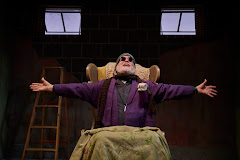
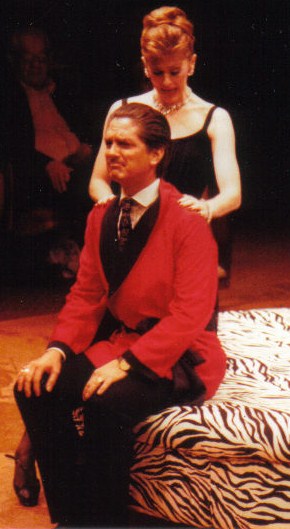
Victor Velasco
It was rather a fluke that I ended up in this production of Barefoot in the Park. I had success auditioning for the Compass Rose Theatre last year, but certain union matters prevented me from accepting the gig.  This time, it appeared the group had lost an actor, as they announced auditions for the role of Velasco only a few weeks before rehearsals began. I spent all of 2012 working in Showcase productions in New York, which are artistically satisfying but financially embarrassing. It was time for a real job.
Our table read revealed a nice chemistry among the actors.  I was asked to remove the gray from my hair, as one of Victor's quirks was his attempt to look younger than he really is.  I can't relate to that at all.
I was pleased to land the role of the eccentric neighbor to the central couple, young newlyweds moving into their first apartment.


The lovely and talented Brandon McCoy and Brianna LeTourneau played the central couple with humor and passion.

The play is very much of its time; written in the early 60s, the attitudes toward women, motherhood, marriage, and the like seem a bit jarring to today's audience. 
Written in 1963, the show's heroine has no interest in a career, and is concerned only with setting up her new household.
But the central relationship seems to be one to which everyone can relate, and our leading actors played the hell out of it. Perhaps it helped that they are planning to be married in real life, but I think they are both talented enough to bring sizzle onstage regardless of their personal life.
Brandon and Brianna had an undeniable chemistry together  as Paul and Corie.  It formed the backbone of the show.
The Compass Rose is a brand new company, Barefoot in the Park was only their 4th full production. As usually happens with such young organizations, budgets were small, so our design element was, well, elemental. But the performances overcame the minimalist designs, and people come to the theatre to see the acting anyway (at least, that's what I tell myself). 
Our director also handled the set and sound design.
We were confronted with our first challenge with the role of "the delivery man," a 15-second walk-on part with no lines but a great sight gag. Our producer, the lovely and talented Cindy Merry-Browne, was having trouble getting an actor to commit to such a minor role. I suggested that, instead of trying to find an actor who would take such a cameo, we auction off the chance to play the part to audience members (I had personal experience with just such an occurrence, when I played Dr. Einstein in a dinner theatre production of Arsenic and Old Lace decades ago; I wrote about that experience here). My suggestion was not met with much enthusiasm, and ultimately, we just cut the role out of the show. Don't tell Doc Simon.
Velasco's behavior would not be tolerated today.  He barges into strangers' apartments, climbs through their windows, and takes over their lives.  His clumsy attempts at seduction would be considered harassment today.  I hope I made him lovable enough that modern viewers would forgive his unforgivable behavior.
I loved working with our young director, the lovely and talented James Phillips, who attended college in DC but has since relocated to New York. He had a real feel for the comedy of the piece, yet was also keen on keeping the honest emotional thread.
After our first weekend, we lost Mother.
The weekend after we opened, we were dealt a serious blow when Cindy, who was playing the role of the mother as well as acting as producer of the show, slipped on the ice and broke her ankle. Three performances were canceled as we scrambled to replace her with the lovely and talented Sue Struve, who jumped in with both feet. It did not seem that the show suffered. 
I grew to admire and even envy Victor Velasco.  His spontaneous spirit was a counterpoint to my own cautious nature. It's always fun to play someone who's the polar opposite from yourself.  If you're attentive, you'll learn something.
We had a healthy run of five weeks, but did not as a rule have healthy audiences. The theatre is rather makeshift (in fact, it was a former McDonalds, located in a strip mall in a suburb of Annapolis), and holds only 50 seats. For reasons to which I am not privy, we rarely filled those seats, and I would guess our house size averaged around 20 or so. This was a shame, as the show was in great shape, and I am proud that we never gave a half-hearted performance, no matter who was (or was not) in the audience.
This bounder's accent was, well, indeterminate.  It was eastern European for sure, but geographically non-specific, which gave me the leeway to make terrible mistakes with it.  The comically Slavic accent would have no place in Sophie's Choice, but fit right into Neil Simon's world.
Well, there were a few of our houses which should not have been there.  Compass Rose labels itself as a "teaching theatre," with their educational component being very important.  Previous shows such as To Kill A Mockingbird and Oliver were well-suited for younger audiences.  Our show was sold to schools as well, and we had three matinees devoted only to middle schoolers. 
After an uproarious night on the town, our heroes discover they are mismatched, and real emotions and fears bubble to the surface.  It is a funny and somewhat painful climactic scene which was incomprehensible to a middle schooler.
There is nothing particularly inappropriate in Barefoot in the Park; there is no cursing and nothing overtly sexual (though our leading players did a lot to heat up the stage on their own), but I still wonder who in the world thought a 12-year old would find anything with which to relate in the story of young newlyweds setting up their first apartment.  As a result, the audience reaction during those matinees was pretty dismal.  Still, I was proud that our company delivered topnotch performances on those days, even in the face of silence from the crowd.
Despite critical kudos and strong word-of-mouth, our houses were disappointing.  Those who attended loved the show, but there seemed to be bewilderment at the theatre regarding the small attendance.  Our producer was sidelined by illness throughout our run, and there did not seem to be anyone else ready to publicize the show.  Compass Rose is in the midst of creating a new space for themselves, and in the scramble to get the new theatre ready for the next production, it sometimes seemed their current show had been left to fend for itself.
By the time we closed, we had earned a Helen Hayes Recommendation, awarded by the HH judges who attended, which was a first for this young company. And I loved performing the show, though I could have done without the substantial commute from DC (about 50 minutes each way). I started the project with a secretly snobbish attitude toward Neil Simon, especially early Neil Simon (this is his second play). Surprisingly, considering he is so popularly performed and I am so often cast in comic roles, Barefoot in the Park was my first experience in a Neil Simon play. 
Following a first act which dealt largely with character, our second act was full of incident.  It played like a dream.
Rehearsing this show up close and personal revealed to me that Doc is a strong structuralist. Surely he does not pass up the opportunity for a set-up/joke routine, but he is also writing characters of some depth. There are reasons he is so successful, and I think I discovered some of those reasons with my latest experience.
As I wrote last week when the show closed, it was a pleasure to play this enthusiastic hedonist with the geographically suspicious accent. Victor Velasco and I are not alike. ... While I bundle up, he enthusiastically walks barefoot in the park in February. He eats life. I nibble. He charges into the unknown. I hang back. He walks on the roof. I'm afraid of heights. He revels in spontaneity. I make a plan. He always says YES. I hesitantly shrug Maybe. I learned some unexpected things from you, Victor. Many thanks.
 

Friday, March 8, 2013

Friday Dance Party: Less Miserable

Gay rumours have swirled around Hugh Jackman ever since he played the flamboyant Peter Allen so well.  To his credit, he has always addressed those rumours with nonchalant humor and humanity. 
At long last, I sat down this week with Les Miserables, the movie. 
Hugh Jackman's first international notice came in a British
revival of Oklahoma.

As a SAG member, a special screener DVD was supposedly mailed to me months ago, For My Consideration.  This week, months after the SAG awards were presented, the DVD mysteriously arrived.  I admit I was not that peeved that the film was late, as I am most definitely not a fan of this musical.

I'm sure my antipathy toward this musical is my own failing.

I saw the first national tour of Les Miz when it sat down for a while in Los Angeles.  It was supposed to be the greatest thing since A Chorus Line. Nope, but at least it was better than Cats.  When the show entered hour three, I'd really had enough.  There are those out there who love this musical, and I certainly respect their opinions, as many of them are better informed than mine, where music is concerned.  But I found myself bored almost immediately by Les Miz.  The piece worked strenuously to touch the emotions, and all that work really wore me out. 
I dreamed a dream that this film version would improve my opinion of Les Miz.
I'm worn out by the movie, too.  I have sat down twice (so far) to watch it, but I have only reached the half-way mark.  I imagine eventually I'll get through it, but is it worth the struggle? 
Signature Theatre scaled down the epic. It's the only
production of Les Miz I have enjoyed. I wrote about it here.

Anne Hathaway's Oscar winning performance is already over, unless she comes back as a ghost, I don't remember.  The Thenardiers have come and gone, twice, and I find myself agreeing with everybody who claims Russell Crowe is a big disappointment.  I'm sorry this movie fails for me, as I would like nothing better than for the movie musical to make a strong comeback.
Despite critical drubbing, this show packed
houses for a year, due solely to Hugh's
presence in it.

They should make a movie musical out of the show which provides this week's Dance Party.  It's very cinematic, and tells its story in a linear fashion which is attractive to American audiences.  The subject matter, though, is probably not everyone's taste.  The Boy From Oz is a biographical musical telling the life story of composer/entertainer Peter Allen;  it is sometimes classified as a juke-box musical, as the score consists only of music written, or co-written, by Allen himself. 
Peter Allen

Hugh Jackman, who I must admit is pretty impressive in the Les Miz film I am currently slogging my way through, is completely (and appropriately) over the top here in Oz
The Boy From Oz was in a long line of star-driven mediocrities.  Nobody much liked the books or the scores to Coco (go here for that Dance Party), Victor/Victoria (go here for that one), Curtains, even the most recent Promises, Promises revival (go here for that one).  But their stars kept the houses full.  When Hepburn, Andrews, Hyde-Pierce, and Hayes left these shows, they either sputtered out quickly or, in the case of Oz, were immediately shuttered by their producers.
Jackman became a real Broadway Baby with this performance, which won the Tony and was the sole reason the show lasted a full year.  The producers didn't even try to keep the show open after Jackman's contract lapsed. 
Jackman hosted the Tonys and revved
up the crowd as Peter Allen. He won
an Emmy as well as the Tony.

Instead, Hugh took the show back to Australia, redesigned for arena stages which could hold 10,000 people, and toured every stadium on the continent.  Our hero returned to Broadway for 10 weeks in 2011, where his concert show packed the houses and turned an enormous profit.
Jackman's return to Broadway in concert was the hit of the season.
As for Les Miz?  I'll keep slogging through it until I finish, maybe one day next week.  I had absolutely no temptation to use a clip from the film this week.  Wouldn't we all rather watch Hugh Jackman shimmy than brood?

Tuesday, March 5, 2013

Friday Dance Party: What Is It That We're Living For?

Franklin's final role was as a nun on
The Young and the Restless, a gig she took
to keep her insurance as she battled cancer.
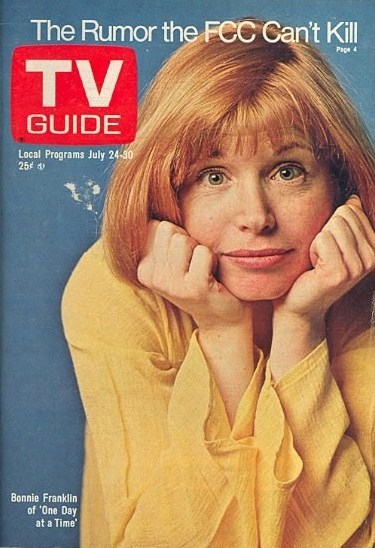
This well-loved 70s sitcom star died last week, after a nasty battle with pancreatic cancer.  She was not one of my favorites, and her TV show, even less so.  But as she was a Tony/Emmy/Golden Globe nominee (but never winner), and as she starred in a situation comedy which is reported to have been a ground breaker (I might take some issue with that), attention must be paid.

Bonnie Franklin
1944-2013
Her greatest fame came as the leading lady of the sitcom One Day At A Time, which had a substantial run of 9 years in the late 70s and early 80s. 
I was not a fan of One Day At A Time. When I did watch, it
was only to tune into the train wreck that was Mackenzie
Phillips.

The premise of the show slipped right into the feminist movement of the period, as it concerned a divorced woman raising two teen-aged daughters on her own.  Franklin's obits last week never failed to mention that the program was a ground breaker, presenting a divorcee in a new and modern light.  Perhaps that was true.  It has also been reported that the show spent a lot of time on social issues of the day, such as pre-marital sex, birth control, suicide, and sexual harassment.  I do not remember the show as being so edgy, but I confess that I rarely watched the thing. 

Franklin owes her biggest success to this lady.Whitney Blake was an actress best known as Hazel's
boss.  Years later, she created One Day at a Time, loosely based on her life with her daughter, Meredith Baxter.
I didn't even remember that the show was from the Norman Lear factory, as it did not seem as relevant as All in the Family, Maude, and Good Times.  Ms. Franklin never grabbed my attention the way Lear's other stars did;  when Bea Arthur, Carroll O'Connor, or Esther Rolle were on screen, you couldn't look away.  As talented as Bonnie Franklin was, she did not have that charisma.
 

Franklin's earlier career was solidly musical.  She was an accomplished tapper at an early age, and she made her first big splash playing a Broadway chorus girl in the 1970 smash Applause.  Though her stage time was about 10 minutes, she earned a Tony nomination for performing the title number of the show. The role she created is now credited as Bonnie in all productions of Applause.  Her competition for the Tony included her costar Penny Fuller, whose role was substantially larger.  They both lost the award to Melba Moore in Purlie.

In the years since her sitcom folded, Franklin has hit the regional theatre circuit.  Off-Broadway, she assumed one of the title roles in Grace and Glorie, taking over for Lucie Arnaz and starring opposite Estelle Parsons.  She would return to the role opposite Pat Carroll.
Bonnie (second from left) appeared at Fords Theatre in All I Really Need To Know I Learned in Kindergarten, opposite James Whitmore and Liz Sheridan.
The clip below comes from the Tony Award presentation of Applause.  Back in those days, the segments from musicals were substantially longer than they are today.
Bonnie did not share any scenes with Applause's star, Lauren Bacall, who incidentally, starred in her own Dance Party from the show here.
 
Bonnie's appearance in
Applause was oh so perky.

This clip gives a pretty good indication of the reasons Applause has never seen a major Broadway revival.  It is most definitely a period piece now, but the writing is cloying and the dialogue unrealistic, even for its time.  The stagey-ness of this scene, which takes place in a bar where Broadway dancers hang out, is laughable now, especially since we have been exposed to the life of a gypsy in a far more realistic fashion in A Chorus Line.  Still, this is the most famous of Bonnie Franklin's musical appearances, so do with it as you will.