Friday, June 1, 2012

Friday Dance Party: Last Chance For Romance Tonight

Musicologists usually claim that the disco music craze lasted only a few years, and if that observation is based solely on record sales, Grammy awards, and radio play, they may be right. 
If there was one iconic image
of the disco era, this was it.

But disco music was hot many more years in the gay clubs;  the genre was practically invented on the gay dance floor, and it was that underground influence which pushed disco music into the mainstream.  At its height, everybody wanted into the act.  Diana Ross, the Jacksons, and the BeeGees, for example, had big hits in non-disco styles, but they all contributed many songs to the disco hitlist as well. 
KC and the Sunshine Band released numerous hits
during the early disco period. You cannot sit still
when one of their songs plays; they helped "boogie"
move into the vernacular.

Disco had more than its share of one-hit wonders, while there were a number of acts who hit the charts repeatedly, with only disco hits (KC and the Sunshine Band, The Village People, and Gloria Gaynor, to name just a few). 
The Village People's mainstream success
belied their gay camp roots. If you ask
anyone to name a disco group,
they will likely name these guys. Go here
for their own Dance Party.

Streisand delivered at least three disco hits, and Cher engineered a major comeback based on her disco contributions.  Musical stars who had no business being played in dance clubs still tried to make it there with one or more disco releases: Midler, Manilow, and even Merman all jumped on the bandwagon (or rather, the mirrored ball). 
"The Queen Mother of Disco," as she was laughingly called, released the most egregious attempt to jump on the disco bandwagon. Ethel recorded her numbers in her usual trumpeting style, the disco beat was added in post-production.  I'm ashamed to reveal that this thing actually got lots of play in the gay clubs in the San Fernando Valley.  
Well, you can see where this is going.  Just as Aretha is the undisputed Queen of Soul, there is one, and only one, Queen of Disco.

Donna Summer
1948-2012
Her career extended beyond the disco phenomenon of the 1970s, but when listening to her 80s hits, it's obvious she was forever influenced by her time as the Queen of Disco. 
The backlash against disco was fervent, so
Summer's 80s hits became "dance tunes."

Listen to her song "She Works Hard for the Money," which is not classified as disco.  Call it what you will, it's a disco song.  Summer's popularity was unequaled in the disco era;  she won five Grammys for her hits, and sold tens of millions of albums.  Her reputation was tarnished in the mid-80s, when she became a born again Christian, and rumors spread that she had called AIDS God's punishment for the sins of the homosexual.  Gays were merciless in their condemnation of a star whom they had, let's face it, personally created.  She ultimately (years later) denied making the comments, but by then, the damage to her career had been done.  She was never to achieve the success she had in the 1970s. 
Streisand had already hit the disco charts with "The Main Event," and at the urging of her son, recorded "Enough is Enough" with Summer.  It was Barbra's first duet ever released as a single; its success encouraged Streisand to team up with Barry Gibb for "Guilty," which yielded several hits and remains her biggest selling album to date. Summer and Streisand never sang "Enough is Enough" together in public, but it is one of the few disco songs still highly regarded today.
Donna Summer's death last week affected me a good deal, bringing back memories and emotions surrounding my first explorations into the gay nightlife.  While later artists like Whitney Houston remind me of the later 80s (go here for Whitney's Dance Party), Summer's music provided the soundtrack to those early years.  The very first disco album I owned was her two-record set, "Once Upon A Time." 

This was not by any means her most successful recording, and the hit it yielded, "I Love You," only reached #37 in 1977.  But the album, which was inspired by the Cinderella story, was a hit with the gay crowd.  Of course, Summer's entire output during the 70s consisted of giant disco hits, and her music was surely the most frequently played in any of the clubs I visited. 
Manilow's "Copacabana" is often considered a disco hit,
but I would call it a story song with a dance beat.
It received lots of play in the clubs,
but I preferred this less-successful tune,
"You're Lookin' Hot Tonight."

It didn't matter how many people were hanging around the bar or "socializing" (ie: cruising) in the corners, whenever any Donna Summer song popped up on the DJ's console, the dance floor filled.  There was something celebratory and sensual about her music, and it simply had to be danced to.  This week's Dance Party features one of her biggest hits, and it happens to be her song which had the biggest influence on me.
Disco songs were released in two versions. One ran about 3 minutes, to target radio stations. The other ran significantly longer, and included repetitive dance interludes. The 12-Inch single was a product of the disco era; it looks like an LP, but includes only one or two songs on each side. DJs in the clubs used these long versions to entice patrons onto the dance floor.  Donna Summer can be credited with helping to invent the 12-Inch single, which came and went with Disco.
I've often quipped that I lost my virginity to "Last Dance," and though that's not literally true, it is, figuratively.  The song was played in every dance club everywhere, every night. 
Thank God It's Friday was one of a number
of disco-themed films which attempted
to repeat the success of Saturday Night
Fever.

Always, it served as the number which accompanied the announcement of Last Call for Alcohol, which usually heightened the sensuality of the late night club scene.  When you listen to the song, notice its unusual structure.  It begins with a slow tempo.  Usually, this section of the song did not signal a big rush to the dance floor. 
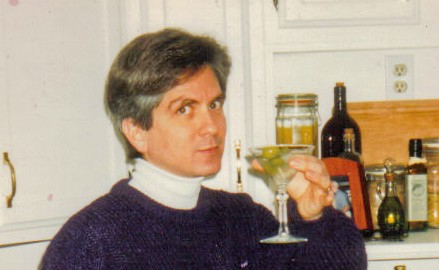
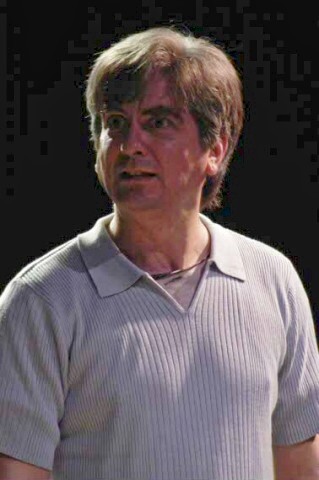
This was a typical look for me during the early
disco years. No wonder there was a backlash.

Even that late at night, during those years, same-sex slow-dancing was reserved for the committed couples, or the folks who were already sure their evening was going to end together.  But you didn't slow dance with just anyone.  (I have railed for years against whoever it was that decided, back in the late 1950s, that couples who were dancing together should not be touching;  that nitwit committed treason against romance.)  Anyway, "Last Dance," as you'll see, soon picks up in tempo, and becomes a standard disco beat.  This is the point in the evening when the dance floor of the club would fill up one last time.  But you'll also see that the song slows down again, and at this point, most of the couples on the dance floor would move into each other's arms to correspond to the beat. 
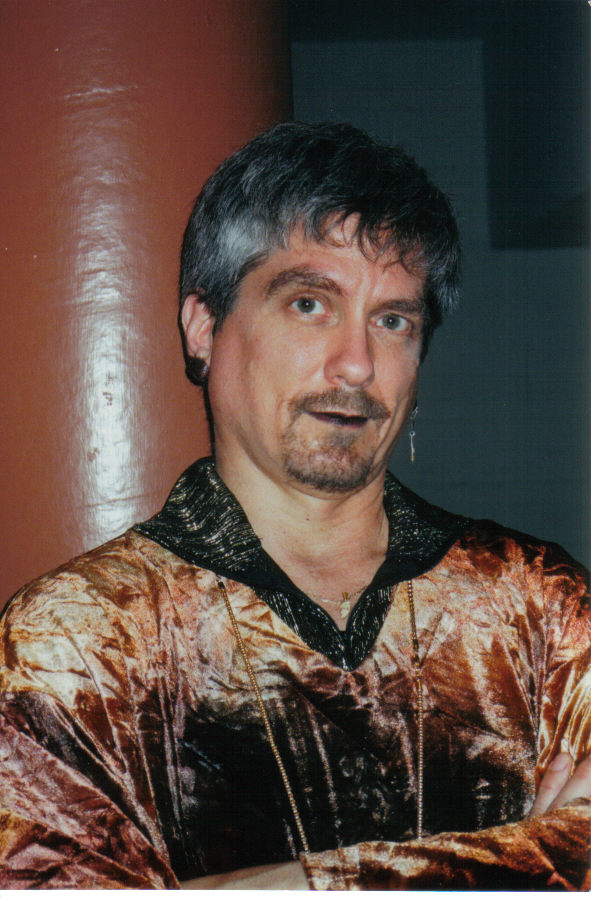
At least the suspenders are gone.

This moment, to me, was always highly charged with excitement, anticipation, sensuality, and fear.  Hey, I was young and completely inexperienced.

Even after the song had fallen from the pop charts, the clubs I attended continued to play "Last Dance" at the end of every evening.  From NY's Studio 54 to West Hollywood's Studio One, to the tiny little In Touch Lounge on Van Nuys Blvd in the San Fernando Valley, everybody knew what the song meant: last chance for romance tonight.


Friday, May 25, 2012

Friday Dance Party: Bianca Gets Wooed

Let's get back to actual dancing on the Friday Dance Party!  Who better to get us back in the swing than one of Hollywood's most famous hoofers?  Ann Miller has appeared before on the Dance Party, go here to see her hilarious (and as it turned out, trend-setting) commercial for soup.  This week, though, we get the full Miller treatment, complete with glamorous gams, unrelenting smile, and those feet that wouldn't quit.

Miller's hilarious parody of herself in this soup commercial was an early example of a film star appearing on-camera hawking a product.  Go here for the routine.

It's not by coincidence that this week's clip is from Kiss Me, Kate.  That film appeared only a few weeks ago in these pages, on the day I began rehearsal for a production of The Taming of the Shrew. 
As almost everyone knows, "Shrew", or rather, a musical production of it, forms the premise of "Kate."  And the two shows are practically twins, you can hardly tell them apart.  This scene is a prime example.  Cole Porter has lifted Shakespeare's text word-for-word, and other than setting it to music, has left the words of the immortal Bard alone. 
Lenny knows when to leave things alone. His
staging of this scene is a carbon copy of the film's.

Taking that cue, our director of Shrew, the lovely and talented Lenny Banovez, has staged the Bianca wooing scene exactly as in the musical.  I'm playing Gremio in our production, and here in the film, that character is the first of the suitors to sing (it's Bob Fosse playing the role, what a career he could have had...).

You can hardly tell this pic is NOT from our production, the similarities are so striking.
You can get more info on our production here.
Yes, I know I'm giving away a lot of the surprise of our Taming of the Shrew by revealing this clip.  Tonight is our opening night, and as I've only recently opened my New York Branch, I couldn't ask for a better way to make my NYC debut.  As I said, this is exactly how we are playing this scene:

Monday, May 21, 2012

Another Modest Suggestion

Over the years, I have run across many, many movies which were film versions of stage shows in which I have played.  Too many to count, actually;  though less frequently done today, stage plays used to be the primary source material for Hollywood.  And considering all the chestnuts I have appeared in onstage, including myriad musicals and sh*tloads of Shakespeare, it's just not a big deal to run across a film version of a stage show in which I have performed.  But last week, the opposite happened, for the very first time:  I attended a stage production of a film in which I appeared.
Our film can be streamed here. Physical copies of the movie can also be purchased here.  This is the actual DVD cover.  The tag line ("Should we, or should we not...kill the JEWS?") leaves no doubt about the theme of the movie. But it also eliminates an element of surprise in the film, and may even discourage viewers from ever watching it.
The film, and the play upon which it was based, is A Modest Suggestion.  I appeared in the indie film version of the piece several years ago, and described the whole experience in these pages (if interested, you should scroll down that page, then read up, to see the journal in correct chronology).  The film was a screen adaptation of a play which had never had a fully staged production.  Now it has, courtesy of New York's Apple Core Theatre Company.  And wouldn't you know, the show is being presented right across the street from my NY branch.

How could I resist attending?  I considered passing it by, only because I am deeply involved in rehearsing a production of Taming of the Shrew, and my free time has been swallowed up by the Learning of Lines and Other Homework. 
Here's a shameless plug for my current gig.  It has nothing to do with this blog entry, but go here anyway.
But I had an unexpected evening off last week, so I popped across 42nd Street to see A Modest Suggestion, the stage play.  It was an early preview, so the theatre, which was very small anyway, had only about 20 folks in attendance. 
In the stage version, these guys nailed every laugh.
Our guys nailed laughs too, I think.  Never having seen
our film with an audience, I can't be sure.

Comparisons are odious but inevitable, I tell myself as I write these words.  The stage play, by Ken Kaissar, was a hoot, and had more laugh-out-loud moments than the film, which had a screenplay by our director Arnon Shorr, in collaboration with the playwright. 
The film's director, Arnon (always with color coordinated jacket/yarmulke), watches the monitor during filming. He cared deeply about A Modest Suggestion; every shot was meticulously planned, every scene storyboarded.
The biggest difference between the play and film happened during the opening sequence, in which four no-named, mid-level executives gather in a corporate boardroom.  The main topic on "today's agenda" is revealed:  whether or not to kill the Jews.  In our film, this is the one and only topic of discussion by the four men. 
Our film had the luxury of doughnuts.  The stage play dispensed with them.  They did have a white eraser board, upon which the gent playing my character wrote catchwords.  I thought that was a great touch.
On stage, "killing the Jews" is the third topic of discussion, and for that reason, the play begins on a lighter note.  The first and second items which these four buffoons discuss were comically incongruous (one was about school lunches, the other was about airport security, both subjects ripe for ridicule).  Playwright Kaisser was pretty skillful when he planted these two topics of discussion, as they let the audience know that A Modest Suggestion was a comedy, and that laughter was welcome and expected.  The audience, then, was better prepared to accept the premise of the third, more incendiary topic of discussion, Hebrew Homicide.
The film's director Arnon had a singular theme which he wished to convey, and his screenplay featured no extraneous discussion of school lunch, travel security, or herring. Playwright Ken Kaissar apparently added those subjects to his current script, which, while off-topic, brought big laughs in the stage version, and alerted the audience that they were watching a comedy.
The rest of the stage play followed closely the screenplay (or vice-versa, I guess, since the play was written before the movie). Well, there was one other long sequence in the play, in which an Hassidic Jew is fed herring, which was marginally funny but majorly yucky, and I am glad we were not faced with that scene in our movie. 
On stage, herring is played for laughs.

In the theatre, the small audience laughed frequently, even as the situation became more dangerous.  The audience had been "taught," in those first minutes of the play, that the piece was a comedy, so they had no problem laughing throughout.  I am not sure our film accomplished the same thing.


On stage, a modern Jew is kidnapped and
quizzed about bacon and God.

A Modest Suggestion, the film, began and ended, as I said, with discussion about Jewish genocide.  It is clear, at least to me, that it's a dark comedy, and the cover of our DVD calls the film a satire.  Still, I can see the piece being misunderstood by some viewers.  While researching this entry, I came across a comment about the movie, posted by a couple of holocaust survivors. 
On film, our gang also kidnapped and quizzed a Jew.

They did not see the comedic elements at all, and even begged the film makers to remove the movie from circulation, fearing that it would validate anti-Semitic activity. (You can read those comments here.) That is only one opinion, but the fact that people could see the film and so misunderstand its intent is disconcerting.  We all thought we were making a satire about anti-Semitism, but apparently some people seeing the film are coming away with the opposite impression. 
Arnon directs myself and Mendy Pellin, playing our
Hassidic Jew. Perhaps Mendy is thankful the
"feeding of the herring" sequence
was not included in our film.

Having now seen the current stage play, I wonder if, had our screenplay included those silly discussions about school lunches and the TSA, before leaping into the darker topic of genocide, would the audience have been more welcome to the message?  I am certain, without a doubt, that our director's intent was to illustrate the ludicrousness of anti-Semitic feelings, but his film may have been just too dark for that point to be made clear.

The stage show Off-Broadway was clear, and the audience knew it.  I could see heads nodding in recognition, when a particular misunderstanding on the part of the gentiles was revealed.  (I may have enjoyed the stage show more than some others, particularly this online critic, who did not like it much).  I believe both the film and stage productions of A Modest Suggestion are works of art, but how effective are they in delivering their message?  That's up for more debate.

Friday, May 18, 2012

Friday Dance Party: She Met Him Just In Time

When Merv Griffin died in 2007, I wrote a bit about what his talk show meant to me as I was growing up, and just becoming interested in show business.  I failed to mention, during that tribute/obit, the contribution this guy had to the longtime success of the show:
Mort Lindsey
1923-2012
He earned a PhD in Music Education from Columbia University, but this guy was no academic.  Lindsey was an integral part of the 25 year run of The Merv Griffin Show.  As the program's musical director, he arranged, conducted, and accompanied a huge variety of stars, in a huge variety of styles. 

These days, when a singer performs on a talk show, they almost always bring their own musical director, and often their own band, but during the Merv years between 1962 and 1986, musical stars depended on the house band to accompany their performances. 
Lindsey won an Emmy for his work as
musical director for Streisand's A Happening
in Central Park.

Mort was considered one of the very best, and could arrange champagne music for Lawrence Welk, Broadway showtunes for Ethel Merman, country sing-a-longs for Dolly Parton, and R&B songs for Freda Payne. 
Mort put Judy at ease, allowing her to give
dynamic concert performances.

Lindsey knew how to put the biggest musical stars at ease, and he was in demand as a free-lance musical director, in addition to his work with Merv Griffin.  Pat Boone, Dean Martin, Frank Sinatra, Elton John, Barbra Streisand, and Liza Minnelli all used him on various television and concert endeavors. 
Not only did Mort Lindsey work with Barbra Streisand, he also worked with Jim Bailey impersonating Barbra Streisand.
But it was his association with Judy Garland for which he is most admired.  In 1961, Garland's career had stalled, as a result of her lack of reliability caused by her substance abuse.  Her handlers were sending her out on the road in a concert tour, in an effort to jumpstart her career.  Lindsey was considered a studio musician at the time, and was hired simply to "pull the orchestra into shape," as he later described. 
Judy at Carnegie Hall

Unexpectedly, Judy showed up to an orchestra rehearsal, and was impressed enough with Lindsey's work that he was hired to music direct the full tour.  The climax of the tour was Garland's celebrated debut at Carnegie Hall, an evening which is considered one of the great show business comebacks.

Mort Lindsey was to be Garland's musical director for the rest of her career.  He became an intimate friend and collaborator, and even co-wrote (with Johnny Mercer) the song "Lorna," in honor of Judy's daughter. 
Bugs Bunny's Chuck Jones
broke his Warner Bros contract
to direct this stylish film. Mort
arranged the Harold Arlen score.

He arranged the music on her one and only animated film, Gay Purr-ee, and when she moved to television for her own variety series, she took him with her.  It is from that series that this week's Dance Party is plucked. 
In 1968, Garland gave one of her final TV appearances on Merv Griffin's show. She was wracked with fright, but was persuaded by the fact that her longtime collaborator Mort Lindsey was leading the band.
While I knew Mort Lindsey solely from his work with Merv Griffin, he will forever be remembered as the man who helped Judy Garland revive her concert career.  The clip below comes from her variety show (if you are interested, a previous Dance Party comes from the series as well).  Mort, of course, is at the piano, and Judy's ease with him is palpable.  He died last week at the age of 89.

Tuesday, May 15, 2012

Waiver Games, Part III: Nick's Pacific Street Saloon

(third in a series regarding my history with Waiver Theatre in Los Angeles. Go here for part I and here for part II...)
I had a good time appearing in my third Waiver Theater Production, but I may have been the only one.  At this time I was still working full time at Lockheed, and was hating every minute of it.  I was always in need of something creative to do outside those lousy office hours.  Once Poof! closed, my best friend Judy Welden came to the rescue, with her first foray into the Waiver Wars.

I wrote about Judy several years ago, and I am pleased to say that she remains my dearest friend to this day. 
Judy's environmental production of
this classic caused a sensation at CSUN.
Actors climbed the walls and
 swung through the air on ropes.
The audience loved it.
The faculty hated it.

She directed me many times during our tenure at Cal State Northridge, both on- and off-campus;  she remains, by far, the director with whom I have worked the most.  We forged a bond which was based on personal and creative intimacy, a bond which continues to deepen today, decades after we first met.
Judy first directed me as the Emcee in Cabaret.
Judy always fearlessly wanted to stretch her creative muscles, so after we graduated from CSUN, she began looking for opportunities to direct in the Real World. 
Our Armenian-centric production of Bye Bye Birdie
featured future soap star Robert Newman (in my lap).

She was raised in the Armenian Church (though I don't think they actually call it that), and one of their branches was located in Hollywood.  High above the sanctuary, for some reason which escapes me now, the church had turned a third floor room into an actual theater.  They had purchased comfy chairs from a movie house, and installed them in a big room, effectively turning the place into a proscenium theater.  Judy, as one of their own, got a great deal on the rental of this theater, and set about preparing her Waiver Theater debut.

She chose to direct William Saroyan's The Time of Your Life, a sprawling bit of modern theater which fit right into her creative aesthetic. Judy was (and is) a great believer in placing her productions in environmental settings.  
I appeared in Judy's first MFA thesis
project at the University of Utah:
The Night Thoreau Spent in Jail.

She had little interest in staging shows on the traditional proscenium stage, which she felt had a tendency to create a separation between the audience and performer.  She preferred her audience to become part of the environment of the play, so she turned the Upstairs Theatre (as it was called) into the saloon in which The Time Of Your Life takes place.  She hung curtains to block off the stationary seating already installed in the theater, turning the space into a true Black Box.  Our playing space was transformed into a slightly seedy bar, with lots of tables and chairs scattered about, where the audience members were to sit.  Judy's audience, back then, didn't just watch the action from a distance, they were seated right in the middle of things.  This was a dangerous but exciting approach to the play. 
James Cagney appeared in the film version of The Time of Your Life. No, that is not Madeline Kahn opposite him, though it surely looks like her.
Judy is a great proponent (and teacher) of the American style of acting, with the Moment-To-Moment interaction between her actors being highly important. 
Our program appeared on every
table like a restaurant's menu.

The cast of The Time of Your Life was huge, prohibitive by today's standards, but since the Waiver Code did not require payment to the actor, such considerations became unimportant.  Instead, Judy concentrated on casting her show with the best actors she could find.  Naturally, she raided the alumni list of the CSUN Theatre Department; many of the roles were filled with our college chums. 
Jenny's performance as Kitty was a highlight.

The leading lady, in fact, was our best gal pal Jenny (I wrote about her a long while ago), who gave a critically lauded performance as the psychologically wounded hooker Kitty.  One of the most dependable actors to come out of our generation at CSUN, Art Riddle, played the pivotal role of Joe. 
Art Riddle co-directed me in my first college
show. Years later, we spent time at Nick's Saloon.

Many more supporting roles were filled with our theatrical buddies, but several prominent roles were to be filled by other members of the L.A. Theatrical Community.  I have put those words in caps to emphasize the inherent dichotomy of those words.  The Theatrical Community of Actors in L.A. consisted almost exclusively of people who were interested in film and television work.  They may have had stage chops, but the focus of their career was to be noticed by Hollywood. 
Jessica Peterson played a socialite who
wandered into the bar, and was horrified.

Judy held open auditions for the available roles in The Time of Your Life, and received an onslaught of actors eager to appear on stage, in order to be seen by casters in the film industry.  Hey, there's nothing wrong with that, I'm just pointing out that Judy and several of her cast members had different goals in mind in presenting The Time of Your Life.  Judy's goal was to produce a memorable piece of theatrical artistry.  Their goal was to snag a TV or film contract.

Those of us who had known and worked with Judy previously had a lovely time with the show, but several Actors At Large did not gel with her way of working. 
Jimmy Williams
today.

Particularly, the gent playing the bartender, who was wonderfully engaging on stage, was a major pain in the ass.  He dismissed Judy's concept of the play;  they were often at odds during rehearsal.  This guy's name was Jimmy Williams, so I'll call him that. 
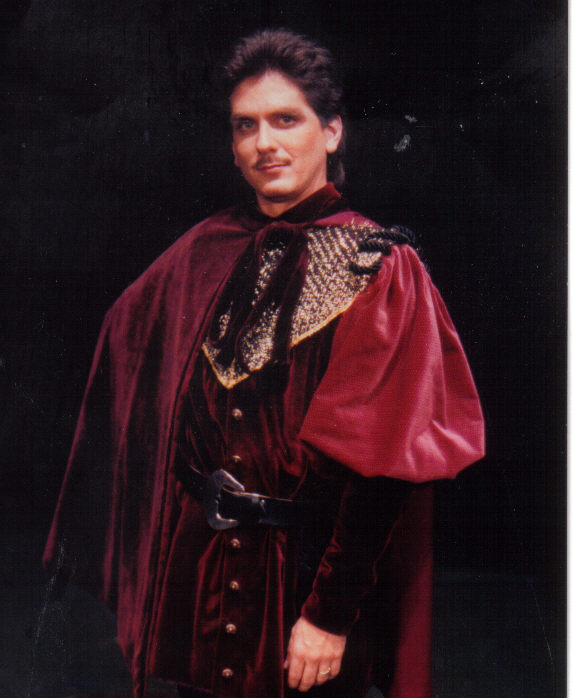
Our college buddy Jann played
a barfly.

Jimmy's dissatisfaction with Judy's direction came to a head when he learned that the show would not have a curtain call.  Judy has always had an uncomfortable relationship with the moment when her actors come back onstage to receive applause.  In later years she came to terms with the fact that audiences want to applaud the work the actors have done, but back in those early days, she was likely to forgo the moment. 
Ed Blackoff, one of the Hollywood Gang,
played Kit Carson. He's had a lively career in
slasher films.

As for The Time of Your Life, she felt the play's conclusion lost much of its impact if the actors came back onstage to take bows.  She was not prepared for the adverse reaction of that decision by Jimmy and his other Hollywood Actors.  They, of course, wanted to come back out onstage to receive joyous applause from their friends, who were likely to be the only people to attend this show. 
Our setup was not very different from this one.
To understand what happened next, it's necessary to envision the theater's setup.  There was only one way to enter and exit the space, through a large set of double doors.  The audience filed in through these doors, and the actors made all their entrances and exits from these doors as well.  They served as the entrance to Nick's Pacific Street Saloon.  I liked this arrangement, as it meant the audience entered the same front door as the characters who were frequenting this bar.  But once the final lights came down on the play, the actors all left the stage through this entrance.  In Judy's concept, the lights came back up, and the audience was left with itself, alone, in the environment.

Jimmy lead an ad-hoc revolt among his Hollywood Peeps, and as soon as the lights came back up, after the final blackout of the play, he charged back into the theatre.  He was followed, one by one, by his professional cronies.  The audience took this as a curtain call, though our director had decided against one.  Jimmy claimed he was just going out to greet his friends, though why he felt he must do so while they were still clapping, who knows?  So, our audiences were often confused as to why some of the actors came out for a curtain call, while others (like myself) did not.

The trouble with Jimmy's Gang notwithstanding, I enjoyed The Time of Your Life.  I played Harry, the young man who comes into the bar looking for a job as a comedian. 
Gene Kelly played my role in the original.

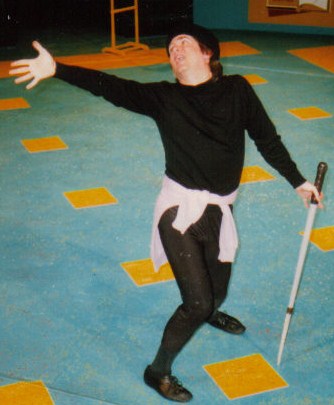
He has several big moments, including his "audition monologue," which proves he should stick to his bigger talent, the soft shoe.  This role was played, in the original Broadway production, by a very young Gene Kelly, before he became a film star, and I had the pleasure of improvising little dance routines which were scattered throughout the show.  Harry, once he entered the bar, continued to hang around, so I spent the majority of the show onstage. Much of that time, I did not have the audience's focus, so I spent a lot of time sitting at the various empty chairs in the saloon, often at tables occupied by actual audience members.  This was a case of "self-blocking."  It led to one of my favorite director's notes I have ever received.  After our final dress rehearsal, I received one hand-written note from director Judy: 

"I hope you know you won't be able to sit in some of the places you've been sitting in."

That's  good advice for life in general, isn't it?
Judy directed me (twice!) in A Funny Thing Happened on the Way to the Forum.
It would be only a couple of years after The Time of Your Life that I again appeared in a Waiver production.  Judy was involved in this one also, though as a stage manager rather than director.  Come back for Part IV of my Waiver Games, in which I gain an acceptable Irish accent but embarrass my mother.