Tuesday, January 17, 2012

Theatre Droppings: Basketball, Writers' Block, and the Boys in the Bar

When the closing notice for Broadway's Lysistrata Jones went up, I hurried down to catch their final Wednesday matinee.

The lovely and talented Jessica Hartman, who helped me learn all that tricky hand choreography in Joe's Coat last year, was the show's assistant choreographer, otherwise the show may not have been on my radar. I was very glad to see it, and remain convinced that it could not make a go of it on Broadway because of lousy producing.
It's a delightful show, full of peppy numbers and hilarious quips, and the gang playing it can't be improved upon. The show began in Dallas, I believe, and then had a very successful run in a gymnasium in Manhattan.

The producers moved the show uptown too early, or did not capitalize the move well enough, or something, but there is no excuse for the show to falter so soon, after raves from everybody, including the New York Times.

The ensemble is terrific, with Jason Tam standing out as a geeky booknik, and if somebody doesn't put Lindsay Chambers in a sitcom, the whole world is crazy.

I've heard that a cast album will be recorded, which will give a boost to post-Broadway productions; with its small cast of 20-somethings, the show is sure to have a full life on college campuses. 

I have seen a couple of non-musicals lately, too. Alan Rickman is headlining a new comedy called Seminar, so I booked a seat in the back row, high in the nosebleed section. Here's another piece which will have further life on college campuses, as it concerns a writing seminar attended by four 20-somethings, and a maniacally unhappy instructor with a distinct lack of people skills.

Rickman is the antagonist, and has the least amount of stage time, but the greatest amount of zingers.

I was most impressed with the actors playing the central couple. Lily Rabe made a big splash opposite Al Pacino's Shylock a while back, and she's worth every rave.

I was familiar with Hamish Linklater only through his sitcom work (he played Julia Louis-Dreyfus's brother in her show), and I greatly admire his decision to return to the New York stage after making his television money. He's done Shakespeare and other classics around town, and is making his Broadway debut as the self-deprecating writer who clashes with Rickman in Seminar.

Finally, I took some advice I got from a local online website I visit, DC Theatre Scene.


They carry reviews of all the shows in the DC area, but they also have a NY correspondent, a man named Richard Seff. It was his rave of an off-off Broadway premiere called Accidentally, Like A Martyr which persuaded me to pop down to the lower east side one cold evening. Manhattan is filled to the brim with hole-in-the-wall black box theaters putting on plays, so Seff's recommendation was the only way I would have even heard about this piece.

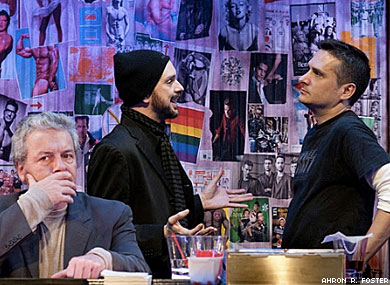
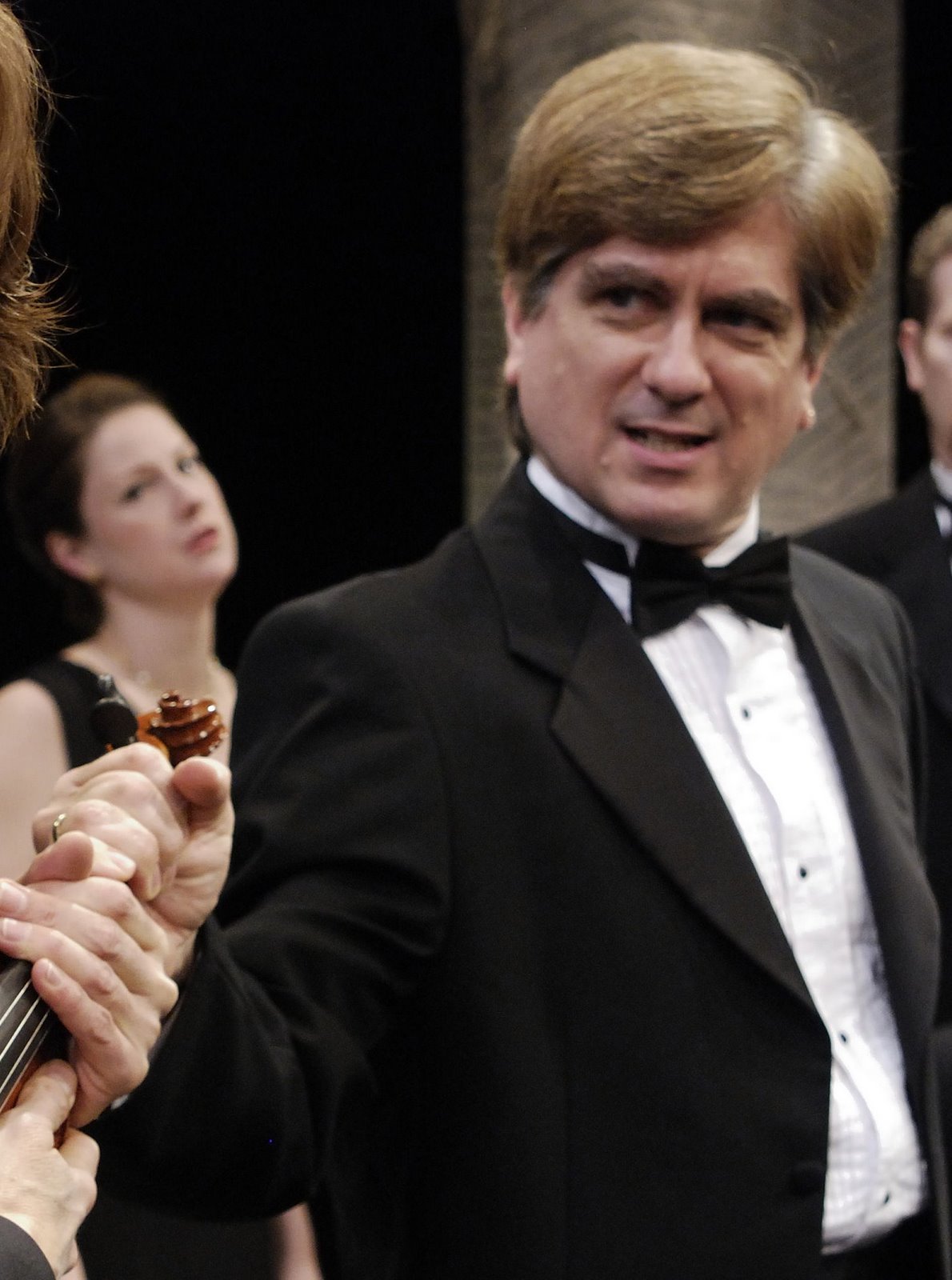
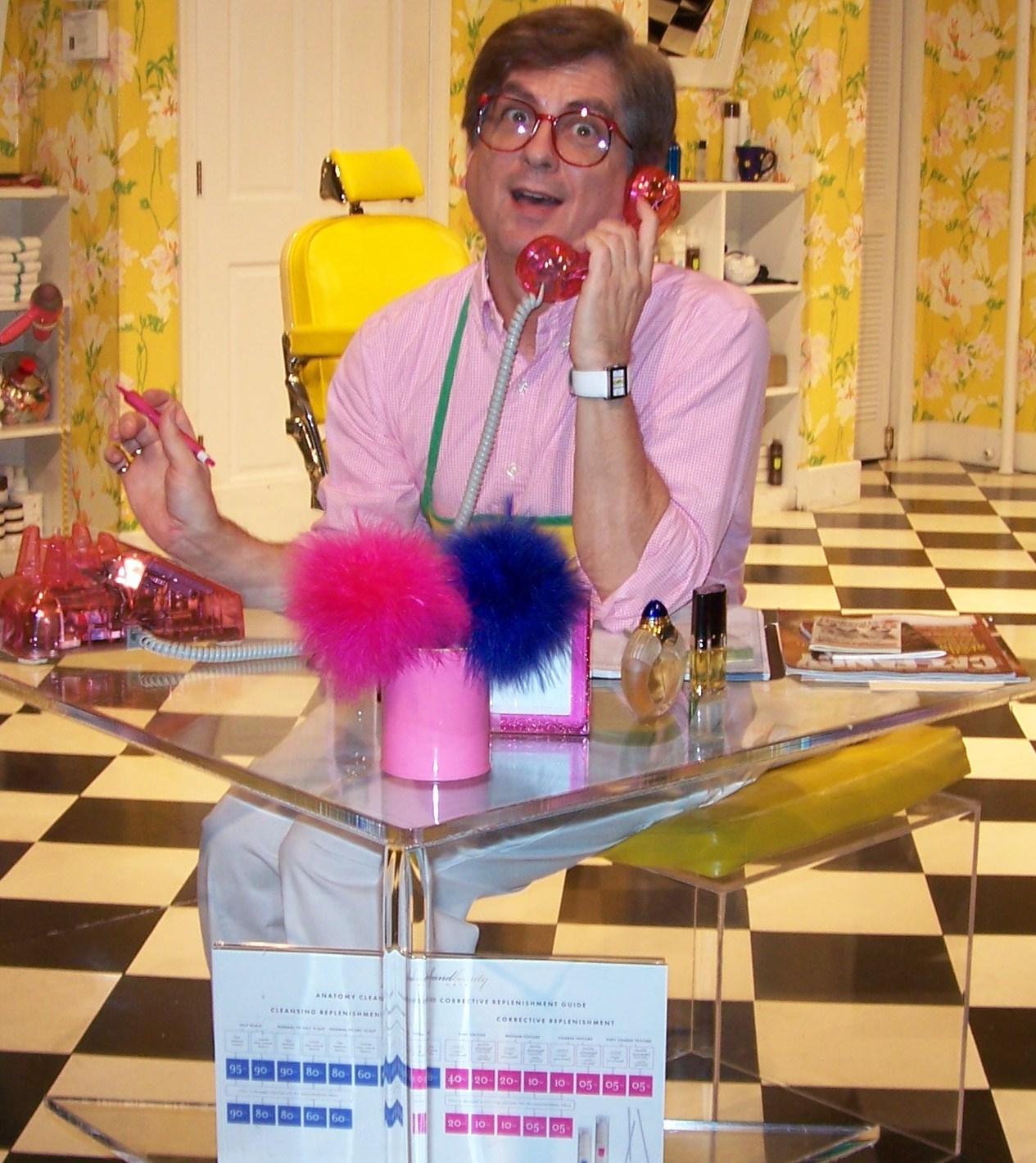
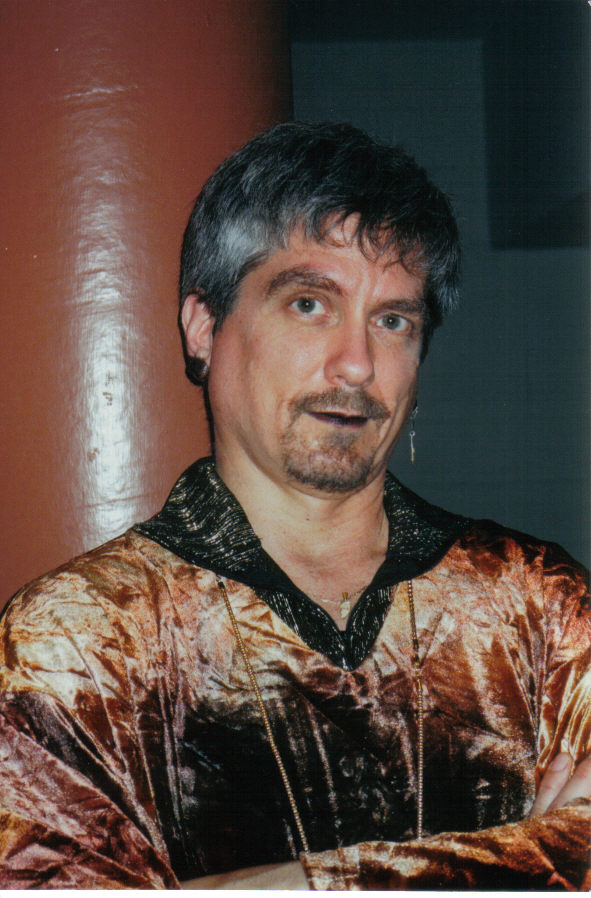
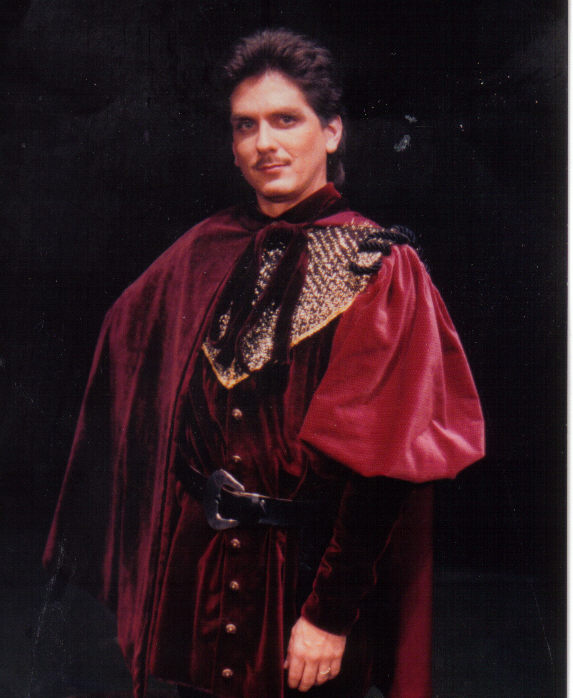
It was written and directed by a gent called Grant James Varjas, who also wrote himself a dynamite role (and wouldn't you?).
I am sure I have seen this actor before, but I cannot remember where (if you know, please tell me!) Anyway, the play is very well-written and performed, and takes place in a dive bar catering to older gay men. The reviewer described it as a successor to The Boys In The Band, and I won't quibble with that, though it's decidedly better written than that 1960s snarkfest. I was very glad to have taken Mr. Seff's advice and schlepped down to see the show.
You can read Seff's review here, by the way, though you won't see any mention in his rave that he contributed money toward the show's production. That fact would not necessarily have dissuaded me from seeing the show, but I'm frankly surprised that he did not disclose his financial support of the production, even as he raved about its artistry.
Maybe I'm just too old-fashioned to believe that, if a critic is a backer of a show, he really should disclose that information when he delivers an unqualified positive review, particularly one which urges Off-Broadway producers to pick up the show, so that it can have a "long and profitable life." Perhaps those kinds of ethics are gone these days.

I've certainly busted my budget the past few weeks, seeing all these shows, I hope I can figure out a cheaper way to assuage my habit. Maybe a job? Well, I wouldn't go that far...

Sunday, January 15, 2012

Theatre Droppings: When Harry Met David

I have got to start resisting the temptation, when I'm visiting my New York Branch, to pop over to the TKTS booth in Times Square.  Even at half price, Broadway shows are just not in my budget, but that has not stopped me in the past few weeks.

Ignoring the advice of all the critics, I was very curious about the major remount/rethink/reconfiguration of the 60s musical, On A Clear Day You Can See Forever.

Barbara Harris and John Collum
couldn't save the original

I'd never seen a production of the stage show, nobody ever does it.  Despite having won a Tony nomination for star Barbara Harris back in the 60s, the show has never seen a major revival, and the movie version, the 3rd film in the triumvirate of stage-to-screen musicals which introduced Barbra Streisand to Hollywood, is not fondly remembered. 


Streisand wakes up the flowers,
but delivers a quirky snooze.

The score has some swell items, so clearly, there was book trouble here. With the blessing of the estates of the originators, substantial revision was done for this revival, to make it more appealing to a modern audience. I believe the changes are viable (I think most of the NY critics disagree), and I enjoyed the performances of all the supporting leads. The new writers reconfigured the story so that the role which Ms Harris and Ms Streisand played in the original and in the film respectively, is now being played by David Turner, in an endearing and heartfelt performance as a gay man falling in love with his straight shrink (look for Turner's name when the Tony nominations come out). [UPDATE: David Turner did not receive a Tony nod, but Jesse Mueller did. In fact, she earned the only Tony nomination the show received]


As David Gamble, Turner creates a sweetly confused gay man with commitment issues.
His is a light, lyrical take on the score, and it's been said his vocal performance is weak, but he stops the show cold with his dramatically satisfying anthem, "What Did I Have That I Don't Have". 

David Turner and Drew Gehling

Drew Gehling, as boyfriend Warren (played in the film by straight-arrow Larry Blyden), has the best pipes in the show, and has been gifted with "Love With All The Trimmings," a song written for Streisand in the movie. I think the ultimate failure of this production, which is closing at the end of the month after a disappointing run, lies with its star. 

Harry Connick smiles in all the promo shots,
 but rarely cracks one onstage

Harry Connick, Jr., is playing the psychiatrist, and his participation has slanted the focus of the show; it now centers around his character's recovery from his wife's death.  The doctor, as in the original, falls in love with his patient's former life (it was always this 60s-style reincarnation stuff which tripped up the story).  In this case, "Melinda" has been updated to be a big band singer from the 40s.  This adjustment is rather an awkward one, but it allows the addition of other standards from the Lerner/Lane musical canon to be shoehorned into the show. 

In the original, Melinda was an 18th century aristocrat.
Here, she's a 1940s band singer.
Jessie Mueller, playing this alter-ego from the past, does a great job with this role, but her performance depends on a chemistry with the show's star.  Harry Connick is a crooner of the first order, but his star power has always had a low wattage for me, and this show reinforces my impression. 


Nobody wanted to see Connick fall for a man,
so Patient Gamble was split in two.
 This guy is no actor, but the redesigned script requires one, so, despite stellar performances from the actors surrounding him, Harry fails to deliver anything near a complete performance.

Friday, January 13, 2012

Friday Dance Party: Doe In The Headlights

This week's Dance Party is inspired, as so often happens, by a dead person.

Doe Avedon

1925-2011
If you're wondering what the hell kind of name is "Doe", you should know that this model/actress/office worker was christened "Dorcas."

That's one of those Shakespearean names which nobody should inflict upon their child.  Anyway, our heroine was working part time as a fashion model when she was noticed by famed photographer Richard Avedon.  He married her, gave her a new name, and during a period in the 1950s and 60s, she was one of those celebrities who was famous for being famous. 

The story of her romance with Avedon lives on, as the basis of the Fred Astaire / Audrey Hepburn musical film, Funny Face.

The clip below is from that film, and it has gained some notoriety on its own.  In 2006, The Gap snagged the rights to this bit, and did some computer magic to give Hepburn the starring role in their commercial for "the skinny black pant."  The commercial is expertly done, but how successful it was in improving sales to girls who had no idea who Audrey Hepburn was, is debatable. 

And you either hate the idea of using old dead celebrities to hawk your product, or you don't care (Audrey's costar in Funny Face turned up dancing with a vacuum cleaner a while back.  Yuck.)  But here is the clip, pure and unadulterated, from the 1957 release.  Hepburn is really in top form here, dancing the hell out of this Bohemian-tinged choreography.

As for our Doe, who was the inspiration for the character Hepburn plays here, she remained with Richard Avedon only 5 years, enough time to give her a minor career as an actress.  Eventually, she remarried, this time to film director Don Siegel of Dirty Harry fame, and she faded from public life.  She died in December at the age of 86.

Friday, January 6, 2012

Friday Dance Party: Whatever Lola Erps

At the risk of mixing my social media, Facebook was all atwitter this week, with a new game.  I'm a team player (though I was always picked last for any team I ever encountered), so I thought I'd play along.  The challenge was this:  determine what song was sitting atop the music charts the week you were born, then find a version of it on YouTube, and post it on Facebook.
I find it fascinating that YouTube has become so universal that it's assumed one can find a version of any song in existence on the site.  But I'm not complaining, since 98% of all my Dance Party clips come from the site.  Anyway, as the week progressed, I got depressed.  It seemed like all of my Facebook friends, at least the ones who were participating in the challenge, were posting "birth week" songs to which I was listening in high school or college.  I don't like feeling elderly, but this game made me feel so.  Nevertheless, I investigated my own birth week, only to discover that the Billboard charts, which determine which song is #1, hadn't even been invented yet.  But by examining record sales and other historical hoohah, we can now determine which songs WOULD have been chart toppers, if there had been a chart to top. 

The big winner my birth week seemed to be a substantial hit, as it remained #1 on this retroactive chart for several weeks. 

I had never heard of the thing, and with good reason.  It's a lousy song called "The Wayward Wind," and it was introduced by a singer nobody has ever heard of these days, a woman named Gogi Grant (sounds like a cartoon character, doesn't it?).  In another example of how ubiquitous YouTube has become, there is actually a clip out there, of Gogi singing her big hit, but it's so friggin' boring, I can't bring myself to post it.  Go here if you are deranged enough to want to hear it.

I didn't want to give up completely on this new Facebook game, so I wondered what else was happening the year of my birth? Naturally, my thoughts turned to Broadway, and what do you know?  The Tony Award for Best Musical that year was (drumroll, please): Damn Yankees.

Damn Yankees is not one of my favorite musicals, but it was one of my favorite theatrical experiences.  The role of Mr. Applegate, the Devil, was a dream role of mine, and back in the early 90s, I had the chance to play it at the Glendale Centre Theatre in California.  I was so pleased with my performance that I posted a clip of my big number as a Dance Party a few years ago.  You missed it?  Go here.

I won't torture you with another clip of my production of Damn Yankees (though the show was a very good rendition). 

Instead, this week's Dance Party comes from the film version.  This movie (which is deeply flawed, primarily by the casting of the non-musical boytoy Tab Hunter as the romantic lead) is important, as it preserves one of the great stage performances of the era.  Gwen Verdon's portrayal of the devilishly seductive Lola caused a sensation on Broadway, but it didn't translate all that well onto film. 

That's not Verdon's fault.  She became recognized, on the strength of Damn Yankees, as the premiere interpreter of choreographer Bob Fosse's work.  The fact that she was sleeping with him had nothing to do with it (and when Ann Reinking became known as HER generation's premiere interpreter of Bob Fosse's work, that didn't have anything to do with the fact that she was sleeping with him, either).

The song which is this week's Dance Party has absolutely nothing to do with the plot of Damn Yankees, it doesn't even make much sense.  While the show is the Faust legend updated to 1950s suburbia, the song below is just another opportunity to show off Verdon's unusual dance technique.  And who better to partner her in the number than her Svengali, Bob Fosse himself? 

Monday, January 2, 2012

Charon's Lighter Load

Regular visitors to these pages are likely to bump into the occasional obituary/tribute to someone whose life, I think, had importance.  Well, "occasional" is an understatement, but I'm doing better than earlier years.  Last year at this time, I made a resolution to reduce the number of eulogies I write.  And, believe it or not, I have done so.  2010 saw well over 100 of these little obits, while 2011 saw only (drumroll please) 74.
You wouldn't expect me to dispense with the tributes altogether, would you? 
Elizabeth Taylor makes a cameo on "General Hospital"
When a superstar/humanitarian/serial matrimonialist like Elizabeth Taylor dies, attention must be paid.  She was the only true superstar we lost this year, though I might put playwright/screenwriter/director/librettist Arthur Laurents in the superstar category.

Laurents wasn't the only stage guru to leave us this year, we also lost Michael Langham, who guided several high-profile regional theaters, and Ellen Stewart, whose Cafe LaMama helped invent the Off-Off-Broadway movement. Doric Wilson wrote gay plays (and witnessed the Stonewall riots first-hand), and Lanford Wilson wrote plays with gays in them (and they also have great parts for actors of all persuasions).  Pam Gems gave us bio-dramas such as Piaf and Marlena, and Russell Warner researched old musicals in order to recreate their original orchestrations.

Margaret Whiting, with husband/porn legend Jack Wrangler

And speaking of the world of music, we lost pop writer/singer Nick Ashford and pianist Roger Williams, as well as Mercer maven Margaret Whiting.  I was "Mad About" Andrew Gold, and we passed the peacepipe when composer Hugh Martin died. Dolores Fuller wrote a few negligible tunes for Elvis, but is secretly revered as Ed Wood's clueless ingenue
Jerry Leiber's final chart hit

When Jerry Leiber died, I wondered "Is that all there is?", and when one of the most famous of all film composers, John Barry, died, I remembered his lush, evocative score for Mary, Queen of Scots.  Coincidentally, the director of that historical snoozefest, Charles Jarrott, also died this year.  Somehow, he was able to turn the turbulent, highly dramatic lives of Henry VIII, Anne Boleyn, Elizabeth I, and Mary, Queen of Scots into dry history lessons which were a little fuzzy on the facts. 
Director Charles Jarrott's historical bio-pics

But with Richard Burton, Genevieve Bujold, Glenda Jackson, and Vanessa Redgrave playing the royals, Jarrott did do something right.

Lots of others behind the camera did something right, too. 
William Holden/Robert Duval/Peter Finch in "Network"

Sydney Lumet, Peter Yates, and Ken Russell all delivered distinctive product,  and while Bert Schneider made Jack Nicholson a star, Michael Cacoyannis did the same for Euripides.  TV's Sherwood Schwartz created not one, but TWO iconic series. 
Elizabeth Montgomery casts her spell in "Bewitched"

 Sol Saks had a little luck with a beautiful witch, and Madelyn Pugh spent her entire career creating stunts for Lucy.   And ego-maniac Joseph Brooks implanted an entire generation's brains with "You Light Up My Life," and like an inoperable tumor, there it remains.


Anne Francis clashed with a Funny Girl; her role was slashed
Speaking of TV, we lost some famous and not-so-famous stars.  Peter Falk's Columbo, James Arness's Marshall Dillon, and Anne Francis's Honey West will always be remembered, as will Harry Morgan's Col. Potter and Alice Playten's newlywed who can't cook.  Livewire Alan Sues always wanted to be a dramatic actor, and Clarice Taylor always wanted to be Moms Mabley
Marian Mercer's rare dramatic turn in "St. Elsewhere"

 Marian Mercer and Sada Thompson died within days of each other, and I felt their loss particularly strongly, just as I mourned the death of one of the queens of the British mini-series, Margaret Tyzack. 
Maggie Smith refused to come to Broadway without Margaret Tyzack, seen here playing Derek Jacobi's mother in "I, Claudius"

Suzannah York needs a shower, "They Shoot Horses, Don't They?"
The Brits were well represented at the morgue this year, as John Wood, John Neville, Susannah York, Pete Postlethwaite, and Anna Massey all ended up there.  We lost Michael Gough, who played "Alfred" opposite several Batmen, and Jill Haworth, who was the first woman to ever sing "Cabaret." 
Jill Haworth was trashed by the critics as the first musical Sally Bowles
Helen Stenborg

Everybody knows I'm a sucker for supporting actors, so Helen Stenborg, Bill Erwin, Jay Garner, Michael Tolan, and Peggy Rea all made the cut.  The death of Cammie King, whose career peaked when she was 5 years old, leaves only Olivia DeHaviland surviving Gone With the Wind. 
Tom Aldredge narrates "Into the Woods"

One of the longest marriages in the American Theatre ended this year, when designer Theoni Aldredge died, followed a few months later by her long-time husband, actor Tom Aldredge.

I eulogized comics Kenneth Mars and Charlie Callas together, as well as the "Disney Sweethearts," Willie Boag and Betty Taylor. 
Doris Belack discovers Tootsie has balls

I keenly felt the loss of Betty Garrett, whom I used to wait on in a restaurant in L.A., and Doris Belack, who appeared in several of my favorite films and TV series. 
Jeff Conaway, and his hair

We also lost former boytoys Jeff Conaway, Michael Sarrazin, and Farley Granger, as well as sex machine Jane Russell, whose statuesque figure inspired the invention of a specific kind of bra.

The soap opera world, reeling from the loss of All My Children and One Life To Live, also lost one of its premiere villains, As The World Turns's Anthony Herrera
Anthony Herrera returned from the dead, repeatedly, as villainous James Stenbeck
Jacqueline Courtney as Alice Frame

The soaps mourned several trailblazers this year, including Jane White (the first black actress to receive a contract on a soap), Jacqueline Courtney (part of the first soap "supercouple"), and Christopher Templeton, a disabled actress who spent years as a supporting character on The Young and the Restless.  Dan Frazer played the first soap character to have Alzheimer's, and Mary Fickett, an original cast member of All My Children, won the very first acting Emmy awarded for a daytime performance.

Mary Fickett spouted anti-war rhetoric and won the genre's first Emmy.

David Nelson stretches his acting muscles.

I mentioned a few people who were famous primarily because of their relationship with someone even more famous.  So, Carol Channing's husband, Groucho Marx's son, and Ozzie and Harriet's first born, all made the cut.  Being inhuman did not preclude a mention in these pages:  a possible Cheetah died recently, as did a polar bear famous for mauling zoo visitors
Knut teaches tourist to read the signs at the zoo.

Finally, two entrepreneurs bit the dust.  The inventor of Doritos died this year, as did the gentleman who, for over 60 years, ran a little bookshop in Paris which became world-renown.

And that's all 74!  I deliberately overlooked several high-profile deaths this year, such as Amy Woodhouse and Steve Jobs, mostly because they were being eulogized ad nauseum elsewhere. 
Charon crosses the River Styxx

I prefer to acknowledge other, lesser-known folks who may have slipped through the cracks, but who deserve some mention. Rest in peace, everybody.