Wednesday, September 15, 2010

Wimoweh - Wimobits

Here are a few dead people who fell by the wayside. Time to pick 'em up and give 'em a proper send-off.

Harold Gould
1923-2010


He was certainly one of the most academically educated actors in the field, having earned both a Masters and a PhD in Theatre from Cornell. After his graduation in the early 50s, he taught for a time in Virginia, before relocated to California to teach at UC-Riverside. He took that opportunity to become a professional actor. By the 1960s, his career was up and running, with appearances on the big and small screen. He worked often on television, but had some poor luck with two sitcom pilots. He appeared as Marlo Thomas's father in the 1965 pilot That Girl, but was replaced by Lew Parker when the series was picked up. In 1972, he appeared as Howard Cunningham in the pilot for Happy Days. Initially, ABC did not pick up the series, but the unexpected success of the feature film American Graffiti (starring Ron Howard, who also starred in Happy Days) encouraged the network to run the pilot as an episode of their comedy anthology series, Love, American Style. The show played well, and Happy Days went to series, but Gould had by then made other commitments, and the role was recast with Tom Bosley.

Harold earned five Emmy nominations in his career, several for his work as Rhoda's father on the sitcom of the same name.

He played opposite Katherine Hepburn in the television film Mrs. Delafield Wants to Marry, and had a recurring role on Golden Girls for a time. He played Louis B. Meyer in Moviola, for which he was again nominated, and appeared in countless TV episodics over the years. The big screen saw him in The Sting, Silent Movie, Stuart Little, Patch Adams and many others. His Broadway career including plays by Neil Simon, Tom Stoppard, and Jules Feiffer, and he won the Obie for his Off-Broadway performance in Vaclav Havel's The Increased Difficulty of Concentration. He died last Saturday at the age of 86, after a long battle with prostate cancer.

SUZANNE GROSSMAN

1938-2010


She was born in Switzerland, and was never a household name, but she did yeoman's work on stage early in her career. She held her own opposite Robert Preston and Rosemary Harris in the original Broadway production of The Lion in Winter, playing the French princess Alais (did you know Christopher Walken played the young Prince Phillip in that original production?).


She went on to appear in Broadway revivals of Cyrano de Bergerac and Private Lives. She turned her hand to the written word, and adapted several Feydeau farces with writing partner and fellow actor Paxton Whitehead; those adaptations played Broadway, and were also seen at major regional theatres such as the Old Globe and the Mark Taper Forum. She wrote many teleplays, and penned over a hundred episodes of Ryan's Hope. Suzanne died August 19 at the age of 72.


NANCY DOLMAN

1951-2010


This Canadian actress and musical performer was probably best known to American audiences for her recurring role on the 70's sitcom Soap. And for her marriage. In her early life, she appeared in several musicals in Canada, and landed in the Toronto production of Godspell, in which she understudied Gilda Radner. It was in that production that she met Martin Short, who would become her husband in 1980.


Five years later, she retired from the business in order to raise their children. Nancy died from cancer on August 21, about a month shy of her 59th birthday.

Here's a guy whose work, I am ashamed to admit, I did not know, but he deserves a mention as the founder of one of the UK's leading theaters:

Mick Lally

1946-2010


He was one of Ireland's most recognizable natives, appearing for years on an Irish soap called Glenroe. American audiences might know him from appearances in the feature films The Secret of Roan Irish and Circle of Friends. But his biggest contribution was to the stage, where he spent most of his career. In 1975, he was a co-founder of the Druid Theatre Company in Galway, which specializes in native Irish plays. He played the title character in the theater's first production, The Playboy of the Western World, and created the role of Mick Dowd in the world premiere production of Martin McDonagh's A Skull in Connemara. He was also in the world premiere of Brian Friel's Translations. The Druid's cultivation of Irish playwrights such as McDonagh and Friel helped their work become internationally known. Lally died August 31 at the age of 64.
Enough of the actors! Here's a guy who had a hand in some of the best known standards from the mid-20th century:

George David Weiss

1921-2010


He earned a degree in music theory from Julliard before turning his attentions to songwriting back in the 1950s. He provided Elvis Presley with one of his signature tunes, "Can't Help Falling in Love," and did the same for Louis Armstrong with "What a Wonderful World." He took a South African Zulu song from the 20s, and reworked it to become "The Lion Sleeps Tonight" (the opening phrase of the song, "Wimoweh, Wimoweh," is roughly translated from the Zulu to mean "I bet I can sell a million copies of this stupid song"). Weiss was elected to the Songwriters Hall of Fame in 1984, which meant they must have forgiven him for his Broadway scores. His biggest stage hit was Mr. Wonderful, starring Sammy Davis, Jr., and he provided the score for the Shirley Jones/Jack Cassidy flop, Maggie Flynn. Most egregiously, he hooked up with a group of folks who thought the Jane Austen novel Pride and Prejudice would make a good musical. It didn't, and the final product, First Impressions (which was actually the novel's working title) remains a footnote in the careers of its stars, Polly Bergen and Hermione Gingold.

Weiss served as president of the Songwriters Guild of America for

almost 20 years, during which time he fought to preserve composers' copyrights in the digital age. He died last month at the age of 89.

Monday, September 13, 2010

Roots and Pods

I'm not sure there are any television impresarios these days, unless you count Dick Wolf, creator of the Law and Order franchise, which I don't. This guy, though, certainly was one:

David Wolper

1928-2010


He turned his knack for sales and chutzpah into a lengthy career as a producer of television and film. He learned early in his career to spot a niche and find product to fill it. He dropped out of college and formed a company which sold old Flash Gordon serials to TV stations in need of filling airtime. His idea to package old movies and sell them to individual television stations created what many of us think of as "the late show."


His career included every aspect of fiction and non-fiction film. In the late 50s, he bought old Russian footage of space exploration, and edited the stuff to become The Race for Space, which snagged an Oscar nomination. He turned Theodore White's Pulitzer-prize winning book The Making of the President 1960 into a TV doc, and won the Emmy. He produced Four Days in November, the first comprehensive documentary regarding the JFK assassination, and won the Oscar for The Hellstrom Chronicle, a documentary about insects. In 1966, he produced the National Geographic special, The World of Jacques-Ives Cousteau, and turned the French oceanographer into an international celebrity.

Wolper's feature films include the first Willy Wonka and the Chocolate Factory and L.A. Confidential, and his sitcoms included Chico and the Man and Welcome Back Kotter. But his most lasting legacy was probably in the mini-series format. Hard to believe today, but for about 10-12 years back in the 70s and 80s, the most important, prestigious events on television were the multi-episode limited series, and Wolper was a pioneer of the genre. The Thorn Birds and North and South were produced by his company, as was the birth mother of the genre, Roots.

In 1977, Wolper turned Alex Haley's family history into a 12-hour television event. ABC was extremely nervous about the project, and had no confidence that a series which chronicled multi-generations of a black family would be a success. Wolper shrewdly peppered his cast with familiar white faces in supporting roles, so Ed Asner (winning an Emmy), Lorne Greene, Robert Reed, Sandy Duncan, and Ralph Waite, among others, were meant to entice white viewers to watch the performances of Cicely Tyson, Maya Angelou, John Amos, Richard Roundtree, and Louis Gossett, Jr. (winning an Emmy). The series was a who's who of African-American talent; Leslie Uggams, until then known as a musical performer, delivered a searing dramatic turn:


And no one who saw Roots will ever forget Ben Vereen as Chicken George:


The nervous network execs programmed the series in a very unusual way. By running the entire 12 hours on 8 consecutive nights, ABC hoped to contain any ratings damage this series, dominated by black performances, might do (in a colossal miscalculation, the network scheduled the series to conclude its run before the sweeps period began).

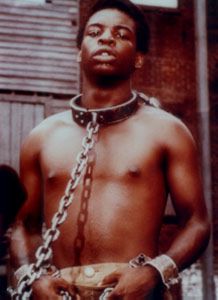
Roots shattered the existing Nielson records, as its word of mouth spread and the ratings rose from night to night. I remember when Roots first aired, and can verify that excitement for the program built, day after day. It was the ultimate water cooler series. Roots earned 36 Emmy nominations and won 9, plus a Peabody. It provided meaty roles for dozens of African-American actors, at a time when such opportunities were non-existent. Perhaps most famously, an unknown drama student from USC was spotted in a college production of Carousel and was invited to read for the series. LeVar Burton's very first professional audition was for Roots; when David Wolper cast the kid in the pivotal role of Kunte Kinte (later called Toby), Burton won an Emmy nomination and launched his career.


Wolper's expertise with massive projects led to his producing the opening and closing ceremonies of the Los Angeles Summer Olympics in 1984, for which he won a special Emmy and the Jean Hersholt Humanitarian Award. He died August 10 from congestive heart disease.

Kevin McCarthy

1914-2010

This well-known character actor got a tough start in life, losing both parents to influenza when he was four. He was separated from his sisters (one of whom, Mary McCarthy, became an influential novelist and critic) and passed around to various relatives, some of whom were abusive. He attended college in Minnesota, where he first stepped onstage in Henry IV, Part I (nervous that he did not understand the language in the play, he was advised that he did not have to make sense of it, "just talk loud"). He moved to New York and began a successful stage career, while becoming a founding member of the Actors Studio. His Broadway credits included the Pultizer-prize winning Abe Lincoln in Illinois, and the musical Winged Victory, as well as other works by Chekhov and O'Neill. He played Biff, the elder, drifter son of Willy Loman, in the original London production of Death of a Salesman, which lead to his recreating the role for the film. He earned an Oscar nomination for his performance.

He had a long career on television, including a stint as the patriarch on the nighttime soap Flamingo Road, and playing opposite Lana Turner in the long-forgotten The Survivors. His numerous film appearances included The Best Man, Mirage, and Kansas City Bomber. As a favor for his friend Montgomery Clift, he made a cameo appearance in The Misfits, opposite Marilyn Monroe and Clark Gable. He felt the role was too small, finally agreeing to appear if he was paid $100 per word. The role had 29 words.

But it was a single performance in a low-budget science fiction thriller for which he may be best remembered. As the doctor who discovers the secret regarding The Invasion of the Bodysnatchers, and attempts to warn the world, he became part of a cult phenomenon. Film enthusiasts argue that the movie was an allegory for the rise of McCarthyism in the 1950s, while others believe it was meant as a statement regarding the overtaking of the modern world by giant corporations. Kevin always chuckled at such beliefs, maintaining that there were no political sentiments in the film at all, they were just trying to make a good scare film.


They succeeded, and the final moments of the piece, in which McCarthy runs through traffic trying to get people to believe him, has become a classic moment in American film:


Kevin McCarthy died Sept 11 at the age of 96.

Friday, September 10, 2010

Friday Dance Party: Handbook for the Recently Deceased


Beetlejuice was one of the top ten box office hits of 1988, and was one of those films of which I was aware, but never got around to seeing (until this week). The film was directed by a young Tim Burton, who had just come off the surprise success of Pee-Wee's Big Adventure and was suddenly Hollywood's hot property. Burton was deep into the lengthy development process of Batman, about which Warner Bros. remained skittish, so in the meantime, he directed this hybrid of comedy, horror, and romance.

The script went through several incarnations, as these things always do, and Burton's first choice for the title character was (are you sitting down?) Sammy Davis, Jr. Producer David Geffen brought Michael Keaton to the director's attention, and Beetlejuice had its star.

Until I watched the film this week, Keaton was the only actor in the thing I would have been able to name, so I was pleasantly surprised to see the cast peopled with lots of talented folks. Geena Davis and Alec Baldwin are hugely attractive as the romantic leads (wasn't Baldwin a cutie before he gained all the weight?), and Jeffery Jones and Catherine O'Hara counterbalance them as the neurotic New Yorkers who invade their space. Wynona Ryder, before she got itchy fingers, was a big success as a goth teen-ager, and Sylvia Sidney, ancient, withered, and engulfed in cigarette smoke, was a hoot as a case-worker for dead people:

Burton purposely wanted Beetlejuice to look like a low budget horror flick, so he spent a scant one million on the special effects. He came up with some terrific sight gags, and the whole movie is a visual gem. This week's Dance Party comes from the centerpiece of the film, a dinner party during which the new inhabitants of the haunted house become temporarily possessed. But before we get to that, allow me to slip this in:

Glenn Shadix

1952-2010


Glenn was another of those character actors who spent his career in support, working a lot, but rarely being recognized. He was born and raised in Alabama, which explains why he was forced into electroconvulsive-therapy as a teenager, to "repair" his homosexuality. He spent a few years in New York before heading to Hollywood, where he had some success on film and television. He spent some time in HBO's Carnivale, and played Jerry's landlord on Seinfeld. Here he is with Will Smith, from the sitcom, Fresh Prince of Bel Air:

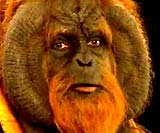
His big break, however, is one of the stories actors love to tell and hate to believe. Against the advice of his agent (who was sure it would sink his career), Glenn was appearing on stage as (get this) Gertrude Stein, when Tim Burton landed in the audience. They became friends, and Burton placed Shadix in Beetlejuice, his first feature film. The two worked together several more times, including The Nightmare Before Christmas and the remake of Planet of the Apes. Glenn's work in the former launched his career in voice-over, and he has several animated series to his credit. In 2007, Shadix returned to Alabama, where he semi-retired, buying an old house (which later burned down) and dabbling in the social issues of the region:

Glenn was preparing a return to the stage, in a production of The History Boys, when he died this week, at the age of 58. It was his death which brought Beetlejuice to mind, which in turn inspired this week's Dance Party choice. Here, our hostess Catherine O'Hara serves an appetizer with a twist (only Tim Burton could make shrimp cocktail look so ugly), while Glenn and his co-stars, along with the cameo work of Dick Cavett and Susan Kellerman, involuntarily dig that Calypso beat:

Sunday, September 5, 2010

Friendly Fire


It's been an interesting week, as I fill time while I remain "between engagements, " a euphemism for Shit Outta Work. The new theatrical season in DC is just getting started, with many if not most of the area theatres opening shows this week or next. Everybody I know seems to be working on something exciting.

My lovely Washington Stage Guild is one of the few locals not opening a show soon; the first show of their season will appear in late October. The WSG held two days of union-mandated auditions this week, and I volunteered to help at the front desk. While other philanthropists volunteer to feed the homeless, I volunteer to usher actors in and out of the audition chamber. Maybe it helps actors get jobs. I'm that kind of guy.

The Stage Guilders were holding these auditions mostly to refresh their files, but my old friend Steve Carpenter, who will be directing half of the company's shows this year, was actively looking to cast two roles in the season opener, Darwin in Malibu. I bulldozed Steve into letting me read for one of the roles, though he freely admitted that he did not see me in the part. I greatly appreciate that kind of honesty from a director (even as I hate to hear it), as too many directors don't tell the truth to actors, fearing that they may hurt some feelings. And I went into the audition having known Steve for 17 years, so was pretty sure I would not be changing his mind.

This week's experience started me thinking about the weird relationship which actors often have with directors who are also their friends. That relationship can develop one of two ways. First, a director may hire an actor who is unknown to him, or is known to him only slightly. Sometimes, through the course of working together, that director and actor can become personal friends (that's happened to me many times). But when that director is again auditioning that friend, the parameters have already been set in place, so there isn't much awkwardness if the actor-friend is not hired by the director-friend. It's all part of the accepted structure of the relationship.

But here's a second scenario. Suppose the actor and director were initially peers. This is exactly what happened the very first time I auditioned for Steve. I had arrived at grad school in the fall of 1993, and Steve was in the MFA class ahead of me. We were a small crowd, and as usually happens with MFA actors, we all became very close very quickly. Though Steve was in the program as an actor, he was stretching his directorial muscles as well. After knowing him for several months as a colleague and friend, I auditioned for his production of Lee Blesssing's hostage drama, Two Rooms. Now that I think of it, I had already been appearing on stage for about 20 years, and in all that time, whenever I had auditioned for a director who was first a friend, I had been cast. Let's not delve too deeply into that; if my friend the director cast me because I was his friend, rather than for my ability, I don't think I want to know about it.

In this instance, with Steve's production of Two Rooms, I did not get the part. It was the first time I felt that palpable awkwardness from being rejected by someone I considered an equal.

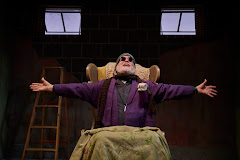
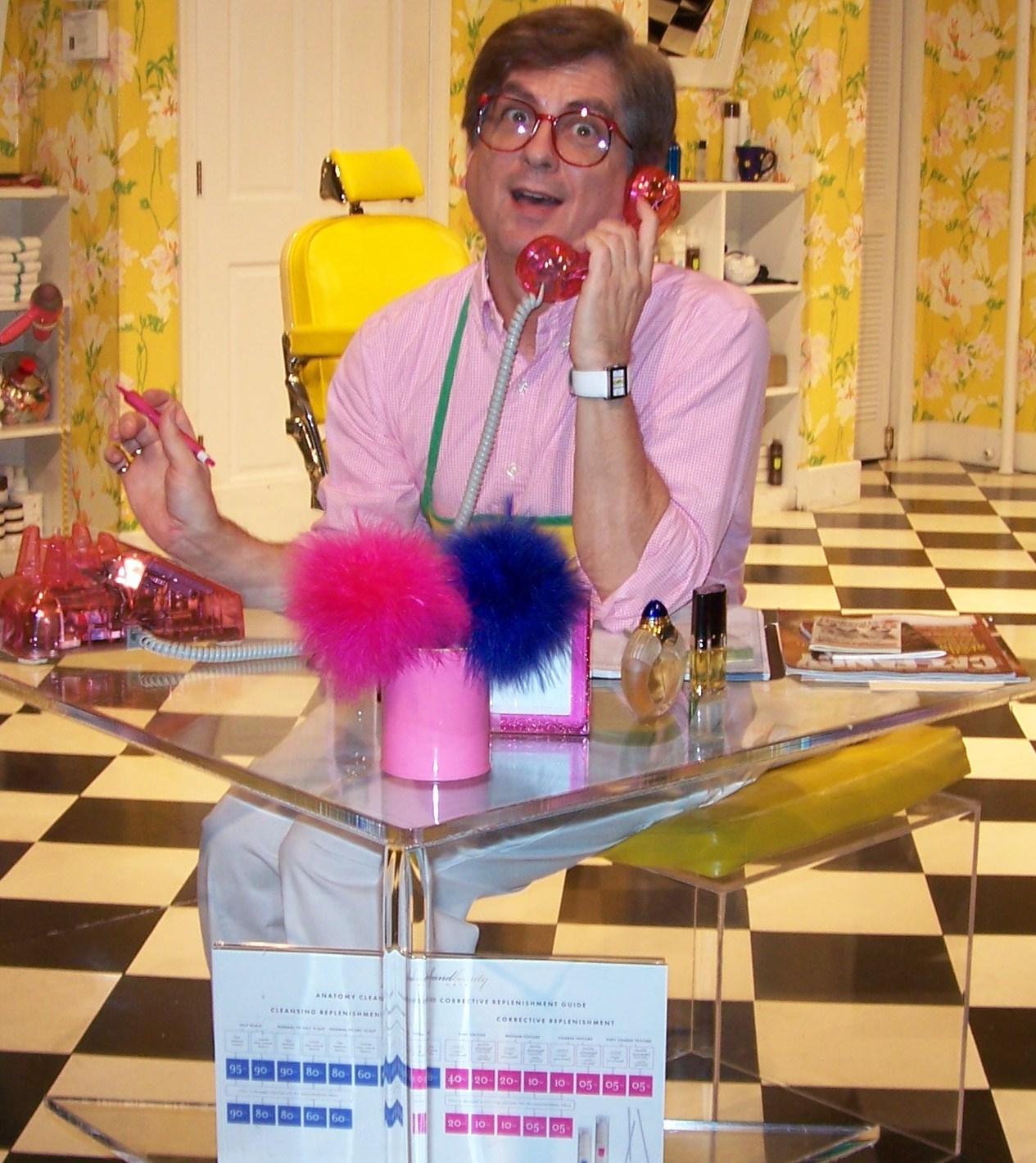
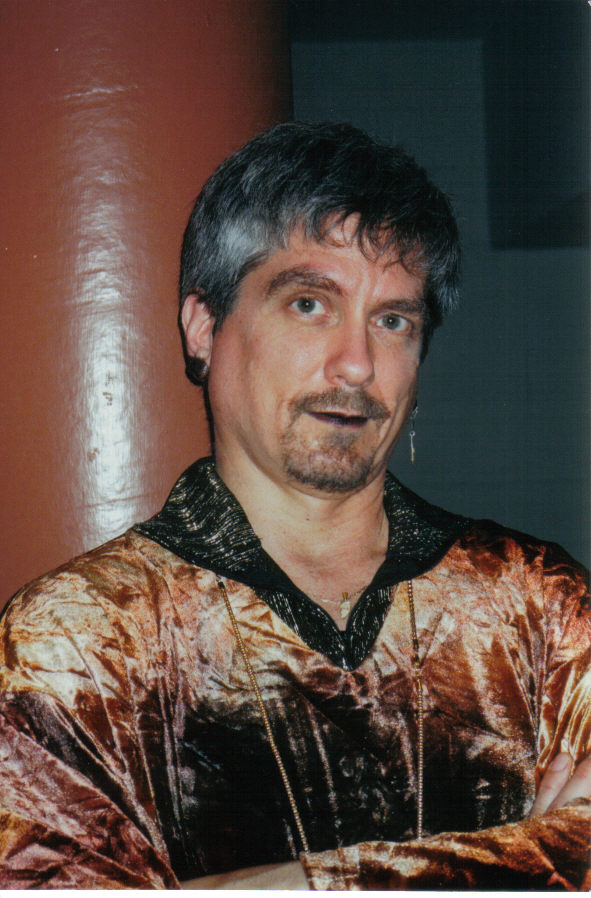
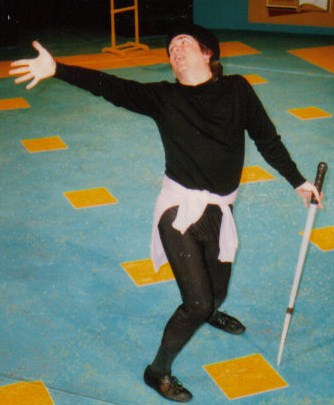
The feeling was yucky on both sides I'm sure. I have come to admire Steve's directorial work greatly, and he is responsible for placing me in two of my favorite projects in DC theaters. Back in '03, Steve cast me in Thief River, where I played two wildly different characters, including this dude (I really rocked that head scarf, didn't I?):

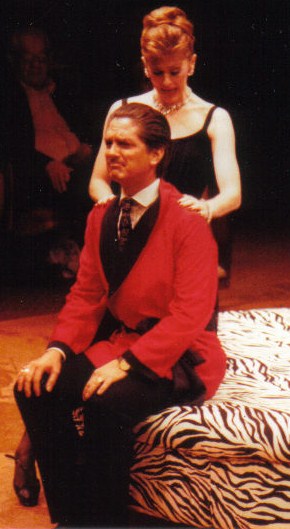
The second role Steve placed in my hands in Thief River was much more comfortable for me. And I got to sit on the floor:


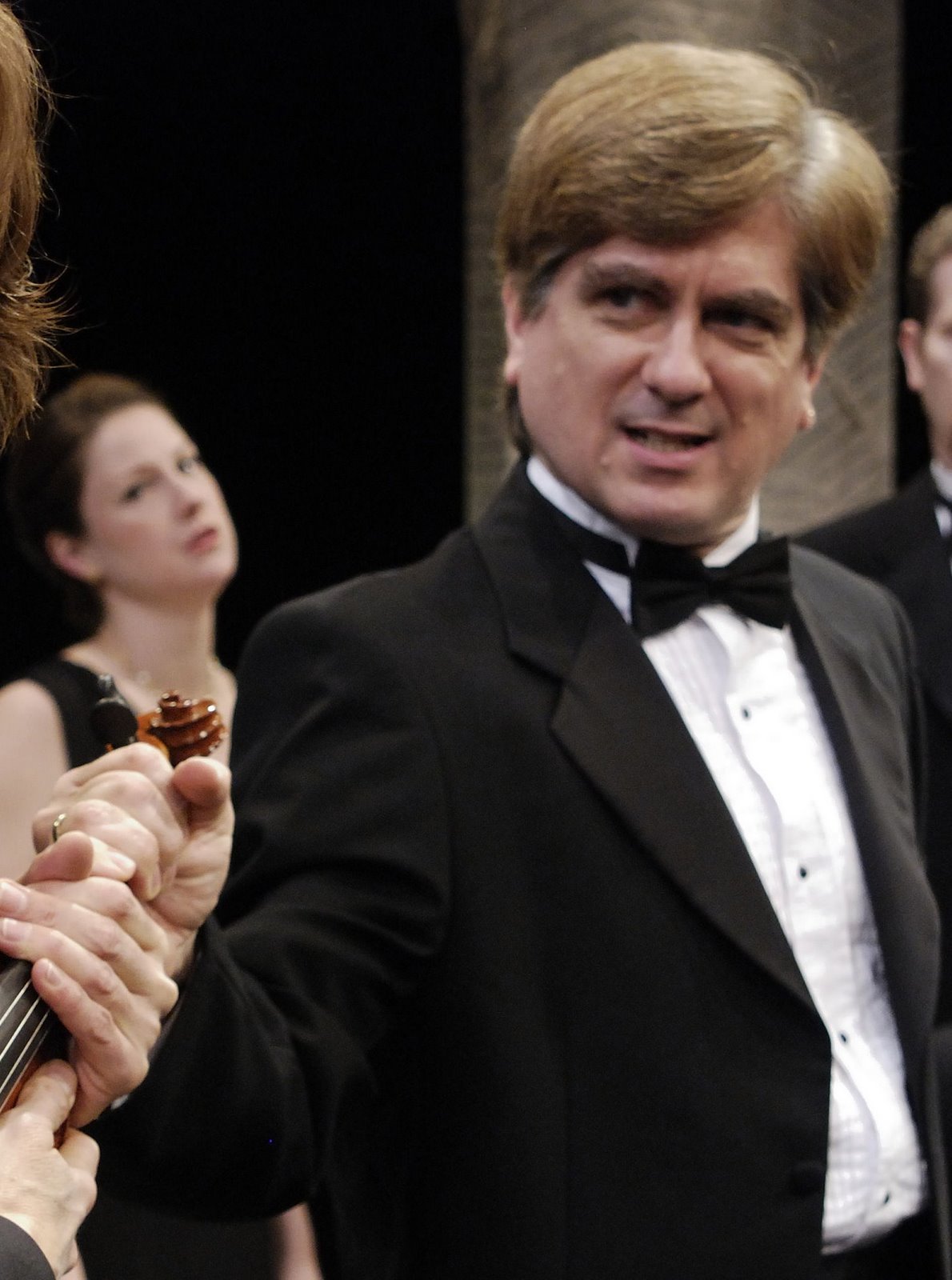
Three years ago, Steve invited me to participate in a Stage Guild production of Opus, playing the slightly off-balanced viola player dismissed from a famous string quartet. During the casting process, I felt the role Steve asked me to play was not as good a fit for me as the uptight, priggish violinist. Steve respected my opinion enough to consider my suggestion that I play the other part, but he returned to tell me that whenever he heard Dorian (the violist) speak, it was in my voice. That is just about the most complimentary thing any director has ever said to me, and Steve was very smart to say it. I stopped lobbying for the other role, and ended up having a great success playing the guy Steve wanted me to play all along.


Which brings me back to this week's audition for Darwin in Malibu. Because Steve respects me as an actor and as a friend, he was not going to say no when I demanded an audition, for a role he could not see me in. The reading itself went swell, just as I wanted, and Steve was gracious enough to thank me for my efforts. The role for which I read is written in my cadence and rhythm, so I may have come upon some nice material to use for audition purposes in the future, though for now, my audition did not lead to an offer of employment.

I don't believe Steve makes many mistakes regarding the casting of his shows, and I have none of the awkward feelings this time that I had 17 years ago at the University of South Carolina. Steve's production of Darwin in Malibu will be terrific, I have no doubt. I actually mean that, even as I would be a fool to say otherwise, since he occasionally reads these pages. He and I will work together again one day, I'm certain.

But I have to confess this. Just for a very quick moment this week, that old awkwardness resurfaced. After my reading went exceedingly well and I performed exactly as I had hoped, there was a nano-second of that old feeling I had first experienced 17 years ago in South Carolina. No one was to blame, and it was only a glancing blow, but just for a moment, I felt myself nicked by friendly fire.