Saturday, April 24, 2010

Theatre Droppings: Todd, Dick, and Harry

That's Sweeney Todd, Richard II, and Henry V, all of whom I visited during their final week of performances in DC.


I wish I had been able to write about these productions sooner, but it's been a busy time for me lately. However, all three of these shows attracted my attention, and though they have now all closed, I'm blathering on about them anyway.


I did not invent the term "Teeny Todd;" I think it was first assigned to an Off-Broadway revival of Sweeney Todd which shrank the orchestra and the ensemble, and played the show in a very small space. Signature Theatre's production, which I was lucky enough to catch at its penultimate performance, was not all that teeny. It was maybe moderately teeny, with an orchestra of only four players, and an abbreviated chorus of London lowlifes.


Who cares? I certainly don't. The ensemble sounded great, and delivered what many consider to be Stephen Sondheim's Masterpiece with strength and style. Musical theatre scholars and geeks will argue forever about which Stephen Sondheim show is his masterpiece; theatre folks may pick Follies, romantics insist the waltz-centric A Little Night Music takes the prize, and the Pulitzer folks picked Sunday in the Park with George as Sondheim's best. (And of course, I'm partial to his early work, A Funny Thing Happened on the Way to the Forum, since it's the only Sondheim I've been in.)

But really, no one can argue with Sweeney being called a masterpiece, so I was very glad I got to slip into Signature's final afternoon performance of Sondheim's grand guignol opera. This particular Todd generated some discussion for a controversial casting decision...more on that in a mo'. The cast I saw included two understudies in the principle roles of Tobias and Johanna; the original actors were busy prepping the next Signature show. As usual when I am confronted with understudy performances, I was not in the least disappointed. Both substitutes did great jobs. As did Chris Sizemore as the Beadle, a role usually played by an obese middle aged tenor. Chris, whom I admired in Civil War at Ford's a while back, and with whom I recently did a staged reading of Parade, was unrecognizable in top hat, skull cap, granny glasses, and Ben Franklin haircut. But he was menacing when he needed to be, and can work that falsetto better than Frankie Valley.


An actor with whom I am unfamiliar, Gregory Maheu, was playing our young hero Anthony, and got the honor (or the curse) of delivering what I think is the greatest, most haunting ballad Sondheim ever wrote, "Johanna." That aria never fails to move me, and this guy, who, physically, had a bit of a Jude Law thing going on, delivered a slender but still powerful version.


Which brings me to the couple at the center of any and all Sweeney Todd productions. Sherri Edelen was playing Mrs. Lovett; she has been at the top of her game for several years now, I think, and I will claim that she is the strongest musical performer her age in town. I don't know Sherri all that well; I worked with her husband Tom Simpson in Man of La Mancha at Wayside Theatre last year, but because Sherri was working in DC at the time, our paths did not cross.


May I wander off into personal memory time? Of course I can, I'm in charge of these pages. I had a pretty fun introduction to Sherri, many years ago, when we both volunteered to help with a general audition for Arena Stage. We sat outside the theatre, checking off names, and mostly, just killing time. Arena had announced Cabaret as part of their upcoming season, and Sherri mentioned Sally Bowles as one of the roles she had always wanted to play, but which had passed her by (actors talk like this a lot). I have always loved Cabaret (I wrote about that little obsession a while ago), so I mentioned to Sherri she would be a good fit for the role of the Nazi prostitute across the hall (my recollection is, she was unfamiliar with the part, which had been removed from the film version). I don't know if she actively pursued it, or if Arena came calling, but she landed the role and earned a Helen Hayes nom for her performance.
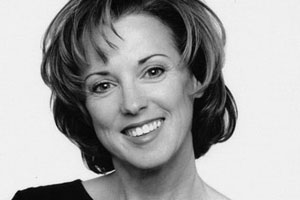


I have no doubt she will be getting another nod for her Mrs. Lovett in Sweeney. She was funny, sexy, and ruthless, all at once.


Lovett's partner in meatpies, our titular hero, was being played by Ed Gero, an actor well-respected in these parts for his classical work, though he is by no means a stranger to more contemporary plays, having won one of his several Helen Hayes Awards for Skylight at Studio. I have never been disappointed in Ed's work, and have a soft spot for him as a fellow performer. (Uh oh, here comes another sweep down memory lane.) He was the first person with whom I ever engaged in stage combat (or I should say, professional stage combat, as opposed to stuff in school). The year I spent at The Shakespeare Theatre, Ed was playing Banquo opposite Stacy Keach's Macbeth,and we opened the show with a vicious fight sequence. All the men in the show participated, as Mackers and his buddy mowed down dozens of sword swinging foes. I was Ed's first fight partner in this sequence; I have such strong memories of waiting upstage center, before the curtain went up, with Ed's wry humor helping to calm my neophyte nerves.


Gero has been one of my favorite DC actors ever since. He's pretty much one of EVERYBODY'S favorites, so it was with a bit of awkwardness that some folks wondered if he was up to the vocal challenges of the Demon Barber of Fleet Street. It sounds a bit odd, considering the over-the-top melodrama which is Sweeney Todd, but Ed's performance was actually understated, playing our anti-hero as a shell-shocked psychopath. The chemistry between him and Sherri was wonderful to watch (you could see their affection for each other when one of their duets went a bit awry, and they delightfully let the audience in on the error).


Ed Gero was tied up at Signature Theatre, so was not involved in the huge "Leadership Repertory" recently presented by The Shakespeare Theatre Company. But I was pleased to see several more of the "old guard" at The Shakes playing a variety of roles. Richard II opened with a scene which was apparently interpolated from an apocryphal play called Thomas of Woodstock. Who cares where that first scene came from, I was glad to see it, as its participants were Ted van Griethuysen, Philip Goodwin, and Floyd King, all playing uncles of R2. I worked with all three of these gents, who taught me a great deal about bringing the classics to life. We don't see them on stage at The Shakes as much as we used to, and that's a crime.


The title character of Richard II, and its companion piece Henry V, were both being played by Michael Hayden, in a monumental exhibition of performance prowess. I have admired Hayden for many years, ever since he proved that an actor who sings can bring new shadings to traditional musical theatre, in the well-received revival of Carousel about 18 years ago. Hayden is responsible for giving the only sympathetic portrayal of the protagonist in Sondheim's Merrily We Roll Along I have ever seen, which I mentioned when it played the Kennedy Center years ago.


Here at The Shakes, his double duty really paid off. Richard II as a play is not well-known to me; I saw Kelsey Grammer play it in Los Angeles the night the 1992 riots began, and if I didn't know better, I would think the two events were related. I also tried to get through an old PBS production of the play starring David Birney, who was never a dynamic actor and proved the point in that dull version. Hayden, though, brought this hubristic character to life for me. And I particularly enjoyed the comic interlude late in the play, with Ted van Griethuysen, Naomi Jacobson, and Tom Story playing a family of squabbling royals.


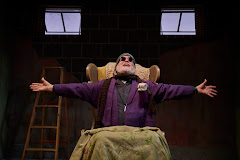
A few days later, I caught Michael Hayden's Henry V, a play I know far better, having been in it with that fine classical actor Mr. Harry Hamlin:


H5 has plenty of heroic speeches to deliver, including one of the most famous Call to Arms in dramatic literature. But he has one or two quieter, more circumspect moments, and Hayden delivered those with a poignancy which balanced out the bombastic rhetoric of the warrior king. I couldn't help but compare those particular scenes to those played by Hamlin, who had some trouble bringing life to his long monologues. During one particularly lengthy speech, Harry suddenly stopped during a tech rehearsal, and suggested that the moment might go better if he slowly took off his clothes while he spoke (he was right, it would have). Hayden had no need to disrobe during his monologues.


I love seeing the classics being brought to life with vibrancy, and these three productions of Sweeney Todd, Richard II, and Henry V did just that.

Friday, April 23, 2010

Friday Dance Party: Hello, Gorgeous


In 1964, my father was working his way up the management ladder at Lockheed, but traveled rarely for the company (he was later to circle the globe a couple of times as head of their commercial aircraft program, but that was a decade in the future). He was excited to be sent to New York by the company, and even more excited when Lockheed invited my mother to join him. They had never been to the Big Apple. Neither of them were big theatre-goers at the time, but they knew that, as first-time visitors, they needed to see a Broadway show. They had no idea what was playing, and wouldn't recognize any of the shows if they did, so they asked the hotel doorman what they should see. He pointed down the street to the Winter Garden Theatre, and my parents walked down the block and bought tickets.


It was years later that I first heard from my father that he and my mother had wandered into the original production of Funny Girl, and had seen the young Barbra Streisand in her career-making role.


As for me, I only became aware of Streisand after Funny Girl,the film, had been in the theaters for many months. My best friend Robert was a huge fan, and insisted we ride the bus from the suburbs all the way downtown to see the movie. I had not heard of the woman (give me a break, I was barely a teenager). The film was one of those "roadshow" events, with an intermission and reserved seating and such. We attended a Saturday matinee, in a huge theatre, with about 8 other people. I was hooked.


During the 60s, 70s, and 80s, Streisand was one of those galvanizing personalities whom people either loved or hated, there didn't seem to be much in-between. For most of that period, I would count myself as a lover. I was not slavishly devoted; I disliked many of her recordings of the 70s, though she topped the charts several times with items such as Stoney End, Enough is Enough, and The Way We Were. In fact, she has achieved a most phenomenal feat: she has delivered at least one #1 album in each of the past five decades. She remains the most successful female solo vocalist in recording history.


While she undoubtedly has had her greatest success in the recording industry (nobody can deny that hers is one of the great voices of the 20th century), she conquered the stage and screen as well. She has only two Broadway projects to her credit, but she was a standout in both. She was first noticed in a supporting role in I Can Get It For You Wholesale, a role which was beefed up musically when her vocal talents became apparent. And Funny Girl, of course, sealed the deal. The show itself is not one of Broadway's classics, and the fact that there has been no high-profile revival indicates that the piece is now inexorably tied to Streisand. But she was not the first choice to play Fanny Brice in this stage biography; during much of its development, Mary Martin was attached to the project (Mary Martin as Fanny Brice? ACK!!) The ultra-goy Martin ultimately withdrew, and the show was offered to Anne Bancroft, of all people, who wisely declined. Carol Burnett was approached; she quite astutely replied, "You need a Jewish girl." Edie Gorme was courted, but her insistence that her husband Steve Lawrence play leading man Nick Arnstein sank that deal. Finally somebody remembered Streisand, and dragged the producers to the Bon Soir cabaret in the Village, where Babs was performing, and a star was born.
Funny Girl had a very healthy run of well over 1300 performances, and was nominated for 8 Tony awards, losing them all. Though Streisand was awarded a Special Tony in 1970, she never won the award in competition. She was nominated for Best Supporting Actress for I Can Get it For You Wholesale, but lost to Phyllis Newman in the giant flop Subways Are For Sleeping, and she lost her Best Actress award (for Funny Girl, of course) to the juggernaut which was Hello, Dolly!


Throughout most of the 60s, Streisand delivered a series of television specials which won multiple Emmys, but it was still a surprise when her film debut snagged an Oscar. Her performance in the film version of Funny Girl ranks as one of the most dynamic film debuts in the history of the movies. The film itself was the top grosser of 1969, and is probably responsible for the failure of all attempts to revive Funny Girl on stage. With Streisand's definitive portrayal of Fanny Brice available for all to see, who would want to see Sutton Foster tackle the part?

This week's Dance Party celebrates not only Streisand's vocal ability, but her screwball comic chops as well. Her comic ability can be overshadowed by her musical accomplishments, but just check out What's Up, Doc? or Meet the Fockers if you have any doubt about her comic timing. Or just enjoy the clip below, which showcases her comedic and musical skills simultaneously. It's from Funny Girl, and illustrates Streisand's ability to be dynamic and endearing at the same time.


Barbra Streisand turns 68 tomorrow.

Wednesday, April 21, 2010

City On Fire

Daryl Gates

1926-2010


I am very glad I was not in Los Angeles the past week. I imagine that the local airwaves were full of tributes to Gates, who died April 16. He may have been the most famous, and surely the most controversial, chief of the LAPD. He was a bigot and a bully, and rose steadily through the ranks of the Los Angeles Police Department despite (or perhaps because of) his racist attitudes. (When asked why so many black suspects were dying due to a chokehold his officers were using during arrests, he replied that blacks' arteries were "smaller than normal people.") He believed working with community leaders to prevent crime was an outdated, useless scenario, and during his watch, community policing diminished dramatically. He imprisoned hundreds of suspected gang leaders during the 1984 L.A. Olympics so they would not cause a blemish on the city, releasing them after the games were concluded.


In his early career, he had a hand in the investigations of the Manson family and the Hillside Strangler, which helped his ascendance through the ranks of the LAPD to become its chief in 1978. He demanded, and got, strict loyalty from his men, but clashed repeatedly with the public at large. He had a terrible working relationship with LA mayor Tom Bradley, who was black, but for some bizarre reason, the Mayor of Los Angeles was not authorized to fire the Chief of Police, making Gates answerable to no one (that governmental loophole has since been closed, a direct result of Gates's tenure as chief).

The Rodney King verdict was to be his well deserved downfall. You remember the story, right? King had been detained by police, after leading them on a car chase, and was beaten beyond senseless by four officers, a beating which was preserved on videotape. The incident caused a major sensation, forcing Gates to suspend the officers, who were later put on trial for assault. The atmosphere in LA was so incendiary regarding this incident that a change of venue was granted, and the cops' trial was held in the overwhelmingly white suburb of Simi Valley.

On the evening of April 29, 1992, I was attending a play at the Mark Taper Forum, only a mile or so from what was known as South Central L.A., an area of poverty and crime. The show was Richard II, and TV star Kelsey Grammer was strutting his Shakespeare in the title role. During the intermission, the audience went outside onto the concrete terrace of the theatre, where helicopters were circling overhead, shining bright spotlights onto the streets below. This kind of thing was not uncommon in downtown LA, and I assumed somebody was filming something. After the show concluded, and the curtain applause had subsided, a spokeswoman for the theatre scrambled onto the stage to announce that there was a major disturbance happening downtown, and we were all advised to steer clear of the area on our way home.

At the time, I was living in Silverlake, a few miles in the opposite direction, so I didn't think too much about the incident as I drove home. It wasn't until I turned on the news the next morning that I discovered that, the afternoon before, the Simi Valley jury had acquitted the four cops of all major charges, and Los Angeles had erupted into a full-scale riot.

Chief Daryl Gates had been at a fundraiser the night the riots ignited, and subsequent investigation proved that he remained at the party even after being alerted that there was major trouble on the streets. The next day, downtown L.A. was ablaze with fire and rampant looting; Gates's police could not even begin to handle the uprising. I remember sitting on the deck of my apartment, watching the billows of smoke rise up from the downtown skyline, and wondering how such a thing could be happening in a civilized city.


It was several days before any kind of order was restored; Gates's police department and even the national guard could not contain the violence, so the first President Bush ordered the 7th Infantry Division of the US Army onto the streets.

In the end, 53 people had died and hundreds more were injured, including Reginald Denny. Remember him? He was the white truck driver who was in the wrong place (the intersection of Florence and Normandy in South Central LA) at the wrong time (barely minutes after the King verdict was announced). With news helicopters overhead catching the thing on tape, Denny was dragged from his truck by several black teens, beaten to a pulp, and left for dead.


The city was under heavy curfew for days, and when it was finally over, I walked a block and a half south, to my favorite Korean diner for breakfast. It had been torched by the rioters.


Subsequent investigations laid much of the blame for the riots squarely on Gates and his management of the police department. Two months later, he resigned in disgrace.

In the years since the riots, the tarnish on Gates's reputation was cleaned up, as he became a businessman in the security surveillance area, and was a frequent talk show guest whenever the topic centered on police matters. His autobiography, Chief: My Life in the LAPD was published before the LA riots, and he did not bother to update further editions to include his massive failure to contain the violence. He died last week at the age of 83 from bladder cancer.

Tuesday, April 20, 2010

A Parade in Town

In DC, just about every week there is some kind of parade celebrating something. You probably didn't hear about the one in which I participated last week.

It was a staged reading of the musical called Parade. The event was produced by Ford's Theatre, which used to call itself Historic Ford's Theatre, which made it sound very stuffy; they've gotten away from that a bit lately, what with their current offering of Little Shop of Horrors, about which I recently wrote. (Ford's has grown less stuffy, I haven't). This reading was actually similar to a backer's audition. The theatre's artistic staff, headed by Paul Tetreault and Mark Ramont, wants to produce Parade in a couple of years, but the cost of doing so apparently requires more funding than the theatre normally gets. So, the Powers That Be decided to pull together a staged reading of the piece and present it in front of a bunch of DC's Big Pockets, in hopes that they will step up and fund the production.

I have never worked at Ford's, and have only recently popped up on their casting radar, I'm not sure why. I was excited to get a callback for their upcoming musical Liberty Smith a month or so ago, then missed the damn thing because of some kind of food poisoning or something. I just could not justify going into the audition and barfing all over the director, so I had to bale on the audition, to my regret (if you are twisted enough to want to know more, I wrote about it all here). But I was fully fit and ready to work when Mark Ramont, who is the theatre's associate artistic director and acts as their local casting director, invited me to participate in this reading of Parade.

Most actors in town participate in staged readings at one time or another, DC is lousy with them. I've written more than once about the 16, count 'em SIXTEEN readings I did with the Washington Stage Guild during the period in which they were not producing fully. I enjoy doing them, despite the lack of remuneration, as it gives me the chance to experiment with a wide range of characters I may not otherwise come across.

Though part of the same species, the musical staged reading is a different animal. I've done a couple previously, both of them requiring about a week's worth of rehearsal, after which several performances were given. One Touch of Venus, produced by American Century Theatre a good while back, was great fun, and was even reviewed by an online theatre critic. I also had a swell time in 1776, which was sponsored by the Smithsonian, and anchored the inaugural festivities surrounding the reopening of the National Portrait Gallery.

Parade, as I said, was a bit different, in that it was to be performed only once, before an invited audience of wealthy muckity-mucks. We did all of our rehearsing on the third floor of the Church of the Epiphany, several blocks away from the theatre, in a creaky but roomy space which Ford's uses for such purposes. (Ford's has recently completed a multi-million dollar renovation, but as inevitably happens when theatre construction is put in the hands of non-theatre folk such as the Dept of Parks or whoever it is that funded that renovation, they overlooked a CRUCIAL element of producing live theatre: a rehearsal space. So all Ford's productions begin life in the attic of a church.)

This reading was important enough that the theatre imported several New York types to lead the Parade. Steve Rosen and Jill Paice headed the cast, playing the husband and wife at the center of the story. They are both accomplished actors with substantial credits; Steve recently played Benny in the Broadway revival of Guys and Dolls, and Jill ended a successful run in The 39 Steps. If we had undergone a full rehearsal process, there would have been time to chat up these two; I would love to hear, for example, some stories of Jill's experience playing Scarlett in the disastrous musical version of Gone With the Wind which happened in London a few years ago. Anyway, our director here was Jeff Calhoun, one of the major musical theatre director/choreographers in the country (among other work, he was responsible for that Big River with the sign language).


Parade is a true story, and takes place in Atlanta in 1913-15. I grew up in Atlanta and had never heard this story, but it is apparently a darkly kept part of the city's history. It concerns a Brooklyn-born accountant, Leo Frank, who settled in Atlanta for a job, and married a local girl. He felt like an outsider, as he was Jewish as well as a Yankee. (This play was written by the same guy who wrote Driving Miss Daisy and Last Night of the Ballyhoo, so he knows a bit about being Jewish in the South.) A teenaged factory worker (a girl named Mary Phagan) is found dead, and Leo is convicted of her murder. Sentenced to hang, his appeals reach the Georgia governor, who becomes suspicious of the testimony given at the trial, and after investigation, commutes Frank's sentence to imprisonment, rather than execution.

The locals will have none of it, and they abduct him from prison one night, and lynch him.

Happy story, eh? Somehow, this period of American history was overlooked by my teachers in suburban Atlanta.

Anyway, we spent five days in the barn-like rehearsal hall, which was ringing with some of the best musical voices in town. Our cast of 16 was peppered with Helen Hayes award winners and nominees, including Eleasha Gamble, who just won this year's award for her performance in The Civil War (a production directed by our leader Jeff Calhoun, who also received a nom for his work, as did the ensemble and the production; I wrote about what I learned from seeing The Civil War a while back). Chris Sizemore was also in that show, and he kicked off our reading with an opening number which took the roof off the joint. My cohort from Man of La Mancha, Tom Simpson, lent his bass-baritone to the role of the prosecuting attorney, and Kevin McAllister handled a string of showstoppers.

I was pretty outclassed by this group of legitimate voices, but I tried to hold my own as the week of rehearsals progressed. I was playing a couple of nice roles: the cop who arrested Leo Frank, and Leo's defense attorney. It was that last role that placed me center stage for the climactic courtroom scene, where I could watch the dynamic work Steve Rosen was doing in the role of Mr. Frank.


As is common with staged readings, the whole cast sat onstage throughout the performance. We were placed in a semi-circle, and approached the free-standing mics whenever we had a scene or song to deliver. I was seated next to another HH award winner, Stephen Gregory Smith, who was stealing his scenes (in a good way) as a reporter whose career takes off due to the Frank trial, and on my other side was Jenna Coker-Jones, who is going to win next year's HH award for her performance in Ford's current Little Shop (her husband Chris might win, too; he also participated in our reading, delivering a couple of numbers in a clear, crisp tenor which makes raspy baritones like me want to get a gun).

On Sunday, we had a final runthrough at the rehearsal hall before walking over to the theatre to give our 4 PM performance. Now, I've been in Ford's many a time, even after the recent renovation, but always as an audience member. I had never stepped on the stage. Until Sunday.

As I sat and faced the audience, I felt a thrill which I used to feel every single time I stepped onstage. I don't know if it's age or experience or what, but I have not felt that true elation about being on a stage in quite a while.

Sunday, that feeling was back. I was performing on one of the most famous stages in the world, with Lincoln's box, decorated in flags, looking down upon us.

I'm going to try to remember that feeling the next time I step out onto the stage of a dinky little black box theatre to perform for a few dozen people. It is the reason I chose this life.