Friday, March 12, 2010

Friday Dance Party: Oscar's Oversights

The Internet was abuzz earlier this week (or at least, my section of it was) after the Academy Awards Show's "memorial" section aired. A few folks were left out, and some people were hopping mad. (Click on the highlighted names below to read my original obits.) The most glaring oversight seemed to be this model-turned actress:
Farrah Fawcett made her fame in television and with her iconic poster back in the 70s, but she appeared in a few big screen items which deserved some notice. Well, maybe only one, but the fact that Michael Jackson was included in the memoriam, after his whopping contribution of one film, then why wasn't Fawcett? Her appearance in the film version of Extremities, as a rape victim who turns the tables on her attacker, garnered her a Golden Globe nomination, and surely should have garnered her a mention at the Oscars.

Like Fawcett, this guy was also known primarily for his television work, but he delivered several high-profile performances on the big screen which should have warranted inclusion:

Henry Gibson's list of feature films is longer than you might think; those of us "of a certain age" recall his swell voice work as Wilbur the pig in the Hanna-Barbera feature cartoon Charlotte's Web. He is well-remembered for strong performances in Robert Altman films, with his work in Nashville garnering him a Golden Globe nomination.

Of the other actor-types who were overlooked at the Oscars, I would surely include this guy:

Edward Woodward became a TV star in The Equalizer, but earlier in his career, he appeared in at least two prestigious features, Breaker Morant and The Wicker Man.

This guy may have been better known for musical appearances, but his movie work still warranted some recognition:


Harve Presnell is well-remembered as a cranky coot in Fargo, but decades earlier, he headlined The Unsinkable Molly Brown opposite Debbie Reynolds. He won the Golden Globe in 1965.

This gal's work was also better known on stage and on TV, but as she's always been a favorite of mine, I missed her inclusion most of all:


Beatrice Arthur's movie credits include Lovers and Other Strangers, Mel Brooks's History of the World Part I, and a Golden Globe nomination for one of the most notorious film adaptations of a Broadway smash, Mame.

That critical flop, released in 1974, placed TV clown Lucille Ball in the title role, robbing us of an iconic stage recreation by original star Angela Lansbury. The film is sunk by Ball's rough vocals, which were so uneven that her numbers had to be painstakingly edited, line by line, to bring them closer to pitch. Arthur recreated her Tony-winning performance as best buddy Vera Charles, and does the best she can. The film is out on DVD, but I've been unable to find a clip of either of Bea's two numbers online, which may be just as well, as I'm sure they came off better in the theatre. So for this week's Dance Party, here's a clip from a musical Arthur never appeared in, but perhaps should have. The show is Wonderful Town, which never received a big-screen treatment, settling instead for an abridged version shown on live TV with original star Rosalind Russell. If you care about such things, you can spot future Broadway stars Jason Graae, Howard McGillan, and Debbie Shapiro (before she went Gravitte) in the dancing ensemble. Let's conga!


Wednesday, March 10, 2010

Lord Arthur Savile's Critics

We've completed our second full week of performances, and the major reviews are in for Lord Arthur Savile's Crime. They can only be classified as raves, with all three critics seemingly pleased that the Washington Stage Guild is back on the boards.

Actually, the Stage Guild returned to full production last fall, when they presented an evening of one-acts at Catholic University in conjunction with the International Shaw Conference (I wrote about those hilarious Shavian bits here). But I suppose our production is getting more buzz as it's a return to downtown DC for the Guild, and is being presented in a charming theatre which may become a long-term home.


Whatever. There are some stage actors out there who do not read reviews of their shows (or claim they don't), and that's all well and good, but I am not one of those. I read the reviews, always with an eye to the most important aspect: will they help put butts in seats? As for the actual critical analysis of the work, well, I confess to being more interested in what my peers think than the critics. But that does not stop me from reading every word, and caring what they say.
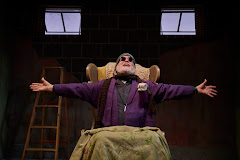
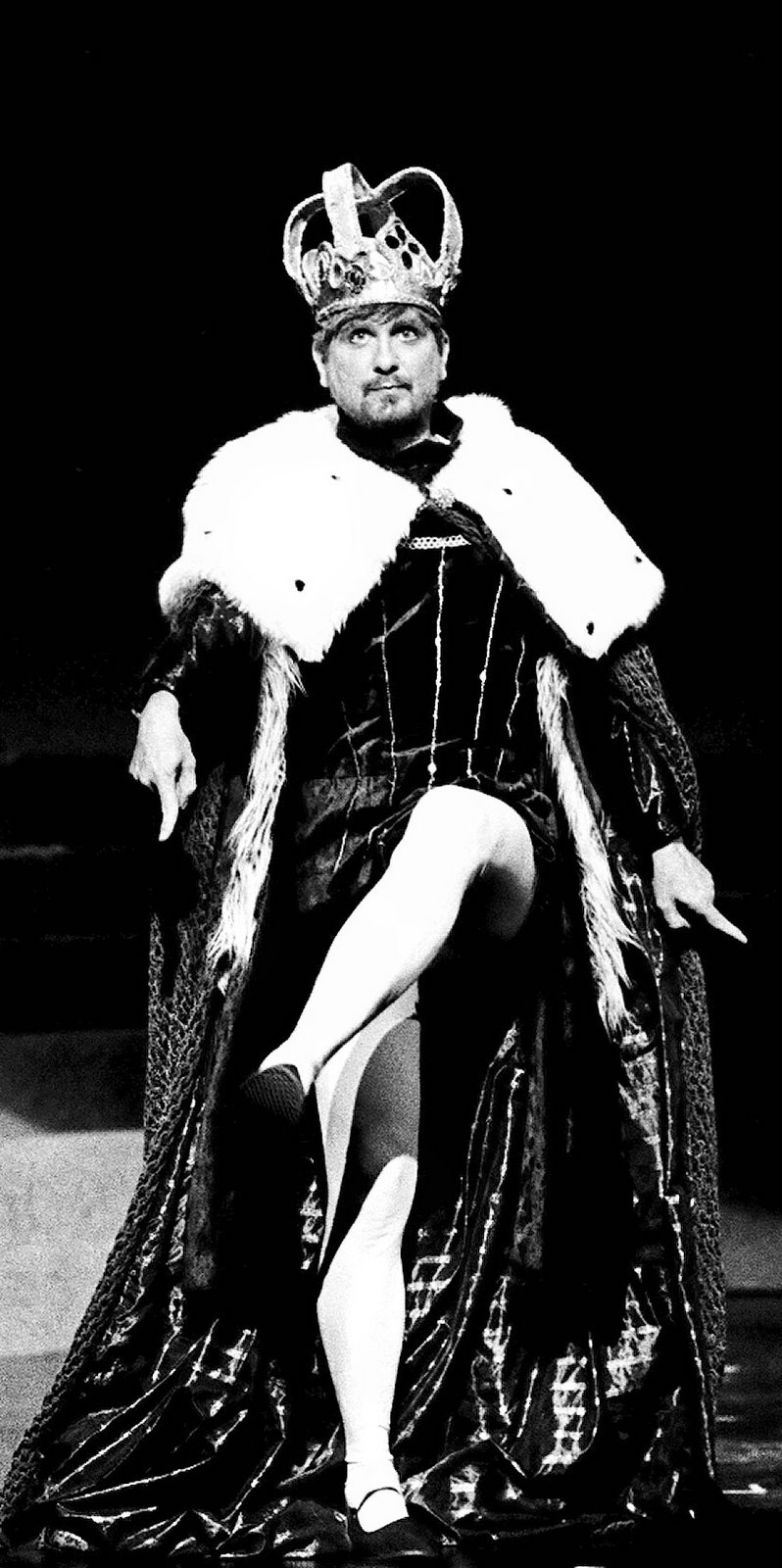
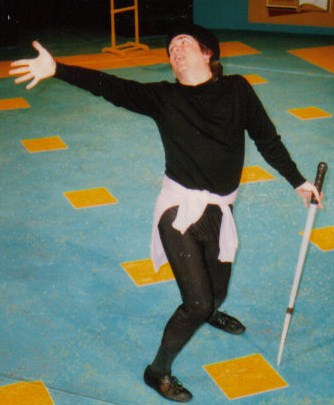
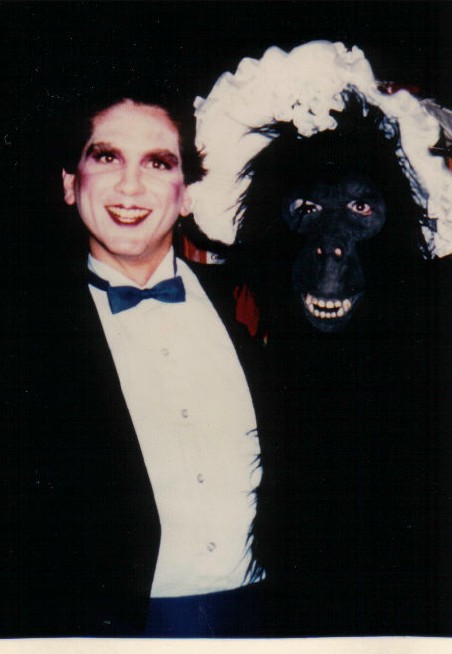
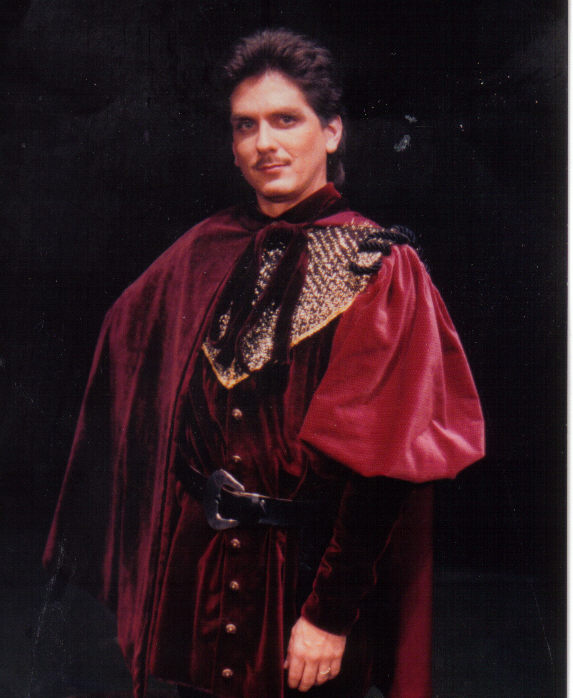
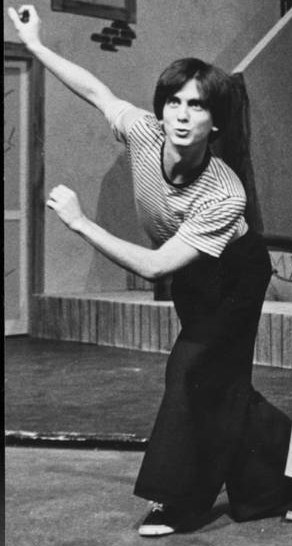
I remember the undeniable thrill I felt the very first time I saw my name in a printed review. It was a biggie, the L.A.Times, who said I had "real panache," playing a minor role in Jon Voight's Hamlet (left). A few years later, the same paper called me a "showstopper," for a fun original musical for kids (there's a blurry screen grab below); I was sure my career was made. I guess I'm glad critics don't actually have that kind of power, otherwise I may have done myself in, when I received this notice a few years later, from one of the trades in Los Angeles:

"R. Scott Williams acts a lot. Or something."

See how we remember such things? That critic was actually correct: I was acting a lot or something. The production, a dismal translation of Machiavelli's Mandragola (The Mandrake) deserved every nasty dart the critic threw.


There have been so many dozens of reviews since then, that it's hard to keep track, though not from lack of my trying. Which brings me back to our current notices for Lord Arthur.... The first review was posted by DC's leading online theatre site, DC Theatre Scene. The couple who runs the site are tremendous boosters of local theatre, and have been personally supportive of my work. Neither of them reviewed our show: they sent another critic, who absolutely raved about six-sevenths of our cast. Can you guess which actor she failed to mention?

Hey, I'd rather be ignored than slammed, so I'm pleased she did not mention me in the review (go here to read it), as I assume she disliked me and declined to mention it, or was so bored by my performance she forgot I was in the thing. No matter, it was a rave for the show, which is the important thing.

Our second review is undeniably considered the city's "money review." The Washington Post's leading critic, Peter Marx, attended the show last week, and responded with another rave. This review has significance for several reasons. Marx has a habit of attending the larger theatres in the area, leaving the smaller, Mom-and-Pop groups to the stringers, so it was unusual to find him in our audience. More importantly, the Post is the review which is most likely to convince audience members to attend, so we are pleased as palmists that he approved of the show. Go here to read the full piece, but it's not necessary, as I will tell you now that I was described as a "sure-footed foil."

Our third review was posted just today, and will hit the newsstands tomorrow. The Citypaper is the free weekly which likes to think of itself as the "alternative" paper (alternative to what remains open for debate). Their critics have large vocabularies and are quick to show them off, and I've been treated pretty well by them in other offerings. Their senior theatre critic, Bob Mondello, attended a very quiet performance last week, and filed a review which can also be considered a rave. He complimented six-sevenths of the cast, then compared me to an "ante-bellum plantation owner." (That suit I'm wearing in Act Two does make me look like Colonel Sanders.)

He saved his most lavish praise for our director and playwright Bill Largess, giving him well-deserved kudos for translating Oscar Wilde's novella to the stage in a stylish manner. I'm thrilled that the Citypaper review can be counted a win, even as the critic in essence wished Bill had been playing my role.

Well, he isn't, and I'm having a ball, when I'm not coughing up disgusting mucus. I snagged a righteous cold two weeks ago, and have been suffering the effects since; my poor castmates have been great sports about my annoying hack backstage.

I have hopes the cough will have diminished when we return to the stage tomorrow night. But our spirits will not, as we've been notified that we are extending our run a week. Such news reflects positive reinforcement from the producers, and I have no doubt we will have a swell time as we head into our third week of shows.

Tuesday, March 9, 2010

NAN MARTIN

1927-2010

Another one of my favorite character actresses who spent her career "in support," Martin had a lengthy stage and screen career, which continued even after her stroke in 1981. She showed an independent spirit in her early years, when she was elected the first female student body president at Santa Monica High. Her first big splash came with her Tony nominated performance in Archibald MacLeish's J.B. in 1960, a ground-breaking production which also starred Christopher Plummer and Raymond Massey. Her New York stage career thrived in the early 60s; under Joe Papp's direction, she played Portia opposite George C. Scott's Shylock, and Gertrude opposite Julie Harris's Ophelia. She spent much of the next year in London, where she again starred with Scott in Three Sisters, in a prestigious production whose cast included Sandy Dennis and Kim Stanley.

Around this time, she was appointed by President Kennedy as theatre chairwoman of the new Arts Advisory Committee at the State Department, a position which took her across the globe.

Nan Martin had ongoing professional relationships with Edward Albee (Three Tall Women), Tennessee Williams (Eccentricities of a Nightingale), and Horton Foote (Dividing the Estate), and was a major player on regional theatre stages (here in DC, she won the 1990 Helen Hayes Award for her performance in Road to Mecca, opposite Kathy Bates). I saw her in one of her many performances at South Coast Rep in La Jolla, CA. SCR is a major regional theatre close enough to Los Angeles that one could drive out to see the show and return home the same day. I learned after the performance that I almost saw Martin's understudy. She had snagged a TV gig which kept her in Hollywood until rush hour, making it impossible for her to get out to La Jolla in time to make her 8 PM curtain. Here's the mark of a true stage trooper: instead of forcing her understudy to go on, Nan hired a helicopter at her own expense to fly her from the studio to the theatre in order to make her evening show.

Martin's film career included various movies co-starring Dean Martin, Sidney Poitier, and Ali MacGraw, and horror fans will recognize her from the third installment of the Nightmare on Elm Street franchise, in which she played Freddy Krueger's mother. She taught acting at Will Geer's Theatrical Botanicum in the Topanga canyon of Los Angeles, and directed several shorts for the AFI Program for Women Directors.
Most folks, though, will recognize her from her television appearances. Early on, she guested on such landmarks as Twilight Zone, The Defenders, and The Fugitive, and later, she became a go-to gal on various sitcoms. She played a recurring role on The Drew Carey Show, playing his boss Mrs. Louder:


She appeared a couple of times on The Golden Girls, including the hilarious "It's a Miserable Life," in which her performance as a cranky neighbor sparked a visit to a funeral home for our gals. Below, please enjoy a brief clip of the episode:


Nan Martin died last week at the age of 82.

Friday, March 5, 2010

Friday Dance Party: Undulating Undies and the Organdy Snood

The star of this week's Dance Party does not appear in it, and disavowed any connection with it during his lifetime.

Theodor Geisel began writing under the pen name "Dr. Suess" during his college days, after he was busted for drinking bootleg gin during Prohibition. He could not bear to give up his humor writing for The Dartmouth Jack o'Lantern, and began submitting his pieces under the pseudonym by which he would later become world famous. He studied for a while at Oxford, but returned to the states in the years leading up to WWII. He wrote for leftist political magazines, skewering the nation's isolationist tendencies, and fully supported FDR during the war. He wrote compellingly about racism against Jews and blacks during the period, but conversely, approved of the internment of Japanese-Americans. This blot on his moral character was partially rectified with his 1954 publication of Horton Hears a Who, which he used as an allegory about the American occupation of post-war Japan.

Though he was already finding success as a children's author, it was an article in Life magazine in 1954 which set him onto the path to his signature style. The article blamed the alarming illiteracy rate among children on the books they were forced to read; a text-book editor buddy of Geisel's compiled a list of 348 words he felt first-graders needed to recognize in print. He delivered the list to our hero, asked him to cut the list to 250 and write a children's book using those words. "Bring back a book they can't put down," William Ellsworth Spaulding goaded. Less than a year later, using 236 of the words given him, Dr. Suess delivered The Cat in the Hat, which became an international success and solidified Geisel's rhyming and rhythmic style ( anapestic tetrameter, look it up).


Geisel claimed he never set out to teach a moral, as kids can see such things coming a mile away, but his works hold subtle allegorical messages. Yertle the Turtle is about anti-fascism, The Sneetches is about racial equality, and of course, How the Grinch Stole Christmas concerns materialism. He meant Horton Hears a Who to address political isolationism, but after his death, a particular phrase from the book has been appropriated by the pro-life movement in the debate against female reproductive rights:


"A person's a person, no matter how small."


Geisel's widow continues to be vehemently opposed to the use of the phrase in the abortion debate.

What does all this have to do with the Friday Dance Party? Not much. Today's clip comes from the only live-action feature film with which Dr. Suess was personally involved (the later screen adaptations of How the Grinch Stole Christmas and The Cat in the Hat were authorized by his widow after his death). The 5,000 Fingers of Dr. T was released in 1953 with story, screenplay, and lyrics by Theodor Geisel. By then, he had disavowed the project, calling it a "debaculous fiasco." At the Hollywood premiere, people were deserting the theatre by the 15 minute mark, and the film was a financial disappointment. Starring oddball Hans Conreid as the title character, it is a fantasy film in which a young boy who hates his piano teacher falls asleep and dreams of being kidnapped by the evil Dr. Terwilliker.

I have tried to get through this movie, and cannot, but others I trust love it. It's a cult film these days, and most if not all the musical numbers are available to view online. It's hard to believe this thing was aimed at kids, as a few of the numbers are quite harsh, including one in which 500 little boys are enslaved in the evil Dr. T's dungeon, and forced to play a huge piano:


(Geisel reported that during the filming of the scene, one of the boys vomited, starting a chain reaction. Soon, they had 150 boys throwing up all over the set; Geisel said it was similar to the film's critical reaction). There is another song taking place during a sinister elevator ride, down into the depths of Dr. T's lair, with a shirtless elevator operator completely masked (that sequence was so disturbing, it was removed from the film in 1958, when it was re-released under the title Crazy Music).


The clip below is a fun solo for Hans Conreid, and illustrates the way with words we came to expect from Dr. Suess. Gotta love this guy's boudoir, and the fancy boys who help him get ready for Do-Mi-Do Day, whatever that is. Dr. T has a fondness for those colorful shifts he wears over regular clothes, the film is full of them. It's not every man who can wear something like that, though wouldn't they look great on Auntie Mame?


Theodor Suess Geisel had a birthday this week, on March 2nd.

Tuesday, March 2, 2010

A Wilde Week

It was a very long time coming, but Lord Arthur Savile's Crime is finally open. I bet our director (and script adaptor) Bill Largess is relieved. He must have started writing this thing several years ago, and it had two staged readings before finally reaching a full production this weekend. He's been tweaking it all along, and perhaps will continue to do so, but for now, he has furnished the world another Oscar Wilde play.

We had some challenges, many resulting from the fact that this is the first Washington Stage Guild show to be produced in the Undercroft Theatre. The landlords, the Mount Vernon Methodists, seemed happy to have a professional theatre company in residence, at least in theory. But I hear they put up some fuss when the Guild installed a new lighting grid, to facilitate lighting this wide, low space. I'm sure our Executive Director Ann Norton smoothed more than a few feathers. (Did you read the well-deserved testimonial to her in the Post? Go here.)

The Methodists are not used to the needs of a professional theatre company. No more proof was needed after Friday night, when the landlords made the decision to take four or five hours to fix a water leak in the adjoining building, beginning at 7 PM. They either totally forgot, or totally disregarded, the fact that the Stage Guild was conducting a preview performance that night. The show went on, without running water backstage or in the lobby bathrooms. Bless the handful of folks who attended, having been alerted at their arrival at the theatre that they would not be allowed to flush.

Lord Arthur... is a full Equity production, which means that we were not required to perform in a theatre without bathroom facilities. It's a tribute to our fondness for the company, and for Ann and Bill in particular, that we all voted to go ahead with the performance, breaking long-standing AEA rules. And truth be told, we were all pretty anxious NOT to lose a full run of the show, as the official opening was the next day.

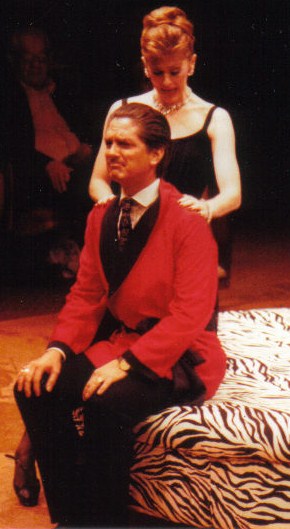
We did not have a specific technical rehearsal, per se; technical aspects of the production were gradually incorporated as the final week of prep progressed. So, lighting effects were built around us during rehearsal, with designer Marianne Meadows hanging and refocusing lights during our breaks. Costumes arrived early in the week, and I admit I was concerned when I was shown the main suit I was to be wearing. Lord Surbiton, my role, is a wealthy man-about-town, the eldest son of a duke, and accustomed to the finest money can buy. This suit, when it first arrived, looked shoddy and old, with ragtag buttons hanging in odd places. I kept thinking of the suits I wore the last time I performed in an Oscar Wilde piece, in grad school. My clothes (left) were handmade, tailored exactly to my dimensions, and wore like a dream. They were spectacular pieces, and I bet USC still uses them today! Anyway, I should not have worried about my costume here, as several days later, the suit had been spruced up, cleaned up, pressed, and now seems quite right. (And the ladies of our ensemble look terrific in their gowns). I am learning it's all part of the Stage Guild routine: we don't expect everything to happen at once, but eventually, all will be well.


A similar thing happened with our set pieces, which arrived extremely late, and were not very similar to those we had expected. The light and delicate garden furniture which had been described to us turned into massive wrought-iron tables and chairs, heavy and difficult to manoeuvre. We spent much time rehearsing the frequent transitions between scenes, moving these things hither and yon (reminded me of my internship, when one of our chief responsibilities was the smooth movement of furniture. Does Uta Hagen cover that in her books?). The time spent on the transitions has paid off, as our audiences are not just sitting through them, but are actually enjoying them (one or two are even getting laughs).

Saturday night and Sunday matinee, we had some of the local press in attendance, as well as many well-wishers who have missed having the Stage Guild in full production. Judging from their reaction, the show is stylish and smart, and often hilarious. We'll see what the general public thinks as performances begin again on Thursday. It will be a challenge to try to fill this house, which seats over 140, as in recent years, Stage Guild shows were performed in a theatre seating less than 90.


But I think we're up to it.

Friday, February 26, 2010

Friday Dance Party: A Posh Life

The star of this week's Dance Party appeared in 70 films throughout his lengthy career, excelling at both the comic buffoon and the menacing villain. But his greatest achievements were in creating a children's film classic, and being in one.

LIONEL JEFFRIES


1926-2010


His career took off in the 1950s, when he became a supporting star of the British film industry in such films as The Colditz Story, opposite Eric Porter and John Mills, and Two-Way Stretch opposite Peter Sellers. He offered a brute performance as the loutish Marquis of Queensbury in The Trials of Oscar Wilde, starring Peter Finch.


By age 19 he had lost his hair, and an ill-advised experiment with a toupee did not end well (he claimed it looked like a dead moth on a boiled egg). He attended RADA, as the only bald student, and was soon making stage appearances in Lorca and Giraudoux. In addition to a booming film career, he often returned to the stage, and appeared on Broadway in 1987, playing Pickering opposite Peter O'Toole's Henry Higgins and Amanda Plummer's Pygmalion.


In the 70s, he became a film writer and director of some note with his production of The Railway Children, considered by some to be a classic of the family film genre. (He bought the film rights at the insistence of his young daughter for 600 pounds.)


Jeffries is well-remembered for his appearances in two film musicals of the late 60s. He played King Pellinore in the all-star Camelot, opposite Richard Harris and Vanessa Redgrave, and in 1968, contributed a charming performance opposite Dick Van Dyke in Chitty Chitty Bang Bang. It is from this classic children's musical that the following clip is plucked. You don't really need to know the details, do you? Surely everybody knows the story of the flying, floating, magic car, and the attempts by the evil Baron Bomburst of Vulgaria to steal the invention. Jeffries's performance as Grandpa Potts is a scene stealer, spending much of the film in an outhouse, which, as you can see, is being abducted by the villains in this clip.


Chitty Chitty Bang Bang had a score by the Sherman Brothers, working off the Disney lot this time, and was based on a fantasy novel by Ian Fleming, of James Bond fame. Jeffries plays Dick Van Dyke's father in the film, though was himself six months younger than the star. It's a marvel what a bald head and a grey beard can do. Enjoy:


Lionel Jeffries died this week at the age of 83.

Tuesday, February 23, 2010

My One And Only Line

We had a crowded weekend of rehearsals for Lord Arthur Savile's Crime at the Washington Stage Guild; at this point in the rehearsal process, I usually need to actively disengage from the show during downtime; otherwise, I obsess. It was time for a road trip! And by that I mean, it was time to pop a movie into the player, and imagine a road trip.


Sunday, our rehearsal began late in the day, so I took the opportunity to sit down with a film which has been in my Netflix Queue for many months, My One and Only. Remember this one? It's not the Broadway musical of the same name (that one was a Tommy Tune hit built around Gershwin standards, and co-starred Twiggy, of all people). Anyway, this movie was released over a year ago, and starred Renee Zellweger as a divorced mother of two boys, who takes her kids on an adventure to find a rich husband. The story is based loosely on one summer of George Hamilton's life, when he was a teenager.


My One and Only was not a success, either critically or financially, and provided more proof that Zellweger should never be the headliner of a movie. I am not a big fan of hers, though I don't actively hate her as many others do; I certainly don't think she has any business trying to carry a major motion picture. She had some pleasant supporting players, including Chris Noth, Eric McCormack, and the lovely and talented Kevin Bacon, and the two young actors playing her sons weren't bad at all. But the movie does not hold together well, and the episodes look better on the page than on the screen.


When the film was released, over a year ago, it lasted only a week or two, at least in DC theatres. I enjoy Kevin Bacon, but was not impressed with the reviews this thing was getting, so I dismissed any thought of going to see it. The movie had come and gone before I remembered I actually had a good reason to see the film: I'm in it.


I don't do much film work (I wrote about my movie career, such as it is, here), but every once in a while, I get a call from Pat Moran, my favorite local casting director. Located in Baltimore, Pat has a national reputation, as she handled casting for Homicide and The Wire, two long-running TV series which were shot in Maryland. She also handled all of John Waters's films, which is how I landed in his Pecker years ago. The experience was a good one, and Pat occasionally calls me in for projects, but only when the role resembles that flamboyant character from Pecker.

Almost two years ago, when My One and Only was on its way to the area to shoot, Pat called me in to read for one of the dozens of day player roles she had to cast with local talent. A "day player" is an actor hired for a small role which is scheduled to take only a day or two to shoot, as opposed to a larger role which would require an actor to be hired per week.

As soon as I got to Pat's office and read the scene, I knew I was too old to play the character for which she had called me in. It was a good part for me, if I were a little younger or Zellweger was a little older (the role was an old boyfriend of her character's); I gave a nice reading anyway, though both Pat and I knew I was not right for this one. A week or so later, she called me in again, this time to read for a drama teacher who casts one of Zellweger's sons in a high school production. This was also a good role for me, and it included an absolutely hilarious speech about Othello or Oedipus or MacBeth or one of those guys, I don't remember. I DO remember that the reading went very, very well, and a day later, I was called by Pat's office and offered the part.

Several weeks later, I reported to wardrobe for fittings, and it was there that I discovered that I had not been hired to play the hilarious drama teacher, but had instead been cast in the dull role of Radford Teacher #2. (I wrote about that shoot here). I had exactly one line, in support of the young George Hamilton character, and it was a righteous bore. I don't mind admitting I was quite disappointed to get this decidedly less-important role.

I became so disinterested in the gig that I did not even notice that I was being photographed by Marco Pontecorvo, who had just finished the HBO series Rome, one of my favorite recent television programs. And if I had bothered to Google the film's director, Richard Loncraine, I would have discovered he was responsible for filming Ian McKellen's Richard III as well as one of my favorite TV movies of all time, My House in Umbria, starring Maggie Smith.
My One and Only spent several weeks filming in the Baltimore / DC area back in the spring of 2008, and I know many others who worked on the project. When I finally got the chance to see the movie this weekend during my precious downtime, I expected to see lots of local actors on that screen. But it didn't happen that way. When I sat down to watch this flick, I discovered that the first role I read for (the old boyfriend) had been cut completely. The second role for which I auditioned (the drama teacher) was also left on the cutting room floor. But my scene as Radford Teacher #2 was left intact, as was my one innocuous line (and I even got a very quick close-up).

When the final credits rolled, there were at least a dozen local names I recognized, though only one or two ended up in the final cut of the film. Apparently, many scenes were cut to bring this mediocre movie down to fighting weight, including those containing the bigger, brighter roles for which I auditioned. I didn't get to play anyone special, but still, it seemed somebody wanted me to end up in My One and Only, uttering these fascinating words:

"Tell us about your summer, George."