Friday, November 6, 2009

Friday Dance Party: Maine's Question One

Was there any doubt? Not from this tired, cynical soul. Though this time, the good guys, that is, the pro-gay marriage folks, actually outspent the conservative, "Let's Preserve The Sanctity Of Marriage Because Heteros Have Treated The Institution With All That Dignity So Far" side...but really, as I've written before, we are not going to make headway as long as our GALs ("Gay Activist Leaders") cling stubbornly to that word: "marriage."
The voters in Maine have voted to repeal an ordinance enacted by their own legislature to allow gay marriage in the state. Why is anybody surprised at this? In each and every instance, when the question of legalizing same-sex marriage has been put to a popular vote, it has been defeated. Each and every time. EACH AND EVERY TIME. Why? Basic civil rights for any minority group should NEVER be left up to the whims of the majority; in such cases, Americans will prove, over and over again, that we are, at our core, selfish, bigoted, and resistant to the rights of any minority. If the black civil rights movement of the 1960s had been put to a popular vote, Barack Obama would still be drinking from a separate water fountain.

So, Maine voters proved my point and repealed the law giving equal rights to same-sex partners. You know what else happened on election day this week? "Referendum 71" passed in Washington State. It was nicknamed "Everything But Marriage," and it insured that same-sex couples would enjoy the exact same legal privileges and rights as married couples, in short: Equality. The only thing missing: the term "marriage." And the measure passed. Why won't those stubborn PALs back off the M Word, and concentrate on gaining full civil rights in all 50 states? We can start calling it "marriage" later.

So, for this politically charged Dance Party, here is a clip you should already have seen. Though it's never been posted here, it went viral last year after the infamous Prop 8 was passed in California. Composer Marc Shaiman (Hairspray) gathered an all-star cast and created this little mini-musical in response. Enjoy, then go out and hug a homosexual. We could use a bit of positive reinforcement; apparently, we're still not as good as you:

Thursday, November 5, 2009

Carl Ballantine

1917-2009

He called himself "The World's Greatest Magician," but he actually gave up sleight of hand very early in his career. The tricks he learned from his barber as a kid did not translate well to the nightclub circuit, until he began commenting on his own ineptitude. He would arrive onstage in formal attire and alert the audience, "if the act dies, I'm dressed for it." He might cut up a newspaper into long strips, promising to reconstruct it. Then he would pause to read the want ads.

Ballantine brought comedy to the world of the magician, and influenced David Copperfield, Steve Martin, Dom DeLuise, and Penn & Teller with his routines. He took his surname from a bottle of whiskey, and named his daughters after famous racetracks (he liked "the ponies"). His brand of stand-up worked well on television, and he guested on all the major variety programs of the 50s and early 60s.

He is well-remembered as Luther Gruber, one of the lovably inept con-men who crewed McHale's Navy in the mid-60s, and he brought his incompetent magician act to Fantasy Island, Night Court, and The Cosby Show. He was the first "magician" to headline in Vegas, and appeared in the first Broadway revival of A Funny Thing Happened on the Way to the Forum starring Phil Silvers (he played Marcus Lycus in the production). In his later life, he had a career as a voice-over artist (he memorably voiced the talent agent of the California Raisins), and received the prestigious Lifetime Achievement Fellowship from the Magic Castle in Hollywood. He appeared in several feature films, including The Shakiest Gun in the West (1968), The World's Greatest Lover(1977) and Mr. Saturday Night (1992), but will surely be best remembered as "The Great Ballantine," the magician whose act bombs.
Carl Ballantine died this week at the age of 92. His wish was to have his ashes spread over the racetrack at Santa Anita.

Wednesday, November 4, 2009

More Line Trouble

Last week, I dipped my toe into a controversy which has since returned to my radar. It all started with a New York Times article regarding Matthew Broderick and his difficulty with his lines during the preview period of Starry Messenger. He was making use of a prompter during performances, which irritated some audience members. (Nobody seems irritated at Lynn Redgrave, who just opened her newest solo show at Manhattan Theatre Club, and is reading the whole thing. But perhaps that's apples and oranges...) Anyhoo, that same NY Times piece spent a bit of time relating the tale of actor Matt Mulhern, who was dismissed from a production at Hartford Stage for hiding a cheat sheet (with line prompts) in his hat during previews for The Orphan's Home Cycle. I did not reference that part of the article at the time, because my gut was telling me there was more to that story than the Times was reporting, or the actor was admitting.
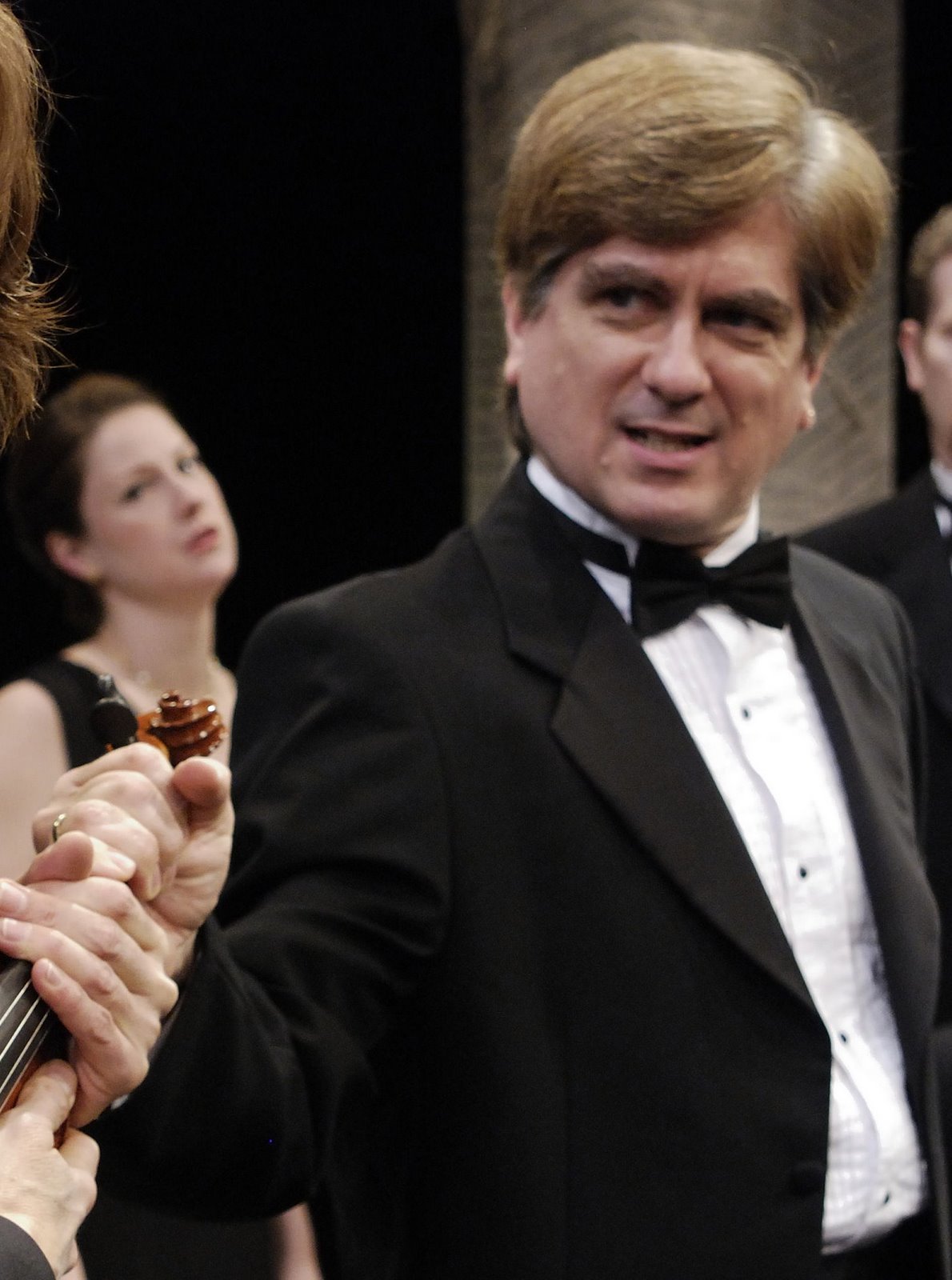
(the actor standing on the far right is Lucas Caleb Rooney, who was the cast member who assumed the roles vacated by Mulhern)

The actor in question (FULL DISCLOSURE ALERT!!) is a friend of a friend of mine, but I have never met nor worked with him myself. He has an active career on stage and screen, a career which has likely been damaged by the Times piece. Below, I have included Matt's video response to what he claims are inaccuracies in the report of his firing (the first of his career). As an actor, I find it a compelling tale, but am still not sure we are getting the entire story.

It is inconceivable to me that a director (Michael Wilson, who is also artistic director of Hartford Stage) would so easily sabotage his Opening Night by firing a principal actor the day before. I have a hunch he was jonesing to get rid of this actor for reasons other than cheat sheets in hats, and snapped up the opportunity (Mulhern revealed to the Times during his interview that he had "ruffled feathers among colleagues for a variety of other reasons" during the rehearsal period).

As of now, we don't know the actual reason Hartford Stage dumped Matt Mulhern; contractually, they are required to offer "cause," but so far, have declined to do so. Actors Equity Association, the union involved, seems to be waiting quite patiently, as the firing took place in early September. Meanwhile, actor Matt Mulhern is left twisting in the wind...

Tuesday, November 3, 2009

A Couple of Dealmakers

There were two deaths last week which caught my eye. Both were folks who knew how to take care of themselves.
Michelle Triola (Marvin)

1933-2009
She studied theatre at UCLA, and was a struggling actress when she snagged a bit part in Ship of Fools in 1964. She snagged something else while working on the film: a meal ticket. She began a relationship with the film's star Lee Marvin, who was married at the time but installed her in his bachelor pad in Hollywood while he dumped his wife. Eventually, Lee and Michelle moved to a Malibu home where she later claimed she was persuaded to give up her "promising" career to become Marvin's de-facto spouse. They were together six years, during which time Marvin became a high-profile star and won the Oscar for Cat Ballou. Though she could never get the star to marry her, Michelle legally changed her last name to Marvin in May of 1970; a month later, he evicted her from his house. Later that same year, Lee married his high school sweetheart, while Michelle hired high-priced Hollywood divorce lawyer Marvin Mitchelson and headed to court.
She was asking $1.8 million, half the actor's salary during the years they were together, and after a sensational trial, was awarded only 104 grand. She never even collected that, as the judgement was reversed on appeal, but by then, she really didn't need the money. Before the case ever made it to court, Michelle had landed another "benefactor:"
Dick van Dyke never married her, either, but the couple remained together over 30 years, until her death this week from lung cancer. Along with her flamboyant attorney Mitchelson, Michelle Triola can be credited with adding a new concept to the legal and societal landscape: palimony.


This guy died the other day, at the ripe old age of 103. Ever hear of him?

John Kenley
1906-2009

The son of immigrant parents, he quit school in his teens and hit the vaudeville circuit, where he sang, danced, and did impressions of Al Jolson, Maurice Chevalier, and, a bit oddly, Ethel Barrymore. Apparently, his Beatrice Lillie was a scream. He choreographed in burlesque and performed acrobatics for New York revues, but he was never meant to be a performer, which he discovered as an assistant to producer Lee Shubert in the 1930s. After a stint in the merchant marines during WWII, he landed in backwoods Pennsylvania, where he converted a Greek byzantine church into a performance space, and began producing plays. The Kenley Players were born; his company went on to become what Variety called the "largest network of theaters on the straw hat circuit."


At its height during the 60s and 70s, the Kenley Summer Stock Circuit included theatres throughout Ohio, Pennsylvania, and Michigan, and toured productions elsewhere. When I was a kid in Atlanta, I recall seeing Joel Grey in 1776, Vincent Price in Oliver, and Paul Lynde in Plaza Suite, all productions which also ran on the Kenley circuit.

John Kenley hit upon a concept which was revolutionary back then, but is standard practice today. In addition to presenting established Broadway stars in the roles which they made famous, he realized that a recognizable name on the theatrical marquee would fill houses. Ageing film stars and current TV phenoms headlined most of his shows. Who wouldn't want to see Karen Valentine and Rose Marie in Bus Stop, playing roles originated by Kim Stanley and Elaine Stritch? He placed Tommy Tune in Pippin, Barry ("Greg Brady") Williams in West Side Story, and (get this) Robby Benson in Evita. He invited Betty White to play Dolly Levi, Pam Dawber to play Eliza Doolittle, and Shari Lewis to play Fanny Brice (Shari Lewis in Funny Girl?? Who did Lambchop play, Ziegfeld?) Joanne Worley played Mama Rose, Kitty Carlisle played Mame Dennis, and Barbara Eden played Maria von Trapp. The guys got some good roles too: Ed Ames played Tevye, Sonny Bono played Pseudolus, and Billy Crystal played the Emcee.


You didn't even have to be an actor to headline his shows; Hugh Downs made frequent appearances, as did Bert Parks. If Kenley thought he had a box office draw, he found a show for them: he put the Hudson Brothers in Godspell, the 5th Dimension in Ain't Misbehavin' and the New Christy Minstrels in Good News. Zsa Zsa Gabor as Madame Arcati in Blythe Spirit makes a kind of odd-ball sense, though Eva Gabor as Desiree in A Little Night Music, maybe not so much. He often nabbed a team of stars from current TV shows, which is how Harvey Korman, Vickie Lawrence, and Lyle Waggoner all landed in Send Me No Flowers, and Soap stars Katherine Helmond and Robert Mandan killed in Same Time, Next Year. Isn't this fun? I could go on for hours; go here for a complete alphabetical list of 40 years of this stuff.

The stars involved made a buttload of money for these short-term gigs, which is why Juliet Prowse, Edie Adams, John Raitt, Carol Lawrence, and Paul Lynde (who was Kenley's biggest draw!) returned over and over. Everyone had to get used to Kenley's opening night tradition, which took Merv Griffin by surprise. He was jobbed in for Come Blow Your Horn, and as the show's leading man, was astonished when he was required, by tradition, to dance the first dance at the cast party. With Kenley. The producer insisted on it, and apparently, no one ever refused.


There were consistent rumours that Kenley was a transvestite, and lived the winter months in Florida as a woman named Joan, but who cares? If he can get away with Lucie Arnaz in Li'l Abner, Rich Little in Promises, Promises, and Fred Grandy in How to Succeed..., he deserves some respect.

Saturday, October 31, 2009

Happy Halloween

...at least, to those who celebrate it. I do not, and haven't for many years. I'm missing that gene which so many in my tribe share, the one that loves Halloween above all other days of the year. I just can't get excited about dressing up in costumes when that is what I do for employment. And I've never been a creative costumer, even on those occasions when I did dress up. (I wrote about that a few years ago.)

But for those of you out there who enjoy this "here kid, rot your teeth" holiday, enjoy this courageous goofball who is proving that, no matter how well you dance, not everyone belongs in skintight clothing:

Friday, October 30, 2009

Friday Dance Party: What Were They Pufn?


Anybody who catches an episode of any Sid and Marty Krofft program will come away certain that those guys were puffing on something illegal. Lidsville, Bugaloos, Sigmund, Banana Splits, and especially The Brady Bunch Hour, are all proof of controlled substances being consumed in the Krofft production offices. (Go here for the Dance Party featuring the Bradys.) Nowhere is this more apparent than in their most famous creation, H.R.Pufnstuf. This wacko movie, based on the TV series, has already appeared on the Dance Party, to celebrate the late Cass Elliot. If you care to, you can watch her solo number from this nightmare here.
But in honor of Halloween, here is the other big production number from 1970's Pufnstuf. The film starred Jack Wild, seen here very briefly as an angel; he is continually upstaged in the film, as in the series, by Billie Hayes, who chews the cheesy scenery with no apologies (catch Hayes in another of her signature roles, Mammy Yokum, here). Martha Raye also appears here, clearly aware that her career ain't what it was. I guess you can't get more Halloweeny than these dancing, singing, cackling witches. Trick or Treat!

Thursday, October 29, 2009

"How Do You Learn All Those Lines?"


Stage actors get that question all the time. Civilians often think the hardest part of the actor's job is memorization. Most actors, however, consider that aspect of the job to be the grunt work, the tedious foundation which has to be laid before the real work (and the real fun) begins. I'm not alone in considering it to be the least impressive part of a performance, knowing the lines.

Pity Matthew Broderick this week. He's a stage vet, and probably thinks the same way regarding the learning of lines. Through little fault of his own, he's become embroiled in a sticky situation regarding the world premiere production of Starry Messenger. The New York Times is reporting that Broderick is calling for lines this week, during the show's first previews. Some audience members are grumbling, with fair reason, that they are paying good money to see a star performance; the least he could do is learn the lines.

Starry Messenger is apparently an extremely wordy play, and is being directed by its author, Kenneth Lonergan. (Whose idea was THAT? Is it EVER a good idea for a playwright to direct the very first production of his own play?) Lonergan has never directed a fully staged production of any play, and, as the piece is new, has been rewriting the thing during previews. The majority of the four-week rehearsal period was spent rehearsing the first draft of the script, and the author has only lately begun to cut, rearrange, and rewrite dialogue. The production was damaged last week by the loss of one of its actors; Tony nominee Jonathan Hadary withdrew to accept a better gig, and his replacement is actually carrying a script during previews.


I've often attended productions where the actors are unsure of their lines, but only one show I've seen comes to mind which used a prompter. I wrote last week that I attended a summer stock production of Follies in Long Beach, CA, about 20 years ago. There were some pretty old stars involved, including Yma Sumac of all people, but the most enfeebled of them all was Dorothy Lamour. Remember her from the "Road" pictures with Crosby and Hope? Well, by 1990, she was about a hundred and two, and had no business being onstage. Somebody persuaded her that she should play Hattie in Follies, which included singing "Broadway Baby." I was concerned for the woman's safety as she teetered onstage, clutching the arm of a young chorus boy, who deposited her center stage for her big number. She could not remember any of the words, and even 12 rows back, I could hear the conductor in the pit shouting the lyrics to her as she began each phrase. It was a true train wreck.


As menial as we consider the task of memorization, we have all felt the terrifyingly sick feeling of losing our lines. I never used to have a problem with lines, but developed one in grad school. I was doing The Night Larry Kramer Kissed Me, which is a 90 minute solo play. For an hour and a half, I talked. During our final dress rehearsal (we had no previews, of course, this was grad school), in one section, I went up. Severely. Being alone onstage, there was no one to help me climb out of the hole, and I
eventually gave up and called for the line. This seems like a little thing, and in fact it was, as there was no one in the theatre except the director, but it rattled me so thoroughly that I developed a routine of reciting the entire show, out loud, before every performance. I followed that routine several years later when I performed a play called Vigil, which consisted of two hours of monologues delivered by my character. I did two different productions of the play, and in the first, I actually went to the theatre every morning and ran the show onstage, by myself, even after having played it for weeks in front of audiences.


Whether it's age or martinis or what, when I'm in a show, I now run all my character's dialogue each and every day before that day's performance. (It usually works for the straight plays, but sometimes fails for the musicals; I previously wrote about the hilarious first preview of Man of La Mancha, in which I rewrote lyrics.) It's the dullest, most agonizing task in the world, learning lines, and reminds me of drilling multiplication tables in the third grade (and don't ask me what 7 x 8 is, I don't remember). But that sick feeling which comes when you are unsure of your words can't really be described to a civilian.

I sympathize with the Starry Messenger audiences, who are feeling a bit cheated this week. The New Group, the Off-Broadway company producing the play, is a subscription house, and as such, cannot delay their preview period, though they delayed their official opening due to last week's cast change. So in this instance, the show must go on, even if the actors are unprepared. I bet Matthew Broderick is feeling the pressure this week, and he has my sympathy. Maybe he should go the route of the older thespians like Angela Lansbury, who are wont to wear earpieces so they can be cued from the booth during performances.