Friday, August 14, 2009

Friday Dance Party: Wild and Crazy Tapper


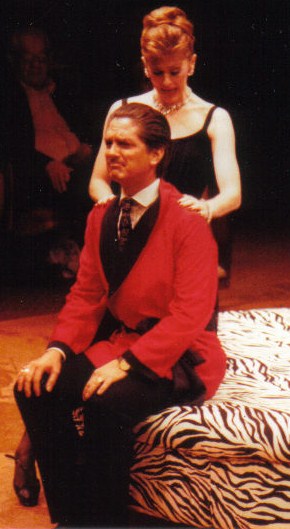
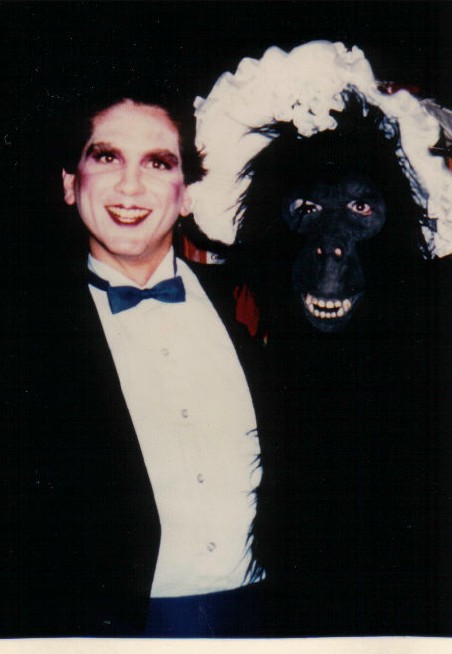
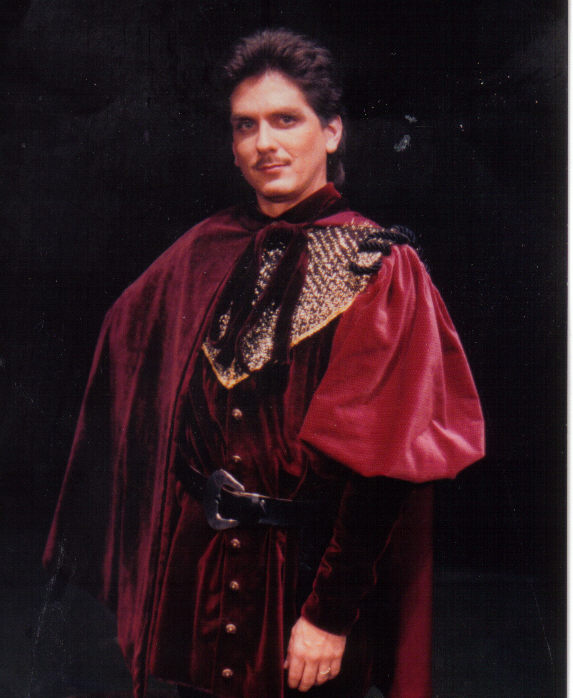
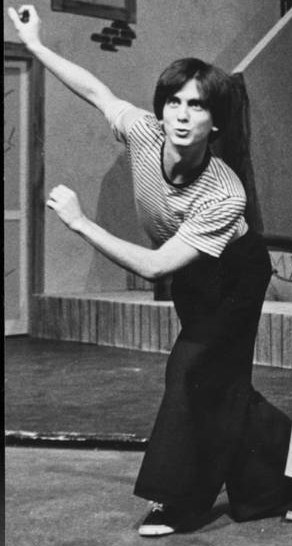
I'm a sucker for tap dancing. I delude myself into thinking I might have been a fair one, had I started early enough. I did a bit of it as the Emcee in Cabaret, but I failed to redeem myself for the terrible mess I made of George M several years earlier. I was horrendous in the role, though I didn't think my tapping was too bad, considering I had never had a lesson.


In honor of this week's Dance Party, I yield my tap shoes to Steve Martin, who is pretty impressive in this clip. Martin is one of the elder statesmen of comedy these days, as well as being a respected playwright (and a crackerjack juggler and Oscar host).


In the midst of his career, he was known for his absurdist stand-up routines, his hosting of Saturday Night Live, and even his recordings: he cracked Billboard's Top Twenty with his novelty song, "King Tut." But he was best known for his physical shtick; his film performances usually showcased his superb physical talents (take a look at All of Me). I maintain that the great physical comedians are also swell dancers; the two techniques are more related than you might think. And Martin capitalized on his natural physical grace in this clip (in it, he admits to having only started dancing about 8 months earlier).

This sequence takes a bit to get going, but around the 2 minute mark, watch out.


Steve Martin turns 64 years old today.

Wednesday, August 12, 2009

Reading, Stage Guild-style


Every theatre in town (and probably in the country) does staged readings these days, and I've done more than my share. Sometimes they are fairly extravagant; in particular, some of the musical Readings I have done were almost full productions (One Touch of Venus at American Century Theatre, 1776 at the Smithsonian, etc.). But usually, staged readings are exactly what they sound like: a bunch of actors sitting on a stage with the script in front of them, reading the play aloud to whomever shows up.
When Washington Stage Guild started doing this kind of thing, there was an attempt to physicalize the reading a bit; we made entrances and exits, and moved about the space with script in hand. Personally, I like that approach, as it adds a bit of visual interest to what is, let's face it, a pretty static endeavor. (I myself would fall asleep almost immediately if I were in an audience, just listening to people read aloud. It's the reason I don't listen to books on tape in the car.) But after a while, the Guilders found that their very specialized audience, one which is accustomed to listening to the elaborately phrased spoken word, didn't care much about such things, so all subsequent readings have been presented with the actors seated, reading from the script.

WSG has been presenting these public readings for a year and a half. I've just checked my programs (yes, I save programs. I'm that guy), and I have appeared in a whopping 16 of these readings for the Stage Guild. I confess that most of them run together in my mind, as we read them only once or twice, then moved on. But my programs remind me that I've done some Synge, some Priestley, and of course, some Shaw, the Guild's signature playwright. (I vote that his Captain Brassbound's Conversion receive a full production one of these days. Yes, its cast is too big, but if anybody can tackle it, it's WSG.) I did two readings of plays by J.M.Barrie, whose big hit was Peter Pan but who contributed these other juicy theatrical tidbits as well, and I was introduced to an early female Irish playwright, Lady Gregory.


We even did a few new plays (or rather, new adaptations), something for which there are other theatres in town better known. There was a science fiction story, translated from the Czech, called War With the Newts, in which I played a lizard with a speech impediment, and we presented a wonderful adaptation of an Oscar Wilde short story at the Kennedy Center's Page-to-Stage Festival last year (that adaptation, by WSG's Artistic Director Bill Largess, is a real keeper; it should definitely be produced).


Just last week, my buddy Steve Carpenter directed us in an hilarious, Soviet-era allegory called The Dragon, a play with such huge technical challenges that it is unlikely to be produced these days. And that's one of the reasons the Stage Guild has been reading these many, many plays; they are often pieces which could not be realized onstage, but deserve to be heard.

Well, there's another reason WSG has spent 18 months or more presenting these readings. Along with all other theatres, they have been hit hard by the recession; philanthropic donations have slowed to a trickle, and the economic collapse caught the Stage Guild at a particularly vulnerable moment. The founding artistic director, John MacDonald, about whom I wrote a bit, died very unexpectedly a year ago, amidst a Capital Funding Campaign that was already experiencing roadblocks. With fundraising difficult at best, WSG has been presenting these readings as a way to keep their unique brand of literate theatre in the public eye. Their brand is so well-known, in fact, that the International Shaw Society is holding a conference in DC in October, partly due to the Washington Stage Guild's presence here.


WSG will be producing an evening of Shaw one-acts on the Catholic University campus to coincide with the conference, and word is, a spring season of full productions is also being planned. I applaud WSG's decision to begin producing again; they fill an important niche in the DC theatre community, presenting Shaw and other language-heavy, literate plays which are often overlooked. I am proud to have appeared in their production of Opus two years ago, which remains their last fully produced show to date.


I am not on the inside, so I don't know what this spring season might entail, or where it will be presented, or anything. Perhaps the staged reading I did on Sunday for the Guild will be my last participation with the group for a while, though I hope not. Regardless, I find it commendable that the company is picking itself up and dusting itself off, and leaping again into the difficult waters of producing shows for the theatre.


Friday, August 7, 2009

Friday Dance Party: Viral Video


Well, the "JK Wedding Entrance" has gone viral, which I think means everybody in the world with Internet access has seen it. So, you won't be seeing it here. Those Youtube clips which suddenly catch the attention of the world are usually worth watching once, but I can't sit through them more than that. Even Susan Boyle's video grew tiring, didn't it? And that one actual DID become viral, as apparently it was the first step toward the poor lady having a nervous breakdown. And the Peanuts gang singing along with The Police, that one's pretty fun, too. But how often can you watch it, once the joke's been played?

As for Jill and Kevin's wedding video, which featured the wedding party dancing down the aisle to "Forever" by Chris Brown, that clip has made the happy couple famous. They even recreated the entire thing on the Today show, a poor choice to make, as a repeated viewing reflected the fact that most in the wedding party could not dance worth a nickle. There is a reason they didn't put white people on Soul Train. But whatever, they get to be famous for a while.

There has been a backlash to the popularity of that video, due to the couple's choice of entrance music. Chris Brown recently plead guilty to beating his girlfriend Rihanna (Full Disclosure: I had never heard of either one of them until he beat the crap out of her...that's how slow I am to pick up on current pop culture). Brown received a suspended sentence and community service (you have to REPEATEDLY break the law here in the US, before it's considered really a crime). But the popularity of the wedding video featuring Brown's song has increased the popularity of the song itself, boosting digital downloads of the tune from a mere 3,000 to an astounding 50,000 in a matter of days. That's an increase of 1,721% from the previous week. This, of course, puts lots and lots of royalties into the pocket of felony assaultist Brown. The wedding couple, of course, have created a website, because that's what newlyweds do as soon as they get married, and have requested that people donate some money to an organization dedicated to ending violence against women and children.


I guess they never considered actually removing their wedding video from YouTube.


As with all videos which "go viral," there have been some responses and some parodies. For this week's Dance Party, here's a fun one, reflecting Jill and Kevin after 6 months of wedded bliss:


Thursday, August 6, 2009

John Hughes

1950-2009

If you were a teen ager in the 80s, you are feeling the loss of Hughes, who chronicled post-adolescent angst in a string of successful films. I was (ahem) not a teen-ager in the 80s, so I saw only one or two of his hits. He was responsible for boosting the careers of several "Brat Packers" in films such as Sixteen Candles, The Breakfast Club, and Pretty in Pink.


John was originally a writer, and it was his work with the satirical magazine National Lampoon which lead to his film career. He provided the screenplays for several of the Lampoon films, including ...Vacation and ...Christmas Vacation, before stepping behind the camera with his teen comedies. Weird Science and Ferris Bueller's Day Off , in addition to his Molly Ringwald trilogy mentioned above, cemented his reputation as a writer who could recreate the rhythm and language of the Gen X teen-ager. Here's a fun clip which perhaps I should have saved for the Weekly Dance Party, but what the hell. I might consider this a John Hughes Signature Clip, as music and dance were always central elements of his teen flicks:


Hughes had some success writing for grown-ups too, providing Steve Martin and John Candy with Trains, Planes, and Automobiles, and working with Candy again in Uncle Buck.


Home Alone, which he wrote and produced, dwarfed his previous successes and is his biggest commercial hit. In his later career, he occasionally wrote under the pseudonym Edmond Dantes (a name he swiped from French literature: Dantes is the fictional hero known better as The Count of Monte Cristo); he provided the stories for Beethoven and Maid in Manhattan under that moniker. He wrote other familiar film scripts such as Mr. Mom, Dennis the Menace, and the remakes of 101 Dalmatians and Flubber.


Hughes has largely absented himself from the public eye since 1994. He died today from a heart attack at the age of 59.

Budd Schulberg

1914-2009


He was born into what he described as "Hollywood Royalty" (his father headed Paramount, his mother was a member of the Jaffe family of agents, producers, and actors), but that didn't help Schulberg get along with his minions. He raised the ire of Hollywood several times over a long career, beginning with his first published novel, What Makes Sammy Run?. It was the tale of an unscrupulous young firebrand who back-stabbed his way into becoming a film producer, and hit such an uncomfortable chord in Hollywood that all attempts to film the story have failed. Ben Stiller reportedly has a new screenplay adaptation ready to go, but even he is having trouble financing the story, originally written back in 1941 but still too close to home for Hollywood types today. There were two television adaptations broadcast in TV's early days, including one starring Jose Ferrer in the 40s, and another more famous version (right) starring John Forsythe, Barbara Rush, Dina Merrill, and Larry Blyden in the late 50s (this one is out on DVD).


Schulberg provided the book to a musical version of the story in the mid-60s, which ran about a year on Broadway and starred Steve Lawrence (above).


More recently, Schulberg has complained that the once-incendiary novel became a "handbook for yuppies."


Budd pissed off Hollywood even further when he appeared before the House Un-American Activities Committee, and named names. He was a frequent collaborator with that other squealer, Elia Kazan, on several high profile films, including On the Waterfront, for which he won an Oscar, and A Face in the Crowd. As a young man, he collaborated with F. Scott Fitzgerald, and wrote a play about the experience, The Disenchanted, for which Jason Robards won a Tony.

Schulberg also wrote short stories and non-fiction, and was the first Boxing Editor for Sports Illustrated. His memoir reflects the exalted position he believed he held in the Hollywood establishment; it is called Moving Pictures: Memories of a Hollywood Prince.

Whatever one may think of his decision to implicate others in his attempt to escape the Commie witch hunts of the early 50s, he must be congratulated for providing one of Hollywood's all-time greatest lines of dialogue:

"I coulda been a contender."
Budd Schulberg died this week at the age of 95.

Tuesday, August 4, 2009

Treading Water


Not much happening in this actor's life, as summer drags on. I'm not working at the moment, and it seems like everyone else is. But I'm not bitter. Not a bit.

I've had some dental drama, which should make for riveting reading. As I write this, my mouth has that swollen-lip feeling you get from the Novocaine, but God bless Novocaine. My dentist, though, I'm not so sure about. I've been going to him for years, but a month ago, out of the blue, he started to sound like the mechanic at the Honda dealership. You know, when you take the car in for an oil change, and he says, "Well, we could just change the oil, but what you really need is a full front-end alignment." My dentist echoed that routine with, "Well, we could just do a regular cleaning, but what you really need is a full scaling." I get nervous when medical professionals start to Suggestive Sell.

The verb "to scale," to me, means to climb something. But in the dental world, they use the verb as fishmongers do, as in, to scrape the scales off the fish. So, I spent several hours this summer suffering through the grotesque process of having gunk scraped off my teeth, a treatment so intense they use drills and crowbars. My dentist claims it will prevent peritonitis and other even ickier maladies which might be coming down the pike. But I think he just wanted to make a buck.


I made a quick trip to New York last week, to attend an audition. I used to make such trips much more often, but I've become either too savvy or too lazy to make the schlep every time I see an appropriate part up for grabs. But this one was a bit different; when a LORT theatre beckons, if you're a regional theatre actor, you go.

I was able to turn the trip into a mini-vacation, staying Thursday night with my sister in South Salem, a small commuter town about an hour north of the city. We enjoyed a home cooked meal together, and Friday morning, I drove down to Manhattan to snag my next gig. The show was Hamlet, and the role was "Polonius." I've had my eye on that verbose advisor since I played him in Rosencrantz and Guildenstern Are Dead earlier this season; that production at North Carolina Stage Company whet my whistle to play the guy full-length. I had four sides prepared, and the director gave me my choice of which to read. I passed on the big monologue with all the maxims ("neither a borrower nor a lender be...", "To thine own self be true," etc) and instead did a comic scene with the royals. Several laughs later, I was sure I had nailed the audition and could see a callback in my immediate future.


Sadly, the best news of the trip was my parking spot.

Who knows what that theatre in Vermont was looking for, but it was not me. But I did swing into town at that special time when Manhattan's alternate side of the street parking restrictions were flipping to the other side. This is the crazy moment in the city's life (happens four times a week, actually), when parking is prohibited on one side of the street or the other, for streetsweeping purposes. So, everybody in town who owns a car scrambles up and down the streets, trying to snag new spots before anybody else does. I caught a break and slid into a spot with no meter, and was so happy, I considered leaving the car there for the next four days, just because I could.


After the disappointing reaction to my stellar reading, I hopped back in the car and raced onto the New Jersey Turnpike, hoping to get out of town just ahead of the Friday afternoon rush hour. I would have made it, too, if the monsoon hadn't hit. I've never driven through such rain, coming down in those heavy sheets which are impossible to see through. So, to top off my big day, my 4-hour drive from NY to DC took 6.


I hope this does not turn out to be the highlight of the summer.

Friday, July 31, 2009

Friday Dance Party: I'd Rather Be Different Than Be The Same


OK, here is one of the weirdest clips ever to grace these pages. I have been a Cass Elliot fan since way before she died, and was one of those who recognized her sparkle even as she sang harmony in the group which made her a star, the Mamas and the Papas. They were a hugely successful folk-rock group in the mid-to-late 60s, but broke up at their height, after only two years of hit-making. Posterity will surely bestow the greatest legacy on "Papa" John Phillips, who composed the group's greatest hits "Monday, Monday", "California Dreamin' ", "I Saw Her Again", and "Creeque Alley".

But for pure show-biz pizazz, the breakout star of the group was Cass Elliot. She had a substantial solo career after the group broke up, delivering several moderate hits before becoming more of a cabaret/variety performer. She had nice comic timing, and was frequently seen on Carol Burnett's and Julie Andrews's variety shows, as well as on Johnny Carson's talkfest, which she occasionally guest-hosted. The truth is, her solo hits were all of the "Bubble Gum Pop" genre of music, and are not my favorites. But she maintained a healthy respect for older standards, and always included a few on her albums (this at a time when no one in the pop music arena was recording those oldies). The Mamas and the Papas had a hit with Rogers and Hart's "Sing for your Supper" (from The Boys from Syracuse), and Elliot's signature song, "Dream a Little Dream of Me," was a Depression-era tune recorded previously by Bing Crosby, Frankie Laine, Louis Armstrong, Dinah Shore, Doris Day, and Ella Fitzgerald. Elliot's version is considered definitive.


Because she was not a songwriter, Elliot's contributions have faded a bit, though she seems to spring back up into the popular consciousness every decade or so. Playwright Jonathan Harvey used her music as the backdrop to his play and film Beautiful Thing in the mid-90s, and more recently, the TV series Lost placed Elliot's hit "Make Your Own Kind of Music" at the center of its explosive second season opener.


Which brings us to this week's Dance Party, which must be Cass's strangest appearance. H.R.Pufnstuf was a live action children's program created by Sid and Marty Krofft, and achieved enough success that a feature film was released in 1970 (a long while ago, I wrote about the psychedelic world of Pufnstuf, and a while later, the big production number from the film graced a Halloween Dance Party). Somebody advised Elliot that this was a good career move (I hope that person was fired), and it is her only feature film appearance. (Well, I should issue the caveat that she appears with the Mamas and the Papas in the documentary covering the Monterrey Pop Festival in 1969.)

Pufnstuf is not a worthy vehicle of Elliot's wide-ranging talents, but she was just striking out on her own and can be forgiven for accepting this chance to act in a Hollywood film, as cheesy as it is. The song she is singing is not one of her best, written by the gents who scored the movie and the TV series, but I still get a kick out of it; it reflects the "Make Your Own Kind of Music" philosophy by which she lived her short life. I have memories of sitting through this movie several times in a row as a kid, waiting impatiently for Mama Cass to make her first entrance, sitting in a vat filled with fruit, eating a banana:

A bit later, she sings this song, with a witches' coven as back-up singers and a Nazi rat as disc jockey. I warned you this was strange.

So, from the whacked-out world of the Krofft Brothers, please enjoy this number from their film, Pufnstuf. (That's film clown Martha Raye in the purple; she appears in her own Dance Party number here.)


Cass Elliot died 35 years ago this week, at the age of 32.