Monday, June 29, 2009

A Little Knight Music


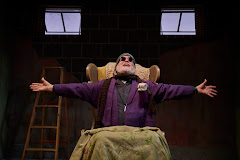
Our third week of performances of Wayside's Man of La Mancha ended yesterday with a wildly enthusiastic audience. I understand we had some former interns of the theatre in attendance, as well as other well-wishers, but I also attribute our continued good response to the continued growth of our performances.


(You're not tired of my going on and on about Man of La Mancha, are you? Yes, I know I have written about my experiences with this production many many times, but I offer no apologies. It is very normal for me to obsess about my work, when I am working. In addition, this show has sneaked up on me and grabbed me by the windmills.)


All of us doing the show have been running across the same reaction, when we tell a friend, relative, or stranger that we are doing this piece. "Man of La Mancha?" the listener will undoubtedly exclaim, "I LOVE that music." It seems that the show is remembered primarily for its musical score, though I am a bit surprised to hear so. If you ask a civilian to name (or even hum) a song from the show, they can usually come up with only one item. But that item is so huge that people believe they remember the whole score.


The item, of course, is "The Impossible Dream," which burst off the Broadway stage in 1965, and may be the last Broadway show tune to become a true standard. There were certainly other hit songs to come out of subsequent shows, but "The Impossible Dream" has passed out of the "show tune" arena and become an actual classic.


Nobody can really pinpoint any other songs from the show. Theatre Geeks may be able to hum the title tune, if given a hint:

"I am I, Don Quixote

The Lord of La Mancha,

My destiny calls, and I go..."


...and perhaps the haunting tune of "Dulcinea" rings a bell with some hardy theatre-goers, but the truth is, there is only one reason everyone remembers the music of La Mancha so fondly: "The Impossible Dream". The director of our production, Warner Crocker, has been quoted as saying, "If your Don Quixote can't deliver "The Impossible Dream," do No, No, Nanette instead." (OK, I paraphrased that a bit for comic effect, but the truth behind the remark remains.)


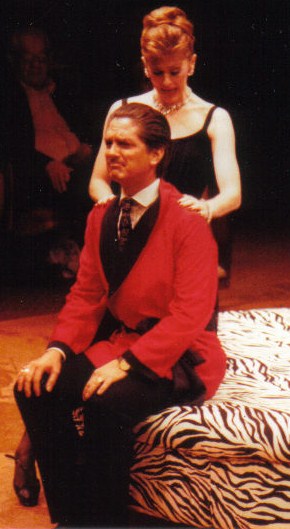
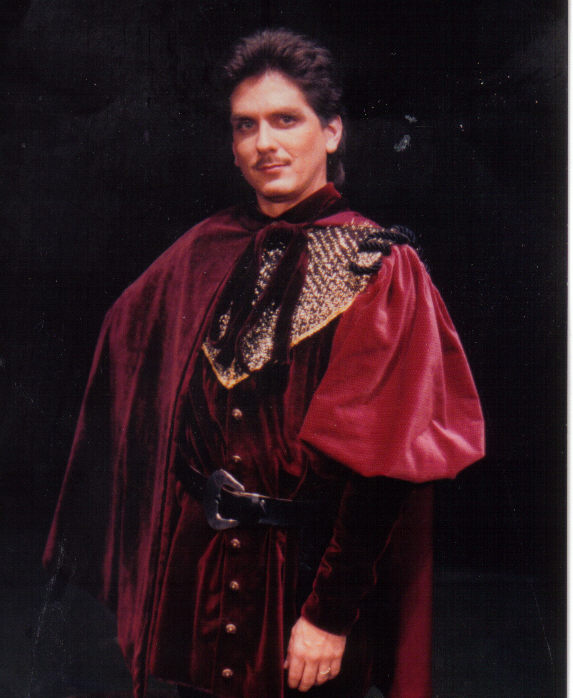
Well, our Don Quixote delivers the song, in abundance. It is not unusual for his forthright performance of the number to stop the show with lengthy, well-deserved applause. Tom Simpson is spectacular in the role; the challenging score sits beautifully on his voice, and he has made acting choices which fully flesh out this character. His performance moves seamlessly from the aristocratic storyteller Cervantes, to the eccentric nobility of Quixote, to the heartbreaking fragility of the delusional Alonso Quijana. Tom is a DC actor known primarily these days for his work in musicals, but I can attest that he is also a first-rate dramatic actor. It is a privilege to stand next to him throughout the show.


Our particular production has an ensemble quality which most star vehicles do not provide. With Tom as the anchor, Wayside's La Mancha incorporates terrific supporting performances which bring the lesser known songs to life. (I have a hunch I'll be writing about those performances before we close later this week.)


I openly confess that I am not a competent judge of music, which will not, of course, stop me from judging the music. The composer of Man of La Mancha, Mitch Leigh, struck gold with this show, providing some melodies which linger in the soul. His lyricist, however, does not rise to the same level. Yes, the words to "The Impossible Dream" can't be challenged, but it seems that in some of the other songs, lyricist Joe Darion twists sentence structure to provide a convenient rhyme:


"In my body it's well known

There is not one selfish bone."


Really? I like lyrics which sound like characters might naturally say them. These...um...don't. (I refuse to admit that I may be prejudiced against the lyric writer because I made up my own at the first preview. This has nothing to do with that. Really. I promise.) Darion has an unfortunate habit of repeating phrases over and over again. And over and over. Again. Over and over. Once you notice it, you can't stop hearing it.


Neither Mitch Leigh nor Joe Darion was able to recreate their La Mancha success in other projects. Composer Leigh returned to Broadway with the musical telling of the Odyssey legend in Home Sweet Homer, a notorious flop which opened and closed in a single night, despite the star power of Yul Brynner in the lead (not by coincidence, Joan Deiner, La Mancha's original Aldonza, was the show's leading lady). Lyricist Darion did little better with Illya Darling, the musical version of Never On Sunday which starred the original film's Greek beauty Melina Mercouri. Unfortunately, she was paired with (get this) Orson Bean as her romantic leading man, and that show failed as well.


But nobody really cares about these guys' later failures. Folks still remember Man of La Mancha primarily through its music, or rather, through its huge central ballad. And who am I to quibble?


A LIttle Late to the Wake

Since my Internet access has been limited lately, and with no television service in my digs, I've been unable to mention several folks who recently died, but who deserve some attention. At the top of this list has to be Dr. Jerri Nielson Fitzgerald. You may recognize this picture, which swept the world back in 1999:
This sunny scientist was stationed at the South Pole when she discovered a lump in her breast. Bad weather marooned her there for many months, during which time she performed a biopsy on herself, and discovered a malignant tumor. Chemo was airdropped to the station, and she treated herself. Her cancer went into remission, and she became the poster gal for courage and stamina. According to her husband, her cancer returned several years ago, and she died last week at the age of 57.

Quite a few weeks ago, this guy died:
1926-2009

He was actor Frank Aletter, who was one of those workhorses of the Hollywood industry, appearing in hundreds of episodics and features. He worked constantly, but probably had his greatest fame in the 60s, when he headlined a couple of forgettable sitcoms, including It's About Time, in which he played an astronaut who was transported back to the era of the caveman (Imogene Coca was in the cast). His death caught my eye a while back, as he was one of our neighbors when I lived in Los Angeles. His daughter, Kyle, was a classmate of my little sister's, and his wife at the time was Lee Meriwether (the above pic is their wedding photo).

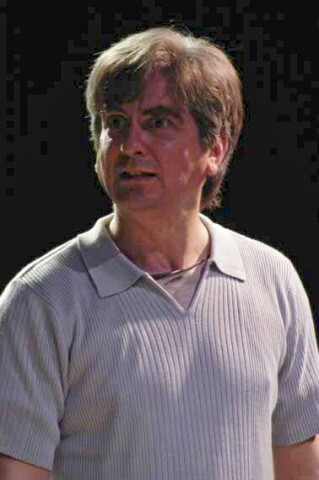
Regular readers of these pages know that I have a lot of respect for actors who spend their careers "in support," and Aletter was one of the best. Also in that class would be the guy at left. He was T. Scott Cunningham, a stage actor who spent his career Off-Broadway and in regional theatres. He was well known in New York circles as a great interpreter of the works of Nicky Silver, and appeared in the original productions of Pterodactyls, Fit to be Tied, and The Eros Trilogy. He was a founding member of the Drama Department, and appeared in the biggest hit to come from that troupe, As Bees in Honey Drown. He was only 47 at the time of his death a few weeks ago.

Here's a bigger star who died just this past weekend, or at least she WAS a big star back in the day:

1922-2009

She was Gale Storm, and she had quite a career in the 1950s. Though she started in movies, she never hit the big time until she moved to television, where she starred in two top sitcoms, My Little Margie and The Gale Storm Show. She defined the perky, plucky, trouble-causing, lovable heroine of the period. She reemerged decades later when she wrote frankly of her alcoholism, at a time when such openness was still a bit taboo. She died this weekend at age 87.

I can't say I'll miss this guy. Billy Mays was a leader in the tacky world of the infomercial, and if it can be said there is a star of the genre, he was it. He also appeared in millions (well, it seems like millions) of shorter commercial shots, hawking cleaning products, kitchen gadgets, and just about everything else nobody needs. He died unexpectedly yesterday at the age of 50. (An autopsy is planned. He was reportedly knocked on the head on Saturday when his airplane made a rough landing, but walked away from the incident. Remind anyone of Natasha Richardson's awful death recently?) Anyway, Mays carved a huge career out of the theory that American consumers will buy things if you shout at them. I have hopes his commercials will be yanked from the airwaves, but that's probably too much to ask for.


Keep that mute button handy.

Sunday, June 28, 2009

Stonewall's Birthday

Today marks the 40th anniversary of the Stonewall Riots. In the early morning hours of June 28, 1969, a motley crowd of hustlers, drag queens, and other gay fringe folk resisted a police raid on the Stonewall Inn, a Mafia-owned gay hangout in Greenwich Village, and touched off several nights of rioting in Manhattan.

The event spawned the formation of gay rights groups throughout the world, and is considered the birth of modern gay activism. (I wrote a bit about the event a year ago in these pages.) On the one-year anniversary of the riots, the first Gay Pride commemoration took place in New York and Los Angeles. Today, June is considered Gay Pride Month, with thousands of festivals and parades taking place throughout the world.

I wonder if any of those drag queens at the Stonewall Inn could have imagined that same-sex marriage is now (or soon will be) legal in 6 states. Massachusetts, Connecticut, and Iowa currently allow gay marriages to be performed, with Vermont, Maine, and New Hampshire scheduled to begin allowing such ceremonies in the coming months. New York and Washington, DC, currently recognize same-sex marriages from other states, but do not allow them to be performed at home.

Those tortured queers at the Stonewall would probably not be surprised that, along with the activism their actions inadvertently ignited, a more powerful backlash was created as well. While 6 states recognize same-sex marriages, a whopping 29 states have passed laws or constitutional amendments banning them. Most famously, California allowed the marriages for about five months last year, before the right was removed by constitutional amendment (I wrote about the passage of the infamous Prop 8 here).


Anita Bryant's anti-gay crusade of the 1970s seems almost quaint now, measured against the virulent gay-bashing still displayed by the likes of Pat Robertson (who blamed the 9/11 attacks on homosexuality), Larry Craig (the hypocrite who plays footsie in airport men's rooms), and those stand-up teens who strapped Matthew Shepherd to a Wyoming fence and left him to die.


Back in 1969, I was totally unaware of the Stonewall Rebellion and its political and sociological implications. I was barely a pre-teen, and spent all my time and energy trying to avoid getting beat up by the bully down the street.


I was introduced to gay-bashing decades before there was a name for it.


Tonight, though, I hope you'll join me in raising a glass to those hustlers, street boys, and men in heels who struck back when they were accosted at the Stonewall Inn forty years ago.


Friday, June 26, 2009

Farrah Fawcett

1947-2009


By now, everybody on the planet knows about Fawcett's tragic death from anal cancer. Or you would, if Michael Jackson hadn't died simultaneously. I'll postpone yakking about Jacko until some of the commotion dies down, but Farrah deserves some attention, too. Diagnosed in 2006, her health battles were played out in the tabloids and on television, the same venues which catapulted her to stardom. Her most famous contribution to pop culture occurred several years before her breakout role in TV's Charlie's Angels, when, as a model and occasional actress, she posed for what may be the biggest selling poster in the history of posters:


Every adolescent straight boy in the nation had this poster hanging in his bedroom, and it hung in a great many garages and biker bars as well. Though she tried for the rest of her life, Fawcett never escaped her iconic status as a pinup girl.


In the 60s and early 70s, she appeared in a dozen or more television series, including I Dream of Jeannie, Owen Marshall, Marcus Welby, McCloud and The Partridge Family. In 1976, she appeared in several episodes of The Six Million Dollar Man, starring her then-husband Lee Majors (for a while, she took her husband's name and was known as Farrah Fawcett-Majors, which was the kiss of death for the marriage. I wrote a long while ago in these pages about that odd Hollywood phenomenon, where the marriage inevitably ends if the woman adds her husband's name to her own).


Fawcett's role on Charlie's Angels made her a star. The show invented the genre called "jiggle television," with Farrah herself remarking that the show shot to number one in the ratings because none of the three stars wore bras. It was the centerpiece of producer Aaron Spelling's TV empire during the late 70s, and Fawcett's back-swept hair style became a sensation. She deserted the show after only one season, which landed her in court for breach of contract. She was later required to fulfill her contract by appearing as a guest star in subsequent seasons of the show.


Like all actresses known primarily for their looks, Farrah was determined to prove herself a real actress, and did so by appearing off-Broadway in the gruesome rape drama Extremities (she took over the role from Susan Sarandon, and ended up in the film version as well). She won her first Emmy nomination for the TV movie The Burning Bed, the true story of an abused housewife who set her husband on fire.


As she struggled to prove herself a legitimate actress, Fawcett's personal life continued to feed the tabloids. Her long-term relationship with Ryan O'Neal (they were a "Hollywood Golden Couple" back in the day) has endured numerous trials, including the habitual incarceration of their son Redmond, who is currently again behind bars for possession of illegal substances (I wrote about this loser here). There was talk earlier this week from Ryan that the couple would tie the marital knot soon, but that apparently did not happen.


I confess that I never considered Farrah Fawcett an exceptional actress, or even a particularly competent one. But her brave struggle with cancer, which she endured in the public eye, makes me hope she has found some final peace.
Farrah Fawcett died yesterday at the age of 62.


Friday Dance Party: Friends of Dorothy


The star of this week's Dance Party is surely one of the most revered, and most tragic, songstresses of the 20th century.

Everybody knows Judy Garland as one of the great song stylists ever. She could belt, she could croon, she could cry you a river. I have great respect for the lady, even as I have previously admitted to seeing only three of her films. Her singing prowess often overshadowed her acting ability; she won an honorary Oscar for her work in The Wizard of Oz, and she was subsequently nominated for A Star is Born and Judgement at Nuremberg.

As a product of the Studio System, Garland was also a first class hoofer. Her ability would never rival that of Ginger Rogers or Cyd Charisse, but she held her own opposite dance titans like Gene Kelley and Fred Astaire. This week's Dance Party proves the point. Please enjoy the following montage of some of her dance skills.


Judy Garland died 40 years ago this week, and her death was at least partially responsible for the birth of modern gay activism. (More on that topic in Sunday's entry. Stay tuned.)

Tuesday, June 23, 2009

Ed McMahon

1923-2009


The son of a traveling salesman, McMahon had a bit of the carnival barker in him. His first job, in fact, was as a carny at age 15. His booming voice and pleasant, non-threatening demeanor were perfect sales tools which he put to good use throughout a long career. In his early years, he hawked fountain pens on the boardwalk in Atlantic City, and kitchenware door-to-door while in college. He joined the military during World War II, and also fought in Korea, retiring as a colonel. His television career was launched in Philadelphia, but it was his job as Johnny Carson's announcer on the 50s game show Who Do You Trust? which was to change his life. When Carson succeeded Jack Paar on The Tonight Show, he dumped announcer Hugh Downs and gave the gig to McMahon. The two worked together for 30 years, with Ed defining the role of talk-show sidekick.


McMahon was the famous face of the Publishers' Clearing House Sweepstakes, and co-hosted the annual Jerry Lewis Labor Day Telethon since its inception. He hosted the talent competition show Star Search and TV's Bloopers and Practical Jokes, and appeared in commercials for Budweiser and Alpo, among other products. But his lasting fame will always be as Carson's set-up man. The two became such a team that McMahon renegotiated his contract to specify that he would only appear on The Tonight Show with Johnny. Whenever one of Carson's many guest hosts took over, McMahon was replaced by bandleader Doc Severinsen.


In recent years, McMahon landed in the news for defaulting on the mortgage on his Beverly Hills estate. He poked fun at his own financial distress in a Superbowl commercial earlier this year.
Ed McMahon died today at the age of 86.

Monday, June 22, 2009

Tale of the Squirrelly Squire


We have reached the mid-way point of our run in La Mancha, and a nice sense of confidence has overcome us all. It's leading to stronger performances, which in turn is leading to strong audience response to the piece. I confess, though, that I still get a little surge of unease as we approach the sequence in the kitchen of the inn. It was during that sequence, during our first preview performance, that I rewrote a song.


Everyone who has spent an amount of time on stage has at least a couple of stories to tell of unmitigated disaster. Usually, it involves the humiliation of the actor telling the story. I have more than my share, including the one I wrote about quite a while ago. That one involved youth, inexperience, and a bourbon gone awry. I had no such excuses the other week at Man of La Mancha.


Let's be frank; brain pharts are coming more frequently these days. Probably too many martinis over the years, but I'm not going there. I promised a little while ago to write about this tale, and so I sally forth.


I sing three songs solo in the show. The first is a very quick acappella dittie. The second number I sing, "I Really Like Him," is the one which caused me some grief at our first preview.


In my own defense (okay, there is no defense, but there are reasons I went so far astray), the song's two verses are virtually interchangeable. They do not follow a logical progression, which is the reason I had trouble learning them in the first place. At the first preview, I launched confidently into the song, singing the second verse first. I recognized my error immediately, but of course did not stop singing. Instead, my brain started to concoct a plan to sing the first verse second. As I tried to figure this out, my mouth took over and began inventing lyrics.


These lyrics didn't have much to do with the show, but they fit the rhythm of the song perfectly. They even rhymed. I don't have a clear memory of the rewrite, but it had something to do with turning myself into glue. My costar in the scene, the lovely and talented Nancy O'Bryan, maintained her composure, though the twinkle in her eye screamed, "What the fuck words are coming out of your mouth?"


I did not do much better when it came time for the second verse, which was a mishmash of scrambled words. In a nutshell, I rewrote the whole song. On the spot. In the correct rhythm and rhyme.


I received kudos from my fellow cast mates, who all claimed they had never enjoyed an onstage screw-up so thoroughly.


It's really a shame that no one was taping that first preview performance. The lyrics I invented, whatever they were, could have been sent to the authors of Man of La Mancha, and offered to subsequent productions as a third verse...