Thursday, March 26, 2009

Theatre Droppings: Gypsies, Extras, and Body Beautiful Beale

Before I left Asheville the other week, I finagled my way into seeing a tech rehearsal for the next project from North Carolina Stage Company, their remount of Stones in His Pockets (the show had a very short run this time, and has since closed). This piece has interested me since I saw a non-union production in DC, about which I wrote a while ago. It's two actors playing more than a score of characters, and is rather a tour-de-force for the actors involved. NCStage's artistic director Charles Flynn-McIver was paired with one of the leading actors in the region, Scott Treadway, and their chemistry was dynamic (they have clearly worked together often). My travel schedule prevented me from seeing one of their actual performances, and they were kind enough to allow me to watch one of their final dress rehearsals. From my chair, the show was a winner. I particularly enjoyed the Dance Sequence (I don't even remember the scene in the DC production), which utilized the actors' comic senses quite well, and they weren't bad tap-dancers, either. Most of the show was comedic, but a handful of moments brought real poignancy to the inhabitants of this small impoverished town in Ireland, hosting a big-budget Hollywood movie crew. Since I'm spending so much of my time in the Asheville area these days, I am sure I'll catch Charlie and Scott in another adventure soon, either as an observer or, hopefully, as a co-conspirator...


I traveled a bit after closing Rosencrantz and Guildenstern Are Dead, and landed in DC in time to catch the National Touring production of A Chorus Line. I have very vivid memories of seeing the original cast of this landmark, just a few weeks after Joe Papp moved them uptown to Broadway, and a few months before they swept the Tonys in 1975. I've written about them in these pages. A grainy clip of that cast can be seen in one of my Friday Dance Parties, too.

Since seeing the original, many other productions of A Chorus Line have crossed my path, but I have resisted seeing the show again. I studied the show, which is one of the few musicals to win the Pulitzer for Drama, a bit in grad school, as I wrote a term paper on its creator Michael Bennett, and have a huge respect for it. The piece did many innovative things, including adding the term "triple threat" to the theatrical vernacular. More importantly, it actually changed the way musicals are created and rehearsed. Bennett was the first to use an extended workshop period to create his show; until that time, musicals were fully written before rehearsals began, then began a preview period out of town where the authors refined the piece before bringing it into New York. Bennett changed that routine, and the workshop system has since become the traditional way to birth a new musical work.

Anyway, access to a free ticket to the National Tour stopping into DC convinced me it was time to revisit the show. I was pleased to find a hugely entertaining, dynamically staged production. That having been said, it was unfortunate that we had four, count 'em FOUR understudies handling leading roles. My previous experience with understudies has been very good; I have almost always found them to be extremely competent. In this case, two were quite good, two were...um...not so much. Ah, well, it was a Sunday night performance, the end of a very physical work week, so I guess I don't blame so many of the leading players for bailing. I was more surprised to discover the creakiness of the final minutes of the play. The dialogue surrounding "What I Did for Love," which became a show biz anthem of sorts back in the day, has not aged well, and the director did not improve things much with his stagy blocking. Nevertheless, the tour is a very fine one, with lots of pleasant surprises, and I am very glad I saw it.

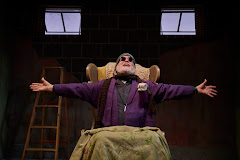
Just a few days ago, I popped over to see a new play called After the Garden. It is actually a recreation of a nightclub act which Little Edie Beale performed for a week in New York in the late 70s. The Beales were an upper-crust family of the mid-20th century, and included in their number the Bouvier sisters, Jacqueline (later to be Kennedy-Onassis) and Lee (Radziwell). Little Edie was not one of the success stories of the clan; a documentary about her living conditions at the decrepit mansion on Long Island was released many years ago. Grey Gardens revealed an eccentric woman caring for her aged mother, and was alternately hilarious and pitiful. After the Garden was developed by the manager who arranged for Little Edie to appear in her own cabaret act soon after her mother died. It is a one-man show, and my old friend Jeffrey Johnson is swell in the role. The piece itself includes bits of confessional, bits of cabaret, and a whole lot of laughs. Every once in a while, though, it delivers a very poignant moment of this unlucky woman's life. The producing theatre is Ganymede Arts, a group dedicated to the GLBT experience, and they have converted the back storeroom of a gift shop into a quirky but functional performance space. I saw the show with the gayest audience since last year's Tony awards, which added to the merriment (like other underdogs, Little Edie Beale has become a bit of a gay icon). I have a hunch more will be heard from this new play, and am certain this new performance space has a future as well. As for Jeff's performance, well, I've been his fan since our South Carolina days in the early 90s, and he has yet to give less than 1000 percent in any performance I have seen.

Monday, March 23, 2009

'sNewz


...an occasional series mentioning current events which lately held my interest...


Once again my inbox is full of items which are beginning to creak with age, so please forgive the fact that most of them are beyond their "sell by" date...


Apparently, authority figures around the world are discovering the disciplinary powers of Barry Manilow. A while back I wrote about the judge in Colorado who sentenced some juvenile delinquents to listen to an hour of Manilow's music as punishment. More recently, a mall in New Zealand, a nation known for its pacifist tendencies, was having problems with teen-agers loitering and causing trouble. (This has always been a confusion to me, the fact that teens love to gather at the mall just to hang around. Perhaps I am prejudiced against malls, as I worked in one for [get this] FIFTEEN YEARS, and cannot abide such places now. Why anyone would think going to one would be FUN and SOCIAL is beyond me...) These New Zealand teens have been spraying graffiti, tossing trash, and otherwise wreaking havoc. The mall owners plan to solve the problem by piping in Barry Manilow music, to discourage the youngsters from spending time there. Poor Barry; apparently, he writes the songs that make the whole world cringe..


Here's another tale that is old news, but worth repeating. Censorship remains alive and well in our nation's public schools. The rock musical Rent has been released for amateur production, and a school in California's Orange County (a region notorious for its right-wing attitudes) planned a production. The principal banned the show without reading the script, after having heard it deals with prostitution, homosexuality, and AIDS. She recently rescinded her ban, and the show will go on next month. Her about-face may have something to do with the lawsuit which the California ACLU slapped on the school and its officials. They are not concerned with the Rent production, per se, but with the rampant bullying of gay students. A female student involved in the Rent production received threats of death and rape, and the administration has done little to counter sexist and homophobic behaviour in the school. Security officers even cracked down on a grass-roots effort on the part of the students to signal their support of the Rent production by wearing rainbow-colored buttons; the buttons were confiscated. It was only after the ACLU filed suit in Superior Court that the production was reinstated.


No such luck for the school in Oregon which wanted to produce Steve Martin's Picasso at the Lapine Agile. A petition with 137 names was presented to the school board, who then halted rehearsals for the show, which the petition complained had "adult content." What? Martin himself offered to fund the production off-campus because he wanted to keep the show from "acquiring a reputation it does not deserve.” I'll say. The play's concept is a meeting between Einstein, Picasso, and Elvis, in a Parisian bar; for the life of me, I cannot imagine what the hell problem the parents had with the thing.


While the above items made me mad, the next two just made me sad. Did you hear that Milan Stitt died? I never would have known if my new buddy Hans had not mentioned it. His loss will be felt in the theatrical community. Don't know who Milan Stitt is? I hadn't heard of him either, but he had a strong impact on American Theatre for a while. He was a playwright (The Runner Stumbles; remember Dick van Dyke in the movie?) but was better known as a teacher, mentor, and dramaturg. He helped found the play development program at the Circle Rep in Manhattan, where he nurtured Bill C. Davis (Mass Appeal), Arthur Kopit (Wings), Paul Zindel (Effect of Gamma-Rays on Man-in-the-Moon Marigolds) and David Mamet, among others. I have a lot of respect for anyone who has the talent to help other talent emerge, so Stitt's influence will be missed.

And speaking of death, the theatre community continues to mourn Natasha Richardson. In Sunday's NY Times, Charles Isherwood writes admiringly of the special discipline of the stage actor, and cites the Redgraves as perfect examples of actors who always show up, and always do the work. He attributes such professionalism to the "dailyness" of stage acting, as opposed to the rather contrary, sloppy aspect of Hollywood fame.


It's a nice article, but I was much more moved when I read about last Thursday night. It was the night when all the lights on Broadway were dimmed for a minute, in tribute to their lost star. Broadway.com reported that, among the regular theatre-goers in Shubert Alley, there were some surprises. Members of Richardson's stage and real family had gathered to watch the tribute. Liam Neeson, who met and fell in love with Richardson while debuting on Broadway together in Anna Christie, was joined by Richardson’s sister, Joely, and her mother, Vanessa Redgrave, as they stood outside the Booth Theatre to see the Broadway community dim its marquees for one minute, a traditional honor saved for stage greats. Seen comforting Neeson with hugs and condolences were friends Matthew Broderick and Sarah Jessica Parker, Ralph Fiennes (Richardson’s co-star in the movies Maid in Manhattan and The White Countess, and Neeson’s friend since the two co-starred in Schindler’s List), Laura Linney (who starred with Neeson in the 2002 Broadway revival of The Crucible), and Richardson's costars from the Cabaret revival, Ron Rifkin and John Benjamin Hickey. At 8pm, the lights of the theater district began to dim, theater by theater, and mourners, onlookers and passersby began to respectfully applaud, at times even shouting Richardson’s name.


As the lights returned, Neeson shielded his eyes with his cap, and ducked into a waiting car with his family.


That image makes me cry.

Friday, March 20, 2009

Friday Dance Party: Perfectly Marvelous

By now everyone knows the details of Natasha Richardson's tragic death this week. I previously wrote that, to my own surprise, I have never seen one of her performances. She's surely mourned by Broadway audiences for two memorable roles, Anna Christie and Sally Bowles. (I've heard from a spy named Charlie who saw her in Closer that she mesmerized in that one, too, but I suppose she was too much a nobody to appear in the film version; Julia Roberts snagged her role in the movie.)
So it's no wonder this week's Dance Party is devoted to Natasha. I could not find any of the solo numbers she sang in Anna Christie, and the dream ballet wasn't appropriate, so this clip from Cabaret will have to suffice. Yes, I know there isn't any dancing in it, but it does give a flavor of what her performance must have been like. It's really a drippy number, one of the slighter songs in a very strong score, but it surely illustrates a point I've been making lately (see posts below): ACTORS give the best musical theatre performances.
So, in honor of the late Ms. Richardson (and with a bit of help from John Benjamin Hickey, who was saddled with playing that loser Cliff), enjoy a perfectly marvelous rendition of a fairly lousy song: 

When I Go, I'm Going Like Elsie

Cabaret has been on my mind this week. The reason is obvious: the tragically unexpected death of Natasha Richardson, who won a Tony as Best Actress in a Musical for the 1998 revival of the show. I wrote about her here, and confessed that I did not see her in this or any other performance. That revival did a lot toward proving that point about which I refuse to shut up, that an actor who sings will deliver a stronger, fuller performance in a musical than a singer hired on vocal prowess. Both Richardson and Alan Cumming are actors of the first rank, and both won Tonys for their work in this musical (it's interesting that Joel Grey, who originated the Emcee in 1966, won the Tony in the Supporting category; 30 years later, it has finally been realized that the Emcee is the LEADING male role in the piece). This revival also featured Denis O'Hare (as Ernst), John Benjamin Hickey (as Cliff), Ron Rifkin (as Herr Schultz) and Mary Louise Wilson (as Fraulein Schneider), all of whom are known as actors first.
This revival (which was really an interesting re-imagining) has had a pretty substantial influence on subsequent productions. I caught the National Tour of the show in DC, with (get this) Terri Hatcher playing Sally Bowles. Yes, in the years between Lois and Clark and Desperate Housewives, Hatcher was attempting to become a stage actress. I was probably lucky that I attended a weekday matinee of the show, because, true to form, the star was absent and the understudy went on in her place. The actress (I can't recall her name) was quite good, but was overshadowed (as so many Sallys before her) by the actor playing the Emcee.
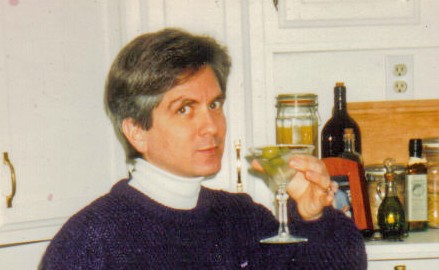
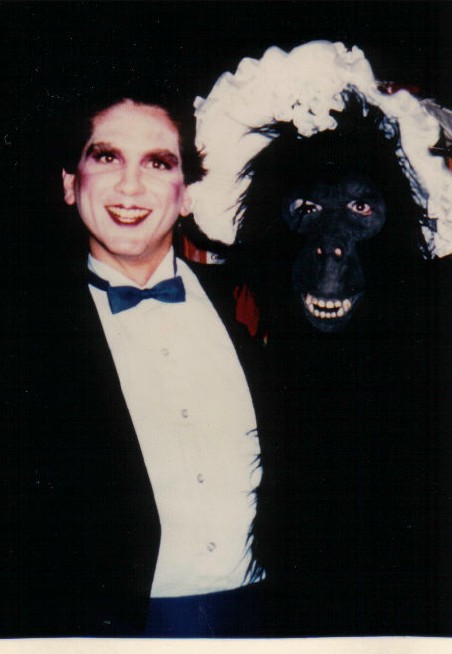
In the tour I saw, the Master of Ceremonies was played by an actor of whom I had never heard, but who has since made a terrific name for himself, Norbert Leo Butz. I could not take my eyes off this dynamic gent, but that is really not surprising. The Emcee in Cabaret is one of the all-time show-stealers, and I should know. Cabaret has been near and dear to my heart and soul since the film came out in the early 70s. I was just a teen, but I still recall the impact of Joel Grey's performance. This was the first time I consciously thought to myself, "I want to play this role." The Emcee became the first role to be placed on "my list," even before I knew I was keeping one. Ask any stage actor, and he or she can tell you immediately what roles they are dying to play (or wish they had had the chance to play). For me, the Emcee topped that list. I was so enamored of the Cabaret film, and the Emcee therein, that I performed a version of "Money, Money" with my friend Ada in my high school drama class (Ada recently reminded me that we used lip sync. yikes). This was the first of many times I performed some aspect of Cabaret. (This picture is proof of my obsession: My friend Donna agreed to accompany me to a Halloween party during this period, and as you can see, I went as the Emcee.) The next time I played the Emcee, I actually got to sing some of his songs in my own voice. I have already written about my first encounters with my best buddy Judy, which resulted in my playing the Emcee in her abridged version of Cabaret. Judy deserves some credit here, not only for giving me the role, but for her idea to turn some of the Kit Kat Girls into men. Back in 1975, this was a pretty radical idea. Judy was ahead of her time; twenty years later, the Cabaret revival placed a man in the song "Two Ladies." Well, Judy's one-hour version of the show had whetted my appetite. I was confident I could play the Emcee in a full length production, and Thespis, the world's first showstopper, seemed to smile down on me when, a year later, Cabaret was announced as part of the main stage season at my undergrad. After several auditions, there remained only three students up for the part. My buddy Cris (about whom I have already written) was (and still is) a phenomenal singer who acted. My acquaintance Billy was a dancer who acted. And I was an actor who moved well and carried a tune by selling the song. Guess who got the role? It wasn't the first, nor last, time a director passed me over in favor of someone with better musical sounds. Cris was wonderful in the role, though I doubt I could recognize it then. My severe disappointment (and it was SEVERE. Cris was lucky I never caught him in a crosswalk while I was driving home) reinforced my determination to play the role, someplace, somehow, in a full production. It was at least a decade after college before I got another swing at the plate. A theatre in Thousand Oaks, CA published a casting call, and though the venue was about an hour from my home, I drove out to the audition. Didn't know a soul, though in true theatrical fashion, I did bump into a kid with whom I had worked about six years earlier. I had the feeling that this may be my last chance to play this role I had coveted for decades, so I did my best to block out the other, better singers auditioning for this plumb assignment. At my first audition, I sang "Money, Money," because I knew it cold and it's an impressive patter song. Of course, it is not in the stage version. (Or rather, it wasn't at that time. The 1998 revival and others before it have since put the song, written for the movie, into the play.) I knew it was not in the play, but pretended ignorance when the director, a lunatic named Stuart, alerted me to the fact. It was enough to secure a callback, though, and a few days later, I made the schlep back out to Thousand Oaks to sing again. This time, the musical director had assigned "The Money Song" for the auditioners to sing; of course, it contains the highest note the Emcee sings in the entire show, which is surely the reason he chose it. Thanks a lot, Zach. I did not know it at the time, but I was later told that my unexpected appearance at these auditions upset the tentative casting plans for the show. In a theatre group such as the Conejo Players, shows were picked with at least a general idea of who would be playing certain leading roles. Nothing was set in stone, but it was the expectation for this Cabaret that the musical director's wife would play Sally Bowles, and his mother would play Fraulein Schneider. (It is in fact what happened.) It was also the expectation that, unless somebody really fabulous crawled out of the woodwork, the musical director would be playing the Emcee himself. I would never have known this little tidbit of info if the director had not let it slip a week or so after we began rehearsals. It was the night I was almost fired. We had spent the first week learning the music, and for me, that was a huge undertaking (including reprises, the Emcee sang a whopping seven numbers; the usual load for a leading man in shows of the period is four). I was learning all this music at the same time I was performing in another musical, so I was taking some care with my voice so as not to be hoarse during those performances. However, the director took this as vocal weakness, and so, one night after rehearsal, Zach the musical director pulled me aside to tell me, "Stuart wants to know if this is all I'm going to get out of you. Because if it is..." Note the dot dot dot, which clearly meant, "you're out." The next day was a pretty terrible one for me, as I anticipated the night's sing-through. It was to be the first time the entire score was sung all the way through, and everyone would be in attendance. I was in no way prepared to give a performance after only a week's rehearsal, but I also knew that if this director saw anything less than a full-out performance, I was to be replaced. That night, I blew out my voice giving this amateur director exactly what he wanted; while the other actors remained in their chairs in a circle when they politely sang, I leaped up, improvised dance steps, interacted with the chorus members, and generally sneered and cackled my way through the rehearsal. I beat the living crap out of the Emcee, but when I was done, I knew I had kept the job. What's funny about this memory is, this gig didn't even pay anything. But I knew in my gut that it may be the last chance I would have to play this role (and it was.) Because of this director, I learned a pretty good lesson about how to fake a performance during a rehearsal, though I have thankfully not had to do it much. I hate the fact that my current show suffered a bit when I returned to it the following night. (Sorry about that, Rob and Joe and Judi and Steve, that final weekend of Robin Hood was not my best work...now you know why.) I had a ball with Cabaret, once I realized that Stuart was not much of a director. I got to sing those wonderful songs, or rather, act them. I acted the dancing, too, and for putting me in high heels during the can-can number, Stuart, I dedicate this shot to you: This whole jaunt down memory lane was triggered by my catching a few snippets of Natasha Richardson's performance as Sally Bowles. In honor of all us actors out here doing musical theatre, here is another clip of the late lamented, singing the title song the way it should be sung. Rest in Peace. 

Wednesday, March 18, 2009

Natasha Richardson

1963-2009


The details of Richardson's sudden death are being reported around the globe, as her fame and that of her theatrical family make her skiing accident international news. Her resemblance to her mother Vanessa Redgrave is striking, particularly when hearing her speak in her own voice. The first time I ever encountered it, she and her husband Liam Neeson were providing introductory commentary on the revival of The Man Who Came to Dinner, starring Nathan Lane and being broadcast live on PBS.


To my own surprise and embarrassment, I have never seen a performance of Ms. Richardson's, on stage nor on film. Like everyone else on the planet, I have always been aware of her mother's illustrious career, and was lucky enough to catch Vanessa on stage at the Kennedy Center a few years ago, playing Hecuba. (I recall thinking that she swiped the film version of The Trojan Women from star Katherine Hepburn years ago, though I'm not sure that opinion withstands the test of time.) Natasha's grandparents included Sir Michael Redgrave and the fine actress Rachel Kempson, who worked until her death at age 92 (PBS freaks will remember her small but vivid performance as Lady Manners in The Jewel in the Crown). Her sister Joely has been on my radar since I ran across Nip/Tuck on TV, and I have already mentioned the personal interaction I had with her aunt Lynn Redgrave. Her uncle is the acclaimed British actor Corin Redgrave, and her father was film director Tony Richardson.


But I'm a bit ashamed to admit that Natasha Richardson's performances have escaped my view. Her stage work included what was reportedly a revelatory Anna Christie on Broadway, and she won the Tony for the acclaimed revival of Cabaret in the mid-90s (she has my sincere admiration and gratitude for showing that many musical theatre roles are best played by actors who sing, rather than singers who try to act. Her performance was so finely tuned, nobody cared that her singing voice was not that of the typical Broadway chanteuse). I've missed her film work, too, which consisted of a healthy mix of small indie films (A Month in the Country, Asylum, The Comfort of Strangers) and the occasional big-budget flick (The Parent Trap, Maid in Manhattan).


Her greatest achievements were surely on stage, and included Nina in The Seagull and Blanche in Streetcar Named Desire. Most recently she played opposite her mother in the concert staging of A Little Night Music.


She leaves behind two sons by her husband Liam Neeson, and of course, her extended family of Redgraves and Richardsons, probably comprising the most acclaimed theatrical dynasty of the late 20th century.

Tuesday, March 17, 2009

Millard Kaufman

1917-2009
Never heard of him? Me neither, but he died the other day at the ripe old age of 92. He was a longtime screenwriter with two Oscar nominations to his credit, for movies of which I have also never heard: Take the High Ground and Bad Day at Black Rock. He was considered a terrific script doctor at MGM, and also wrote a bit for television. He attached his name to the 1950 script of Gun Crazy, the film noir classic which was actually written by the blacklisted Dalton Trumbo, as a favor to their shared agent. In 1992, he officially requested that his name be removed from the film's credits and be replaced with its rightful author. His first novel ("Bowl of Cherries"), which he wrote in his late 80s, was an unexpected smash, and his second book is due out this fall.

So, Millard Kaufman seems to have been an upstanding gent and worthy of recognition, but you may wonder why he is receiving an obit in these pages. I do not, after all, write about everybody who dies, just about folks who hold some interest for me. (It is why I did not report on the death of radio pundit Paul Harvey, who died a few weeks ago. I'm sorry he's gone, of course, but am not all that interested in him or his work.)

Well, here's why. Back in 1949, Kaufman penned the script for a short animated film called Ragtime Bear, and included a character based on his near-sighted uncle. A year later, Kaufman wrote Punchy de Leon for the same character, and a star was officially born:

HAPPY ST. PATRICK'S DAY

Now go get snockered.