Sunday, April 6, 2008

Charlton Heston


1923-2008


I have mixed feelings about Heston, who was not the greatest actor of his generation, or may not have been even one of the greats. He created a film persona, as did so many of the stars of his time, and he continued to play a variation of that persona throughout his career. I confess that the only film of his which I thoroughly enjoyed was the Sci-Fi thriller Planet of the Apes, and I'm sure I enjoyed that film more for the performances of Kim Hunter, Roddy McDowell, and Maurice Evens than that of Heston.


In his later years, Heston became politically active on a number of issues, upon most of which I disagreed. He famously held up a rifle, as president of the National Rifle Association, claiming it would not be removed until his hand was cold and dead, or something to that effect. Remarks like that do nothing to aid rational discussion of the Gun Laws and Liberties, and are simply incendiary (he made them during a horrible period of gun violence in schools and other public places).


Heston, a former president of SAG, clashed with later, more liberal presidents such as Ed Asner, and he famously resigned from Actors Equity over the Miss Saigon controversy. Broadway producers wished to import their London star of the show, Jonathan Pryce, to play a role described as a "Eurasion," causing the American Asian acting community to voice objections. Heston misconstrued the whole affair and claimed that refusing to allow a white man to play an Asian was in fact racist. I disagreed with Heston on this point and others, but it can't be denied that he had a compassion for other people (here he is helping out at a food bank with his wife and grandson).


I met Heston once, backstage after a performance of The Hostage in which I appeared in Hollywood. His manservant, if that's what you call a valet or butler these days, was an aspiring actor and was appearing in the show as a Russian sailor (the gent was actually Czech, I think). Anyway, Heston generously attended one of our performances and dropped backstage to shake all our hands. This was many years before he became so politically active, and before he started to exhibit signs of Alzheimer's.


I could never get through any of his Biblical epics, and had trouble sitting through his later performance as Sir Thomas More in A Man for All Seasons, a production he bankrolled himself. I suppose I will always remember him in connection with that final scene of Planet of the Apes, which, back in the day, was a real stunner.

Rest in peace, Bright Eyes.

Friday, April 4, 2008

Theatre Droppings: Shaw, Seuss, and "History"

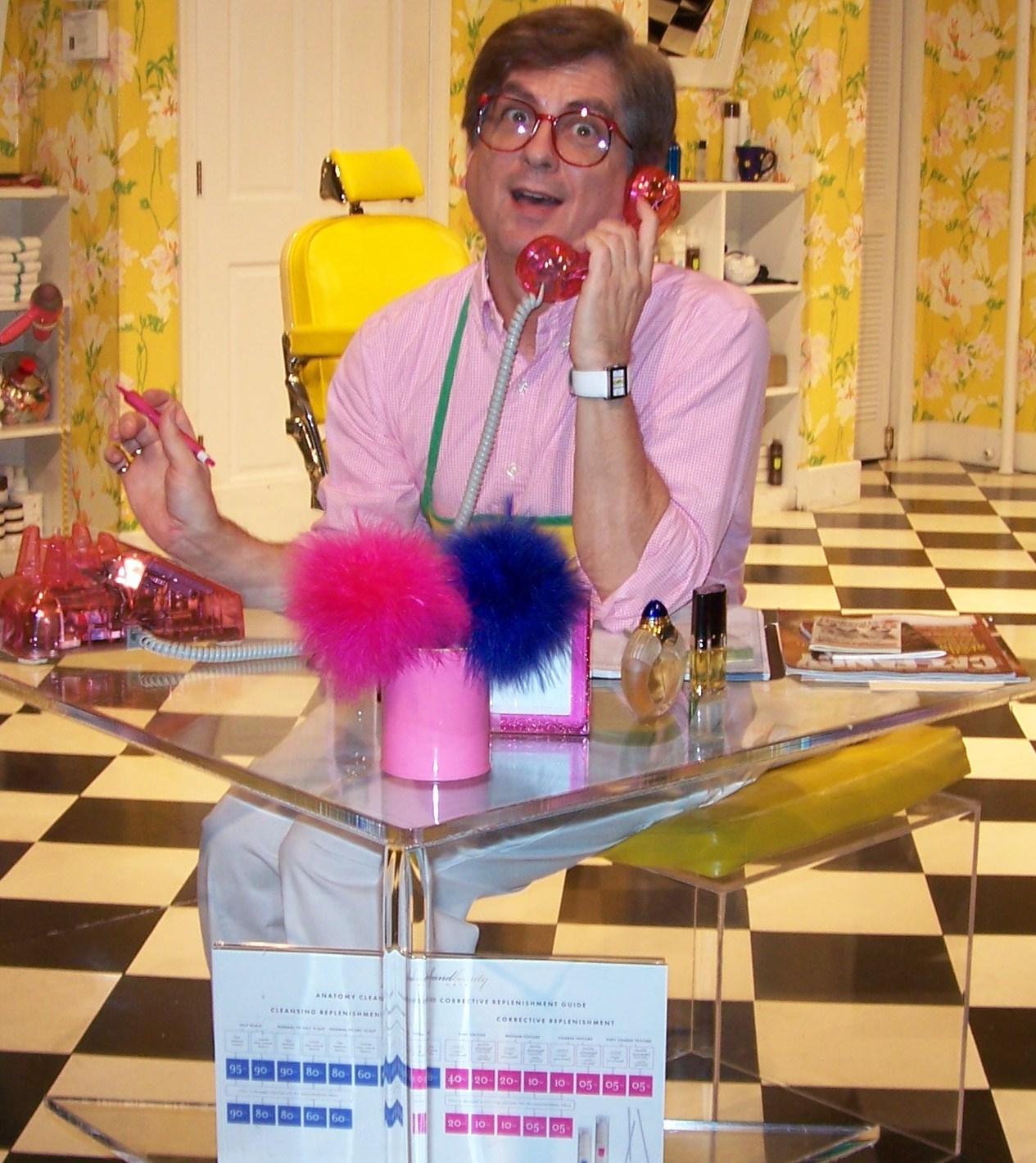
I've had the chance to catch a few local droppings in my off-hours. My new buddy Gillian Shelly (whom I now call "My Barbara," as she shares the Shear Madness salon with me) is pulling double duty. In addition to her four shows a week at KenCen, she is one of the stars of Seussical the Musical, Jr. at Toby's Dinner Theatre. I drove out to Columbia, MD, to see her belting the hell out of the role of Gertrude McFuzz, for a full house of elementary (and younger!) school kids. I have been curious about the show since it first appeared on Broadway, and judging from the cast album, the role of the Cat in the Hat seems a good fit for me, so I welcomed the opportunity to see the show, even in an hour-long, truncated format. Gillian and her cohorts are having a ball playing the piece, and it zips along with almost no libretto. This junior version resembles an opera more than a traditional musical, though nothing seems lost with the elimination of large chunks of the original Broadway book. (Between you and me and the lamppost, the role of the Cat, which I covet, was the one real loser in this reduction. I have a hunch the character is much more central to the action in the full-length show...).


I was so glad I got a chance to catch the final matinee of Major Barbara at The Shakespeare Theatre Company, as it felt a bit like old home week. Though the show was presented in the new Harmon Center, the cast was filled with the regulars who put The Shakes on the map. Helen Carey and Ted van Griethuysen played the battling Undershafts, and in their hands, the show's focus shifted from the younger generation to the elder. I worked with Helen and Ted during the year I interned at The Shakes, and came away from the experience certain that I had been working with truly gifted actors. I was disappointed that I missed another of my favorite local actors, Floyd King, who had been excused from the show I saw in order to prep his next adventure at Studio Theater (see below). Catie Flye, my previous director and fellow actor, was playing one of the homeless misfits in the mission, and Vivienne Benesche, with whom I worked in Henry V, played the title character. The whole project was guided by director Ethan McSweeney, who was greatly involved with the intern company at The Shakes during my time there. He directed a bang-up version of Major Barbara, full of wit. I loved everyone casually sitting around on bombs during the final scene. I had a bit of trouble with the over-the-top stylings of Tom Story as Stephen Undershaft, and was more comfortable with the performances of Karl Kenzler as Cusins and Kevin O'Donnell as Lomax, both of whom lent realism to their portrayals. Ethan made a swell decision to include some of Shaw's stage directions on the show curtain each time the setting shifted. I wondered, though, why The Shakespeare Theatre hadn't released seats to this performance to the half-priced TicketPlace. I sat in the balcony, which was almost empty, and could see many empty seats in the orchestra as well... This cast deserved a fuller house.


I have been curious about Alan Bennett's The History Boys since it made such a splash in London and New York a while back, so I caught Studio Theatre's new production. I did my very best to enjoy it, but I made the unfortunate choice to attend a student matinee, where a group of inner-city teen-agers were bored, restless, and downright disruptive. I suppose some genius thought that, because the show dealt with teen-aged boys, this group of rude students would be interested. Not so. I finally moved away from the distracting group at intermission, and enjoyed Act Two from the back of the house. Floyd King did his usual bang-up job as the odd-ball teacher whom his students alternately loved and tolerated, and Simon Kendall was terrific as the new young teacher with a secret of his own. But the real fun was in the interaction with the boys of the title, with Owen Scott as the lovelorn "Posner" and Jay Sullivan as the cocky "Dakin" real standouts. The Washington Post made some noise about Scott's singing, but the fact that he occasionally wobbled off-key struck me as endearing rather than distracting. I may try to catch another performance of the show a little later in the run, with an adult audience whom I know will better appreciate this stylish debate on Education vs. Examination.


Monday, March 31, 2008

Matt


The family at Shear Madness bid an emotional farewell to one of their longtime members on Sunday night. Matt Sawyer, who has been involved in various productions of the Madness for well over a decade, left the company to continue his military training as an officer in the National Guard. Matt has been a buddy of mine for many years, and while we can't claim to be particularly close friends, we are surely good friends. I know he would step up to help me anytime, and the reverse is true as well.


Matt began his Shear career playing the young detective, Mikey. When I met him, he was graduating to the role of Eddie, the sleazy antiques dealer. I was in the midst of my first gig in the salon, and about half-way through my contract, several of my costars were rearranged. Matt came in as Eddie, and I immediately took a liking to this self-effacing young man with impeccable comic timing. He soon graduated to the role of the lead detective, Rosetti, a role which is complicated and difficult, but Matt handled it with aplomb. I was thrilled when I rejoined the show last year, in the spring company, and I found that "my Rosetti" would be Matt. He and I have a strong chemistry together, and he made me look very, very good.


As so often happens in this business, our paths crossed more than once. As our first Shear contract together was ending, we were both offered roles in the Second National Tour of Tales of a Fourth Grade Nothing. Matt had appeared in the First National Tour and had been asked to return. This was my first experience with touring, a process which was educational, exhilarating, and exasperating. After rehearsing at the Kennedy Center (but not performing there), our tour began with a long 6 day drive to our first site, in North Dakota. Hard to keep the excitement up when there are 6 days between your final dress rehearsal and your first performance. The cast took turns driving the passenger van across country, that is, everyone except me. I had broken my foot during rehearsals, and I was wearing one of those removable boot casts. Nobody thought it was safe to drive while wearing one of those things, so my first week on the road was quite the boring one. Matt kept my spirits up with his positive attitude and wry humor. He was always the first actor to volunteer to help out the crew traveling with us, and even occasionally drove the huge moving van which housed our sets and costumes.


Here's a typical pose, representing Matt's brand of "what the f*ck?" attitude:


Another typical pose of Matt's happened in dressing rooms across the country, and just about every night of Shear Madness. Whenever Matt wanted to sit down, he'd pull down his pants. No one quite knows the reason for this ritual. He didn't remove his pants, he just dropped them down around his ankles and sat.


Matt's ability as "Rosetti" was undeniable. His skill with the audience was matched only by his desire to insure that every single moment of the show shined. With him at the helm, everybody onstage looked good.


Matt is headed down south to Georgia for several weeks before shipping out to Oklahoma for a period of several months. During that time, he will be completing officer's training, after which there are strong indications that he will be transferred to the war zone. I can't even imagine what life has in store for him in the next few years.


During our season together last year, I asked him about food rations while out in the field. Matt surprised me a few days later with a large brown packet marked:


U.S. Government Property


"Ready-to-Eat, Individual Meal.


Menu No. 6: Chicken Fajita."


That ugly brown packet of processed food has been sitting on my refrigerator for a full year. I imagine it now tastes roughly the same as it would have then. I imagine it lasts pretty much forever. It's likely to be a long while before I see Matt again, but I'll be keeping that packet, unopened, until his return from his journeys.


Be safe, my friend.


Friday, March 28, 2008

25 Years


In the early pages of this blog, I wrote a letter to my mother, on the 24th anniversary of her death. It's hard to believe that a full year has since passed, and it's even harder to believe that I have lived a quarter of a century without her.


I can't claim to think about her every day anymore, but this time of year, my subconscious takes more control than I'm used to, and I begin to dream more regularly of my mother. Memories of her are closer to the surface this time of year, and I find myself thinking of her when I reach for a plate which she touched, or sit in the rocking chair which sat in our living room so many years. The drop-leaf table which resided in our dining room in Atlanta while I grew up now sits against my wall; there isn't room enough to raise the leaves, but this time of year, I find myself recalling those special occasions when we dined on it.


I wish all my memories were comforting ones, but I sometimes run across one which makes me wince, or gives me a shudder. Why did I say that to her? Why wasn't I kinder to her at that moment? Why was I such a sarcastic schmuck so often?


One of my deepest regrets is that my mother did not really get to know the adult me. That was entirely my fault; I was 26 when she died, and had lived at home all but 3 months of those 26 years, so I had plenty of opportunity. She once, rather ruefully, mentioned that we never did anything together, just the two of us, like going to the movies. Go to the movies with your mother? Such an outrageous idea had never entered my head.


I'd sacrifice quite a lot to go to the movies with her today.


Well, we did have a bit of a routine, once I turned 21. During those years in California, I think my mother was bored. Her children didn't need a lot of attention anymore, and she was far removed from the close friends she had made while living in Atlanta for 20 years. My father had huge responsibilities in his career, and we never expected him home much before 8. So, I would get home late in the afternoon, either from my job at Sears, or my waiter job, or my rehearsal, or just hanging out with Judy or Claudia, and I would bound upstairs to my room to check the messages on my private phone line, to read my mail, or just to continue my life.


Soon, I would hear my mother holler up the stairs to me: "Want a cocktail?"


Our cocktail hour really wasn't one, as we never had an actual cocktail. In those late years of her life, half a beer was just about all my mother could take, her body having been so ravaged by the cancer, and even more ravaged by its treatment. She didn't care about having a drink, she clearly wanted some adult interaction, and I was the only adult around. So, we would split a domestic beer (she taught me the trick of salting the beer in the glass to reignite the foamy head; I still do it!), and she would listen while I rambled on about the Sears Complaint Department or whatever else I wanted to talk about. In retrospect, of course, I wish I had spent those precious times letting her know more about the man I was becoming; she was clearly waiting for me to reveal more of myself to her. But I was a coward, and she was a lady, so...


I have a dear longtime friend who asked me recently what my views on religion are. He has made many very logical points about the irrationality of the concept of God, logic being the enemy of religion. I couldn't really answer him coherently. I am not in any way, shape, or form a religious person (I couldn't wait to turn 15 and thus be excused from the Sunday School which my parents forced on me throughout my childhood, but that was more from laziness than lack of belief), and I certainly don't think there is a grandfatherly figure with a white beard waiting for us at the end of our life.


And it can't be denied that the majority of the wickedness in the world, throughout history and today, has been caused, and is being caused, in the name of organized religion.


But there is comfort in the thought that there may be some kind of afterlife for the spirit, once the flesh gives out. There is solace in thinking that my mother's spirit lives on somehow, I hope someplace close.


Without that belief, even 25 years later, the loss would be too much to bear.


Thursday, March 27, 2008

Glory Daze


We've had some great news for the local theatre community this week. Signature Theatre's original staging of Glory Days will be moving into the Broadway theatre recently vacated by the Putnam County Spelling Bee, and will open in time for Tony consideration. The show's original cast and director will remain.


This is great news because of the rarity of a DC-grown project making it to New York. Jane Horwitz pointed out a few instances where the local gang made good, but they are few and far between. I was not a big fan of Glory Days when I saw it, but I'm thrilled just the same that my opinion was in the minority. It is always good for our community to gain national attention for something other than political hijinks. It's good news for DC theatre, and Signature in particular.


Unless I'm mistaken, this will be director Eric Schaeffer's second Broadway stint. He directed the Sondheim revue Putting it Together a while ago, which transferred from Los Angeles on the star power of Carol Burnett. Sadly, the show did not continue beyond Burnett's involvement in it.


And Eric seemed close to hitting the Broadway boards a number of other times. Over & Over, The Fix, The Rhythm Club, The Witches of Eastwick, and Mame all seemed to be prospects for transfer, though none made the move. Just shows how difficult it is to land on the Great White Way, so Signature Theatre is to be congratulated for getting there this time.


It makes us all look good!

Sunday, March 23, 2008

the Musicality of Shear


As we've launched into the Shear Madness Spring Fling, with two full companies sharing 12 performances a week, the actors have been reminded several times about the "sound" of the piece. Our glorious leader, Bobby, has mentioned more than once that the dialogue has a musicality to it. I have to admit that the first time I heard this, ten years ago during my first assignment in the salon, I inwardly rolled my eyes. Shakespeare and Shaw have a musicality to their plays, but Shear Madness ?


I have since changed my tune, pardon the pun. Bobby has always insisted that the show works best when certain crescendos are hit, certain sotto voces are enforced, etc. He freely admits that the play is paper-thin, so with that scarcity of depth comes the necessity of playing each and every moment in the correct key.


I've been thinking about this concept a lot since rejoining the Madness, and I've come to a few conclusions. The show has been around for decades, of course, and each and every cast, be it in Boston or Chicago or San Fransisco or Budapest, is telling the same story. We are all playing the same concerto, to use a term from the play. But as individual actors, we all have different instruments (ourselves) . So, each cast, while playing the same song, differs from every other cast, because the instruments playing that song are different.


It's been a relief to think of the show in those terms, particularly in the situation which occurs at the Kennedy Center each spring. It can be a bit unsettling to be performing a show with one cast while a completely separate cast (playing different "instruments") prepares to play the same show an hour later. Comparisons are bound to pop up, and I have to hand it to the management of the show at KenCen that they keep such comparisons to a minimum. They want each cast to be playing the Shear Madness Concerto in their own way.


But despite the fact that the instruments being played are sometimes wildly different, we are all playing the same song.

Saturday, March 22, 2008

Theatre Droppings: New York, 1991

Once I graduated college, my semi-annual jaunts to Manhattan ceased, as we all attempted to begin construction on our adult lives. I remained very close to many of my friends from those undergrad days, but the thrill of traveling together wore off. For reasons best saved for further entries, the 80's swept by without my heading east to New York. My next trip, then, was in 1991, when I visited the city on my own, camping out at a friend's tenement flat in Hell's Kitchen. (The toilet was down the hall, shared with two other apartments, and the bathtub was in the kitchen.)
I saw two straight plays that year, and four musicals. Our Country's Good, by Timberlake Wertenbaker (gotta love that name) was the kind of large-cast drama which is prohibitive in today's commercial houses. According to my program, there were 13 actors in the piece, including J. Smith Cameron, who had received a Tony nomination for her role. But the main attraction for me was the presence in the cast of Peter Frechette, who had been one of my favorite young character actors ever since I caught his performance in Skriker (a dense play about a shapeshifter) in a small theatre in LA. Frechette has had a long and varied career since then, including appearing in that controversial episode of thirtysomething, in which he and David Marshall Grant exchanged pillow talk as two gay characters who had just slept together. Anyway, Our Country's Good concerned a British penal colony in Australia in the 18th century. I thoroughly enjoyed this dramatic piece, and had no idea I was watching the early work of the actress who is now the preeminent stage actress of our time, Cherry Jones.


The second straight play I saw was a comedy, but full of backstage drama. The Broadway production of I Hate Hamlet has become an infamous one, due to an altercation between its young leading man, Evan Handler, and its star, Nicol Williamson. I've already mentioned Williamson's histrionics, and in this show, he apparently repeatedly refused to perform the stage fights as choreographed. There was a fencing match in the show, as Williamson, playing the drunken ghost of John Barrymore, dueled with Handler's character. After one evening performance, Handler had had enough, and walked off the show.

I did not see that particular performance, but by the weirdest luck, I was in the audience the very next show, a matinee, when the understudy, who had never appeared on a Broadway stage, stepped into the role. The papers that morning had been full of the altercation from the night before (this was back when what happened in a Broadway theatre actually was deemed newsworthy), so this young actor (Andrew Mutnick, I never heard of him again) was under considerable pressure to perform. The truth is, he wasn't very good, but the audience gave him a standing ovation anyway, after which Williamson himself made a curtain speech praising the young actor. The star failed to mention that the reason this guy was onstage today was because he himself had been misbehaving dangerously the night before. All this backstage trauma overwhelmed this light-weight piece, an early play by Paul Rudnick, but I enjoyed the show, which also starred Adam Arkin and Celeste Holm (Holm was awarded her own Dance Party in these pages when she died).
Mandy Patinkin and Robert Westenberg (remember him as the Wolf in Into the Woods?) were in the large cast of The Secret Garden, as were future Broadway leading ladies Rebecca Luker and Alison Fraser, but the show was swiped by two younger stars. Daisy Eagan played the orphan Mary Lennox with such panache that she won the Tony for the role, and John Cameron Mitchell, as the field hand Dickon, was also a highlight (Mitchell went on to create a sensation as the drag queen victim of a botched sex change operation in his own composition, Hedwig and the Angry Inch). The Secret Garden was a beautiful show to watch and to hear, particularly the haunting ballad sung by the brothers in love with the same ghost, "Lily's Eyes."

I have already mentioned seeing Angela Lansbury in a major revival of Gypsy back when I was still in the womb, and in 1991, I was privileged to see another dynamite performance of the iconic Mama Rose. The 90's revival of the show originally starred Tyne Daly, who was eventually replaced by Linda Lavin. By the time I caught up with the production, Daly had returned to the show to play its final months. Nobody would claim that Ms. Daly is a spectacular singer, and I would venture to say that, despite her success on TV, she is not a spectacular actress (I always preferred her under-rated TV costar, Sharon Gless).


But once I saw her in Gypsy, I will claim that Daly is a spectacular performer. From her first entrance from the back of the theatre, barking orders to her kids, Daly's Mama Rose was full of relentless drive.
The final two musicals I saw that year in New York were both products of the creative artistry of Tommy Tune. I've been a fan of Tune's since he was a young performer, winning his first Tony for a supporting turn in the musical Seesaw. I remember that his acceptance speech was quite moving, as he emphatically proclaimed that audiences could always be inspired to come to the theatre because it is "ALIVE."


By 1991, Tune's career had shifted from performing to directing and choreographing. The Will Rogers Follies was really an old-style vaudeville show, with the various acts surrounding a plot concerning the home life and career of Will Rogers (the show was subtitled: A Life in Revue). Gregory Peck's voice was piped in every night as Florenz Ziegfeld, and up-and-coming stars Cady Huffman and Dee Hoty played the women in Rogers's life. Film star Keith Carradine, the least creepy of the Carradine clan, was an ingratiating presence as Will, and my program tells me something I either never knew, or have forgotten: actress Martha Plimpton is Carradine's illegitimate daughter. How fun is that?

Despite the star power onstage and in the sound booth, the undisputed star of Will Rogers Follies was its director / choreographer. The show is the thinnest imaginable, but Tune was able to turn each and every number into a memorable moment. He stopped the show in the middle of Act Two with "Favorite Son," which had the entire chorus sitting side by side with Will, banging tambourines, switching hats, and tapping legs.


(that's Carradine's replacement, Larry Gatlin, above)

What Tommy Tune did with tambourines and hats in Will Rogers Follies, he did with chairs in Grand Hotel. The show had been running quite a while when I caught up with it (none of the original stars were in it at this point; I saw former Duke of Hazzard John Schneider, of all people), and the darkness of the plot, and the bleakness of the music, should have turned me off. But Tune created something truly wonderful out of this episodic tale of the inhabitants of a Berlin hotel in the midst of the Depression. The scenic design consisted of not much more than a huge revolving door, and all those chairs, which the actors rearranged in various positions to signify various locales. Doesn't sound like much, but this was one of the most visually exciting musicals I have ever seen. And those chairs did everything but tapdance...

My 1991 trip to New York was to be the last one I took for the express purpose of theatre-going. I have visited the city many, many times since, and have caught more than a few later Broadway shows, but the trip was always in conjunction with an audition, or a visit to a friend, or what have you. Those years, during which I would see 6, 7, 8, or more shows in a single week, are long gone. Who can afford that now?