Thursday, April 8, 2010

Three Dynasty Members, and a Crusader

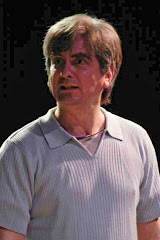
CORIN REDGRAVE


1939-2010

Everybody recognizes this guy's name, or at least his surname. American audiences saw him in supporting roles in such films as Four Weddings and a Funeral and A Man for All Seasons, but his international reputation was overshadowed by those of his sisters.

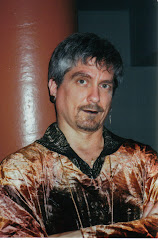
He was the middle child, and only son, of Sir Michael Redgrave and Rachel Kempson, British theatrical royalty (left)who instilled in all their children show biz DNA. Though Vanessa and Lynn are more easily recognized by Americans, Corin was very well-known in his native England for stage appearances in Shakespeare, Coward, and the like. He was equally well-known, and sometimes reviled, for his political views, which, like his sister Vanessa, he never failed to espouse. He was as left-wing as anyone could get, and it's possible that his extremely radical politics damaged his career.


Someone noticed that, as soon as the Berlin Wall fell, Corin's career picked up. In his middle and later years, he worked steadily onstage, and in 1998, delivered a Tony nominated performance in the premiere production of a forgotten Tennessee Williams play, Not About Nightingales. His socialist views, like those of his sister Vanessa, tempered over time, though he was a vocal supporter of a movement to impeach prime minister Tony Blair after the Iraqi Invasion.
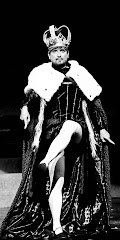
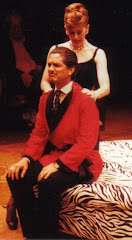
He shared political views with big sister Vanessa (and occasionally shared the stage with her, as in The Cherry Orchard, above), but he shared an ambivalence about his father with little sister Lynn. She wrote a play about it (Shakespeare for My Father) and he wrote a memoir about it (Michael Redgrave - My Father) . In 2004, he played King Lear on the same stage at the Royal Shakespeare Company where his father had triumphed in the role 50 years earlier.(If you are unsure which character above is Lear, you need to brush up your Shakespeare).


Corin Redgrave died Tuesday at the age of 70.


Well, if Americans aren't too sure who Corin Redgrave was, they certainly knew this guy, who died last week amidst a lot of hoopla:

JOHN FORSYTHE


1918-2010


Everybody knows the suave, sophisticated actor who spent the better part of his career in television. He attended UNC-Chapel Hill, but dropped out when he discovered the money he could make on the radio. His smooth vocal quality was a natural for the medium. When WWII came along, he enlisted in the air force, and was promptly sent to Broadway, in the ensemble of Moss Hart's Winged Victory, a tribute to American pilots. Later stage roles included another American soldier, in the original Teahouse of the August Moon, and replacing Henry Fonda in the original Mister Roberts. On the big screen, he appeared in Alfred Hitchcock's comic mystery The Trouble with Harry, and in Truman Capote's docudrama In Cold Blood.


But his greatest fame was on television. He worked steadily as a guest on various episodics in the early days, and delivered a fine performance as a cynical theatre critic in a television play called What Makes Sammy Run?, which starred a young Larry Blyden (that performance is available on DVD; I've seen it and it's well worth renting). His first starring role was as dashing playboy Bentley Gregg in the sitcom Bachelor Father, playing one of television's first single parents (technically, he was raising his niece). In later years, he was the disembodied, but highly recognizable, voice of "Charlie" in one of the iconic series of the 1970s, Charlie's Angels. (He performed the same vocal duties in the two film remakes of recent years).


In the 80s, he headlined another iconic series, Dynasty. ABC's answer to the smash hit Dallas, the primetime soap dealt with the wealthy and powerful Carrington clan. During its first season, Forsythe's role was written as a ruthless patriarch who ruled his family with an iron fist; that tempered a bit over time, as Forsythe's own likable personality crept in. I disliked the series myself, but watched it in its early years due to the presence of the family's son, one of the first gay characters I had run across on television. Of course, the writers eventually turned the character bi-, and he married Heather Locklear or something, and I completely lost interest.

The public at large wasn't too interested, either, at least during the show's first season. The show struggled through its first year and was renewed based more on its pedigree (Aaron Spelling, ABC's hitmaker at the time, produced the show) than on its ratings. In a smart move, the writers teased the arrival of the scheming matriarch of the family, who swept into a wedding (or was it a funeral? Who remembers?) in the final scene of the first season. The role of Alexis Carrington was due to be cast during the hiatus, so the character arrived dressed in a heavy black veil, played by an extra. When season two premiered months later, the veil was lifted to reveal Joan Collins; her catfights with Linda Evans became a signature of the series.

Dynasty's ratings rose, hitting #1 in 1985. The show spawned a short-lived spinoff, The Colbys, before sputtering out after nine seasons.


Forsythe himself was amused that his performance as Blake Carrington turned him into a sex symbol in his 60s. He received three Emmy and four Golden Globe nominations for his work on Dynasty, losing them all.


He died last week at the age of 92.


Nobody remembers this (I certainly didn't), but this guy was also a Dynasty star, at least in its later years:


CHRISTOPHER CAZENOVE


1945-2010


He was born into a middle class family with upper-class connections: his father was an aide-de-camp to King George VI for a time. Chris declined to enter the family's stock brokerage firm, and studied to be an actor at the Bristol Old Vic, making his stage debut in Shaw's Man and Superman in the late 60s. He was a charismatic young actor who worked often, but stardom eluded him. I first saw this guy in the BBC mini-series The Duchess of Duke Street, playing the romantic interest of the leading lady.


He made more than a few feature films, in roles both large and small (he stood next to Charlton Heston in 1970's Julius Caesar, and appeared in Three Men and a Little Lady). He toured England and the states as Henry Higgins in a revival of My Fair Lady, but it was his casting in Dynasty which probably brought his biggest fame. (He played John Forsythe's brother, who plotted to steal the family fortune. yawn.)

His personal life was marked with tragedy, as his son died in a car crash in his 20s, and he himself struggled with substance abuse. He died yesterday from septicaemia at the age of 66.


I have one more obit, but before getting to it, you just have to take a peek at the clip below, the opening credits for one of the later seasons of Dynasty. This show epitomized the excess of the 80s and, as always happens with a night-time soap, the cast had grown to an unmanageable size. So the writers took them all to a fictional country and slaughtered about half of them. The "Massacre in Moldavia" is still considered one of the great Jump The Shark moments in TV history.


OK, back to the real world. I'm embarrassed to reveal that I had never heard of this guy until his recent death. Embarrassed, because he was one of the founders of the regional theatre movement in which I live my life.

CRAIG NOEL

1915-2010


In 1937, this youngster from New Mexico was cast in a community theatre production of The Distaff Side in San Diego, CA. Other than a stint in the military during WWII, and a few years in Hollywood (he assisted Orson Welles for a time), he remained with that theatre for the rest of his life. He was instrumental in turning The Old Globe Theatre into a professional theatre, the first to use Equity actors on the West coast. He was its artistic director over forty years, and remained a vital element of the Globe until his death. He directed over 200 productions, and produced over 200 more, many of which went on to lasting fame. The list of shows he sent to Broadway include several August Wilson premieres, and a few Neil Simons as well.


In 1986, I was living in Los Angeles and sometimes made the schlep down Interstate 5 to San Diego to catch a weekend matinee at The Old Globe. One such Sunday, I sat behind Bernadette Peters, who I later learned was in the audience at Stephen Sondheim's (and, I assume, Craig Noel's) invitation. We were watching the world premiere production of Into the Woods, a show which was very much still in flux. They were of course eyeing Broadway, and Sondheim and his collaborator James Lapine wanted Peters in the show. The female lead in Into the Woods is undeniably the Baker's Wife, which was already being played by Joanna Gleason (spectacularly, I may add). I learned later that Peters was offered her choice of playing the Witch or Cinderella, and, well, if you're a musical geek, you already know she chose to play the Witch. The role was beefed up quite a bit for Peters, and she had some success with it in New York, though structuralists could point out that her presence in what was originally a supporting role slanted the piece. If I had been Bernadette Peters (and in so many ways, I am, we're practically twins), I would have chosen to play Cinderella, a character which actually undergoes a change during the course of the play. She navigates an emotional arc in her story, while the Witch, well, doesn't.


I've slid off-topic here a bit, what are the odds of that happening? Back to Craig Noel, who helped guide Into the Woods to its later success. He was responsible for the growth of The Old Globe into one of the giants of the regional theatre movement, and the theatre won the 1984 regional theatre Tony. Noel led the effort to restore the fascility when it was distroyed by arson in 1978, and created a Master of Fine Arts in Acting at the University of San Diego which was connected to the theatre (I have several friends who came out of that program, which is one of the country's best).


In 2007, Noel was presented the U.S. National Medal of Arts by George W. Bush, who must have had some help in chosing such a worthy recipient, since I can't imagine Bush ever sat through a play in his life. Craig Noel did, though, and the professional theatre is better for it. He died last week at the age of 94.

Tuesday, April 6, 2010

Hayzie Thoughts


DC's Drama Prom was last night, more formally known as the Helen Hayes Awards. They are exactly like the Tony Awards, if the Tonys were sometimes given to scrappy non-union houses like Keegan (who won big with their Rent), or to companies who present plays with no words in them (Synetic always wins the Best Ensemble award, but last night, had to share it with my buddy John Dow and his two cohorts in MetroStage's Heroes. Yea!).


Speaking of that Ensemble award, I have to say I hoped the two actors in Disco Pigs might pick up the trophy. I say that not just because one of those two actors was my acquaintance Rex Dougherty (I worked with him out at Wayside a while ago), but because I thought the two of them exemplified what a true ensemble is about. (And that shopping cart should have garnered its own nomination; it did everything but tapdance).

OK, this particular blog entry may be too DC-centric to be of interest to others who may stumble upon it, but I'm just too hot to care. My air conditioner went out yesterday, and will not be revived. We are suffering (some demented fools might say "enjoying") unseasonably warm weather this week, so as I write these words, it is 87 degrees. At 9:45 PM. INSIDE MY CONDO. No wonder I'm sitting in my underwear, drenched.

Oh, too much information? Let's get back to last night. I did not attend the city's largest cast party, though my tux was ready and I had tickets in hand. I just had a feeling I did not want to go, so I didn't. Of course, as always happens in my life, whenever I decide NOT to do something, I regret that decision. Paging Dr. Phil.


Anyhoo, I watched (or rather, read) the event on Twitter, so I was kept up to date on the winners and losers. I was really sorry, for example, that Marni Penning lost for her swell performance in Hysteria. (And at the risk of this entry degenerating into a "Why wasn't So-and-So nominated?" thing, why wasn't Bruce Nelson nominated? Or Jeff Baker? Or director Steve Carpenter, for that matter? Go here for my take on the show when I saw it. ). Marni is one of the area's most accomplished actresses, and after spending a lot of her career elsewhere, it appears she is settling here in DC for good. I've been her fan since I saw her in Steel Magnolias out at my beloved Wayside Theatre about a hundred years ago, so I look forward to her next local adventure.


I also was sorry to see cute little Nate Dendy lose his award, Best Supporting Actor in a Musical, to his cast mate in The Fantasticks, Laurence O'Dwyer. I wrote about seeing that show here, and while O'Dwyer was a hoot as the hammy old actor, I though Dendy accomplished a more difficult task, bringing great heart and soul to a role which neither sings nor speaks. Ah well, I'm glad that Fantasticks, produced by Arena, won something. It was the strongest production of that chestnut I've ever seen (and I've seen more than my share).

I was also glad King Lear won something. In fact, it won several things, including Best Actor for Stacy Keach, Best Direction for Robert Falls, and Best Resident Production overall.


I wrote about seeing this riveting production here; I am sorry Ed Gero did not pick up a trophy for his Gloucester. Have I mentioned I saw his recent performance as Sweeney Todd? Oh, well, I'll put that on my list of things to drone on about in a further entry. You're waiting impatiently, aren't you?

The reception after the awards is always the highlight of the evening. The Internet has been abuzz all day about it, and pictures have been posted reflecting the usual Good Time Had By All. In retrospect, I wish I had gone. But instead, I sat here sweating in my underwear.

Oops, even more TMI?

Sunday, April 4, 2010

Easter Thoughts

Well, it's the tail-end of Easter Sunday, and the final day of what they call Holy Week. This means more to me than you might think.


Twenty seven years ago, during Holy Week, my mother died. I've occasionally written about her in these pages, including a letter to her several years ago, and a few memories which popped up on the 25th anniversary of her death. On what would have been her 80th birthday, I wrote a bit about the music she loved, music which continues to inspire me. As you can tell, she remains a big part of my consciousness, even after all these years. The anniversary of her death was exactly a week ago (Palm Sunday), and coincided with the closing performance of my latest stage endeavor, Lord Arthur Savile's Crime. As always happens this time of year, my sub-conscious has recently taken over, and I've been dreaming of my mother more often than usual. There is nothing new in that, it happens every year, without any effort on my part.

Whenever that sad anniversary lands on a day where I have a performance, or a rehearsal, or both, I am grateful. I'm not sure my mother ever expected me to devote my life to the performing arts; she would have wished a more financially stable career. But every year at this time, I hope that, if she had lived, she would have witnessed what the theatre has done for my soul, and approved.

This week, I've had to face another truth regarding the loss of my mother. I have now lived more of my life without her than with her. I don't know who the hell put that concept into my head, but I am now stuck with it. It saddens me further.


But my sadness is tempered with the joy I had with the experience which ended on Palm Sunday. The Washington Stage Guild is just the kind of company my mother would wish me to keep: lively, sincere, and indefatigable. As I head into this next segment of my life, I keep memories of her close to me, and hope she might approve of my life's choices.

Saturday, April 3, 2010

Theatre Droppings: I Just Met a Girl Named Maria


Is there anything more exciting than watching superb work happening onstage, live, in front of you? I don't think so. I attended two-thirds of Terrence McNally's Nights at the Opera festival at the Kennedy Center this week, and can't recall being so jazzed by so many great performances. There wasn't a stinker in the bunch.

McNally is having a great week here in DC, though a difficult one elsewhere (more on that in a mo'). I missed his newest work, Golden Age, which actually received some subdued reviews, but I did catch two other plays which validate him as one of our best contemporary dramatists. I was familiar with both plays, having seen previous high-profile productions, so these actors at KenCen had some impressin' to do.


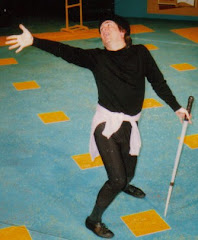
The Lisbon Traviata may be my favorite McNally play, due in no small part to the first production I saw of it, in Los Angeles many years ago. Nathan Lane was recreating the role he created in New York, and it was a stellar performance (this was years before his Broadway Tonys and film appearances). I was so impressed with this guy, whom I had never seen nor heard of before, that I went back to see the show two more times, in the space of a month. In this production, he was playing opposite Richard Thomas (above), who was at the time determined to smash the image he had created as John-Boy Walton; the two of them together were very, very good. They were aided by Dan Butler, before he became a bit of a celebrity with his recurring role on Frasier (he played the vulgar skirt-chasing sports announcer); Dan played Thomas's lover in the piece.


In the Kennedy Center production, John Glover and Malcom Gets are playing the Lane and Thomas roles. I read somewhere that Glover was reluctant to attempt the role which had put Lane on the map so many years ago, and it's true that Nathan's performance would be hard to top. Glover makes the role his own, though, and I thoroughly bought into his interpretation of Mendy, the aging, needy opera queen. And speaking of needy, Gets came into his own in the second act, when we witness his long-term relationship disintegrate into violence. I have enjoyed the work of both Glover and Gets in previous endeavors, and hold them in high esteem for their ability to maintain full careers while declining to hide their own sexuality. The press usually describes them as "openly gay," which they are, but I consider that they are two members of what I call the "Quietly Out," a group of actors who just do their work, and don't bother too much with what the public may think of their private lives. (And because they don't care, the public doesn't either.)


But their work in The Lisbon Traviata is terrific, whether they are sleeping with men, women, or livestock. They are ably assisted by two actors of whom I have not heard, Chris Hartl (right) and Manu Narayan; the four of them comprise a very strong ensemble, and deliver a potent production.

I think I read that McNally was in rehearsal with this show, and did some adjusting to a script which, let's face it, is several decades old. I am sure he was tinkering with the final moment of the play, which is the only moment in the Los Angeles production I found difficult to swallow. Here, though, it's jolting and surprising and frighteningly real.


Master Class is one of McNally's big hits, for which he won a Tony award in its original production. The show ran long enough for his leading lady, Zoe Caldwell (she won the Tony, too) to be replaced by Patty LuPone and, even later, by Dixie Carter. I saw LuPone in the role, and wrote about it here. This month at the Kennedy Center, Tyne Daly has taken the role, which is large enough to be described as a tour de force. She never leaves the stage, and every eye in the audience is on her every moment of the play. She's playing Maria Callas, giving a Master Class at Julliard. I loved LuPone in the role, and ditto Ms. Daly.

I'll admit when I heard Tyne was cast in the role, I was sceptical. I thought she was a bit too old, but I have been proven wrong. I've seen Daly onstage before, in one of her final performances in Gypsy on Broadway, a role which won her a Tony (she also has numerous Emmys for her television work). I enjoyed her Mama Rose, but I admire her Maria Callas even more. Truth be told, I have found her small screen work to be a little, well, calculated. Never bad, just...well...unspontaneous. She won four Emmys, back to back, for her work in Cagney and Lacey, and I always thought her costar Sharon Gless to be much more effortless in her choices. (Gless finally won for her work, too).

Anyway, whatever problems I have had with Daly's film work have not translated to her stage work, where her sparkling extravagance has always served the character.

I'm not sure why, but I was more invested in the students who appear onstage with Callas in this production of Master Class, as opposed to the original Broadway production, when I didn't give two hoots about them.

And I really enjoyed the fact that my buddy Clinton Brandhagen, who is playing the walk-on part of the stagehand, garnered so many laughs from his few moments on stage (his Shear Madness experience may be helping a bit there).


Playwright Terrence McNally is having a good week in DC, but in NY and in Texas, not so much. His 1991 play, Lips Together, Teeth Apart, was to have a major Broadway revival this month, courtesy of Roundabout Theatre. After two weeks of rehearsal, star Megan Mullally (above) quit the show, citing creative differences with the director, and the production collapsed. This must be very frustrating for McNally, as this would actually have been the show's Broadway debut; its original run was Off-Broadway at Manhattan Theatre Club.


It's doubtful McNally was going to garner much press for the classroom production of Corpus Christi which had been scheduled to be performed in Texas last week. That is, until now. This is McNally's most controversial play, a modern retelling of the gospel, with Jesus and his disciples portrayed as gay men, and it's ignited fundamentalist bigotry all over the planet in years past (I wrote a bit about this play on the 10th anniversary of Matthew Shepherd's death). In this instance, a young college student at Tarleton State University in Stephenville, TX, was using the play for a class directing project. There were no school funds used for the production, and the presentation was not open to the public (in fact, it was scheduled at 8 AM on a Saturday to avoid confrontation). A local radio host, who also happens to be the pastor of a local church so you know how interested he is in freedom of speech, took issue with the student's right to explore new ideas in the privacy of the classroom. Though this upstanding reverend never saw nor read Corpus Christi, he was sure it blasphemed his own personal beliefs, so he swung into action. Initially, the college's administration backed the student, declaring the presentation, quite rightly, "a class project not intended for the public anymore than a student’s math assignment.” The student in question identifies himself as a gay man who is also a Christian, and chose the piece "to bring people together," and to promote the acceptance of gay Christians. But this church leader, David Harris of the Hillcrest Church of Christ, was more interested in censorship than tolerance, and he whipped up a public frenzy which even included the state's lieutenant governor. The college capitulated, and the student's directing project was cancelled.
Got that? This mouthy Christian bigot personally disagreed with McNally's play, and caused a college (you know, a seat of higher learning, which teaches tolerance and freedom to explore new ideas) to disallow a student's homework.


Happy Easter, everybody! Jesus would be so proud.