Here are a couple of talents we lost in the past month; one was an expert at detecting and exploiting the general public's cultural appetites, while the other introduced a new age of American film making.

 Writing seems a strange career for someone like Cannell, who struggled with severe dyslexia throughout his life. He was working for his father's furniture business in Los Angeles when he sold his first television script, in 1968, for an episode of It Takes a Thief. He attracted the attention of Universal, the studio which, at the time, was delivering much of the meat-and-potatoes programming for the three networks. He penned scripts on a free-lance basis for a
  short while before landing his first full-contract gig, as story editor on Adam-12. He claims to have been the lowest paid writer on the Universal lot, but a glitch in his contract promised him $70,000 for each two-hour pilot he wrote, and an additional $100,000 if the pilot was made. Obviously, he began to churn out the pilots.
By his estimation, he personally wrote over 450 television episodes in a career spanning three decades, and executive produced over 1500. He created at least 40 TV series, most of them crime/adventure dramas aimed at the male audience. He was one of the first American producers to recognize the financial wisdom of filming in Canada to avoid Hollywood-style labor costs, so he built his own studio in Vancouver. He furnished the fledgling Fox network with its first season hit 21 Jump Street, which incidentally launched Johnny Depp's career.
His tongue-in-cheek series about a reluctant superhero, The Greatest American Hero, provided a top-40 hit with its theme song.

He created the slightly lurid Silk Stalkings, and made a TV star out of future killer Robert Blake as Baretta. Baa Baa Blacksheep took a look at an air force squadron in the Pacific during WWII, and in Tenspeed and Brownshoe, he paired Broadway hoofer Ben Vereen with uber-geek Jeff Goldblum (even in 1980, the pairing of black and white leading men was unusual; the series failed).
 Cannell is probably best remembered for the creation of two series which exemplify his male-centric point of view. In 1983, the first episode of The A-Team premiered after the Super Bowl, bringing this series about a group of misfit mercenaries to the attentions of millions of male viewers. The show was a top-10 hit for four of its five seasons, and turned a mohawked, former wrestler named Mr. T into a
  cult figure. The show had a cartoon feel to its over-the-top violence (it even inspired its own series of comic books); despite repeated explosions, car crashes, and the like, nobody ever seemed to get seriously hurt. The show continued to be popular during syndicated reruns, and remains an international hit. A feature film was released this year in an attempt to revive the franchise (it was not a success).
 Cannell was also responsible for the creation of one of the most beloved of all television gumshoes in The Rockford Files. Jim Rockford, as portrayed by James Garner, was the
  antithesis of the TV detective of the time. He wore rumpled clothing and lived in a trailer at the beach; he handled only cold cases so as not to have to deal with the police, and often suffered
  money problems caused by his deadbeat clients. But Garner and Rockford were a match made in casting heaven, and The Rockford Files is considered one of the finest examples of the TV detective genre. And its theme song also hit the Top 40 music charts.
Honestly, I didn't watch any of the above shows. What a shocker. While Mr. T was creating a national catchphrase with "Piddy duh fool," I was watching The Days and Nights of Molly Dodd. But Cannell was responsible for one series which did appeal to me, Wiseguy. The premise concerned a cop who lives his life deeply undercover, spending many months on a single case. In a departure from the norm, Wiseguy's 4 seasons were comprised of long story arcs which
  took many episodes to conclude. Its brooding star, Ken Wahl, became such a sensation that he has since become a recluse, and the show can be credited with bringing attention to young character actor Kevin Spacey, whose multi-episode performance in season one, as a loony millionaire with a truly creepy sister complex, launched his career.


In recent years, Stephen J. Cannell has become a best-selling fiction writer, with a number of crime novels to his credit, including one which will be released posthumously. He was an occasional actor, and recently had a recurring role (as himself) on Castle. Each of Cannell's productions ended with his signature logo:
Cannell lost his battle with melanoma last month at the age of 69.

Stephen J. Cannell
1941-2010
 Writing seems a strange career for someone like Cannell, who struggled with severe dyslexia throughout his life. He was working for his father's furniture business in Los Angeles when he sold his first television script, in 1968, for an episode of It Takes a Thief. He attracted the attention of Universal, the studio which, at the time, was delivering much of the meat-and-potatoes programming for the three networks. He penned scripts on a free-lance basis for a
  short while before landing his first full-contract gig, as story editor on Adam-12. He claims to have been the lowest paid writer on the Universal lot, but a glitch in his contract promised him $70,000 for each two-hour pilot he wrote, and an additional $100,000 if the pilot was made. Obviously, he began to churn out the pilots.
By his estimation, he personally wrote over 450 television episodes in a career spanning three decades, and executive produced over 1500. He created at least 40 TV series, most of them crime/adventure dramas aimed at the male audience. He was one of the first American producers to recognize the financial wisdom of filming in Canada to avoid Hollywood-style labor costs, so he built his own studio in Vancouver. He furnished the fledgling Fox network with its first season hit 21 Jump Street, which incidentally launched Johnny Depp's career.
His tongue-in-cheek series about a reluctant superhero, The Greatest American Hero, provided a top-40 hit with its theme song.
He created the slightly lurid Silk Stalkings, and made a TV star out of future killer Robert Blake as Baretta. Baa Baa Blacksheep took a look at an air force squadron in the Pacific during WWII, and
 in Tenspeed and Brownshoe, he paired Broadway hoofer Ben Vereen with uber-geek Jeff Goldblum (even in 1980, the pairing of black and white leading men was unusual; the series failed).
 Cannell is probably best remembered for the creation of two series which exemplify his male-centric point of view. In 1983, the first episode of The A-Team premiered after the Super Bowl, bringing this series about a group of misfit mercenaries to the attentions of millions of male viewers. The show was a top-10 hit for four of its five seasons, and turned a mohawked, former wrestler named Mr. T into a
  cult figure. The show had a cartoon feel to its over-the-top violence (it even inspired its own series of comic books); despite repeated explosions, car crashes, and the like, nobody ever seemed to get seriously hurt. The show continued to be popular during syndicated reruns, and remains an international hit. A feature film was released this year in an attempt to revive the franchise (it was not a success).
 Cannell was also responsible for the creation of one of the most beloved of all television gumshoes in The Rockford Files. Jim Rockford, as portrayed by James Garner, was the
  antithesis of the TV detective of the time. He wore rumpled clothing and lived in a trailer at the beach; he handled only cold cases so as not to have to deal with the police, and often suffered
  money problems caused by his deadbeat clients. But Garner and Rockford were a match made in casting heaven, and The Rockford Files is considered one of the finest examples of the TV detective genre. And its theme song also hit the Top 40 music charts.
Honestly, I didn't watch any of the above shows. What a shocker. While Mr. T was creating a national catchphrase with "Piddy duh fool," I was watching The Days and Nights of Molly Dodd.
 But Cannell was responsible for one series which did appeal to me, Wiseguy. The premise concerned a cop who lives his life deeply undercover, spending many months on a single case. In a departure from the norm, Wiseguy's 4 seasons were comprised of long story arcs which
  took many episodes to conclude. Its brooding star, Ken Wahl, became such a sensation that he has since become a recluse, and the show can be credited with bringing attention to young character actor Kevin Spacey, whose multi-episode performance in season one, as a loony millionaire with a truly creepy sister complex, launched his career.
In recent years, Stephen J. Cannell has become a best-selling fiction writer, with a number of crime novels to his credit, including one which will be released posthumously. He was an occasional actor, and recently had a recurring role (as himself) on Castle. Each of Cannell's productions ended with his signature logo:
Cannell lost his battle with melanoma last month at the age of 69.
Arthur Penn
1922-2010
As a director, he had substantial success with both stage and screen, and is remembered as a pioneer of the New American Film movement of the early 1970s. His career, in retrospect, looks a lot like a badminton match, with Penn as the birdie, flitting back and forth between stage and screen work.
While serving in WWII, he met producer Fred Coe, who would become a longtime collaborator on many of his early projects. Coe set Penn up as a director of 1950s television, and their collaboration included a William Gibson teleplay about Helen Keller. The live program won Emmy nods for Penn and for star Teresa Wright, but more importantly, it cemented a strong working relationship between Gibson, Coe, and Penn. The trio turned to Broadway, providing Henry Fonda and Anne Bancroft with a substantial hit in Two for the Seesaw in 1957. On a roll, Penn headed to Hollywood, helming the first of his many underrated flops, The Left-Handed Gun, a Gore Vidal story starring a moody Paul Newman. As with most of his under-performing films, this one has received better reviews in retrospect than it did at the time, and it failed at the box office.

Arthur returned to Broadway to direct William Gibson's stage adaptation of the teleplay which had put both of them on the map. The Miracle Worker was a smash, earning Tonys for Penn, Gibson, and star Anne Bancroft. It was director Penn who suggested that Bancroft's character, Annie Sullivan, sport an Irish brogue. Bancroft was just coming off a year in Two for the Seesaw, in which she used a thick New York accent, and the actress was having trouble getting rid of it. Arthur sensed that, if Bancroft could replace the accent with another one, she would have no trouble, so Annie Sullivan's Irish accent was born. The role is now traditionally played with a brogue, though the historical Sullivan had none. (I offered that story and others when I wrote my obit for playwright William Gibson a few years ago, go here if you wish to read a bit more).
 Arthur Penn became one of the go-to Broadway directors of the early 60s, providing the comedy team of Mike Nichols and Elaine May with their Broadway debut, as well as guiding Lillian Hellman's Toys in the Attic. He also influenced the presidential election of 1960, when he directed the third television debate between JFK and Nixon. He advised Kennedy to keep his answers short and pithy, and to directly address the camera, advice which is commonly thought to have swung the election in Kennedy's favor.
By 1962, Hollywood was begging for Penn's return. He was the logical choice to direct the film version of The Miracle Worker, earning Oscars for his stars Anne Bancroft and Patty Duke, and nominations for himself and for Gibson's screenplay.


 a lot like a badminton match, with Penn as the birdie, flitting back and forth between stage and screen work.
While serving in WWII, he met producer Fred Coe, who would become a longtime collaborator on many of his early projects. Coe set Penn up as a director of 1950s television, and their collaboration included a William Gibson teleplay about Helen Keller. The live program won Emmy nods for Penn and for star Teresa Wright, but more importantly, it cemented a strong working relationship between Gibson, Coe, and Penn. The trio turned to
 Broadway, providing Henry Fonda and Anne Bancroft with a substantial hit in Two for the Seesaw in 1957. On a roll, Penn headed to Hollywood, helming the first of his many underrated flops, The Left-Handed Gun, a Gore Vidal story starring a moody Paul Newman. As with most of his under-performing films, this one has received better reviews in retrospect than it did at the time, and it failed at the box office.
Arthur returned to Broadway to direct William Gibson's stage adaptation of the teleplay which had put both of them on the map. The Miracle Worker was a smash, earning Tonys for Penn, Gibson, and star Anne Bancroft. It was director Penn who suggested that Bancroft's character, Annie Sullivan, sport an Irish brogue. Bancroft was just coming off a year in Two for the Seesaw, in which she used a thick New York accent, and the actress was having trouble getting rid of it. Arthur sensed that, if Bancroft could replace the accent with another one, she would have no trouble, so Annie Sullivan's Irish accent was born. The role is now traditionally played with a brogue, though the historical Sullivan had none. (I offered that story and others when I wrote my obit for playwright William Gibson a few years ago, go here if you wish to read a bit more).
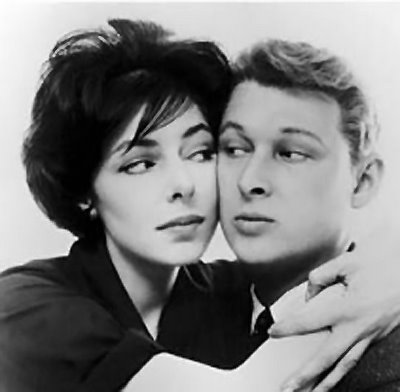 Arthur Penn became one of the go-to Broadway directors of the early 60s, providing the comedy team of Mike Nichols and Elaine May with their Broadway debut, as well as guiding Lillian Hellman's Toys in the Attic. He also influenced the presidential election of 1960, when he directed the third television debate between JFK and Nixon. He advised Kennedy to keep his answers short and pithy, and to directly address the camera, advice which is commonly thought to have swung the election in Kennedy's favor.
By 1962, Hollywood was begging for Penn's return. He was the logical choice to direct the film version of The Miracle Worker, earning Oscars for his stars Anne Bancroft and Patty Duke, and nominations for himself and for Gibson's screenplay.
He clashed with the star of his next film, Burt Lancaster (don't get me started on his phenomenal lack of talent); Lancaster had more clout, and Penn was sacked after a few days of shooting. His luck with Mickey One, starring Warren Beatty, and The Chase, starring Marlon Brando and Robert Redford, was not much better (the latter film was taken out of his hands and re-edited by the producer). Both films reflected Penn's admiration for the French cinematic techniques which were misunderstood in Hollywood at the time.
Our hero retreated to Broadway (again), where he guided Lee Remick and Robert Duvall in Wait Until Dark, turning it into one of the all-time great stage thrillers. When Francois Truffaut declined Warren Beatty's offer, Penn was approached to direct what was to become his best known, most influential film.
 luck with Mickey One, starring Warren Beatty, and The Chase, starring Marlon Brando and Robert Redford, was not much better (the latter film was taken out of his hands and re-edited by the producer). Both films reflected Penn's admiration for the French cinematic techniques which were misunderstood in Hollywood at the time.
Our hero retreated to Broadway (again), where he guided Lee Remick and Robert Duvall in Wait Until Dark, turning it into one of the all-time great stage thrillers. When Francois Truffaut declined Warren Beatty's offer, Penn was approached to direct what was to become his best known, most influential film.

Arthur had to be persuaded by Beatty to direct Bonnie and Clyde, who offered him complete autonomy on the set, and approval of the final cut of the film. 
American films of the 60s, until that time, had been unable, or unwilling, to reflect the tumultuous civil unrest, the violence, and the new sexual freedom of the period. The studio contract system had collapsed, but the studios themselves were still attempting to deliver the mainstream product which had worked for decades. Bonnie and Clyde's mix of screwball comedy, sexual explicitness, and shocking violence (set to an upbeat bluegrass score composed by Lester Flatt and Earl Scruggs, who also wrote The Beverly Hillbillies theme) paved the way for the new wave of American films of the 70s. Martin Scorsese, Francis Ford Coppola, Hal Ashby, and Robert Altman all point to Penn's work as an inspiration for their own.
 Arthur followed up Bonnie and Clyde with the subversively gentle Alice's Restaurant, the epic Little Big Man, and the existential thriller Night Moves. His films were not as well-received by the mid-70s, so he once again headed to Broadway, where he placed George C. Scott in Sly Fox, an updated adaptation of the Elizabethan comedy Volpone, and re-teamed with William Gibson for Golda, another vehicle for Anne Bancroft. In his later years, Penn executive produced Law and Order, with his son as director, and delivered a surprise cult hit with Penn and Teller Get Killed.

American films of the 60s, until that time, had been unable, or unwilling, to reflect the tumultuous civil unrest, the violence, and the new sexual freedom of the period. The studio contract system had collapsed, but the studios themselves were still attempting to deliver the mainstream product which had worked for decades. Bonnie and Clyde's mix of screwball comedy, sexual explicitness, and shocking violence (set to an upbeat bluegrass score composed by Lester Flatt and Earl Scruggs, who also wrote The Beverly Hillbillies theme) paved the way for the new wave of American films of the 70s. Martin Scorsese, Francis Ford Coppola, Hal Ashby, and Robert Altman all point to Penn's work as an inspiration for their own.
 Arthur followed up Bonnie and Clyde with the subversively gentle Alice's Restaurant, the epic Little Big Man, and the existential thriller Night Moves. His films were not as well-received by the mid-70s, so he once again headed to Broadway, where he placed George C. Scott in Sly Fox, an updated adaptation of the Elizabethan comedy Volpone, and re-teamed with William Gibson for Golda, another vehicle for Anne Bancroft. In his later years, Penn executive produced Law and Order, with his son as director, and delivered a surprise cult hit with Penn and Teller Get Killed.
 His final work for Broadway, the 2002 adaptation of Turgenev's Fortune's Fool, won Tonys for both Frank Langella and Alan Bates. He died last month, a day after turning 88.




,+Olney+Theatre+Center,+2004.jpg)


,+Shakespeare+Theatre+Company,.jpg)

,+Warehouse+Theatre,+1999.jpg)
,+Are.jpg)
,+Everyman+Theatre,2002.jpg)
,+First+Nationa.jpg)
,+Shakespeare+Theatre+Company,.jpg)


,+Granada+Th.jpg)
,+Globe+Playhouse,.jpg)
,+Valley+College,+1975.BMP)
,+CSUN,+1976.jpg)