Tuesday, July 7, 2009

Steve of the Woeful Countenance


If you saw Man of La Mancha at Wayside Theatre (and many people saw it twice), you saw this guy onstage, but you probably didn't notice him. He was seated in the corner of "Pitland," (our nickname for the upstage pocket under the top platform, where most of the music originated), usually playing the trumpet, when he wasn't playing the bass. Always, he wore the forlorn expression of a prisoner of the Inquisition. Unlike the other musicians in the piece, all of whom were also actors (I'll get to them in a minute), he was never brought down into the center of the action. Like a wallflower at the High School Dance, he hugged that corner until he almost disappeared. I was onstage a lot, and though he never left the stage, I only saw him twice. Once, when the entire company danced offstage in an orgy of gypsy gyrations, he was the one soul left, to slowly pick up the trumpet and begin a melancholy strain. Another time, I passed right by him as I made my dignified exit, after croaking out one of my big numbers (I wrote about fouling up that little ditty here, in case you missed it).


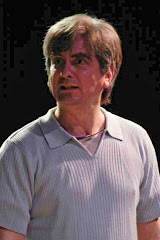
This shrinking violet secreted in the corner, way upstage left, was Steve Przybylski, and he was the star of the show.


Man of La Mancha is a star vehicle in the best sense of the term, and our Quixote, Tom Simpson, fulfilled every requirement of the role (I wrote a bit about sharing the stage with Tom here). Like the best star vehicles, La Mancha contains lots of swell supporting characters, and a dynamic leading lady role in Aldonza, the kitchen slut whom the mad knight adores. Nancy O'Bryan played our gal to the hilt and then some. Nancy possesses a beautiful voice, and she could easily have turned Aldonza into a lark or a nightingale, with clear and pristine tones. But she chose a more dangerous route, allowing the roughness of the character to inform her voice; the result was a raw, realistic performance. I was grateful that director Warner allowed Sancho Panza to remain part of the action during Aldonza's rant following her gang-rape (Sancho is usually in the background at that point), as I was able to see upclose how ravaged this woman had been.

Everyone else did strong work, too. Can you tell I'm proud of this cast? Wayside's Intern Company stepped up to the plate in this, their first show together, playing instruments, playing horses, and playing actual people, too. Jayson "I've never sung before" Belew had fine moments as Cervantes's nemesis, and teamed up with Cody "The Barber" Murphy to kick the show into gear as a couple of hoofing horses. Aviva "My blog is better than yours" Pressman was raunchy as a barmaid but prim and proper as the Housekeeper. Dave "The Padre" Sucharski pulled double and triple duty as one of the leading musicians, while Mike "I'm not an intern" Rosengarten seamlessly moved his classical guitar into the action many times. Warner augmented the company with some former interns, including Ricky Hesson, who flip-flopped from the stern Governor to the indecisive Innkeeper and back again, and Vaughn Irving (about whom I wrote here), who was privileged to wear the Best Hat in the show. And we had some more local talent joining the fun, including Sun King "yes, my parents were hippies" Davis, whose bones I jumped every night, and Gus "Bucket Boy" Glatzel, who was the closest anybody in the cast got to being Spanish (he's Argentinian by birth).


The spectacular Thomasin Savaiano played both Quixote's niece and the Innkeeper's wife, and turned that gypsy dance into a comic highlight. But my favorite moment of hers came near the end of the play, when, as one of the nameless prisoners awaiting her turn in front of the Spanish Inquisition, she spat, "they'll put the question to him." I stood only a foot or two from her when she delivered that line, and in that moment, I swear I could see in this pitiful creature's eyes her entire existence. That's a fine actress (Thomasin played my wife in Wayside's Black Coffee several years ago; she wiped the stage with me):
So, anchored by Tom's dynamic turn as the title character, we had some strong performances. But I still maintain that that unnoticed guy sitting in the corner was the star of the show. From our audience's feedback, we heard, over and over, that the music in the show stood out. It was rustic, it was true to the period, it sounded "right." Steve was our musical director (I wrote about his skills in rehearsal here), and he re-orchestrated this huge musical into a chamber piece, using instruments which evoked the time and place. He was constantly adjusting and re-imagining the piece; when it became apparent, very late in the process, that a flute was essential, he volunteered himself to play it (along with the thousands of other instruments he was also handling). Wisely, Warner knew a bad idea when he heard it, and enlisted young Molly Knudsen to join our band (Molly is a teen actress who had not appeared in a Wayside mainstage production, and her playing of the flute added a haunting quality to "Dulcinea," in particular). Steve was greatly aided by Til Turner's scenic design; the set resembled a tiny Hollywood Bowl after Armageddon had hit, and the acoustics funneled the music straight out into the audience. Warner and Steve looked for any and all opportunities to suck the musicians into the action, and succeeded in making the music part of the organic whole.


Steve is also an actor, but it was a contractual glitch which prevented Warner from making use of his thespianic skills. Instead, he sat upstage left, removed from the action, playing his instruments and occasionally (and very subtly) conducting the music. But anytime you looked at him, he had the despondent, woeful look of a prisoner of the Inquisition.


I think all of us are proud of our work on Man of La Mancha. I hope Steve is proudest of all. He should be. His work, in a word, was stellar.

Seven Weeks Since


Yesterday morning, I woke up to the sound of a single thump at my front door. It took me a minute to realize it was the daily newspaper. The Washington Post, to which I subscribe, had restarted their daily delivery. I had forgotten that, seven weeks ago, when I left for my out of town gig, I had requested the paper be restarted on Monday.

It's been seven weeks since I read a newspaper. At least, while holding it in my hand. I am not one of those eccentrics who believes the only true way to read a newspaper is to have it in your hand, I'm perfectly happy to read it online, and often do. But I get a ridiculously low subscription rate from The Post, I guess because they, like all newspapers, are hemorrhaging subscribers. They have allowed me to keep my special introductory rate, which was only for 6 months, for about 6 years. So, though I really don't need the paper every day, I get it, at least when I'm in DC. You're dying to get the same deal, aren't you? I pay a buck eighty a week for all seven papers, which cost $4.50 at the newstand (if there were newstands anymore, which there aren't). Plus, I get the Sunday coupons! (yep, sorry to say, I'm that guy: I clip Sunday coupons.)


A lot can happen in seven weeks. Hey, a whole war was fought in 1866 in seven weeks, with Austria fighting both Prussia and Italy. By missing the paper for seven weeks, I missed lots of juicy details closer to home, concerning, for example, the South Carolina governor who ditched his family on Father's Day in order to screw his mistress. I did hear, from NPR, that this Upstanding Citizen has inadvertently invented a new euphemism for sexual exploits: "hiking the Appalachian Trail."


I also missed all the drama surrounding the Iranian elections and the Honduran coup. I haven't a clue what's in that health care bill, and I did not read a thing about the DC trainwrecks. Yep, there were two of them. The first one was that awful collision on the subway line (I still have a hunch that driver was busy texting when she plowed into the parked train).

The second DC trainwreck happened just this weekend, when our former mayor and convicted felon Marion Barry was arrested for stalking his girlfriend. Gotta love this guy, and the DC citizens who will forgive him anything.


This reminds me of another thing I've been missing out on. It's been seven weeks since I watched a television program which wasn't prerecorded. I had no TV service out at my digs, and when I returned to DC on my days off, I always watched shows I had taped. So I haven't seen a news show, a talk show, or a game show in seven weeks. I missed ALL of the McMahon tributes, the Farrah tributes, and the Karl Malden tributes (Karl did get some tributes, didn't he? I hope so, but not to worry, I plan one in these pages this week.)

The biggest shock of all is this: I believe I am the only person on the planet Earth who has not seen a single Michael Jackson report, tribute, or retrospective. Not one. Now that I'm back in civilization, though, it will be difficult to avoid them; just today, all the major networks and many of the minor ones are interrupting their programing to broadcast excruciatingly detailed coverage of the guy's funeral. Come on, the guy was a good musician who lived a freaky, screwed up life, but it's not like he was a pope or something.

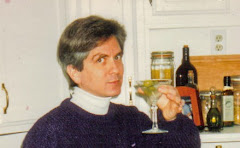
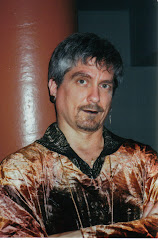
I'm reminded of one more thing I've been missing. It's been seven weeks since I shaved. The lovely and talented Tamara Carruthers and Cat Lovejoy, Wayside's costume queens, asked all the men in the show to stop shaving, to give the show that scruffy look. I was happy to comply, so I haven't seen a razor in seven weeks. Yesterday, it occurred to me that I have spent as much of 2009 bearded as not; I also refrained from shaving while I was playing Polonius down at North Carolina Stage Company. I don't like my beard, which makes me look like Walter Brennan without the limp. So yesterday, I went to the gym (another thing I haven't done in seven weeks) for the express purpose of using their industrial sink to get rid of all this facial hair. I looked like this when I started:

...and now I look like my normal self again:

Okay, I took a little of the grey out, too. So sue me.

Sunday, July 5, 2009

Christopher Columbus and his Ninjas


Our fourth and final week of Man of La Mancha ended with a bang. Literally. In fact, lots and lots of them.


We shrank to five shows this week, only two of which took place at their normal time. Our closing day, Saturday, was also the Fourth of July, and both shows were rescheduled to attempt to compliment, rather than conflict with, Middletown’s lavish Independence Day celebrations. Those celebrations included a parade (I missed it, but was told that there were fewer tractors than usual, and that the troupe of Bolivian Dancers was greeted with stony silence...no fondness for furriners here), and a family-friendly campground with live music and booths offering pretzels and funnel cake. I had heard of funnel cake, but did not know what it was. After asking somebody, and getting more information than I really needed, I determined that, essentially, funnel cake is a cake that’s fried. And looks like a steaming pile of...well, you can see what it looks like.


Fried Cake that looks like turd. Welcome to the Deep South.


Both our Fourth of July shows had about a quarter of a house (which was expected); they were warm and receptive audiences. Our evening show had been bumped up half an hour to avoid the fireworks which Middletown always provides to its citizens, paid for by their numerous speed traps. The pyrotechnics are ignited in the field behind the theatre, so it was important that they be held until our final curtain came down. No such luck. The building began to shake during Don Quixote’s deathbed scene, and continued through the end of the play. I decided that the Spanish Inquisition had stopped burning people at the stake. They were blowing them up instead.

But the weirdest performance of the week was on Thursday. Our regular Wednesday matinee had been canceled, or rather moved to Thursday morning to accommodate a school group. It was never clear to me what the hell kind of school group goes on field trips in July. One rumor stated that it was a "make-up" performance for a kids’ matinee of Wayside’s annual Christmas show, which had been canceled back in December due to bad weather. You’ve heard of Snow Days? This was a Snow Show. Another rumor I heard was that this was not in fact a school group, but a summer camp group. That made a bit more sense to me, though I wondered why they didn’t go down the road a bit and see West Side Story at Shenandoah University. At least that show has kids in it. Man of La Mancha has dirty, foul smelling men, and a woman who gets raped.


Welcome to Children’s Programming!


I don’t complain about singing at 11 AM, though it’s not the easiest thing in the world. I spent enough time on tour with a kids’ musical to consider 11 AM a gift; we often performed Tom Sawyer at 10 or even 9 in the morning. But backstage at Wayside, I did inquire what age our audience would be. "6 or 7," was the reply I received. "6th or 7th grade?" I hopefully asked. Nope. 6 or 7 Years Old. Some School Group or Camp Counselor actually considered our very adult, two-and-a-half hour show, to be appropriate for children who are still learning not to eat Play-Doh. Our director Warner tried to lessen the violence by clipping the majority of the rape sequence, but we left everything else intact. We lost three quarters of the audience at intermission, as the children hadn’t had lunch and the chaperones were under the impression the show lasted only 90 minutes. But even with slightly older kids remaining for Act Two, they did not follow the story much, and never recovered from the sight of Quixote grabbing that gypsy’s boob.
Warner did his best at intermission, running a Q&A session to try to clarify any misunderstandings, but it was clear that the kids were just too young. Their questions did not revolve around the story, but rather things like "is that a real sword?" We did get a kick out of two misconceptions. One kid asked if the Captain who comes into the jail cell to fetch prisoners was Christopher Columbus (I guess the Spanish military helmet caused that confusion):


Another kid asked if the black-robed Inquisitors were ninjas.


Columbus and his Ninjas. There’s a video game waiting to happen.


At least we did not receive the one question everyone backstage was sure was coming:


"Mommy, what’s a whore?"


Friday, July 3, 2009

Friday Dance Party: Independence Day Edition


I've written previously of my love for 1776, the unlikely Broadway musical concerning the creation of the Declaration of Independence. I first saw the thing in summer stock as a kid (with Joel Grey, of all people, playing John Adams), and realized even then what a special bird it was. The book is one of the strongest, most suspenseful, of any American musical, and can actually stand on its own without the music. The Founding Fathers are treated as men rather than icons (with the occasional twinkle), and the writers did a few amazing things. It's hard to imagine if you have never seen the show, but as soon as the piece begins, they manage to make you forget that you already know the ending.


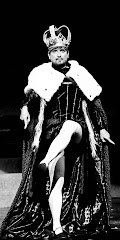
The show won several Tonys in its original run, including Best Musical and Best Supporting Actor in a Musical, for Ron Holgate, who stars in this week's Dance Party. He, as well as many of the original cast, recreated their roles for the film version. A notable absence from the film was Betty Buckley, who had made her Broadway debut in the role of Martha Jefferson; the part went to Blythe Danner in the film (above). The terrific William Daniels, playing Adams, made a huge name for himself with 1776, both with his performance and with his off-stage ego. Back then, the Tony rules claimed that only actors billed above the title of a show could be considered in the leading actor categories, and Daniels refused to allow himself to be considered a supporting player in the piece. (That rule still stands, but the Tony committee gets together periodically and votes to waive it these days.) So, Daniels was never nominated for his stellar work in 1776, though he surely would have been a contender for the award (Jerry Orbach took the prize that year, for Promises, Promises).


I was privileged to appear in a staged reading of 1776 several years ago, as a special event to reopen the Smithsonian's National Portrait Gallery. Coincidentally, Tom Simpson, with whom I currently share the Wayside stage, tore the roof off the joint with his rendition of "Molasses to Rum" (and he had a cold, too!). There have been several local productions of the show in these parts, but no director has had the good sense to put me in one. Maybe one day...


When we were rehearsing for that staged reading (actually, FIVE readings, as we performed them all weekend), we realized another brave thing the authors had done. The third scene of the play takes place in the meeting room of the Continental Congress (as do most of the scenes) and is notable in that it contains absolutely no music. Of any kind. For over 20 minutes. It's said that this is the longest stretch of time in ANY musical without a song. The number below immediately precedes that long stretch, and is strategically placed in the musical to send the show off into Dramatic Scene Land with a big bang.


Here's Ron Holgate as Richard Henry Lee, being sent off to his state legislature to win a vote for Independence. Happy Fourth of July!

The big joke in the play is that Richard Henry Lee doesn't leave. He returns and stops the show again, with a reprise. They filmed it for the movie, but it was cut before release. It has since been restored in the Director's Cut DVD version. Here's more Lee:

Thursday, July 2, 2009

Pat's Wish

One of my favorite comic character actors is Pat Carroll. Those of us in my generation are familiar with her work in countless sitcoms and romantic comedies of the 60s, 70s, and beyond. My earliest memory of her was her appearance in the mid-60s remake of the TV musical Cinderella, in which she stole her scenes as one of the stepsisters (I wrote an appreciation of that performance here). She is a Tony nominee, and an Emmy and Grammy winner. Her longevity is amazing. In 1970, she appeared in the first season of The Mary Tyler Moore Show, as Mary's cranky hospital roommate, and 23 years later, she appeared in the final season of Designing Women, as Julia's former school teacher. If you saw her, you would remember her. She has a robust personality which shines through all her work, and an infectiously raucous laugh which reflects her love of life.
For later generations, she is known primarily as the voice of one of Disney's most famous villainesses:
Back in the mid-90s, I was thrilled beyond words to find out that, during my year at The Shakespeare Theatre Company, I would be performing with Pat Carroll. She was playing the (male) lead in Ben Johnson's Volpone, and among other things, I was to play the all-important role of the fishmonger.
Pat was a delight to work with. She clearly relished performing onstage, and behind the scenes, she treated everyone with the greatest respect. They loved her at The Shakes, and she appeared there several times over the years, winning Helen Hayes awards for her turns as Falstaff (another cross-dressing role) and as Mother Courage. When it was discovered that she would be turning 70 years old during our run of Volpone, a surprise party was planned. It was the end of a long week, and a long weekend, too. Like most theatres in DC, The Shakes ran a "five show weekend," meaning we did five shows in the 48 hours between Friday and Sunday nights. It was a particularly gruelling schedule for the leading players, and Pat was no spring chicken. She was suffering from bad knees at the time, and other ailments resulting from her advancing age.
The party was set up in the green room, and dozens of well-wishers (in addition to the company) gathered to surprise Pat when she emerged from her dressing room after Sunday night's show. All went well, and Pat was genuinely touched by our efforts. She was the belle of the ball, sharing stories and circulating among her admirers and her comrades with great humor (and a nice bottle of hooch). She led an extraordinary life, and had spent some of her early years living in Mexico (she claimed to have sung in cantinas as a child, and I believe her).
She told a little story which has remained with me since. I think of it every year on this day. Pat said that she had been receiving phone calls and messages all day long, from friends and family, who were sorry that she had to perform two shows on the day she turned 70. But Pat corrected them all. "When I was 12 years old," she told us, "a life in the theatre was my greatest wish. To have two shows on my 70th birthday? My dreams came true."
When I was 12 years old, I was afraid to wish for a life in the theatre. Today is my birthday, and like Pat on her 70th, I am lucky enough to have two shows to perform. They'll be dedicated to her.

Monday, June 29, 2009

A Little Knight Music


Our third week of performances of Wayside's Man of La Mancha ended yesterday with a wildly enthusiastic audience. I understand we had some former interns of the theatre in attendance, as well as other well-wishers, but I also attribute our continued good response to the continued growth of our performances.


(You're not tired of my going on and on about Man of La Mancha, are you? Yes, I know I have written about my experiences with this production many many times, but I offer no apologies. It is very normal for me to obsess about my work, when I am working. In addition, this show has sneaked up on me and grabbed me by the windmills.)


All of us doing the show have been running across the same reaction, when we tell a friend, relative, or stranger that we are doing this piece. "Man of La Mancha?" the listener will undoubtedly exclaim, "I LOVE that music." It seems that the show is remembered primarily for its musical score, though I am a bit surprised to hear so. If you ask a civilian to name (or even hum) a song from the show, they can usually come up with only one item. But that item is so huge that people believe they remember the whole score.


The item, of course, is "The Impossible Dream," which burst off the Broadway stage in 1965, and may be the last Broadway show tune to become a true standard. There were certainly other hit songs to come out of subsequent shows, but "The Impossible Dream" has passed out of the "show tune" arena and become an actual classic.


Nobody can really pinpoint any other songs from the show. Theatre Geeks may be able to hum the title tune, if given a hint:

"I am I, Don Quixote

The Lord of La Mancha,

My destiny calls, and I go..."


...and perhaps the haunting tune of "Dulcinea" rings a bell with some hardy theatre-goers, but the truth is, there is only one reason everyone remembers the music of La Mancha so fondly: "The Impossible Dream". The director of our production, Warner Crocker, has been quoted as saying, "If your Don Quixote can't deliver "The Impossible Dream," do No, No, Nanette instead." (OK, I paraphrased that a bit for comic effect, but the truth behind the remark remains.)


Well, our Don Quixote delivers the song, in abundance. It is not unusual for his forthright performance of the number to stop the show with lengthy, well-deserved applause. Tom Simpson is spectacular in the role; the challenging score sits beautifully on his voice, and he has made acting choices which fully flesh out this character. His performance moves seamlessly from the aristocratic storyteller Cervantes, to the eccentric nobility of Quixote, to the heartbreaking fragility of the delusional Alonso Quijana. Tom is a DC actor known primarily these days for his work in musicals, but I can attest that he is also a first-rate dramatic actor. It is a privilege to stand next to him throughout the show.


Our particular production has an ensemble quality which most star vehicles do not provide. With Tom as the anchor, Wayside's La Mancha incorporates terrific supporting performances which bring the lesser known songs to life. (I have a hunch I'll be writing about those performances before we close later this week.)


I openly confess that I am not a competent judge of music, which will not, of course, stop me from judging the music. The composer of Man of La Mancha, Mitch Leigh, struck gold with this show, providing some melodies which linger in the soul. His lyricist, however, does not rise to the same level. Yes, the words to "The Impossible Dream" can't be challenged, but it seems that in some of the other songs, lyricist Joe Darion twists sentence structure to provide a convenient rhyme:


"In my body it's well known

There is not one selfish bone."


Really? I like lyrics which sound like characters might naturally say them. These...um...don't. (I refuse to admit that I may be prejudiced against the lyric writer because I made up my own at the first preview. This has nothing to do with that. Really. I promise.) Darion has an unfortunate habit of repeating phrases over and over again. And over and over. Again. Over and over. Once you notice it, you can't stop hearing it.


Neither Mitch Leigh nor Joe Darion was able to recreate their La Mancha success in other projects. Composer Leigh returned to Broadway with the musical telling of the Odyssey legend in Home Sweet Homer, a notorious flop which opened and closed in a single night, despite the star power of Yul Brynner in the lead (not by coincidence, Joan Deiner, La Mancha's original Aldonza, was the show's leading lady). Lyricist Darion did little better with Illya Darling, the musical version of Never On Sunday which starred the original film's Greek beauty Melina Mercouri. Unfortunately, she was paired with (get this) Orson Bean as her romantic leading man, and that show failed as well.


But nobody really cares about these guys' later failures. Folks still remember Man of La Mancha primarily through its music, or rather, through its huge central ballad. And who am I to quibble?


A LIttle Late to the Wake

Since my Internet access has been limited lately, and with no television service in my digs, I've been unable to mention several folks who recently died, but who deserve some attention. At the top of this list has to be Dr. Jerri Nielson Fitzgerald. You may recognize this picture, which swept the world back in 1999:
This sunny scientist was stationed at the South Pole when she discovered a lump in her breast. Bad weather marooned her there for many months, during which time she performed a biopsy on herself, and discovered a malignant tumor. Chemo was airdropped to the station, and she treated herself. Her cancer went into remission, and she became the poster gal for courage and stamina. According to her husband, her cancer returned several years ago, and she died last week at the age of 57.

Quite a few weeks ago, this guy died:
1926-2009

He was actor Frank Aletter, who was one of those workhorses of the Hollywood industry, appearing in hundreds of episodics and features. He worked constantly, but probably had his greatest fame in the 60s, when he headlined a couple of forgettable sitcoms, including It's About Time, in which he played an astronaut who was transported back to the era of the caveman (Imogene Coca was in the cast). His death caught my eye a while back, as he was one of our neighbors when I lived in Los Angeles. His daughter, Kyle, was a classmate of my little sister's, and his wife at the time was Lee Meriwether (the above pic is their wedding photo).

Regular readers of these pages know that I have a lot of respect for actors who spend their careers "in support," and Aletter was one of the best. Also in that class would be the guy at left. He was T. Scott Cunningham, a stage actor who spent his career Off-Broadway and in regional theatres. He was well known in New York circles as a great interpreter of the works of Nicky Silver, and appeared in the original productions of Pterodactyls, Fit to be Tied, and The Eros Trilogy. He was a founding member of the Drama Department, and appeared in the biggest hit to come from that troupe, As Bees in Honey Drown. He was only 47 at the time of his death a few weeks ago.

Here's a bigger star who died just this past weekend, or at least she WAS a big star back in the day:

1922-2009

She was Gale Storm, and she had quite a career in the 1950s. Though she started in movies, she never hit the big time until she moved to television, where she starred in two top sitcoms, My Little Margie and The Gale Storm Show. She defined the perky, plucky, trouble-causing, lovable heroine of the period. She reemerged decades later when she wrote frankly of her alcoholism, at a time when such openness was still a bit taboo. She died this weekend at age 87.

I can't say I'll miss this guy. Billy Mays was a leader in the tacky world of the infomercial, and if it can be said there is a star of the genre, he was it. He also appeared in millions (well, it seems like millions) of shorter commercial shots, hawking cleaning products, kitchen gadgets, and just about everything else nobody needs. He died unexpectedly yesterday at the age of 50. (An autopsy is planned. He was reportedly knocked on the head on Saturday when his airplane made a rough landing, but walked away from the incident. Remind anyone of Natasha Richardson's awful death recently?) Anyway, Mays carved a huge career out of the theory that American consumers will buy things if you shout at them. I have hopes his commercials will be yanked from the airwaves, but that's probably too much to ask for.


Keep that mute button handy.