Friday, March 20, 2009

When I Go, I'm Going Like Elsie

Cabaret has been on my mind this week. The reason is obvious: the tragically unexpected death of Natasha Richardson, who won a Tony as Best Actress in a Musical for the 1998 revival of the show. I wrote about her here, and confessed that I did not see her in this or any other performance. That revival did a lot toward proving that point about which I refuse to shut up, that an actor who sings will deliver a stronger, fuller performance in a musical than a singer hired on vocal prowess. Both Richardson and Alan Cumming are actors of the first rank, and both won Tonys for their work in this musical (it's interesting that Joel Grey, who originated the Emcee in 1966, won the Tony in the Supporting category; 30 years later, it has finally been realized that the Emcee is the LEADING male role in the piece). This revival also featured Denis O'Hare (as Ernst), John Benjamin Hickey (as Cliff), Ron Rifkin (as Herr Schultz) and Mary Louise Wilson (as Fraulein Schneider), all of whom are known as actors first.
This revival (which was really an interesting re-imagining) has had a pretty substantial influence on subsequent productions. I caught the National Tour of the show in DC, with (get this) Terri Hatcher playing Sally Bowles. Yes, in the years between Lois and Clark and Desperate Housewives, Hatcher was attempting to become a stage actress. I was probably lucky that I attended a weekday matinee of the show, because, true to form, the star was absent and the understudy went on in her place. The actress (I can't recall her name) was quite good, but was overshadowed (as so many Sallys before her) by the actor playing the Emcee.
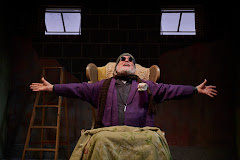
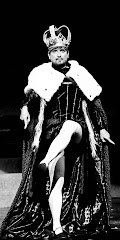
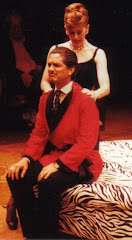
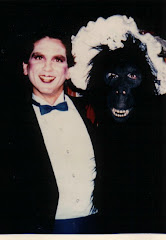
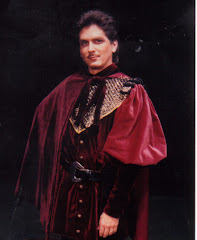
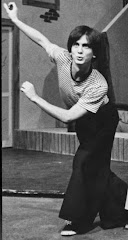
In the tour I saw, the Master of Ceremonies was played by an actor of whom I had never heard, but who has since made a terrific name for himself, Norbert Leo Butz. I could not take my eyes off this dynamic gent, but that is really not surprising. The Emcee in Cabaret is one of the all-time show-stealers, and I should know. Cabaret has been near and dear to my heart and soul since the film came out in the early 70s. I was just a teen, but I still recall the impact of Joel Grey's performance. This was the first time I consciously thought to myself, "I want to play this role." The Emcee became the first role to be placed on "my list," even before I knew I was keeping one. Ask any stage actor, and he or she can tell you immediately what roles they are dying to play (or wish they had had the chance to play). For me, the Emcee topped that list. I was so enamored of the Cabaret film, and the Emcee therein, that I performed a version of "Money, Money" with my friend Ada in my high school drama class (Ada recently reminded me that we used lip sync. yikes). This was the first of many times I performed some aspect of Cabaret. (This picture is proof of my obsession: My friend Donna agreed to accompany me to a Halloween party during this period, and as you can see, I went as the Emcee.) The next time I played the Emcee, I actually got to sing some of his songs in my own voice. I have already written about my first encounters with my best buddy Judy, which resulted in my playing the Emcee in her abridged version of Cabaret. Judy deserves some credit here, not only for giving me the role, but for her idea to turn some of the Kit Kat Girls into men. Back in 1975, this was a pretty radical idea. Judy was ahead of her time; twenty years later, the Cabaret revival placed a man in the song "Two Ladies." Well, Judy's one-hour version of the show had whetted my appetite. I was confident I could play the Emcee in a full length production, and Thespis, the world's first showstopper, seemed to smile down on me when, a year later, Cabaret was announced as part of the main stage season at my undergrad. After several auditions, there remained only three students up for the part. My buddy Cris (about whom I have already written) was (and still is) a phenomenal singer who acted. My acquaintance Billy was a dancer who acted. And I was an actor who moved well and carried a tune by selling the song. Guess who got the role? It wasn't the first, nor last, time a director passed me over in favor of someone with better musical sounds. Cris was wonderful in the role, though I doubt I could recognize it then. My severe disappointment (and it was SEVERE. Cris was lucky I never caught him in a crosswalk while I was driving home) reinforced my determination to play the role, someplace, somehow, in a full production. It was at least a decade after college before I got another swing at the plate. A theatre in Thousand Oaks, CA published a casting call, and though the venue was about an hour from my home, I drove out to the audition. Didn't know a soul, though in true theatrical fashion, I did bump into a kid with whom I had worked about six years earlier. I had the feeling that this may be my last chance to play this role I had coveted for decades, so I did my best to block out the other, better singers auditioning for this plumb assignment. At my first audition, I sang "Money, Money," because I knew it cold and it's an impressive patter song. Of course, it is not in the stage version. (Or rather, it wasn't at that time. The 1998 revival and others before it have since put the song, written for the movie, into the play.) I knew it was not in the play, but pretended ignorance when the director, a lunatic named Stuart, alerted me to the fact. It was enough to secure a callback, though, and a few days later, I made the schlep back out to Thousand Oaks to sing again. This time, the musical director had assigned "The Money Song" for the auditioners to sing; of course, it contains the highest note the Emcee sings in the entire show, which is surely the reason he chose it. Thanks a lot, Zach. I did not know it at the time, but I was later told that my unexpected appearance at these auditions upset the tentative casting plans for the show. In a theatre group such as the Conejo Players, shows were picked with at least a general idea of who would be playing certain leading roles. Nothing was set in stone, but it was the expectation for this Cabaret that the musical director's wife would play Sally Bowles, and his mother would play Fraulein Schneider. (It is in fact what happened.) It was also the expectation that, unless somebody really fabulous crawled out of the woodwork, the musical director would be playing the Emcee himself. I would never have known this little tidbit of info if the director had not let it slip a week or so after we began rehearsals. It was the night I was almost fired. We had spent the first week learning the music, and for me, that was a huge undertaking (including reprises, the Emcee sang a whopping seven numbers; the usual load for a leading man in shows of the period is four). I was learning all this music at the same time I was performing in another musical, so I was taking some care with my voice so as not to be hoarse during those performances. However, the director took this as vocal weakness, and so, one night after rehearsal, Zach the musical director pulled me aside to tell me, "Stuart wants to know if this is all I'm going to get out of you. Because if it is..." Note the dot dot dot, which clearly meant, "you're out." The next day was a pretty terrible one for me, as I anticipated the night's sing-through. It was to be the first time the entire score was sung all the way through, and everyone would be in attendance. I was in no way prepared to give a performance after only a week's rehearsal, but I also knew that if this director saw anything less than a full-out performance, I was to be replaced. That night, I blew out my voice giving this amateur director exactly what he wanted; while the other actors remained in their chairs in a circle when they politely sang, I leaped up, improvised dance steps, interacted with the chorus members, and generally sneered and cackled my way through the rehearsal. I beat the living crap out of the Emcee, but when I was done, I knew I had kept the job. What's funny about this memory is, this gig didn't even pay anything. But I knew in my gut that it may be the last chance I would have to play this role (and it was.) Because of this director, I learned a pretty good lesson about how to fake a performance during a rehearsal, though I have thankfully not had to do it much. I hate the fact that my current show suffered a bit when I returned to it the following night. (Sorry about that, Rob and Joe and Judi and Steve, that final weekend of Robin Hood was not my best work...now you know why.) I had a ball with Cabaret, once I realized that Stuart was not much of a director. I got to sing those wonderful songs, or rather, act them. I acted the dancing, too, and for putting me in high heels during the can-can number, Stuart, I dedicate this shot to you: This whole jaunt down memory lane was triggered by my catching a few snippets of Natasha Richardson's performance as Sally Bowles. In honor of all us actors out here doing musical theatre, here is another clip of the late lamented, singing the title song the way it should be sung. Rest in Peace. 

Wednesday, March 18, 2009

Natasha Richardson

1963-2009


The details of Richardson's sudden death are being reported around the globe, as her fame and that of her theatrical family make her skiing accident international news. Her resemblance to her mother Vanessa Redgrave is striking, particularly when hearing her speak in her own voice. The first time I ever encountered it, she and her husband Liam Neeson were providing introductory commentary on the revival of The Man Who Came to Dinner, starring Nathan Lane and being broadcast live on PBS.


To my own surprise and embarrassment, I have never seen a performance of Ms. Richardson's, on stage nor on film. Like everyone else on the planet, I have always been aware of her mother's illustrious career, and was lucky enough to catch Vanessa on stage at the Kennedy Center a few years ago, playing Hecuba. (I recall thinking that she swiped the film version of The Trojan Women from star Katherine Hepburn years ago, though I'm not sure that opinion withstands the test of time.) Natasha's grandparents included Sir Michael Redgrave and the fine actress Rachel Kempson, who worked until her death at age 92 (PBS freaks will remember her small but vivid performance as Lady Manners in The Jewel in the Crown). Her sister Joely has been on my radar since I ran across Nip/Tuck on TV, and I have already mentioned the personal interaction I had with her aunt Lynn Redgrave. Her uncle is the acclaimed British actor Corin Redgrave, and her father was film director Tony Richardson.


But I'm a bit ashamed to admit that Natasha Richardson's performances have escaped my view. Her stage work included what was reportedly a revelatory Anna Christie on Broadway, and she won the Tony for the acclaimed revival of Cabaret in the mid-90s (she has my sincere admiration and gratitude for showing that many musical theatre roles are best played by actors who sing, rather than singers who try to act. Her performance was so finely tuned, nobody cared that her singing voice was not that of the typical Broadway chanteuse). I've missed her film work, too, which consisted of a healthy mix of small indie films (A Month in the Country, Asylum, The Comfort of Strangers) and the occasional big-budget flick (The Parent Trap, Maid in Manhattan).


Her greatest achievements were surely on stage, and included Nina in The Seagull and Blanche in Streetcar Named Desire. Most recently she played opposite her mother in the concert staging of A Little Night Music.


She leaves behind two sons by her husband Liam Neeson, and of course, her extended family of Redgraves and Richardsons, probably comprising the most acclaimed theatrical dynasty of the late 20th century.

Tuesday, March 17, 2009

Millard Kaufman

1917-2009

Never heard of him? Me neither, but he died the other day at the ripe old age of 92. He was a longtime screenwriter with two Oscar nominations to his credit, for movies of which I have also never heard: Take the High Ground and Bad Day at Black Rock. He was considered a terrific script doctor at MGM, and also wrote a bit for television. He attached his name to the 1950 script of Gun Crazy, the film noir classic which was actually written by the blacklisted Dalton Trumbo, as a favor to their shared agent. In 1992, he officially requested that his name be removed from the film's credits and be replaced with its rightful author. His first novel ("Bowl of Cherries"), which he wrote in his late 80s, was an unexpected smash, and his second book is due out this fall.

So, Millard Kaufman seems to have been an upstanding gent and worthy of recognition, but you may wonder why he is receiving an obit in these pages. I do not, after all, write about everybody who dies, just about folks who hold some interest for me. (It is why I did not report on the death of radio pundit Paul Harvey, who died a few weeks ago. I'm sorry he's gone, of course, but am not all that interested in him or his work.)

Well, here's why. Back in 1949, Kaufman penned the script for a short animated film called Ragtime Bear, and included a character based on his near-sighted uncle. A year later, Kaufman wrote Punchy de Leon for the same character, and a star was officially born:

HAPPY ST. PATRICK'S DAY

Now go get snockered.

Monday, March 16, 2009

Ron Silver

1946-2009

"They say that Hollywood is sex without substance, and Washington is substance without sex, so maybe the marriage of the two is mutually intriguing."


So said Ron Silver, an actor by trade but an activist by inclination. He was long known for championing leftish causes such as First Amendment rights and gun control. It was an unwelcome surprise to the liberal Hollywood community when he reversed many of his beliefs and spoke at the 2004 Republican Convention in support of Bush's reelection, calling himself a "9/11 Republican." While falling short of joining the Republican Party (he officially became an Independent), the about-face was not warmly welcomed in Hollywood. Silver was to complain that he lost work due to his support of the Bush administration's conduct in Iraq and Afghanistan.


Silver's career included television, film, and the stage. He was a supporting player in the waning days of Rhoda, and appeared as a regular on several other unsuccessful sitcoms. He made a splash on stage with two portraits of Hollywood, Hurlyburly and Speed-the-Plow, the latter providing Madonna with her only Broadway appearance. (He won the Tony for playing the same role which Jeremy Piven deserted in the recent Broadway revival. I won't shut up about it here.) Other stage appearances included co-starring with Marlo Thomas in her Broadway debut, Social Security.


Among many roles, he played several real life folks, including lawyer Alan Dershowitz (Claus von Bulow's attorney in Reversal of Fortune), Henry Kissinger (Kissinger and Nixon) and male chauvinist and lousy tennis player Bobby Riggs (When Billy Beat Bobby). He made a strong showing in one of my favorite films, Silkwood, playing a union organizer who inadvertently causes Karen Silkwood's death.


He had a rare leading role in another of my favorites, a little known movie called Garbo Talks. His portrayal of a dying woman's son was a sweet departure; he more commonly played characters full of fast talk and deft manipulation. In the 90s he had recurring roles on Chicago Hope, Veronica's Closet, and The West Wing, the latter earning him an Emmy nomination.

Silver will be remembered as much for his political activism as his acting career. He was the president of Actors Equity for most of the 90s, and founded the Creative Coalition, a political action group centered on arts funding and public education. He actively campaigned for Bill Clinton as well as George W. Bush, and believed that Democracy was not a spectator sport.


Ron Silver died yesterday after a two year battle with esophageal cancer. He was 62.

Friday, March 13, 2009

Friday Dance Party: A Huttonannny!


I've been thinking about Betty Hutton lately. Haven't you? Hutton was a huge film star in the 40s and early 50s, though no one has ever heard of her these days. She is chiefly remembered for having replaced Judy Garland in the film adaptation of Annie Get Your Gun. She suffered her own mental demons later in life, addicted to alcohol and sleeping pills, and even attempted suicide in 1970. Apparently her conversion to Catholicism reversed her downward spiral, and she cleaned up her act a bit. She went back to school, earning a Masters degree, and worked various odd jobs until returning to Broadway in the 80s as one of Dorothy Loudon's replacements in Annie.


She's largely forgotten now, which is a shame. I first became aware of this dynamo when, as a kid, I stumbled upon one of her old movies, The Perils of Pauline. In it, she introduced a couple of swell Frank Loesser tunes, including "I Wish I Didn't Love You So" and my favorite, "Rumble Rumble." I've used the latter at auditions occasionally, but nobody can touch Hutton's manic version. She was a topnotch clown, with a malleable face which rivaled that other female comic star of the period, Martha Raye (Hutton was much more attractive, however, and could believably play romantic scenes as well as comic ones). Her comedy songs were always gems, written by the top composers of the day such as Johnny Mercer, Cole Porter, Irving Berlin, and of course Loesser. She burst onto the scene in 1942, in a supporting role in The Fleet's In, swiping the film from star Dorothy Lamour with her hilarious rendition of "Arthur Murray Taught Me Dancing In A Hurry." A year later she was teamed with another Paramount superstar, Bob Hope, in Let's Face It, and by the end of the decade, she was the studio's top-grossing female star. She took billing over Fred Astaire in 1950's Let's Dance, and her performance as Annie Oakley the same year is generally considered classic.

Hutton broke her contract when Paramount refused to allow her husband at the time (she had four total) to direct her next film, and her career began its swift decline.
Here's just one example of Hutton's song styling, complete with machine-gun lyrics and bulldozer delivery. There's even a bit of dancing, in honor of the week's Dance Party, and a special guest, too. I can't stop talking about it!
Betty Hutton died two years ago this week.

Thursday, March 12, 2009

COLLISION

My past and my present collided full-force on Sunday. It was our final performance, so I suppose I should announce that Rosencrantz and Guildenstern Are Dead is dead. I have to say I am sorry to see its demise. After experiencing some frustration with playwright Tom Stoppard's intricate wordplay ("too smart for the room," as some comedians might complain), our company emerged with an engaging, entertaining and even endearing piece. The houses were good, for the most part, with only one or two quiet ones; I can't tell if the odd newspaper review we received (I mentioned it here) affected our crowds or not. But the audiences seemed to follow the show easily enough, and even my folks had fun. (My father's enjoyment had a bit to do with the fact that I had composed a Cheat Sheet for him in advance; though he actually saw me in a full production of Hamlet, he didn't remember a thing about it, and Stoppard's play is better enjoyed by those familiar with Shakespeare's play).


My old high school buddy Randi enjoyed it, too. I have not seen her in...well...let's just say, it's been SEVERAL decades. She found me on Facebook and discovered, by reading my extremely colorful Status Updates, that I was working in Asheville. Turns out she moved here about three years ago, so she snagged tickets for herself and her husband and came to our closing performance. This picture of Randy (she's on the right) is blurred, but my memories of her are not. Back in the Day, she was part of the crowd which included the drama kids and the gang involved in the school's chorus. My very first full-length show, in fact, was Our Town (just like everybody else's, I suspect), in which I played the Stagemanager, and Randi played the hero's kid sister. Ah, memories....


When Randi approached me after the show on Sunday, I could have sworn I had gone back in time. Her bubbly, cheerfully sardonic personality was fully intact, and physically, she had changed very little. It's amazing that I have such clear memories of those days, but cannot remember where I parked my car an hour ago. We had a lovely chat for half an hour or so, and promised to meet again for a longer catch-up. I had to cut our reunion short in order to pop out to our director's house for a low-keyed BBQ with the cast and crew.


It was only then that I began to feel the usual letdown which comes with the closing of a show. Admittedly, my responsibilities in this particular production were not huge, but I had a lovely time with this crowd from NC Stage, and I hope to work with them again. (I wrote a bit about them here). I think they are doing things right, growing at the right pace (not that I'm such an expert about such things), and most importantly, seem to be able to keep the high stress factor which always accompanies theatrical endeavors from affecting their work, or their lives. Not an easy feat.