Thursday, March 5, 2009

Horton Foote

1916-2009

Foote wrote over 60 plays and screenplays over his long career, the majority placed in the fictional town of Harrison, a stand-in for his tiny home town of Wharton, TX. He began his career as an actor, studying at the Pasadena Playhouse in Los Angeles and the American Actors Company in New York. While at the latter, he fulfilled a class assignment by writing a short one-act play about the Friday night dances in his hometown. Wharton Dance, with Foote in the lead, was presented by the company and led to his writing a full, three act play called Texas Town. The show was presented by the American Actors Company and attracted the attention of the New York Times critic Brooks Atkinson, who disliked the leading man (Foote) but praised the play, calling it an "engrossing portrait of small-town life.” Foote's writing career was launched.


After World War II, Foote became a television writer as well as a playwright. While his stage plays were not yet greeted warmly (he provided Kim Stanley with her Broadway debut in The Chase in 1952), he created a series of well-regarded one-hour teleplays. He summed up a particular story for his producer this way: "It's about an old lady who wants to go home." Silent film star Lillian Gish played the widowed Carrie Watts in this first incarnation of The Trip to Bountiful, which went on to have Broadway and London productions, as well as a celebrated off-Broadway revival starring Lois Smith (above) a few seasons ago. But the show's greatest fame came with 1985's film version, which provided Geraldine Page, one of Oscar's perennial losers, her career-topping Academy Award.


During the period he was writing for television, the industry moved to Hollywood, where Foote drew the attention of the film community. He was hired to adapt Harper Lee's autobiographical novel To Kill A Mockingbird, and won an Oscar for the screenplay. The film provided Gregory Peck with an Oscar as well, and was Robert Duvall's screen debut, in the role of the outcast Boo Radley. Duvall became a frequent interpreter of Foote's work, winning an Academy Award for bringing his story Tender Mercies to life. Foote won his second Oscar for the original screenplay.


Foote had further film success adapting his play The Traveling Lady into Baby, The Rain Must Fall, starring Steve McQueen. Two other screenplays, however, were deemed unacceptable to the studios and, though he retained writing credit, his words were ditched. Foote left Hollywood in frustration and began a short period of inactivity, after which he began his nine-play cycle of family plays, The Orphans' Home. As these plays began to be presented in New York, he attracted the attention of the NY Times critic Frank Rich, who became his champion and created renewed interest in Foote's stage work. Signature Theatre, a prestigious off-off-Broadway group, devoted their 1994-95 season to his work and debuted an older play which had never had a production, The Young Man from Atlanta. Foote won the Pulitzer.


A revival of Foote's Dividing the Estate was a smash at Playwrights Horizon and was presented on Broadway this season. Elizabeth Ashley, Penny Fuller, Gerald McRaney, and Hallie Foote (the playwright's daughter and a frequent interpreter of his work) starred as a warring family enduring economic hardship. Foote's lifelong dream was to see his Orphans' Home Cycle onstage in a single series of productions, and had recently completed the necessary adaptation to do so, before his death yesterday at the age of 92.


The Orphans' Home Cycle is scheduled to be presented at Hartford Stage and Signature Theatre next season.

Tuesday, March 3, 2009

The Party's Over


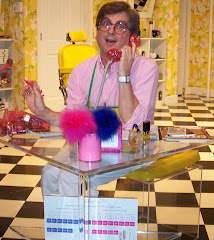
Here's an obit of someone you probably never heard of, though she had a substantial influence upon one of the big musical hits of the 1950s. Mary Printz was a telephone operator working for a prestigious answering service whose clients included many theatrical celebrities. In the days before home answering machines, these services were essential for important people on the go. Mary took her work seriously, and in fact, offered services above and beyond the call of duty. Now don't get dirty. I mean she would sometimes walk your dog or water your plants or run other important errands. She became a bit of a celebrity at her job, and after being charmed by her personality, sparked the creative interest of lyricist Adolph Green, one of her clients. With his writing partners Betty Comden and Jule Styne, he created Ella Peterson, the switchboard operator with a penchant for fixing her clients' personal problems (as well as creating a few). Ella is the central character in the musical Bells Are Ringing, which had a healthy run on Broadway in the late 50s. Portrayed on stage and on film by Judy Holliday, the kookily endearing heroine ended up falling for one of her clients, after the usual hijinks. Mary Printz herself opened her own agency the year the musical based on her life opened on stage, with a celebrity clientele which eventually included Candice Bergen, Shirley MacLaine, Robert Redford, Burt Reynolds, Brooke Shields, Liz Smith, Spencer Tracy, Kathleen Turner, Tennessee Williams and members of the rock band Kiss. (Her very first message taken, according to her husband, was for Hermione Gingold.) Belles Celebrity Answering Service took clients only on referral ("no doctors and no TV repairmen," Printz was proud to say, "too much trouble for the girls.") The agency is still in existence today, hanging onto about 90 die hard clients including Stephen Sondheim and Woody Allen.


The show based on the character of Mary Printz yielded several hit songs, two of which became standards still played today, "Just in Time" and "The Party's Over."


Printz continued to run her celebrity answering service until her death last week at the age of 85.

Saturday, February 28, 2009

'sNewz

...an occasional series mentioning current events which held my interest this week...


Well, not actually THIS week, as several of these items have been lounging around my inbox while I go on and on about Ros and Guil, about which I seem unable to shut up. Ah, well...

Sarah Palin continues to be the gift which keeps on giving. I don't mind a bit if she remains in the national spotlight; the more she remains there, the more we learn about her ethically challenged lifestyle. Lately, she's been forced to reimburse the State of Alaska for various items which she charged to them, such as per diem payments made for nights she spent in her own home, and expenses for her children which she claimed were State Business Expenses. No wonder she's sometimes considered the Great Hope of the Republican Party; she already has their business practices down pat. So does her niece, according to EBay. A month or so ago, the famous pair of Naughty Monkey Double Dare high heels which the Pitbull wore to accept the vice-presidential nomination from the Republicans was sold at auction by Palin's niece. Some lonely soul bought those soles for a whopping $2,000 and change (they retail at less than 90 bucks). The Ebay auction included an autographed picture of Palin wearing the shoes, which were apparently given to this niece after the governor dumped her own wardrobe in favor of the lavish one the RNC provided. Oh, and regarding those designer togs which caused so much ruckus during the campaign, Palin insisted all the clothes were to be donated to charity after the election. According to the Washington Post, the wardrobe was recently spotted, stuffed into garbage bags and sitting in a corner of the RNC's Washington headquarters.


Here's another item which interests me, though it's probably past its expiration date by now. Everybody knows Michael Phelps was hit pretty hard by that unfortunate picture of him taking a hit off a bong at a party at the University of South Carolina (my alma mater! Those gamecocks know how to partaaaayyyy). He was suspended from swimming competition for three months, and Kellogg's yanked his picture from their Corn Flakes. (He didn't lose everything, though, as Subway kept him on to endorse their sandwiches. And why not? After taking several hits of the demon weed, Phelps and others are bound to get the munchies and head down to the local sandwich shop for a footlong). An extremely zealous law enforcement officer in SC raided two houses which were suspected to be Phelps's Columbia hangouts (this is, of course, many days after the party in which the incident happened. Nobody would have known about the incident had not some enterprising photo-journalist snapped the photo and sold it to a London tabloid for 100 grand). This SC sheriff arrested almost a dozen people, confiscating a few cigarettes worth of grass, and made noises about arresting Phelps, too, who had long since left his jurisdiction. A few weeks ago, Robo-Cop decided against attempting to charge Phelps, who has never denied his involvement but has issued the standard "I regret my behavior" apology in hopes of salvaging his endorsement career. He claims the incident was a one-time error in judgement, and everyone seems to conveniently forget that he made a similar "one-time error in judgement" a few months after the 2004 Olympics, where he won 6 gold medals but had yet to vault into the national limelight. At that time, he was pulled over and arrested for drunk driving in Maryland, at the age of 19.


The ongoing saga of the Mercury-infested Jeremy Piven seems to have reached its conclusion this week. It's a story which has caught my interest for months, though nobody else really cares much. I wrote about the details of Piven's sudden desertion of Broadway's Speed-the-Plow here. As a result of his action, the producers filed a grievance against him with Actors Equity. Piven's hearing this week was closed to the public and the press, but in true Hollywood style, our Jeremy gave an exclusive interview to the New York Times right after the conclusion of the hearing. Apparently, he broke down in tears while telling the horrible story of his poisoning, its side-effects, and his terrible mistreatment by the press, many of whom reported on Piven's wild night life during the run. He did not bolt from the show because he was bored and partying too hard, but because he was often disoriented onstage and sometimes could not breathe (this despite photos taken of Piven out on the town celebrating Britney Spears's birthday and other events). As for the hearing itself, the expected outcome was reached: with five producers representing the Broadway League, and five actors representing the union, the votes were split right down the middle, and no action will be taken against Piven by Equity. The producers still have remedies in court, but I have a hunch they will let the matter drop now that the show is long gone and they've insured that Piven's reputation is soiled. It'll be a while before another Broadway producer takes a chance on him.

(update 3/1/09: I spoke too soon. According to today's NY Times, "Speed-the-Plow" producers are proceeding with arbitration against Piven. So, the story goes on!)


This final item is brand new, and I'm not sure how I feel about it. The producers of the film versions of Chicago and Hairpray and the TV versions of The Music Man and Gypsy are prepping a new Damn Yankees feature film. The book is being rewritten by the guys who created the Beverly Hills Cop franchise, and the flick will star Jake Gyllenhaal and Jim Carrey. I think the idea of a new movie is a good one; I'm going against most musical lovers when I call the original Damn Yankees movie a disappointment. Though it creditably preserved the Tony-winning performances of Gwen Verdon and Ray Walston, those performances were far less dynamic onscreen. The movie was really sunk, however, by casting prettyboy Tab Hunter in the leading role of Joe Hardy, a role which requires singing and dancing, neither of which Hunter could do. (I don't know if Gyllenhaal can do those things either.) The original film is a weak imitation of the show, which holds a special place in my heart, and the fact that it failed to make major screen stars of either Verdon or Walston proves my point. Verdon returned to Broadway and Walston moved to television for the better part of their remaining careers.

As for Carrey in the role of Applegate (the devil), well, who knows? I really like his work in his quieter pieces such as The Truman Show and Eternal Sunshine of the Spotless Mind (you know, his flops),but his wilder comic roles leave me pretty cold. Playing the Devil may encourage his baser impulses and turn the character into an over-the-top caricature. After all, remember the last time he reinvented a beloved character on screen?


Friday, February 27, 2009

Friday Dance Party: Who Says Fat Men Can't Dance?

This week's dance is apropos of absolutely nothing. It just makes me smile.
...and my mother had an outfit just like that one.


Tuesday, February 24, 2009

No Critical Favors


I finally sat down to watch the Oscarcast I had waiting on DVR (I can't bear to watch such things as they happen, I need the security of the fast-forward) and I thought Hugh Jackman did a bang-up job. He was charming, classy, and (as opposed to the usual Oscar host, who for 30 years has been a comedian) multi-talented. I thought his musical numbers were a hoot, and his camaraderie with the audience was fun and endearing.


Not everybody shares my opinion. Though the NY Times gave the broadcast a nice nod, the critics in the LA Times and the Washington Post fell over themselves with snarky comments. So what else is new? Since I read the Post daily, I am accustomed to the attitude which oozes from their two television writers, Tom Shales and Lisa de Moraes. Shales, for example, wished the hosting duties had been handled by Tina Fey and Steve Martin, who were hits during their introductory spot. This is nothing new from Shales, who wrote an exhaustive book about Saturday Night Live years ago, and since then, allows no opportunity to pass without plugging one of the show's cast members, past or present. Truly, there is rarely a week of his columns which does not include at least one mention of SNL, even in reviews of shows which have absolutely nothing to do with it. It's true, Fey and Martin were a success, but neither of them can be counted on to boost the TV ratings for the Oscarcast, as Fey cannot get her own highly regarded sitcom out of the ratings dungeon, and Martin's previous stints as Oscar host did not lead to improved ratings. Jackson, however, was clearly a ratings hit with viewers, who provided a large increase in ratings from last year (and this was a year which was predicted to be low-rated, lacking any blockbuster hits in the major categories). So while the LA Times TV critic complained brutally about Jackson's musical numbers, the audience disagreed. So did the LA Times film critic, Kenneth Turan, who loved the show and the clips and the recognition of the rich history of film (Shales at The Post hated all the clips, writing "people tune in the Oscars to see stars in the flesh, not to see clips of stars in roles they have already played." I'd like to see his research on this outrageous statement, as he's dead wrong).


Critics such as Sales and de Moraes at the Washington Post never seem bothered when the general public disagrees with their assessments, as they are sure their opinions are better informed and superior to those of common television viewers. And regarding de Moraes, I've wondered for years why her employers continue to pay her to write about a medium she so clearly despises. Every column she issues drips with sarcasm toward her subject; I wonder how she sleeps at night, when her days are spent writing about a topic she thoroughly hates.

I've been thinking about critics this weekend, as the local review of our Rosencrantz and Guildenstern Are Dead was published on Sunday. I'm new to the area, but I think, though am not sure, that this will be the only print review the show receives. The critic was enthusiastic about the production and the players, but issued one of those caveats which do not help increase attendance. Phrases like "the evening lengthens to three hours" and "don't worry if you don't understand it. It's not supposed to be easy" will hardly cause a stampede at the box office. I admit to a bit of frustration here, as, after a tentative start, the show has blossomed into a real crowd pleaser, from what I can tell. The laughs are plentiful and the surprises in the text are well played by our leading actors. With two well-placed intermissions, the show moves briskly and hardly seems like an experience which is "good for you," like attending the opera or the ballet. (This local critic even spent a paragraph discussing the intermission, railing against patrons who went outside to smoke.)

As the great Hans Meyer, playing our Rosencrantz (to the hilt), said, the review, while very positive, "did us no favors."


Friday, February 20, 2009

Friday Dance Party: PIRATES!!

I love this clip from The Pirates of Penzance production in Central Park, a show so successful, it moved to Broadway for a multi-year run. They made a film of the show, too, but I've chosen the clip below to share, though it is grainier than the corresponding clip in the movie. I chose it because the presence of the audience is clearly exciting the performers to higher heights. Almost without exception, when I see a stage production taped live before an audience, then a film of the same piece taped in a studio, the stage production wins out. Though it necessarily has cheaper production values, the excitement generated by the audience infects the performers, and the viewers. I also enjoy this clip for the presence of Tony Azito (the chief policeman) and especially, Kevin Kline. I wrote a while ago about seeing Kline for the first time in On the Twentieth Century, and here, he's a dynamo.

Naturally, as I'm occupied this week with the preview and opening performances of Rosencrantz and Guildenstern Are Dead (see entry below), this clip came to mind because it includes pirates. Tom Stoppard has cleverly interpolated piracy into his riff on Hamlet, and they play a small but pivotal role in the proceedings.

Sort of.

Anyway, for this week's Dance Party (and finally, there is a bit of dance in this one, or at least, marching), enjoy Kline and Company as they belt the hell out of "With Cat-Like Tread" from Shakespeare In The Park's The Pirates of Penzance:

The Politics of the Preview

It's a good thing I'm not in charge of theatre administration, because I would never have come
up with the clever way the NC Stage folks are presenting our previews. Each day this week, a new incentive encourages audiences to pop in to see the new show. We had an invitational dress on Tuesday, attended by about 30 people who, I'm told, always come to this performance. The first time in front of an audience is often an awkward one, especially with a comedy such as Rosencrantz and Guildenstern Are Dead, a language-heavy piece with existential overtones. As a result, we started with a whimper rather than a bang. As the performance progressed, however, the audience warmed up a bit, and were quite nice by the time they got used to this odd world we were introducing. Wednesday's show
was Pay-what-You-Can, a enticement commonly used to beef up the house during the preview period. It was a large and friendly crowd, again, I'm told, made up of folks who always attend this event. They "got" the play from start to finish, and I have a hunch they were the various artists, performers, and literary loons who populate Asheville. Thursday night, the theatre hosted a Happy Hour before the show (actually, Hour and a Half), and the attendees were already lined up outside the lobby when I arrived at the theatre at 6. Sated with munchies and wine, they were another nice house. Tonight, Friday, is the Talk-Back performance, and no, that does not mean the audience is encouraged to shout at the actors during the show. After the curtain comes down, viewers are invited to hang around and ask questions, give feedback, etc, to the cast and director. I'm told that, here again, the same crowd tends to come to this performance during the run.

So NCStage has really come up with some creative ways to fill the houses before the show's official opening. It puts a lot of the pressure off the Big Night, which will seem like performance #5 to the cast, rather than #1. We've learned a lot this week from our audiences, and each night before the show, the cast has assembled to tweak certain moments and, hopefully, improve.


So far, so good!