Monday, August 25, 2008

The Wind that Swept Through Georgia

FRED CRANE

1918-2008


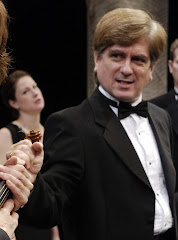
It's been a tough summer for the few surviving cast members of the monster hit Gone With the Wind. Crane, pictured above on the right, passed away this weekend at the age of 90. He played one of the Tarleton Twins in the opening sequences of the classic film, and can claim to have uttered the very first lines of dialogue in the four-hour epic. Sadly, he will be remembered, if at all, as the other Tarleton Twin. His career was overshadowed by George Bessolo, the gent who played his brother. Don't recognize George Bessolo's name? After appearing in Gone With the Wind, he changed his name to George Reeves, and went on to play Superman in the early TV series of the same name.

This news comes on the heels of the death of another GWTW supporting player, Evelyn Keyes, who died July 4. Keyes had a much more substantial career than Crane, though she is remembered primarily for her active private life, which included marriages to director John Huston and bandleader Artie Shaw, among others. In the film, she played Scarlett's whiny sister Suellen, from whom Scarlett swipes a boyfriend, whom she then marries.


I probably know more than I should about these players and their characters. I must now come clean and admit that I am something of a Gone With the Wind fetishist. I suppose part of my attraction to this unwieldy, melodramatic film stems from Atlanta being my hometown. But I am sure that I hold this movie in high esteem for another, more personal reason: I have distinct memories of my mother taking my older sister and me downtown to view the film in one of its major rereleases in the early 60s. It was my mother's favorite film, so became one of mine. It has since dropped off many historians' radars, largely due to the unconscionable sugarcoating of slavery. Scenes of happy Negroes singing in the fields while picking cotton do not sit well with modern viewers.


But as a piece of fictional storytelling, I continue to admire it. Only a handful of actors from the film are still with us, including one of its major stars, Olivia de Havilland. Ann Rutherford, who played Scarlett's younger sister Careen, and Alicia Rhett, who played Ashley's jealous sister India, are still alive, as are the folks who, as child actors, played Beau Wilkes and Bonnie Blue Butler.


But mostly, the movie's huge cast is gone with ... well, you know...


I'll think about that tomorrow.

Sunday, August 17, 2008

Theatre Droppings: Catch-Up Edition


Circumstances beyond my control have prevented my seeing as much local theatre this summer as usual. Primarily, my continued involvement with the staged readings at the Washington Stage Guild has occupied most weekends. I've been honored these past weeks to be included in these events, which have taken on a special meaning with the unexpected death of the group's founder, John MacDonald. The company is soldiering on. Our usual routine has been to gather late Saturday afternoon for a quick reading of the play, and even quicker discussion. Afterwards, some huge piece of animal carcass is tossed on the barbie, side dishes and drinks are whipped out, and a relaxed evening is had by all. The following day, Sunday, the cast gathers to read the play for anyone who shows up, once in the afternoon, and again in the evening. So, I've added to my previous list of roles which I had fun playing but would never attempt in a full production. In addition to those several roles, I played a young minister who questions the reality of the devil, when a magician arrives on the scene and spooks everybody. That play, Magic by G.K. Chesterton, could be a very effective piece fully staged.Also, I had an absolute ball playing a man decades younger than myself, a nincompoop who was attempting, without success, to swipe an inheritance, in a new translation of Goldoni's The Amorous Servant.


So, I have a good excuse to be a little lax in my theatre-going of late. I was able to pop back out to Totem Pole Playhouse a second time. I had previously been out to see a bunch of coconuts playing around in Lying in State, a play which was far beneath their talents. The show this time was a reliable old chestnut that everybody has heard of, but nobody ever does, Bell, Book, & Candle. From the film version, I was under the impression that the show had gangs of people running around the stage, but in fact, the play has only five characters. My buddy Ray Ficca was playing the comic foil, the brother of our heroine who is, incidentally, a witch. I enjoyed this production much more than Lying in State, as it was exceedingly well written, well acted, and well directed. It's said that this play was the inspiration for the long-running sitcom Bewitched, and that certainly seems likely. One aspect of the play which most people don't know, however, is that it is sometimes taken as a coded play about homosexuality. Its playwright, John van Druten, was gay (he's better known for his play I Am a Camera, which provided source material for the musical Cabaret). In B,B&C, van Druten populated his Manhattan scene with an underworld of undesirable creatures who in appearance were just like everyone else, but who held dark secrets. They even gathered in their own special nightclubs. One of the characters is a confirmed bachelor, and another is named Queenie. All very surreptitious, don't you think?


Today, I drove across the river to see Keegan theatre's Stones in his Pockets. The national tour of this piece rolled through town several years ago, and Rep Stage produced it more recently. My buddies at Wayside Theatre did it only a year or so ago. I didn't see any of those productions, so I was pleased to get the chance to catch the show here. I have only seen a handful of Keegan productions over the years. They do an eclectic mix of small, intimate pieces, new works, and big, blowzy musicals with gangs of people (they just closed Man of La Mancha yesterday at a different location). Usually, their work has an Irish bent, but that is not a hard and fast directive; one thing I admire about the company is their determination to do whatever the hell play they want, regardless of the logistics, or the timing, or whatever. Thus, 1776 graced their boards a couple of years ago, in a production with which I had some trouble. I noticed the same sort of trouble with The Hostage, another of their large-scale productions. The company is non-union, which gives them the freedom to tackle these big shows on a shoestring, but as happens in such instances, the audience gets one or two strong performances in the leads, surrounded by performances somewhat less than. (I've noticed the same phenomenon at Washington Shakespeare Company.)


But anytime I've caught one of Keegan's smaller shows, I've been impressed. They did a bang-up production of Picasso at the Lapine Agile a long while back, and their current effort is even better. On a blank stage with only a few chairs and a few boots, Keegan's cast of two creates the inhabitants of an Irish village being invaded by a Hollywood movie crew. The show is a delight, and the players are adept at the differentiation of character so necessary in a piece such as this. Matthew Keenan, who is new to me, lends a lot of heart to his roles, particularly the central role of Jake, and the walk-on role of Sean, a character which greatly affects the tone of the piece. Eric Lucas, whom I have enjoyed several times before at Keegan, is equally fine as Charlie, the second protagonist, and is also a hoot as the film's director and first AD.


I know I can be rather a prig about companies such as Keegan, sniffing that they should be on the road to becoming union houses and all that, but when I see one of their intimate productions, like the one described above, I can't really fault their direction too much. They are doing a lot right.

Malnutrition in America


Somebody needs to get this child a pork chop...

Saturday, August 16, 2008

This is My Nightmare


I often dream of performing in a pseudo-psychedelic setting to an audience of admirers. I am always bringing down the pseudo house with my showstopping performance.

Today, I ran across my dream turning into my nightmare. And I actually remember this clip when it was first run on network television.

Here are Cher and Tina Turner, rocking out to a medley of Beatles tunes. With abandon, they are bumping, grinding, and dancing around with each other. It seems they are having a terrific time with this medley.

Except it is not a duet.

It is a trio.

With Kate Smith.

Remember “God Bless America?” Yes, that Kate Smith. Trying to sing Beatles songs along with Cher and Tina Turner.

This clip is over 5 minutes long, but you only need to watch about half of it to understand my current nightmare. Cher and Tina are groovin’ to the songs. Kate is totally, hilariously, outrageously out of place.

And because of that, she is being ignored.


When I dream dreams like this, I am similar to Cher. Or Tina. Or sometimes Tim Conway, wandering through the mess, snagging a canned laugh. But I’m always one of the successful ones, fully in charge, fully confident, fully at home in the world.

That’s in my dream. But in my life right now, I’m awkward, insecure, out of place.

In my life, I’m Kate Smith.

Trying to sing “Hey, Jude.”

Wednesday, August 13, 2008

Brideshead Repackaged


When the mammoth miniseries Brideshead Revisited premiered in the UK in late 1981, it's said that, across the nation, the chic younger set were showing up in trendy nightclubs carrying teddy bears. Nothing quite so precious happened in the states when the series was broadcast on Great Performances; university students were unlikely to be viewing anything on PBS in large numbers, much less this languid adaptation of Evelyn Waugh's 20th century classic. I was out of college by then, and when American TV critics started to single out the show as the finest series ever to be shown on television, I tuned in. (I won't necessarily concur that it's the Best Thing Ever On TV; perhaps later in these pages, I'll go on and on about my personal favorites. But surely Brideshead Revisited is in my top 5-10...).


A slimmed-down movie version of the story has recently hit the theaters, and I popped 'round to see it last week. There are many, many differences between the two, all of which have been commented upon by just about everybody. Though the original tale places Charles Ryder at its core, the film's dominating force is Emma Thompson as Lady Marchmain. One need only view this ad for the flick to tell exactly whom the movie believes is the center of this story of doomed romance, and the affect of Catholicism on an aristocratic family. I love Emma Thompson, who doesn't? I was privileged to see her onstage in LA when she was brought to town by her then-husband, Kenneth Branaugh, to star in A Midsummer Night's Dream and King Lear. She stole the former as Helena, and was completely unrecognizable in the latter, playing the King's Fool. The range of this woman is indescribable.


But I'm getting a bit ahead of myself.


The original Brideshead made an international star of Jeremy Irons, playing the leading role of Charles Ryder, the outsider mixing it up with various members of the aristocratic Flyte family. The series should have made an international star of Anthony Andrews, too, but it didn't. I can't imagine why, other than to suppose that audiences were uncomfortable with his role as Sebastian, an alcoholic hedonist whose homosexuality clashes with his Catholic upbringing and causes his ruin. I for one could not take my eyes off this beautiful young man's performance, and when his character dropped out of the series about mid-way through, I found it difficult to keep my interest peaked. As Sebastian faded away in Charles's life, his sister Julia became the central antagonist, and I remember thinking, when the hell is Sebastian going to reappear?


The original miniseries was blessed with spectacular players all around, but its supporting cast was dominated by three world-class actors. Claire Bloom, playing the role currently being played by Emma Thompson, chose a much more subtle approach to this matriarchal monster. She created a loving, caring mother who, with nary a raised voice or eyebrow, kept her children subjugated to the strict Catholicism which was a central tone of the story. I admit that I preferred Bloom's characterization to the more brittle performance of Thompson in the film.


In the film version, Michael Gambon plays her estranged husband Lord Marchmain. In this instance, I preferred the movie's actor to the series's. Gambon has had a long and distinguished career, but cannot be considered a major movie star. He is a major actor, however, and his performance seemed pitch perfect to me. His job wasn't an easy one, I'm sure, for his predecessor in the TV series was Laurence Olivier, in one of his final roles. I never get tired of watching Olivier, even as I never forget that I am, in fact, watching Olivier. I almost never forget that I'm watching that terrific actor. But with Gambon, I was watching the character.


Olivier won the Emmy award for his performance, but I think the stronger work was being done by his contemporary John Gielgud, in the smaller role of Edward Ryder. His performance as the disengaged, distant father of the main character was for me a highlight of the series. Gielgud's brief scenes with Irons are hilarious, comic gems, and remain some of the best of his long career.


As for the current film, well, comparisons are odious, aren't they? How fair is it to compare a 14 hour series with a two and a half hour movie? Out of necessity, Charles's infatuations with first Sebastian, then his sister Julia, are condensed into the same time frame, turning the relationship into a more traditional romantic triangle. I don't have a problem with that. Neither do I have trouble with the lack of focus on the Oxford years or the other members of the Flyte family. Something's gotta give.


In the central role of Charles Ryder, Matthew Goode is a dead ringer for his predecessor Jeremy Irons. His understated work is a strong counterpoint to the flamboyant presence of Ben Whishaw as Sebastian. Whishaw's performance is much more effeminate than his predecessor's, but I think it worked quite well. It is the film's only performance which stopped my mind from making ongoing comparisons with the miniseries, and erased all thoughts of Anthony Andrews's previous interpretation.


Though Brideshead the miniseries remains near the top of many people's hit lists, the film is unlikely to make the same claim. But I enjoyed the movie immensely, and if you're interested in Waugh between the Wars, and can divorce the film from the series, it's worth the effort to revisit Brideshead.

Tuesday, August 12, 2008

George Furth

1932-2008


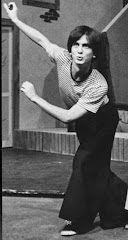
Beginning his career as an actor, Furth played the odd-ball nerd with the nervous twitch on film and television in the 60s. Here he is in a typical over-the-top pose from The Monkees. He appeared in notable feature films such as Butch Cassidy and the Sundance Kid, Shampoo, and Blazing Saddles. He found his lasting fame as a writer, penning plays and musicals throughout the 70s and 80s.


His Broadway credits include two substantial hits, and at least one substantial flop. Along with Stephen Sondheim, he created the landmark concept musical Company, for which he won the Tony. His later collaboration with Sondheim, Merrily We Roll Along, flopped heavily and closed after 16 performances.


He wrote several straight plays which made it to Broadway, most notably Twigs. A tour de force comedy in which a single actress plays a mother and her three daughters, the production was Michael Bennett's only successful direction of a non-musical play, and turned Sada Thompson, considered one of the most competent stage actresses of the period, into a Tony winner. Furth reached Broadway several more times with minor works, and penned the book for The Act for superstar Liza Minnelli's return to the Great White Way.


I've written previously about the Kennedy Center's productions of both Company and Merrily We Roll Along, and about the original cast album of Company as well. In the spirit of that groundbreaking musical, and in celebration of George Furth's contribution to the American Theater:


I'd like to propose a toast.


Sunday, August 10, 2008

Eerie Resemblence

OK, I know I swore that these pages would be Olympics-Free during all the jingoistic hoopla, but I just can't help myself. Am I the only one who noticed this? Take a gander at this pic from the Opening Ceremonies:

The above picture reflects Chinese soldiers entering with their flag. You might think they were executing some kind of dance. Until you see this, a pic of soldiers in 1930s Germany:


China is starting to give me the creeps...